New York — On a crisp, wintry afternoon in early March, Washington Square Park transformed into a stage of nostalgia, identity, and glittering alter egos as crowds gathered for a Miley Cyrus lookalike contest an event that felt less like a competition and more like a cultural reunion.
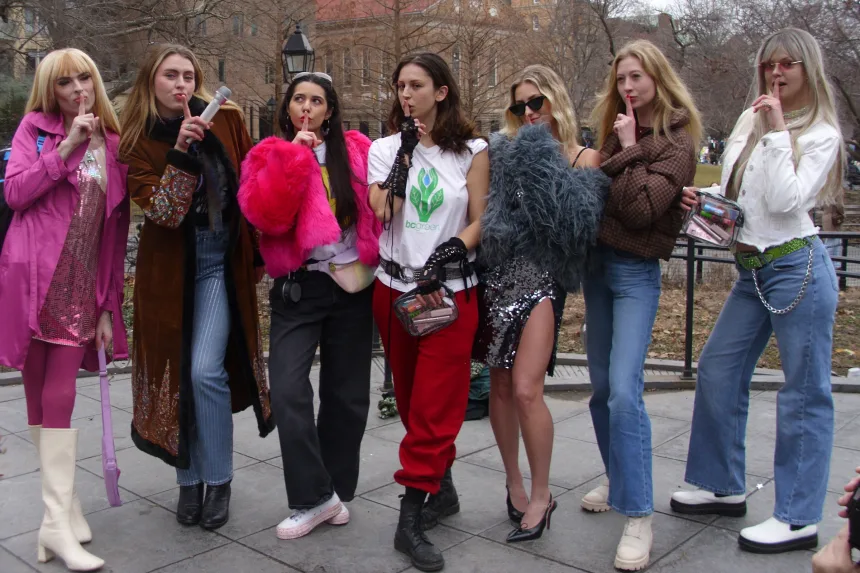
Among the audience were cousins Sophia, 23, and Ariana Parizadeh, 22, Iranian-American fans who grew up in strict households where watching Hannah Montana often meant doing so in secret. For them, the story of a girl living a double life as both an ordinary teenager and a global pop sensation wasn’t just entertainment it was deeply personal.
- Miley Cyrus & Hannah Montana Shaped Immigrant Kids’ Identity
- Pakistani Farmers Sue German Firms Over 2022 Floods
- Ron Angeles Sex Scandal
- Rihanna’s LA Mansion Targeted in Gunfire Attack While She Was Home
- LIST: Emergency Hotlines for Filipinos in Middle East
- Linda Walker Is Trending on Social Media
- Donald Trump State of the Union Focuses on Jobs, Borders and Foreign Policy
- What Lies Beneath TV Series
“Going between home and school, I felt like I had to code-switch,” Sophia said. At home, it was Farsi, tradition, and expectations of becoming doctors or lawyers. At school, it was English, assimilation, and the quiet effort to belong. “There were different parts of me that came alive in each place,” she reflected, recalling how even summers spent in Iran shaped yet another version of herself.
When Hannah Montana first premiered in 2006, starring Miley Cyrus, it captured a universal tension: the desire to be seen versus the need to fit in. Two decades later, that message still resonates. A 20th anniversary special featuring a now 33-year-old Cyrus—debuted Tuesday on Disney+, reigniting conversations about identity, belonging, and the masks people wear.
The show may have centered on a white, Southern girl navigating fame in Malibu, but its emotional core transcended boundaries. For Katrina “Kitty” Black, a 29-year-old Jamaican-American fan, the connection ran deep despite cultural differences.
“She was white and I was Black,” Black said, “but that awkward stage of figuring yourself out—with your family, your friends, and the pressures of the world—that was all very real to me.”
Black’s childhood was a balancing act: singing in her Jamaican church in Stamford, Connecticut, then attending an elite private school where she was one of the few Black students. The contrast felt cinematic at times—“like dramatic music was playing,” she joked. “If only they knew.”
For many fans like Black, Hannah’s iconic blonde wig became more than a costume it was a symbol. A transformation. A shield. A question.
“Sometimes in order to fit into certain spaces, you put on this wig,” she said. “Looking back, I don’t love that message but it was real. You’re juggling two worlds.”
That duality between authenticity and acceptance remains at the heart of the show’s legacy. While a modern reboot might feature more diverse casting or updated storylines, its central theme still holds: the struggle to reconcile who you are with who the world expects you to be.
Michael Poryes, co-creator of the series, acknowledged that enduring impact in a recent statement, emphasizing that the show’s mission has always been clear: to remind audiences that being liked for who you truly are is not just important it’s everything.
And in a park filled with lookalikes, wigs, and echoes of a pop anthem once sung by millions, it was clear: the best of both worlds was never just a catchy lyric—it was a lived experience.
The Magic of Washington Square Park
On a chilly afternoon in early March, Washington Square Park buzzed with anticipation as fans gathered for the annual Miley Cyrus lookalike contest. The crisp air carried with it a sense of nostalgia and excitement, as attendees donned outfits reminiscent of Hannah Montana, the beloved character that Miley Cyrus portrayed. This event was not merely a contest; it was a vibrant celebration of identity and community.
Celebrated for its artistic and cultural significance, Washington Square Park has long served as a melting pot for diverse communities, notably including immigrant families. As children of immigrants grow up navigating their own identities, cultural touchstones like Hannah Montana often play a pivotal role in shaping their understanding of self. The lookalike contest became a reunion for fans, transcending age and background, uniting people who shared a formative experience through Cyrus’s duality as a country star and a typical teenager living in two worlds.
The influence of Hannah Montana reached far and wide, offering a unique lens through which many immigrant kids could see themselves reflected in a mainstream narrative. The show provided themes of friendship, family, and the struggle for authenticity—an experience that resonates with many young viewers who adapt in new environments while trying to preserve their cultural heritage. Events such as this lively contest foster a sense of belonging, helping participants celebrate a shared history as they gather to affirm their collective love for a character who has inspired countless young individuals.
As the Miley Cyrus lookalike contest proceeded, laughter and cheer echoed throughout the park, turning it into a joyful celebration of identity and culture. Such gatherings are powerful reminders of how popular culture can unite diverse communities, leaving a lasting impact on generations that find camaraderie and inspiration in the trials and triumphs of fictional characters like Hannah Montana.
Sophia and Ariana’s Connection with Hannah Montana
Sophia and Ariana, two Iranian-American cousins, spent their childhood navigating the complexities of growing up in strict immigrant households. Their experiences, shaped by cultural expectations and familial obligations, often led them to feel a sense of disconnection from their American peers. However, a shared ritual of watching “Hannah Montana” became a powerful bonding moment for them, as it resonated deeply with their struggles of dual identities.
In the show, Miley Stewart juggles her secret life as a pop star with the challenges of being a regular teenager. Similarly, Sophia and Ariana found themselves balancing their Iranian heritage with their American lifestyles. Sophia recalls a particular episode where Miley experiences the pressure to conform both to her celebrity persona and her family obligations, mirroring her own feelings when attending family gatherings with relatives expecting traditional behaviors. For Ariana, the show’s themes of authenticity and self-discovery provided a sense of validation; she often felt torn between her desire to fit in with her friends and her family’s expectations to uphold cultural values.
As they watched Miley navigate the pitfalls of adolescence while hiding her true self, Sophia and Ariana felt both understood and inspired. The character’s moral dilemmas and emotional struggles mirrored their own teenage experiences, fostering a sense of solidarity. They appreciated how the show depicted the complexities of having multiple identities, showcasing both the humor and heartache inherent in the journey. “Hannah Montana” became more than entertainment for them; it served as a lens through which they could process their own identities and challenges.
The girls’ childhood memories of watching the show remain vivid, punctuated by laughter and tears as they discussed plotlines that resonated with their lives. Ultimately, these experiences helped Sophia and Ariana develop a deeper understanding of themselves, as they embraced both aspects of their identity the Iranian and the American just as Miley did.
Dual Identity: Navigating Between Two Worlds
Code-switching is a prevalent phenomenon among immigrant children, where they navigate between different cultural environments, adopting different behaviors, languages, or even attitudes to fit in. Sophia and Ariana, for instance, faced unique challenges associated with their dual identities, particularly at home and in school. This experience often meant modifying their speech, mannerisms, and even their interests in order to gain acceptance from their peers while still adhering to the cultural expectations within their families.
At school, Sophia and Ariana often felt the pressure to conform to mainstream American culture. They adopted the language and styles seen in popular media, such as those showcased on the Disney Channel by characters like Hannah Montana. The show encapsulated the struggles of a typical teenager who juggles her double life, serving as a mirror to their own experiences of duality. For many immigrant kids, resonating with Hannah Montana, a girl who alternated between her public persona and private self, became a source of comfort as they too felt the continuous tug-of-war between two worlds.
At home, however, the expectations shifted dramatically. Sophia’s and Ariana’s parents often emphasized the importance of their cultural heritage, teaching them language and values that had been passed down through generations. The contrast between these home expectations and the more relaxed social norms found in schools created an internal conflict for both girls, as each environment demanded a different version of themselves. As seen in Hannah Montana’s character, the struggle to balance these divergent expectations became emblematic of their own journeys, highlighting the difficulty of striving for acceptance in a society that often feels foreign.
Thus, the portrayal of dual identity through characters like Hannah Montana helped immigrant youth articulate their own experiences of struggle and belonging, while also navigating the complexities of code-switching effectively.
Hannah Montana’s Cultural Impact: A Broad Reach
The television series Hannah Montana, which aired from 2006 to 2011, played a significant role in shaping cultural narratives, especially for immigrant children navigating complex identities in a rapidly globalizing world. Although the show is often labeled as a family-friendly sitcom, its themes resonate with a diverse audience, reflecting challenges related to identity, race, and gender. The character of Miley Stewart, portrayed by Miley Cyrus, exists as an archetype that many young viewers, particularly those from immigrant backgrounds, could relate to. As Miley balances her life as a typical teenager and a pop sensation, she navigates the expectations placed upon her, mirroring the dual identities many immigrant kids experience.
Moreover, Hannah Montana skillfully addressed the notion of self-discovery and the struggle between personal ambition and familial obligations. The show’s emphasis on family values, friendship, and individuality struck a chord among viewers, encouraging them to embrace their multifaceted identities. The narrative tackled gender roles in a lighthearted manner, allowing young audiences to engage with complex concepts of femininity and empowerment without overtly challenging societal norms. This approach enabled the series to reach a wide demographic, illustrating that identity formation is a universal experience.
The supporting characters in the show also provided a lens through which viewers could explore diversity. Notable figures, such as Rico, added a layer of cultural representation, fostering conversations around race and ethnicity. Although the portrayals were simplistic at times, the characters of Hannah Montana transcended cultural boundaries, allowing fans from various backgrounds to see aspects of themselves reflected in the storylines. This ability to connect with a broad audience ensures that the series retains its cultural significance, highlighting the intersections of identity among immigrant youth in contemporary society.
Reflections from Today’s Fans: A New Perspective
Among the myriad fans of Miley Cyrus and her alter ego Hannah Montana, Katrina ‘Kitty’ Black, a Jamaican-American woman, offers a compelling perspective on the influence this show has had on her identity. Kitty reflects on the two contrasting personas portrayed by Miley Cyrus—one as a regular teenager and the other as a pop superstar. This duality resonates strongly within immigrant communities, where the pressure to adapt and navigate different cultural environments can often create an internal struggle.
Kitty notes that, for many young viewers like herself, the dichotomy of Hannah’s life served as an allegory for their own experiences. “Hannah was relatable, yet unreachable, embodying both the desire to fit in and the longing for something greater,” she explains. The show illustrated the conflict of blending different cultures while simultaneously fostering a sense of belonging. This sentiment is shared by numerous fans who describe how Hannah Montana mirrored their own challenges of balancing traditional values with the modern influences surrounding them.
The very premise of Hannah Montana, where Miley could live a double life, allows individuals like Kitty to examine their own identities. Growing up amidst the complexities of being torn between two worlds, fans found comfort in Hannah’s journey. Kitty recalls how episodes often sparked conversations in her own family about cultural expectations and aspirations. The singer’s ability to toggle between two identities reminded fans that embracing a multifaceted sense of self is both valid and empowering.
Kitty highlights the power of pop culture in shaping one’s identity and self-perception. The way Hannah Montana navigated her dual existence stands as a representation of the immigrant experience, illustrating that identity can be fluid and multifaceted—an important realization for a generation influenced by these narratives.
The Symbolism of Hannah’s Wig: An Unexpected Message
The iconic wig worn by Miley Cyrus in her role as Hannah Montana serves as a profound symbol that conveys multifaceted meanings. At first glance, the wig represents the duality of Miley’s character, allowing her to seamlessly transition between the glamorous world of stardom and the relatable life of a teenage girl. This portrayal highlights the conflict many young girls face between society’s expectations and their authentic selves, particularly resonating with those from marginalized backgrounds.
For countless immigrant children, this struggle is intensified by cultural pressures and the desire for acceptance in an often unforgiving social landscape. The wig becomes a metaphor for the masks these young individuals wear as they navigate their identities. They may feel compelled to conform to mainstream ideals while simultaneously grappling with the cultural values instilled in them by their families. The presence of Hannah Montana’s wig thus amplifies discussions surrounding self-identity, self-worth, and the pressures imposed by societal norms.
Moreover, the wig symbolizes the broader implications of assimilation, where immigrant children can feel torn between their ancestral roots and the culture they inhabit. By adopting the alter ego of Hannah Montana, Miley Cyrus embodies this inner conflict, illustrating the emotional turmoil that arises from a desire to belong versus the fear of losing one’s heritage. This narrative engages young viewers in a dialogue about authenticity versus performance in various social contexts.
In today’s discourse on identity, the themes represented by Hannah’s wig remain relevant, as they invite reflection on how societal expectations can distort personal identity. It is essential to recognize these implications, especially for children navigating these challenges, fostering resilience and self-acceptance in the face of external pressures.
The creators of the iconic television show Hannah Montana, notably Michael Poryes, worked within a landscape that was both challenging and full of opportunity. Their intention was to build a narrative that resonated with young audiences, particularly children navigating the complexities of adolescence and identity. In interviews, Poryes articulated an understanding of how Hannah Montana served as a dual metaphor for youth struggle—balancing personal desires and societal expectations. This acknowledgment illustrates an awareness among the creators concerning their responsibility to address sensitive subjects.
As the show gained popularity, discussions emerged regarding the impact of its portrayal of identity and culture among immigrant kids, specifically. Many young viewers from diverse backgrounds found relatable themes woven into the storyline, leading to rich interpretations of the character’s experiences. The show’s intersection of celebrity culture with ordinary life prompted a deeper exploration of self-identity, urging viewers to grapple with the contrast between their lived experiences and those presented on the screen. Such dialogues have spurred researchers to consider the notion of ‘intention versus interpretation’ in media representation.
Creators like Poryes often find themselves in a complex position; while they may have specific intentions behind their narratives, their audience’s interpretation can diverge widely based on cultural backgrounds and personal experiences. Therefore, the responsibility extends not just to crafting engaging stories but to being cognizant of how those stories are processed by varied audiences. The emergence of various interpretations also fuels discussions about the broader implications of storytelling in shaping identity, especially for marginalized groups. The success of Hannah Montana lies not only in its entertainment value but in the conversations it sparked about identity, representation, and belonging for many immigrant children, making creators’ awareness of their work’s impact crucial to its legacy.
Revisiting the Past: A 20th Anniversary Reflection
The recent 20th anniversary of the iconic series Hannah Montana has prompted a wave of nostalgia among fans, particularly those belonging to immigrant backgrounds. The significance of this celebration lies not only in the series’ impact on popular culture but also in its exploration of themes that resonate deeply with its audience. By revisiting the show, fans are afforded an opportunity to reflect on their formative years while recognizing the complex identities they have navigated.
Nostalgia can play a powerful role in shaping memories and emotions, often providing comfort and a sense of belonging to individuals as they recall their youth. For many immigrant kids, Hannah Montana was more than just a television series; it was a mirror to their desires for acceptance and identity. The dual life led by Miley Stewart allows viewers to connect with the challenges of balancing different aspects of their lives, much like the experience of many immigrant families striving to assimilate while maintaining their cultural heritage.
This anniversary also sheds light on how the themes of the series friendship, self-discovery, and the importance of family remain relevant in today’s context. As our understanding of identity evolves, revisiting Hannah Montana can prompt discussions surrounding cultural representation and the complexity of growing up in a world that often demands conformity. Fans are encouraged to engage with the series from a new perspective, recognizing that its influence extends beyond entertainment; it encapsulates a narrative that resonates with the immigrant experience.
In reliving these cherished moments, audiences can rediscover the personal significance these stories hold, considering how they shaped their understanding of themselves and the world around them. Ultimately, the celebration of this anniversary serves as a reminder of the impact that Hannah Montana has had, echoing across generations and contributing to ongoing dialogues about identity for immigrant children.
The Lasting Legacy of Hannah Montana
The cultural phenomenon of Hannah Montana extends well beyond its original airing, resonating deeply with a diverse audience, particularly among immigrant children. The show created a unique bridge between the worlds of everyday adolescence and celebrity life, allowing fans to navigate their identities in ways that felt authentic and relatable. For many immigrant kids, the duality presented by Miley Stewart’s life—balancing the pressures of fame with the desire for normalcy—mirrored their own experiences as they often juggle the expectations from their heritage with the reality of growing up in a different culture.
Through its narratives, Hannah Montana encouraged young viewers to embrace their complexities. The character wrestles with typical teenage issues while also grappling with the significance of her rich cultural heritage, making her an aspirational figure for viewers feeling similar conflicts. The show’s portrayal of family values, friendship, and self-acceptance has resonated particularly with immigrant children searching for their place in a society that is sometimes less than welcoming to cultural diversity. Such themes illustrate a fundamental understanding: that while cultural backgrounds influence identity, the essence of who we are transcends these borders.
Moreover, the influence of Miley Cyrus’ dual role has ignited broader conversations about identity and authenticity. These dialogues are critical, as they encourage individuals to navigate their cultural landscapes confidently. As shows like Hannah Montana continue to be discussed and revisited by new generations, it becomes clear that their impact on self-acceptance and cultural pride remains palpable. The legacy of Hannah Montana is not merely in its entertainment value, but in its ability to empower millions to be true to themselves amid diverse challenges and expectations.
Hannah Montana: A Journey of Acceptance and Queerness in the Bible Belt
For many individuals raised in the Bible Belt, the journey of self-discovery can be fraught with challenges, particularly for those who identify as queer. In this deeply conservative region of the United States, traditional values often dominate the cultural landscape, promoting a narrow view of acceptable identities. Kendall Knight’s childhood exemplifies the struggle many face; the societal expectations in this environment compelled him to conceal his true self behind a façade that was more palatable to those around him.
The overwhelming influence of religious doctrine can create an atmosphere where deviation from the norm is not only discouraged but can also lead to significant social ostracism. In Kendall’s case, acknowledging his queerness meant confronting fears of isolation and judgment from a community that often equates such identities with moral failing. This internal conflict a tug-of-war between authenticity and societal acceptance—leads many to adopt an identity that is not genuinely theirs, resulting in pervasive feelings of shame and confusion.
As Kendall navigated his formative years, he experienced the nuances of belonging in a world that celebrated conformity while simultaneously silencing diversity. The pressure to hide his queerness was immense, deeply embedded in the expectations of family, peers, and community. Through coping mechanisms that ranged from denial to passive acceptance, he crafted a public persona that aligned with traditional values. However, this dissonance created an internal struggle that could not be ignored, leading to important moments of personal reflection and gradual acceptance over time.
This exploration of queer identity within the Bible Belt highlights a pervasive issue, how environments shaped by conservative beliefs can stifle individuality and lead to a profound sense of disconnection from one’s true self. For many, including Kendall, the journey toward understanding oneself becomes an essential narrative of resilience amidst the challenges posed by rigid societal norms.
The Allure of Hannah Montana: Escapism and Inspiration
Kendall’s fascination with Hannah Montana exemplifies the profound allure of escapism found within popular culture. Set against the backdrop of the Bible Belt, where conformity often stifles individuality, the character of Hannah Montana represented a beacon of hope for those, like Kendall, yearning for authenticity. For him, the duality of Hannah’s identity—as a typical teenager and a glamorous pop star—served as a powerful metaphor for self-discovery and personal freedom.
Hannah Montana’s adventures and challenges allowed Kendall to envision a life unrestrained by conventional expectations. The dichotomy of living a double life resonated deeply with him; it mirrored his own struggles in reconciling his true self with societal pressures. Each episode offered a glimpse into a world where self-expression flourished, inspiring him to embrace his own desires and aspirations. Amid the expectations imposed by his surroundings, Kendall found solace in the fearless confidence that Hannah exuded, transforming his admiration into a source of inner strength.
This admiration not only shaped Kendall’s persona but also influenced the focus of his aspirations. As he navigated his formative years, Hannah Montana became emblematic of the possibility for change and acceptance, fueling his desire to break free from the constraints that defined his upbringing. The character’s journey illuminated paths of expression that were often obscured by the societal norms of his environment. In that light, Hannah Montana was not merely a television character; she was a symbol of resilience and a pivotal source of inspiration. This escapism allowed Kendall to explore facets of his identity, gradually instilling the courage to live authentically.
Pretending to Be Hannah Montana
Throughout childhood, many children experiment with different forms of identity and expression. For Kendall, dressing up as Hannah Montana in the privacy of his home allowed him to explore his creativity and authenticity. The television character represented a critical figure in popular culture, embodying both the struggles and triumphs of adolescence. As Kendall donned makeshift costumes created from a hodgepodge of thrift store finds and personal touches he transformed not only his appearance but also his state of mind.
Singing into a hairbrush, Kendall engaged in performative play that encapsulated the yearning for acceptance and validation. This seemingly simple act of pretending to be a pop star offered a sanctuary from the rigid expectations of the Bible Belt, a region known for its conservative values. Within the four walls of his home, Kendall could unleash a version of himself that would otherwise remain hidden. The vibrant world of Hannah Montana became a canvas for him to express his personality, ambitions, and dreams.
The moments spent immersed in this performative play were vital for Kendall, as they provided an escape route from societal norms that pressured him to conform. Through the songs and stories that Hannah Montana portrayed, Kendall could navigate feelings of isolation and embrace his identity as he yearned for self-acceptance. This ritual of dressing up and performing transcended basic childhood play; it was an essential part of his journey toward understanding himself in a world that often resisted such exploration.
Ultimately, these playful performances served as a microcosm of a broader journey, wherein Kendall began to reconcile his identity with the norms surrounding him. While it might seem like mere play, the experience of pretending to be Hannah Montana was illustrative of deeper themes of acceptance and individuality, crucial for personal growth.
Embracing Queerness: The Evolution of Kendall Knight
Kendall Knight’s journey of self-discovery provides a remarkable narrative of embracing queerness within the complexities of the Bible Belt. Initially, Kendall grappled with societal expectations and the fear of rejection, which led him to keep his identity concealed. This internal struggle is emblematic of many young individuals in conservative areas, where adherence to traditional norms often overshadows personal authenticity.
Significant pivotal moments ignited Kendall’s transformation. One such moment was encountering openly queer role models in media and his personal life. By witnessing their narratives, he found solace and courage, realizing that acceptance is attainable. The visibility of other LGBTQ+ individuals played a crucial role in shaping his perspectives, illustrating that pride in one’s identity is a powerful tool in combating prejudice.
Moreover, Kendall’s journey was fortified by support from the LGBTQ+ community, which offered a safe space for exploration and acceptance. By participating in gatherings and engaging with affirming peers, he cultivated a sense of belonging that had previously evaded him. These experiences encouraged Kendall to publicly embrace his queerness, redefining his identity on his terms and fully integrating it into his life.
Central to Kendall’s evolution was the development of personal strength that emerged from the acceptance of his queerness. This resilience allowed him to navigate challenges with confidence and assertiveness, reinforcing the idea that embracing one’s identity is not merely an act of self-acceptance, but also a statement of defiance against societal constraints. Through his journey, Kendall Knight exemplifies how this evolution manifests as a powerful beacon for others, encouraging the cultivation of authenticity and pride in the face of adversity.
Peer Advocacy and Substance Use Awareness
Kendall’s journey through substance use and recovery has profoundly influenced his commitment to peer advocacy. As someone who has navigated the tumultuous waters of addiction, he brings a unique perspective to the realm of substance use awareness. Kendall understands the silent struggles many individuals face, particularly in the restrictive environment of the Bible Belt, where stigma often hinders open discussions about mental health and addiction. His lived experience allows him to connect authentically with others who find themselves in similar situations, offering not only empathy but also practical guidance rooted in understanding.
In his role as a peer advocate, Kendall focuses on fostering a supportive community where individuals grappling with substance use disorders can find solace and strength. By creating spaces for open dialogue about addiction, he emphasizes the importance of community and resilience in recovery. He works tirelessly to raise awareness about the resources available for those in need, often highlighting the critical role of support networks in sustaining recovery efforts. His advocacy extends to educational initiatives aimed at dismantling the misconceptions surrounding substance use, thereby empowering individuals to seek help without fear of judgment.
Kendall believes that the path to recovery is not a solitary journey; rather, it flourishes within a community that nurtures acceptance and support. He draws parallels between his past struggles and the challenges faced by those he advocates for, reinforcing the idea that such challenges can be met with strength and hope. Through his dedication to peer advocacy, Kendall champions the notion that everyone deserves understanding and a second chance at life free from the shadows of addiction. His work serves as both a beacon of hope and a reminder of the transformative power of community in overcoming adversity.
The Art of Drag: My Superhero Cape
The world of drag is often viewed through a lens of entertainment, but for performers like Kendall, it transcends mere performance and becomes a vital expression of their identity. Drag serves not only as a creative outlet but also as a transformative art form that allows individuals to embrace their authentic selves in a society that may not always accept them. In Kendall’s experience, the act of dressing in vibrant costumes and donning glamorous wigs is akin to putting on a superhero cape, providing him with an added layer of confidence and a sense of liberation.
Wearing these elaborate costumes and wigs can be a deeply personal ritual. Each thread and fiber represents a rejection of societal norms and an affirmation of Kendall’s queerness. The makeup, when applied and perfected, acts as a shield, protecting him from the prejudices of the outside world while simultaneously allowing his true self to shine through. Moreover, Kendall finds that drag is not merely an external transformation; it also sets the stage for internal change, unlocking emotions that might otherwise remain hidden.
Through performances, Kendall is able to challenge perceptions and engage in dialogues about identity and acceptance, particularly in a region where these subjects can often be contentious. Each show presents an opportunity to invite audiences into a space of understanding, using humor, artistry, and performance to bridge gaps. Ultimately, the transformative power of drag gives Kendall not just a vivid persona, but a pathway to self-discovery, resilience, and community building. It emphasizes the notion that drag is not just about art; it is a lifeline, a superhero cape, that empowers performers to redefine their narratives and assert their rightful place within society.
“Out of the Closet”: Celebrating Hannah Montana
Kendall’s Instagram segment, titled “Out of the Closet,” serves as a dynamic platform for exploring the intricate themes of queerness as portrayed in the beloved Disney franchise, Hannah Montana. This segment seeks to create a safe space for fans to engage with their identities while reflecting on the cultural implications of the show, particularly within the context of the Bible Belt, where discussions of LGBTQ+ topics may often be met with resistance.
In each episode, Kendall dives into various aspects of the series that resonate with queer audiences, from the complexities of dual identities to the empowerment felt through self-acceptance. By examining Hannah Montana’s journey, Kendall highlights how the character embodies the struggle many face when navigating their sexuality against traditional societal norms. Moreover, Kendall encourages followers to share their personal experiences, creating a sense of community among those who may feel isolated in their environments.
What makes the “Out of the Closet” segment particularly impactful is its emphasis on representation. In an era where visibility is crucial for fostering understanding and acceptance, Kendall’s timely discussions shed light on the importance of queer narratives within mainstream media. By addressing how Hannah Montana’s themes of self-expression and the balancing act between public and private personas mirror the challenges faced by LGBTQ+ individuals, Kendall provides a poignant commentary on the necessity of diverse stories in pop culture.
Ultimately, this segment serves not only as a celebration of Hannah Montana but as a continual reminder of the ongoing journey toward acceptance and understanding within the often conservative landscapes of our society. It invites fans to reflect on their own experiences while celebrating the universal desire for acceptance and love, regardless of societal expectations.
A Victory at the Miley Cyrus Lookalike Contest
Kendall had long dreamed of participating in the annual Miley Cyrus lookalike contest held in New York City. As the date approached, excitement coursed through him. This was not only a chance to showcase his resemblance to the pop icon but also an opportunity to embrace the persona of Hannah Montana, a character that deeply resonated with him.
On the day of the event, the atmosphere was electric. Contestants from various backgrounds came together, all eager to pay homage to Miley Cyrus. Kendall, dressed in a shimmering outfit reminiscent of Hannah Montana’s iconic style, felt a mixture of nerves and exhilaration. As he stood backstage, he could hear the cheers and laughter drifting in from the crowd. It was a reminder of the celebration of individuality and expression that this contest embodied.
When it was finally his turn to step onto the stage, the rush of emotions overwhelmed him. With each stride, he embraced the character, channeling the spirited energy that Hannah Montana exudes. As he performed, the crowd roared with approval, igniting a newfound confidence within him. The culmination of months of preparation played out in those few minutes, reinforcing his identity and passion for performance.
After a thrilling showcase, the judges deliberated, and Kendall held his breath in anticipation. When his name was announced as the winner, a wave of validation swept over him. This moment represented more than just being recognized as a lookalike; it was a profound victory for Kendall as a performer and a personal triumph in embracing his queerness amidst the challenges often found within the Bible Belt. The experience at the contest reaffirmed his belief in authenticity and the power of self-acceptance, becoming a cornerstone in his journey as an artist.
Hannah Montana as a Cultural Icon: The Youngest Drag Queen
Miley Cyrus’s portrayal of Hannah Montana has garnered significant attention, particularly in regard to the character’s embodiment of cultural and gender fluidity. Over the years, many fans and critics have highlighted how Hannah Montana can be considered as a precursor to discussions surrounding queer identity within mainstream media. The character, with her dual life as both a teenage girl and a pop star, serves as a remarkable lens through which viewers can explore themes of gender expression.
The distinct performance art elements associated with Hannah Montana often resonate with drag culture. Just as drag queens create exaggerated personas that challenge societal norms surrounding gender, Hannah’s character navigates her dual identity in a similar fashion. In many ways, her escapades underscore the complexities of identity and societal expectations, particularly in a conservative environment such as the Bible Belt where traditional views on gender and sexuality persist. Through her performances, Hannah Montana illustrates the struggles of reconciling a public persona with private identity, an experience that many LGBTQ+ individuals can relate to.
Miley Cyrus has herself acknowledged these connections, discussing how she sees Hannah Montana as a multifaceted icon. By daring to parody the expectations of femininity and creating a stage presence that embraced both girlhood and stardom, Cyrus positioned Hannah as a cultural artifact that transcended typical notions of gender representation. In reflecting on her own journey and the liberation that comes with self-acceptance, she emphasizes how encompassing various identities can foster deeper connections among individuals.
The parallels between Hannah Montana and modern notions of queerness and performance challenge audiences to rethink the boundaries of gender expression in a broader cultural context. As conversations around acceptance and identity continue to evolve, Hannah Montana serves as an early example of how popular culture can navigate and celebrate the richness of gender diversity.
- Worst Country I’ve Visited- Thailand Girl, Stark Warning After Disappointing Vietnam Trip
- Artemis II | NASA, Voyage, Mission & Moon
- A Prayer of Thanksgiving for Divine Blessings, Triumph, Forgiveness, and Good Health
- NASA’s Artemis II Departs Earth Orbit for Historic Moon Flyby
- NASA: The Artemis Generation Takes Flight with Historic Artemis II Mission
- Victor Glover | Life, Education & NASA Career
- Philippines vs China, When Betrayal Comes from Within: The Cost of Selling a Nation
- Supreme Court Affirms Dismissal of GMA Network’s Complaint Against ABS-CBN Over TV Ratings Dispute
- List of political ideologies
- Andrew Heywood | British author, Educationalist, & political theorist
- Holy Wednesday: A Solemn Reminder on Judas Iscariot Betrayal of Jesus Christ
- Judas Iscariot | About in the Bible, Betrayal & Apostle
- Relief or Rhetoric? Imee Marcos’ Call to Suspend Government Deductions Remains Without Action—Just Words
- Gatchalian Renews Push to Keep Minors Off Social Media
- Donald Trump Floats Seizing Iran’s Kharg Island Oil Hub, Wider Middle East Conflict
- Kharg Island | Geography, Historical and Importance of Iran
- Mary, mother of Jesus Christ
- SURVEY: Who would you vote as Philippine President in 2028?
- Matty Juniosa Gets Golden Buzzer on Britain’s Got Talent
- Pope Leo XIV Warns, Prayers of Those Who Wage War Will Not Be Heard
- Iran New Peace Demand, control Strait of Hormuz — Bring Net Billions
- Philippines, China Begin Talks on Sea Energy Cooperation
- Jesus Christ | God of Christians, Teachings, Miracles, Death, & Doctrines
- Holy Week 2026
- Genghis Khan (Temüjin)