Iran has introduced a significant new condition in its negotiations to end the conflict with the United States and Israel: formal acknowledgment of its sovereignty over the Strait of Hormuz. This demand, absent from previous discussions, signals a strategic shift, elevating the waterway’s importance in Iran’s foreign policy. The Strait of Hormuz, a critical passage for global energy supplies, has become Iran’s primary tool of influence. What was once a veiled threat of disruption is now a demonstrated power, with Tehran aiming to leverage the strait for both revenue and economic pressure.
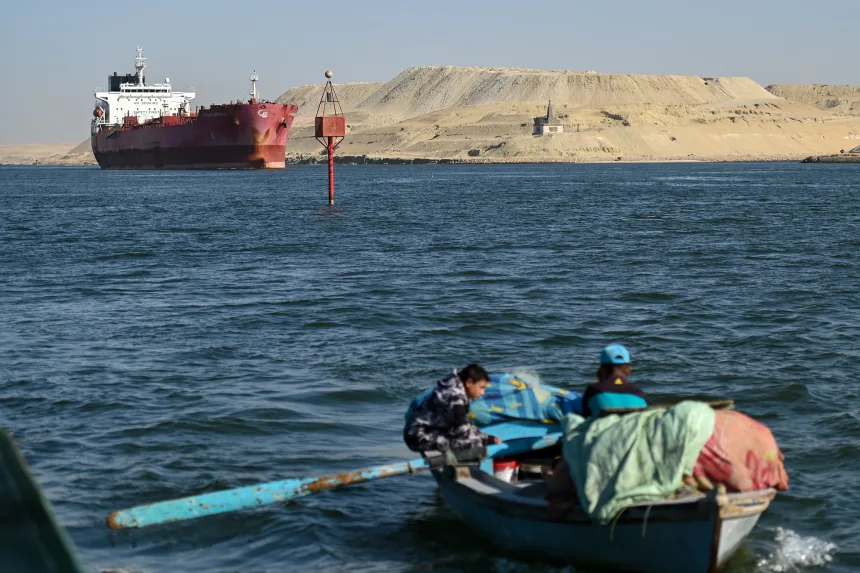
IRAN — When an Iranian official this week unveiled a fresh roster of conditions for halting the conflict ignited by the United States and Israel, he introduced a striking addition one absent from Tehran’s previous pronouncements: a formal acknowledgment of Iran’s sovereignty over the Strait of Hormuz. The inclusion of this demand signaled not merely a negotiating tactic, but a calculated elevation of the waterway’s geopolitical significance in Iran’s strategic calculus.
The Strait of Hormuz, a slender maritime corridor through which roughly one-fifth of the world’s oil and liquefied natural gas customarily flows, has increasingly revealed itself as the Islamic Republic’s most formidable instrument of influence. What was once primarily a latent threat an oft-repeated warning that the passage could be sealed in the event of aggression has evolved into a tangible demonstration of power. In the current climate, Tehran appears intent on transforming this critical chokepoint into a dual-purpose asset: a potential wellspring of billions of dollars in annual revenue and a decisive lever capable of exerting immense pressure on the global economy.
READ MORE ARTICLES:
- Iran Says No Negotiations With US
- Pentagon Lawsuit May Shape Future AI Rules
- Iran Demands Hormuz Control, War Reparations for Peace
- Pezeshkian Highlights Iran’s Peace & Non-Proliferation Pledge at UN
- Donald Trump Delays Iran Strikes Amid Gulf Mining Threat
- Iran Allows Select Ships Safe Passage Through Strait of Hormuz
- Iran Intel Chief Esmail Khatib Killed
- UAE Air Defences Intercept Iranian Missile and Drone Threats
For years, Iran’s vows to shutter the strait in response to hostilities were widely viewed as rhetorical brinkmanship dramatic, yet unlikely to be carried out, and even less likely to produce sustained disruption. Few anticipated that such measures would be pursued with real effect, or that they would reverberate so profoundly across international trade networks. Yet the magnitude of the resulting disturbances seems to have emboldened Tehran. The newly articulated demands suggest that Iran is no longer content with wielding the strait as a temporary bargaining chip; instead, it appears determined to convert this episodic leverage into a more enduring and institutionalized form of strategic advantage.
Vessel traffic through the vital maritime chokepoint has slowed to an almost complete standstill in the wake of Iranian assaults, jolting global energy markets and compelling nations far removed from the Persian Gulf to scramble for emergency measures to safeguard their fuel reserves. What was once a steady artery of international commerce has become a flashpoint of instability, its disruption rippling outward across continents and economies.
“Iran has been somewhat surprised by the sheer effectiveness of its Hormuz strategy by how inexpensive and relatively effortless it has been to place the global economy in a position of vulnerability,” observed Dina Esfandiary, Middle East lead at Bloomberg Economics. “One of the key takeaways from this conflict is Tehran’s realization that it possesses a powerful new form of leverage, and it is likely to deploy it again. The idea of monetizing that leverage reflects a growing awareness of just how strategically valuable it is.”
In Washington, policymakers are keenly attuned to that prospect. U.S. Secretary of State Marco Rubio cautioned on Friday that among the immediate postwar concerns would be Tehran’s potential attempt to institute a tolling mechanism at Hormuz.
“Such a move would not only violate established norms it would be unacceptable and dangerous for the global community,” Rubio declared following a G7 meeting in France. “The world must be prepared to confront it.” The foreign ministers of the G7 echoed that stance, underscoring “the absolute necessity” of restoring secure and toll-free freedom of navigation through the strait. Reflecting the waterway’s escalating strategic prominence, Mojtaba Khamenei, in what was presented as his first address as Iran’s new supreme leader, asserted that the leverage derived from obstructing Hormuz “must continue to be utilized.”
In earlier negotiations with the United States, Iran’s principal demands centered on sanctions relief and acknowledgment of its right to pursue peaceful nuclear technology; sovereignty over the Strait of Hormuz had not featured among them.
Now, however, Tehran appears to be signaling a shift toward institutionalizing its newfound influence. Iranian lawmakers are weighing legislation that would compel nations transporting fuel and goods through the strait to pay transit fees. Meanwhile, an adviser to the supreme leader has spoken of establishing a “new regime for the Strait of Hormuz” in the aftermath of the war—an arrangement that could empower Iran to impose maritime restrictions on adversaries and effectively link access to one of the world’s most indispensable shipping corridors to the ebb and flow of its geopolitical confrontations.
The proposal to levy transit charges has drawn sharp criticism from legal scholars. James Kraska, a professor of international maritime law at the U.S. Naval War College, argued that such a move would contravene the established rules governing transit passage. In his view, there is no foundation in international law that would permit a coastal state to impose fees on vessels navigating an international strait such as Hormuz.
He explained that the Strait of Hormuz constitutes a waterway used for international navigation, where the territorial seas of Iran and Oman overlap. Although the domestic laws of both countries apply within their respective territorial waters, the strait’s status as an international passage triggers a distinct legal regime. Under that framework, all states are entitled to the right of transit passage, which guarantees unimpeded movement whether by surface vessels, aircraft in overflight, or submarines in submerged transit without interference or obstruction.
These principles are codified in the United Nations Convention on the Law of the Sea (UNCLOS). Even though neither Iran nor the United States has formally ratified the convention, Kraska maintains that many of its central provisions carry binding force because they reflect customary international law norms so broadly recognized and consistently practiced that they attain legal authority independent of treaty membership. Nonetheless, he noted that Iran could attempt to invoke its non-party status as part of an argument to justify a different interpretation of its rights.
Historically, there is scant precedent for a state successfully imposing tolls on passage through an international strait. One notable example dates back to the 19th century, when Denmark collected fees from ships traversing the Danish Straits. However, sustained objections from other maritime powers ultimately compelled Denmark to sign the Copenhagen Convention of 1857, which permanently abolished the so-called Sound Dues. The episode underscored the enduring resistance of the international community to restrictions or financial barriers on vital maritime corridors.
Iran Eyes Billion-Dollar Windfall From Hormuz Toll Plan Despite Legal Doubts
That, however, has not deterred Tehran from examining in detail how such a mechanism might be structured, administered, and ultimately monetized. Iranian authorities continue to assess the practical contours of a potential toll regime, weighing not only its logistical feasibility but also the scale of financial returns it could conceivably generate.
Specialists remain skeptical about whether Iran could implement a fee system that would be broadly recognized and accepted by the international community. Yet should Tehran manage to overcome legal and diplomatic resistance, the financial upside could be immense. Based on calculations by CNN, the proceeds might approach the scale of revenues long associated with Egypt’s Suez Canal.
Under ordinary conditions, approximately 20 million barrels of crude oil and refined petroleum products transit the Strait of Hormuz each day — a volume roughly comparable to the cargo carried by about ten very large crude carriers (VLCCs). If Iran were to impose a reported charge of $2 million per tanker, daily income from oil shipments alone could reach $20 million. Over the course of a month, that would accumulate to an estimated $600 million derived solely from crude and petroleum flows.
Factoring in liquefied natural gas (LNG) cargoes would elevate the total even further. With LNG shipments included, projected monthly receipts could surpass $800 million. Such a sum would represent approximately 15% to 20% of Iran’s total monthly oil export earnings in 2024 — a substantial augmentation of its energy-derived income.
By way of comparison, Egypt typically generates between $700 million and $800 million per month from the Suez Canal, a man-made, state-administered maritime corridor. Although those revenues have declined markedly over the past year due to disruptions in the Red Sea, the benchmark illustrates the magnitude of income Iran could theoretically capture were a Hormuz tolling system to take hold.
The prospect of monetizing transit through the Strait of Hormuz appears to be shaped not only by strategic calculation but also by acute economic necessity. According to analyst Esfandiary, Iranian policymakers view the imposition of passage fees as a pragmatic means of offsetting the financial strain imposed by sweeping international sanctions. In her assessment, Tehran regards such charges as a comparatively straightforward and low-overhead method of recouping revenue lost through curtailed access to global trade and financial systems. Iran ranks among the most heavily sanctioned nations in the world, surpassed only by Russia in the breadth and intensity of punitive measures targeting its economy.
Publicly, Iranian officials continue to assert that the Strait of Hormuz remains open to maritime traffic — though not without qualification. Authorities have emphasized that vessels deemed “non-hostile” are permitted to pass, provided they coordinate their movements with Iranian counterparts. That stance was formally communicated in correspondence sent by Iran’s foreign ministry to both the UN Security Council and the International Maritime Organization, as reported by Reuters, underscoring Tehran’s effort to frame its position within an official diplomatic context.
Concurrently, there are indications that Iran may already be experimenting with what a regulated transit regime could entail. Maritime tracking data suggests that certain tankers have altered their routes to sail closer to Iran’s shoreline. Industry reports indicate that some shipping operators may have remitted payments in exchange for assurances of safe passage. No government, energy importer, or shipping company has openly confirmed paying such fees, and the specifics of any arrangements remain opaque. Nevertheless, shipping intelligence outlet Lloyd’s List reported that more than 20 vessels have navigated what it characterized as a newly defined corridor through the strait. According to its reporting, at least two of those ships are understood to have paid for access, with one payment allegedly amounting to roughly $2 million.
Further reinforcing the sense of an emerging framework, Iran’s Islamic Revolutionary Guard Corps has reportedly instituted a registration process for vessels seeking approved transit. At the same time, some governments are said to be holding direct discussions with Tehran to secure safe passage for their tankers, suggesting that quiet diplomatic engagement may be unfolding alongside public posturing.
Richard Meade, editor-in-chief of Lloyd’s List, indicated that these developments are not merely speculative. “This is happening,” he told CNN, adding that such arrangements could become more common in the absence of tangible progress in ongoing negotiations. For now, however, he characterized the broader shipping industry as effectively paralyzed — caught between legal uncertainty, geopolitical risk, and the practical imperative of keeping global energy supplies moving.
Iran Eyes Billions: Strait of Hormuz Monetization Could Rival Suez Canal Income
Despite widespread skepticism and legal ambiguity, Tehran has not been dissuaded from examining how a structured transit-fee regime in the Strait of Hormuz might be designed — nor from calculating the scale of profits it could potentially yield. Iranian policymakers appear to be studying both the operational framework and the financial architecture of such a system, assessing whether it could transform one of the world’s most critical maritime chokepoints into a substantial source of state revenue.
Many analysts remain doubtful that Iran could implement a levy structure capable of securing broad international legitimacy. Resistance from major maritime powers and energy-importing nations would be formidable. Yet, according to CNN’s estimates, if Tehran were somehow able to institutionalize and normalize such charges, the resulting income could rival the earnings historically generated by Egypt’s Suez Canal.
On an average day, roughly 20 million barrels of crude oil and refined petroleum products move through the Strait of Hormuz — a volume equivalent to the cargo capacity of approximately ten very large crude carriers (VLCCs). Were Iran to impose a reported transit fee of $2 million per tanker, daily revenues from oil shipments alone could reach around $20 million. Over the span of a month, that figure would amount to approximately $600 million derived solely from crude and petroleum flows.
Incorporating liquefied natural gas (LNG) shipments into the calculation would drive the total even higher. With LNG cargoes included, projected monthly income could surpass $800 million — a sum representing an estimated 15% to 20% of Iran’s monthly oil export earnings in 2024. Such a revenue stream would mark a significant financial injection into an economy grappling with persistent external constraints.
By comparison, Egypt typically collects between $700 million and $800 million per month from the Suez Canal, the state-administered artificial waterway linking the Mediterranean and Red Seas. Although those revenues have declined sharply in the past year amid instability and disruptions in the Red Sea corridor, the Suez Canal remains a powerful benchmark for what a successfully monetized Hormuz passage might achieve.
Economic necessity appears to be a central motivator behind Tehran’s interest in monetizing transit. Analyst Esfandiary has argued that Iranian authorities view the imposition of passage tariffs as a means of compensating for revenue losses incurred under sweeping international sanctions. She characterized the approach as a relatively straightforward and low-cost instrument to offset restricted access to global financial systems and trade networks. Iran ranks among the most heavily sanctioned nations worldwide, second only to Russia in the breadth and severity of imposed measures.
Iranian officials have repeatedly emphasized that the Strait of Hormuz remains open to maritime traffic — albeit not without conditions. Authorities have stated that vessels considered “non-hostile” are permitted to transit, provided they coordinate their movements with Iranian officials. This position was formally communicated by the foreign ministry in correspondence addressed to the UN Security Council and the International Maritime Organization, according to Reuters.
Meanwhile, Tehran appears to be quietly experimenting with elements of a managed transit framework. Ship-tracking data indicates that certain tankers have altered their routes, sailing closer to Iran’s coastline. Reports suggest that some operators may have paid for guarantees of safe passage, though no government, importing country, or shipping company has publicly confirmed remitting such fees. The precise terms and structure of any arrangements remain opaque.
Nevertheless, maritime intelligence firm Lloyd’s List reported that more than 20 vessels have recently navigated what it described as a newly established corridor through the strait. According to its findings, at least two ships are believed to have paid for transit rights — one reportedly transferring approximately $2 million.
In parallel, Iran’s Islamic Revolutionary Guard Corps has introduced a registration mechanism for vessels seeking approved passage. At the same time, several governments are said to be engaging in direct discussions with Tehran to secure safe transit for their tankers, signaling a quiet layer of diplomatic engagement beneath the public rhetoric.
“This is happening,” Richard Meade, editor-in-chief of Lloyd’s List, told CNN, suggesting that such arrangements could become more frequent absent tangible progress in ongoing negotiations. Yet he also underscored the broader atmosphere of uncertainty gripping the maritime sector. For now, he concluded, the global shipping industry finds itself in a state of near paralysis — suspended between geopolitical tension, legal ambiguity, and the urgent necessity of sustaining energy flows through one of the world’s most vital waterways.
- Worst Country I’ve Visited- Thailand Girl, Stark Warning After Disappointing Vietnam Trip
- Artemis II | NASA, Voyage, Mission & Moon
- A Prayer of Thanksgiving for Divine Blessings, Triumph, Forgiveness, and Good Health
- NASA’s Artemis II Departs Earth Orbit for Historic Moon Flyby
- NASA: The Artemis Generation Takes Flight with Historic Artemis II Mission
- Victor Glover | Life, Education & NASA Career
- Philippines vs China, When Betrayal Comes from Within: The Cost of Selling a Nation
- Supreme Court Affirms Dismissal of GMA Network’s Complaint Against ABS-CBN Over TV Ratings Dispute
- List of political ideologies
- Andrew Heywood | British author, Educationalist, & political theorist
- Holy Wednesday: A Solemn Reminder on Judas Iscariot Betrayal of Jesus Christ
- Judas Iscariot | About in the Bible, Betrayal & Apostle
- Relief or Rhetoric? Imee Marcos’ Call to Suspend Government Deductions Remains Without Action—Just Words
- Gatchalian Renews Push to Keep Minors Off Social Media
- Donald Trump Floats Seizing Iran’s Kharg Island Oil Hub, Wider Middle East Conflict
- Kharg Island | Geography, Historical and Importance of Iran
- Mary, mother of Jesus Christ
- SURVEY: Who would you vote as Philippine President in 2028?
- Matty Juniosa Gets Golden Buzzer on Britain’s Got Talent
- Pope Leo XIV Warns, Prayers of Those Who Wage War Will Not Be Heard
- Iran New Peace Demand, control Strait of Hormuz — Bring Net Billions
- Philippines, China Begin Talks on Sea Energy Cooperation
- Jesus Christ | God of Christians, Teachings, Miracles, Death, & Doctrines
- Holy Week 2026
- Genghis Khan (Temüjin)
ba2vlf