Artemis II represents a groundbreaking chapter in human space exploration as the United States embarks on a mission to send four astronauts on a daring journey around the Moon and back to Earth. Launched from the iconic Kennedy Space Center on April 1, 2026, this ten-day voyage marks several historic firsts and serves as a critical stepping stone in NASA’s ambitious Artemis program. The crew, comprised of NASA astronauts Reid Wiseman, Victor Glover, and Christina Koch, along with Canadian Space Agency astronaut Jeremy Hansen, is set to make history both individually and collectively.
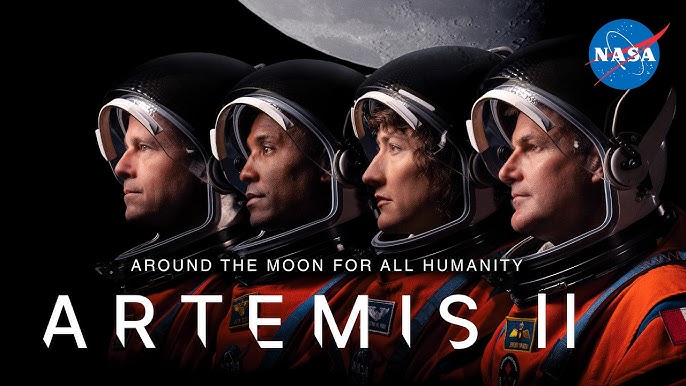
This mission is the second flight of NASA’s powerful Space Launch System (SLS) and represents the first crewed journey of the Orion spacecraft. It also signifies the first human mission beyond low Earth orbit in over five decades, following the conclusion of the Apollo 17 mission in December 1972. In many ways, Artemis II bridges the gap between the pioneering Apollo era and the new era of sustainable lunar exploration.
From the very first day of the mission, Artemis II shattered milestones in human spaceflight. Victor Glover became the first person of color to travel beyond low Earth orbit, while Christina Koch made history as the first woman to venture so far from Earth. Reid Wiseman set a record as the oldest astronaut to journey past low Earth orbit, and Jeremy Hansen became the first Canadian and the first non U.S. citizen to participate in such a mission. Beyond these individual achievements, Artemis II is expected to set unprecedented records in distance and speed: the spacecraft will reach approximately 252,799 miles (406,841 km) from Earth, fly about 4,700 miles (7,600 km) beyond the Moon, and return at a breathtaking atmospheric reentry speed of roughly 25,000 miles per hour (40,000 km/h).
Artemis II is not merely a symbolic journey; it is a pivotal flight test that lays the groundwork for future missions under the Artemis program. These subsequent missions aim to return humans to the lunar surface in 2028, marking the first lunar landing in over half a century. Initially conceived as Exploration Mission-2 (EM-2), the flight was originally planned to support the now-canceled Asteroid Redirect Mission, proposed in 2013. With the establishment of the Artemis program in 2017, the mission objectives were revised, emphasizing lunar exploration and the testing of spacecraft systems for deep space operations.
The objectives of Artemis II bear a striking resemblance to those of Apollo 8 in 1968, the first crewed flight to orbit the Moon, yet with distinct differences in trajectory. While Apollo 8 remained relatively close to the lunar surface, Artemis II follows a planned free-return trajectory more akin to the path flown by Apollo 13, though the Orion spacecraft is scheduled to travel even farther from the Moon than any previous human mission.
In essence, Artemis II embodies the spirit of exploration, innovation, and international collaboration. It serves as a bridge between the pioneering achievements of the Apollo program and the future of sustainable lunar exploration, setting the stage for humanity’s return to the Moon and beyond.
Mission Planning and Launch Date Selection (2017–2021)
The early conceptual phase of Exploration Mission-2 (EM-2) began in 2017, when NASA envisioned an ambitious, single-launch mission designed to push the boundaries of human space exploration. Initially, the mission was slated to utilize the Space Launch System (SLS) Block 1B rocket, paired with the advanced Exploration Upper Stage and a lunar-configured Block 1 Orion spacecraft. The plan included a remarkable payload capacity of 50.7 tonnes (approximately 112,000 pounds), reflecting the mission’s unprecedented scale. At the time, the mission’s objective was equally bold: astronauts would rendezvous with an asteroid that had been previously placed into lunar orbit by the robotic Asteroid Redirect Mission (ARM), conduct spacewalks, and collect valuable samples for scientific study and technological experimentation. This represented a unique convergence of human and robotic space exploration, aiming to demonstrate both deep-space operational capabilities and the feasibility of asteroid resource utilization.
However, April 2017 marked a significant shift in NASA’s strategic direction with the cancellation of the Asteroid Redirect Mission. This prompted a reimagining of EM-2’s objectives. Following ARM’s termination, planners proposed a simplified 8-day mission involving four astronauts traveling on a free-return trajectory around the Moon. This trajectory was designed to bring the crew close to the lunar surface and then safely back to Earth without requiring additional propulsion maneuvers, allowing NASA to focus on testing the Orion spacecraft and deep-space systems in a real mission scenario.
Later that same year, an alternate concept emerged: instead of solely orbiting the Moon, EM-2 could carry four astronauts on an 8- to 21-day journey, with the primary goal of delivering the first module of the Lunar Gateway—a planned small space station in lunar orbit intended to serve as a staging point for future lunar and deep-space missions. This version of the mission underscored NASA’s long-term vision for a sustained human presence in cislunar space, linking crewed lunar exploration to the broader architecture of the Artemis program.
By March 2018, significant practical considerations prompted further adjustments. Due to delays in constructing the Mobile Launcher, necessary to support the more powerful Exploration Upper Stage, NASA decided to launch the initial Gateway module aboard a commercial launch vehicle. The SpaceX Falcon Heavy was ultimately selected for this task, reflecting the agency’s increasing reliance on private-sector capabilities to complement its human spaceflight objectives. Despite the early optimism surrounding the Lunar Gateway, programmatic shifts and evolving priorities led to its eventual cancellation in March 2026, marking the end of a concept that had once represented the cornerstone of NASA’s lunar orbital infrastructure.
Through these years of planning and adjustment, EM-2 exemplified the dynamic nature of human space exploration: objectives evolved in response to technical, logistical, and budgetary realities, while still maintaining the overarching goal of pushing humanity beyond low Earth orbit and laying the groundwork for sustainable lunar operations.
Hardware Development, Testing, and Integration: Artemis II (2021–2026)
The Artemis II mission has been a monumental undertaking for NASA, marked by meticulous hardware development, rigorous testing, and complex integration procedures spanning from 2021 through 2026. Central to this effort has been the Space Launch System (SLS) core stage, which forms the backbone of the Artemis II vehicle. In December 2024, the SLS core stage was carefully lifted into High Bay 2 of NASA’s Vehicle Assembly Building (VAB), signifying a critical step in the stacking operations that would prepare the rocket for its eventual journey beyond Earth orbit.
The integration of the Artemis II core stage followed a precise and carefully orchestrated timeline. On February 11, 2023, NASA achieved a major milestone when the engine section of the core stage was rotated into a horizontal position. This operation marked the final significant assembly step before the engine section could be integrated with the rest of the vehicle. The following month, on March 20, the engine section was successfully mated with the core stage inside Building 103 at the Michoud Assembly Facility in New Orleans, Louisiana. Initially, NASA had planned to transport the fully assembled core stage to the Kennedy Space Center (KSC) during the summer of 2023. However, by May, the schedule had been adjusted, and the delivery was rescheduled for late autumn 2023, reflecting the careful attention to quality assurance and readiness.
The propulsion system, powered by RS-25 engines, underwent meticulous installation. Serial numbers E2047, E2059, E2062, and E2063 were mounted on the core stage in New Orleans, completing this critical phase by September 25, 2023. During subsequent checks, a leak was detected in the oxygen valve hydraulics of engine E2063, prompting NASA to replace it with engine E2061 in April 2025—a testament to the program’s commitment to safety and operational reliability.
By mid-2024, the Artemis II core stage was fully outfitted and ready for transport. Between July 16 and 25, 2024, the completed core stage arrived at Kennedy Space Center, marking a pivotal moment in the vehicle’s assembly process. Complementing this milestone, the adapters necessary for integrating the full launch vehicle achieved substantial completion in June 2024 and were subsequently delivered to KSC in September of the same year. These steps collectively ensured that Artemis II would move closer to a fully integrated launch system, combining cutting-edge hardware, precise engineering, and rigorous testing protocols to pave the way for humanity’s next journey into deep space.
The crew for NASA’s historic Artemis II mission was officially announced on April 3, 2023, by NASA Administrator Bill Nelson during his “State of NASA” address at the agency’s Ellington Field facility near Houston, Texas. Following this announcement, the Artemis II crew made a highly publicized appearance later that evening at NRG Stadium, coinciding with the excitement of the 2023 March Madness basketball championship, drawing widespread attention to the next chapter of human space exploration.
As preparations progressed, the Orion spacecraft Integrity, along with its European Service Module (ESM) designed specifically for Artemis II, underwent critical assembly and testing throughout early 2025. NASA had initially set September 2024 as the target to begin stacking operations for the Space Launch System (SLS) rocket. However, unforeseen challenges, including detailed investigations into Orion’s life support system and unexpected damage to its heat shield following the reentry of Artemis I, delayed the schedule by more than two months. Despite these setbacks, rocket stacking operations officially commenced on November 20, 2024.
Over the following months, meticulous integration efforts culminated on October 20, 2025, when the fully assembled Orion spacecraft, its European Service Module, and the launch abort system were securely positioned atop the SLS rocket, completing the vehicle’s complex vertical assembly. The Space Launch System itself, standing at an imposing 322 feet tall with its iconic orange and white exterior, awaited the next phase of the mission at Kennedy Space Center’s Vehicle Assembly Building.
The mission’s next significant milestone occurred on January 18, 2026, when the fully integrated rocket, Orion capsule, and launch tower were carefully rolled out from the Vehicle Assembly Building to Launch Complex 39B, marking a critical step in bringing humanity closer to returning astronauts to lunar orbit. This rollout not only demonstrated the culmination of years of design, engineering, and testing but also set the stage for the next daring human voyage beyond Earth.
Launch Timeline and Evolving Schedule
The mission’s launch schedule has undergone a long and complex evolution, reflecting the technical, engineering, and programmatic realities of preparing one of the most ambitious space endeavors in recent years. When the project was first subjected to preliminary assessments in 2011, planners projected that liftoff would likely occur sometime between 2019 and 2021. At that stage, the timeline reflected cautious optimism, based on early development benchmarks and projected system readiness.
As the program advanced, however, it became clear that additional work would be required before the mission could safely proceed. Subsequent evaluations pushed the anticipated launch to 2023, marking the first significant shift in the schedule. These adjustments underscored the intricate nature of integrating cutting-edge systems and ensuring that every component met strict performance and safety standards.
By January 2024, updated planning documents indicated that the mission was then expected to launch in September 2025. This new target date suggested that substantial progress had been made, yet it also acknowledged the extensive preparations still underway. However, further scrutiny later that year introduced fresh uncertainty. In October 2024, the NASA Office of Inspector General concluded that the Exploration Ground Systems team had already used up the contingency time originally allocated to address unforeseen complications. Without that built-in margin for resolving unexpected issues, the oversight office assessed that meeting the September 2025 target would likely prove unrealistic.
Additional developments in December 2024 confirmed that the timeline would shift once again. Outgoing NASA Administrator Bill Nelson announced that the launch had been postponed while engineers conducted months-long investigations into technical concerns involving the life support system and the spacecraft’s heat shield. These components are critical to crew safety, and the agency emphasized that no compromise would be made in resolving potential risks. At that time, officials identified April 2026 as the new target for liftoff.
Speculation about another schedule adjustment emerged in March 2025, when AmericaSpace reported that the launch might be advanced by approximately two months, potentially moving from April to February 2026. In response, NASA stated that it could not formally confirm the revised date but acknowledged that internal efforts were underway to explore possibilities for an earlier launch. The agency explained that a February 2026 window could allow teams to take advantage of operational efficiencies during the integration process—specifically in coordinating the Space Launch System (SLS) rocket, the Orion spacecraft, and associated ground systems—while still maintaining crew safety as the highest priority.
By August 2025, more widely recognized outlets, including NASASpaceflight journalist Eric Berger and U.S. Senator and former astronaut Mark Kelly, reported that the mission had indeed been moved to February 2026. These reports suggested that planning had solidified around the earlier timeframe. Finally, in September 2025, agency officials formally announced that they were targeting a launch window opening on February 5, 2026.
Taken together, the mission’s shifting timeline illustrates the dynamic and highly meticulous nature of modern spaceflight preparation. Each adjustment has reflected a balance between ambition and caution, with technical verification and astronaut safety consistently guiding the ultimate schedule decisions.
Launching a crewed spacecraft toward the Moon is far more complex than simply choosing a date on a calendar. Mission planners must work within precise orbital mechanics that dictate when Earth and the Moon are properly aligned. Each lunar month provides only a narrow set of opportunities. There are multi-day launch periods that occur once per lunar cycle, and within those periods, even more restrictive daily windows that may last only a few hours. These tight margins ensure that the spacecraft follows the correct trajectory, conserves fuel, and arrives at the Moon under optimal conditions.
For the upcoming Artemis II mission, the constraints became even more demanding after mission planners revised the flight profile. The updated plan calls for the Orion spacecraft to perform a shorter “skip reentry” maneuver upon returning to Earth. This approach, designed to test critical systems and enhance mission safety for future lunar expeditions, further reduces the number of suitable launch days within each monthly window. In other words, not every day in an already limited launch period qualifies—only select dates meet the precise requirements of the adjusted trajectory.
Originally, NASA targeted early February 2026 as the first viable opportunity to send the crewed mission into space. However, real-world factors quickly intervened. A severe winter storm that swept across North America in January 2026 disrupted preparations, creating logistical challenges and delaying prelaunch activities. Weather often plays a decisive role in space operations, affecting everything from hardware transport to fueling procedures and safety protocols.
Despite these setbacks, NASA proceeded with a critical milestone known as a “wet dress rehearsal” on February 2. During this comprehensive simulation, engineers fully fuel the rocket and conduct a mock countdown, stopping just short of ignition. This exercise is designed to validate ground systems, procedures, and vehicle performance under launch-like conditions. However, during the simulated countdown, technicians detected a liquid hydrogen leak—an issue that cannot be taken lightly, given hydrogen’s extreme volatility and importance as rocket fuel.
Further inspections revealed additional concerns. A valve connected to the pressurization system of the Orion crew module hatch required retorquing to meet safety standards, and final closeout operations—those last essential tasks performed before sealing the vehicle—took longer than anticipated. Given these cumulative issues, NASA announced that the launch would slip to March 2026 to allow sufficient time for repairs, inspections, and validation.
A second wet dress rehearsal was conducted on February 19. This time, the simulation proceeded successfully, marking a major step forward. Yet the path to launch remained challenging. Just two days later, on February 21, engineers observed irregularities in helium flow within the system. Helium plays a critical role in pressurizing propellant tanks and ensuring stable fuel delivery during flight. Because of this anomaly, mission managers made the cautious decision to roll the rocket back to the Vehicle Assembly Building (VAB) for deeper analysis and corrective action.
The rollback operation began at 9:38 a.m. EST on February 25 and concluded roughly ten and a half hours later when the rocket arrived safely inside the VAB at approximately 8:00 p.m. EST. This intricate maneuver underscores the scale and delicacy of modern launch vehicles—moving a fully assembled rocket requires careful coordination, specialized transport equipment, and strict environmental controls.
NASA leadership emphasized that no firm launch date would be finalized until a fully successful wet dress rehearsal had been completed and its data thoroughly reviewed. Administrator Jared Isaacman stressed that mission safety and system reliability remain the agency’s highest priorities. Only after engineers confirmed readiness through comprehensive analysis would the agency commit to a definitive launch schedule.
That confirmation came following a Flight Readiness Review (FRR) on March 12, a formal assessment in which senior officials evaluate every aspect of the mission—from vehicle hardware and software to weather considerations and contingency planning. After the review, NASA announced seven distinct two-hour launch opportunities spanning April 1–6 and April 30. The first of these carefully calculated windows was set to open at 6:24 p.m. Eastern Daylight Time (22:24 UTC) on April 1.
The evolving timeline of Artemis II illustrates the delicate interplay between engineering precision, environmental realities, and orbital mechanics. Every delay reflects a commitment to caution and thoroughness. As humanity prepares to return astronauts to lunar orbit for the first time in more than half a century, each adjustment underscores the complexity—and historic significance—of this new chapter in deep space exploration.
On March 18, NASA formally confirmed a major milestone in the countdown to its next crewed lunar mission, announcing that the powerful Artemis II Space Launch System (SLS) rocket, paired with the Orion spacecraft, would be transported the following day to Launch Pad 39B at the agency’s Kennedy Space Center in Florida. The rollout marked a pivotal step in final launch preparations, symbolizing the transition from assembly and testing inside the Vehicle Assembly Building (VAB) to the highly visible final phase of pad operations.
As ground teams in Florida prepared for the rollout, the four-member Artemis II crew simultaneously began a period of quarantine in Houston. This health stabilization protocol is a standard preflight procedure designed to minimize the risk of illness before launch. By isolating the astronauts in a controlled environment, NASA ensures that no preventable medical issues jeopardize the mission timeline or crew safety during this critical period.
On March 20, the rollout process encountered a temporary setback when high winds in the area forced a delay. Weather conditions are carefully monitored during such operations because the SLS, one of the most powerful rockets ever built, must be transported slowly and securely atop NASA’s crawler-transporter along the crawlerway to the launch pad. After conditions improved, the rocket was successfully rolled out from the VAB to Launch Pad 39B for a second time, positioning it for final integrated testing, fueling preparations, and countdown procedures.
Following these preparations, Artemis II officially lifted off on April 1, 2026, at precisely 22:35:12 Coordinated Universal Time (6:35:12 p.m. Eastern Daylight Time). The launch marked another historic chapter in NASA’s Artemis program, demonstrating the agency’s continued commitment to returning humans to deep space and laying the groundwork for sustained lunar exploration.
Heat Shield Performance Under Scrutiny After Artemis I
When NASA launched Artemis I in November 2022, the mission marked a pivotal return to deep-space exploration beyond low Earth orbit. The uncrewed flight of the Orion spacecraft was widely regarded as a technical success, demonstrating the integrated performance of the Space Launch System rocket and the crew vehicle in lunar orbit and during high-speed Earth reentry. However, following recovery operations, engineers identified an unexpected issue that shifted attention from celebration to investigation: unusual erosion patterns on Orion’s ablative heat shield.
The Orion capsule relies on a protective heat shield composed of AVCOAT, a specially engineered ablative material designed to absorb and dissipate the extreme thermal energy generated during atmospheric reentry. As a spacecraft plunges back to Earth at lunar-return velocities—far faster than typical low Earth orbit missions—the friction with Earth’s atmosphere produces temperatures that can exceed several thousand degrees Fahrenheit. AVCOAT functions by gradually charring and eroding in a controlled manner, carrying heat away from the underlying structure and safeguarding the crew module.
Post-flight inspections revealed that portions of the AVCOAT material had eroded more extensively than preflight computer models had predicted. Specifically, engineers documented localized “char loss,” where chunks of the protective layer appeared to have broken away. Although the internal temperatures within the crew module remained within certified safety limits—meaning the spacecraft itself was never in immediate danger—the discrepancy between prediction and actual performance raised significant engineering concerns. Any deviation from expected ablation behavior in a crew-rated spacecraft demands close scrutiny, particularly as NASA prepares to send astronauts on future missions.
Despite the technical importance of the findings, detailed close-up imagery of the heat shield damage was not publicly released immediately after the mission. It was not until May 2024 that photographs and analysis appeared in a report issued by the NASA Office of Inspector General. The delayed release of visual documentation fueled questions about transparency and communication within the agency.
Recognizing the seriousness of the issue—especially with astronauts scheduled to fly on Artemis II—NASA convened an independent review team in April 2024. The panel was tasked with evaluating both the observed heat shield performance during Artemis I and the agency’s proposed mitigation strategy for the upcoming crewed mission. After months of analysis, testing, and modeling, the review concluded in December 2024. NASA subsequently announced its intention to proceed with Artemis II using the existing heat shield design rather than replacing it entirely.
During a formal press briefing, agency officials outlined the technical rationale behind their decision. According to NASA engineers, the root cause of the unexpected erosion was traced to gas entrapment within the AVCOAT material. During reentry, gases generated by the intense heating became trapped beneath the char layer. As pressure built up, localized cracking occurred, resulting in fragments of the protective material breaking away. This mechanism differed in detail from what preflight models had anticipated, explaining the mismatch between prediction and observation.
Instead of redesigning or manufacturing a new heat shield for Artemis II—a process that could introduce schedule delays and additional complexity—NASA opted for a trajectory adjustment strategy. Engineers proposed increasing the spacecraft’s reentry descent angle. By steepening the angle of descent, the Orion capsule would pass more quickly through the most intense thermal environment, thereby reducing the duration of peak heating exposure associated with the char loss phenomenon. Modeling simulations and ground-based testing suggested that this revised reentry profile would remain within established thermal and structural safety margins while minimizing further material erosion.
Although NASA emphasized that safety margins were maintained throughout Artemis I and that internal spacecraft temperatures never exceeded design limits, the publicly released version of the independent review report was heavily redacted. The limited disclosure prompted criticism from some former NASA engineers and astronauts, who argued that greater transparency would strengthen public trust—particularly for missions involving human crews.
The heat shield findings underscore the inherent complexity of returning spacecraft from lunar distances. Reentry from deep space imposes significantly greater thermal loads than missions confined to low Earth orbit. Every anomaly, even one that does not compromise mission safety, provides critical data that refines engineering models and improves predictive accuracy for future flights.
As NASA advances toward Artemis II—the first crewed mission in the Artemis program—the heat shield episode serves both as a reminder of the challenges of deep-space exploration and as an illustration of iterative engineering in practice. Through analysis, independent review, and trajectory modification, the agency has sought to balance caution with progress, ensuring that the next phase of lunar exploration proceeds with lessons learned firmly integrated into mission planning.
As part of the rigorous certification pathway for Artemis II, NASA undertook an expanded series of technical assessments aimed at validating the Orion spacecraft’s readiness for human flight. These efforts went beyond standard qualification procedures, incorporating deeper analytical modeling and stress-testing scenarios that simulated more severe damage to the capsule’s heat shield than what is anticipated during the mission’s atmospheric reentry. Engineers closely examined worst-case contingencies, including conditions that would impose higher-than-expected thermal and structural loads on the spacecraft. According to NASA, the findings from these comprehensive evaluations demonstrated that even under damage conditions exceeding projected mission parameters, the Orion capsule’s primary structure would remain sound. The agency concluded that the spacecraft would retain its ability to safeguard the crew, maintaining structural integrity and thermal protection throughout the critical reentry phase.
In January 2026, Isaacman publicly affirmed his support for proceeding with Artemis II using the current heat shield configuration. His position followed an in-depth review of NASA’s analytical data, as well as consultations with agency engineers and independent experts. While some individuals who had previously raised reservations acknowledged that the additional testing and modeling helped resolve their concerns, not all critics were persuaded. A segment of stakeholders continued to argue that the mission should not move forward without incorporating a redesigned heat shield. Nevertheless, NASA clarified that modifications addressing AVCOAT material permeability are already in development and will be implemented on the heat shield designated for Artemis III, reflecting the agency’s ongoing commitment to iterative improvement while advancing its broader lunar exploration objectives.
Crew of Artemis II
| Position | Astronaut | |
|---|---|---|
| Commander | Reid Wiseman, NASA Second spaceflight | |
| Pilot | Victor Glover, NASA Second spaceflight | |
| Mission Specialist 1 | Christina Koch, NASA Second spaceflight | |
| Mission Specialist 2 | Jeremy Hansen, CSA First spaceflight | |
| Position | Astronaut | |
|---|---|---|
| Mission Specialist | Andre Douglas, NASA | |
| Mission Specialist | Jenni Gibbons, CSA | |
The Artemis II mission marks a historic chapter in human space exploration, bringing together an international team of four astronauts selected for one of the most anticipated journeys beyond Earth orbit in decades. The crew is led by NASA commander Reid Wiseman, joined by pilot Victor Glover and mission specialist Christina Koch. Completing the team is mission specialist Jeremy Hansen, representing the Canadian Space Agency (CSA). Together, they form a diverse and trailblazing group poised to carry humanity back toward the Moon under NASA’s Artemis program.
Announced as part of NASA’s renewed commitment to deep space exploration, the Artemis II crew reflects both experience and progress. Reid Wiseman, serving as commander, brings seasoned leadership and prior spaceflight experience to guide the mission. Victor Glover, assigned as pilot, continues to build on his distinguished career as a naval aviator and NASA astronaut. Christina Koch, designated as mission specialist, adds her extensive spaceflight background, including long-duration missions aboard the International Space Station. Representing Canada, Jeremy Hansen joins the mission as a CSA astronaut, underscoring the collaborative spirit that defines modern space exploration.
The mission also includes designated backup crew members to ensure operational readiness. On November 22, 2023, the Canadian Space Agency named Jenni Gibbons as Jeremy Hansen’s backup, reinforcing Canada’s integral role in the program. Later, on July 3, 2024, NASA appointed Andre Douglas as the backup astronaut for the three NASA crew members. These selections ensure that the mission maintains flexibility and preparedness as it advances toward launch.
Artemis II is notable not only for its technical ambitions but also for the milestones represented by its crew. Victor Glover is set to become the first person of color to travel around the Moon. Christina Koch will be the first woman to make such a journey. Reid Wiseman will hold the distinction of being the oldest individual to undertake a lunar flyby mission. Jeremy Hansen will become the first non-American astronaut to travel around the Moon, highlighting the expanding global participation in deep space exploration.
Canada’s involvement in Artemis II stems from a 2020 treaty between the United States and Canada, which formalized Canadian participation in the Artemis program. Through this agreement, the Canadian Space Agency secured astronaut flight opportunities as part of its contribution to the program, including its role in developing key technologies such as robotics for the Lunar Gateway. Hansen and his backup, Jenni Gibbons, were selected under this bilateral framework, symbolizing a deepening partnership between the two nations in advancing space exploration.
Beyond individual achievements, Artemis II will set a new benchmark in the history of human spaceflight. The mission is expected to break the long-standing record for the greatest number of people simultaneously traveling in deep space. That record was established in 1968 during the Apollo 8 mission, when three astronauts journeyed around the Moon. By sending four astronauts beyond low Earth orbit at once, Artemis II will surpass that milestone, demonstrating both technological advancement and the renewed ambition of international space collaboration.
As the first crewed mission of the Artemis program to journey toward the Moon, Artemis II serves as a crucial step in NASA’s broader objective of establishing a sustained human presence in lunar orbit and eventually on the lunar surface. The mission not only honors the legacy of the Apollo era but also represents a modern, inclusive, and multinational approach to exploration. Through its diverse crew and international partnerships, Artemis II signals a new era in which humanity ventures deeper into space together.
Mission of Artemis II
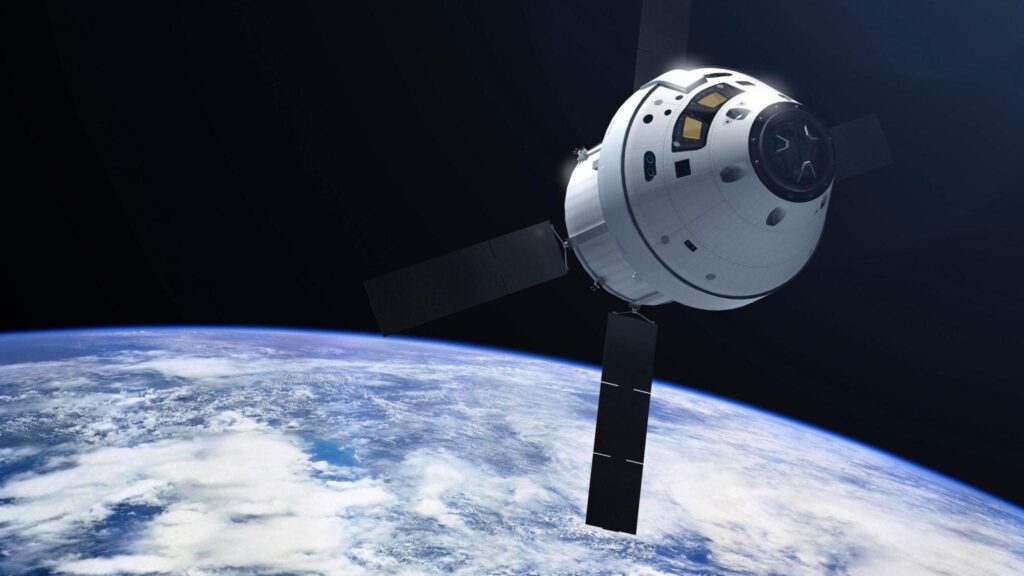
The Artemis II mission represents a pivotal step in humanity’s return to deep space exploration, marking the first time astronauts will travel aboard the Orion spacecraft on a journey around the Moon. Designed as the inaugural crewed flight of the Space Launch System’s Block 1 configuration, this mission is not merely a test flight but a comprehensive demonstration of the systems, procedures, and operational capabilities required for sustained human exploration beyond low Earth orbit.
At the heart of the mission is the powerful Space Launch System (SLS), whose Block 1 variant will propel the Orion spacecraft and its four-member crew into space. After liftoff, Orion will be placed into a highly elliptical Earth orbit lasting approximately 24 hours. This extended orbit is intentional and strategic. During this period, astronauts will conduct thorough evaluations of the spacecraft’s environmental control and life support systems—critical components that ensure the crew’s safety and comfort in the vacuum of space. These tests will verify the performance of air circulation, temperature regulation, communication systems, navigation equipment, and onboard avionics under real mission conditions.
A distinctive feature of the Artemis II flight plan is its use of a multi-trans-lunar injection (MTLI) approach. Rather than executing a single, immediate burn to depart Earth’s orbit for the Moon, the spacecraft will perform multiple propulsion maneuvers. This method allows mission controllers and the crew to carefully assess system performance before committing to the trajectory that will carry them into deep space. It reflects NASA’s cautious and methodical strategy for human-rated missions, where redundancy and verification are paramount.
During the high Earth orbit phase, the crew will also conduct a rendezvous and proximity operations demonstration. Using the spent Interim Cryogenic Propulsion Stage (ICPS)—the upper stage that initially powered Orion toward orbit as a simulated target, astronauts will practice maneuvering the spacecraft in close proximity to another object in space. This exercise will refine navigation techniques and demonstrate Orion’s precision handling capabilities, skills essential for future docking operations with lunar gateways or other spacecraft.
Once Orion completes its extended Earth orbit and reaches perigee—the point in its orbit closest to Earth—the spacecraft will ignite its main engine to perform the definitive trans-lunar injection (TLI) burn. This maneuver will send Orion on a carefully calculated free-return trajectory around the Moon. A free-return path is a safety-focused design in which the spacecraft loops around the Moon and naturally returns to Earth without requiring additional major propulsion adjustments. In the event of unforeseen complications, this trajectory ensures that gravity alone can guide the crew safely home.
As Orion travels thousands of kilometers beyond the Moon and into deep space, the mission will validate systems in the harsh radiation environment and extreme thermal conditions encountered far from Earth’s protective magnetosphere. The journey will gather invaluable data on spacecraft performance, crew endurance, and operational readiness—information that will directly inform subsequent missions, including lunar surface landings.
Following its lunar flyby, Orion will re-enter Earth’s atmosphere at high velocity, testing its heat shield and recovery procedures before splashing down. The successful completion of Artemis II will not only demonstrate the reliability of NASA’s next-generation launch and crew systems but also pave the way for future expeditions aimed at establishing a sustained human presence on and around the Moon.
Preparations for this historic voyage intensified as the crew arrived at the Kennedy Space Center (KSC) on March 27, initiating final training and launch rehearsals. The official countdown sequence began on March 30, marking the final phase before liftoff. Together, these milestones underscore the mission’s significance as both a technological achievement and a defining moment in the next era of human space exploration.
Mission Overview of Artemis II: A Detailed Examination of the Launch Phase
The second major mission in NASA’s renewed lunar exploration campaign, Artemis II, marks a historic step forward in human spaceflight. Designed as the first crewed test flight of the Artemis program, this mission follows a carefully engineered trajectory divided into multiple phases over the course of approximately ten days. Each phase is meticulously planned to validate spacecraft systems, ensure crew safety, and demonstrate operational readiness for future deep-space missions. The journey begins with a powerful and precisely timed launch sequence that sets the foundation for everything that follows.
Launch and Ascent: The Opening Act of a Lunar Voyage
Artemis II began its journey from Launch Complex 39B at NASA’s Kennedy Space Center, lifting off at precisely 22:35:12 Coordinated Universal Time (6:35:12 p.m. Eastern Daylight Time at the launch site). The vehicle responsible for carrying the crewed Orion spacecraft into space was the Space Launch System (SLS) Block 1 rocket, currently the most powerful rocket developed by NASA for deep-space missions.
The launch sequence itself was a carefully orchestrated progression of events occurring within mere seconds. Approximately seven seconds before liftoff, the rocket’s four RS-25 core stage engines roared to life. These engines gradually throttled up to full power, ensuring stable and balanced thrust before the rocket was released from the launch pad. At the exact moment of liftoff referred to as T-0—the two massive solid rocket boosters ignited. Their ignition delivered the overwhelming majority of thrust needed to overcome Earth’s gravitational pull during the first two minutes of flight.
As the rocket climbed skyward, accelerating rapidly through Earth’s lower atmosphere, the solid rocket boosters provided extraordinary power. Traveling at roughly 3,100 miles per hour (about 5,000 kilometers per hour) and reaching an altitude of approximately 30 miles (48 kilometers), the boosters completed their burn and separated from the core stage. This separation event reduced weight and allowed the rocket to continue its ascent more efficiently under the power of the core stage engines alone.
Inside the Orion spacecraft, the crew monitored systems carefully. Although the launch vehicle and spacecraft are designed to operate autonomously, the astronauts remained prepared to intervene if necessary. Commander Reid Wiseman, seated in the left-hand seat, oversaw the ascent. While direct manual control was not expected during nominal operations, the crew maintained the capability to issue an abort command should circumstances demand immediate action.
The rocket’s core stage continued firing for approximately eight minutes after liftoff. During this time, it propelled the spacecraft beyond the densest layers of Earth’s atmosphere and built up the velocity required to enter orbit. Once its propellant was expended, the core stage separated from the spacecraft, completing its role in the ascent phase.
At this stage of the mission, Orion was placed into a highly elliptical orbit around Earth. The orbit’s farthest point, known as the apogee, reached approximately 1,200 nautical miles (2,200 kilometers or about 1,400 miles) above the planet’s surface. This altitude is particularly significant because it is nearly five times higher than the orbit of the International Space Station, demonstrating the mission’s deep-space trajectory and testing Orion’s systems in a more demanding environment than low Earth orbit.
Notably, during the initial ascent phase, the Interim Cryogenic Propulsion Stage (ICPS)—the upper stage responsible for sending Orion toward the Moon—did not ignite. Instead, its engine was reserved for later maneuvers once the spacecraft was properly positioned in orbit. This staged propulsion approach ensures efficiency and precise trajectory control as the mission transitions from Earth orbit to translunar space.
A Foundation for Deep-Space Exploration
The launch and ascent phase of Artemis II represents far more than a routine liftoff. It is a critical demonstration of integrated systems performance: the power of the SLS rocket, the resilience of the Orion spacecraft, and the preparedness of the crew. Every second of ascent contributes valuable data that will shape the future of human exploration beyond Earth orbit.
By successfully delivering Orion into a high elliptical orbit, the launch phase establishes the conditions necessary for the mission’s next steps—trajectory adjustments, deep-space operations, and the eventual journey around the Moon. In this way, the launch is not merely the beginning of a ten-day mission; it is the opening chapter in a renewed era of human exploration beyond our home planet.
Earth orbit and systems checkout
In the critical moments following main-engine cutoff, the mission transitioned from the raw power of ascent to the deliberate precision of orbital operations. With launch complete and the spacecraft safely coasting above Earth, astronauts Christina Koch and Victor Glover began the methodical process of transforming Orion from a launch vehicle payload into a fully functioning crewed spacecraft. Their first task was to unstrap from their seats—an act that symbolized the shift from launch survival mode to active mission operations—and begin a comprehensive systems checkout.
Inside the capsule, they powered up and verified the spacecraft’s essential life-support infrastructure. This included activating and testing the potable water dispenser, confirming the operational readiness of firefighting masks designed for onboard emergencies, and evaluating the toilet and waste-management systems critical for crew sustainability during extended missions. Each system underwent careful inspection to ensure reliability and performance in the microgravity environment. The results were reassuring: all systems functioned as designed, clearing Orion for the next phase of its journey.
Approximately 50 minutes after liftoff, at the spacecraft’s apogee—the highest point in its current orbit—the Interim Cryogenic Propulsion Stage (ICPS) ignited. This precisely timed burn raised Orion’s perigee, the lowest point in its orbit, reshaping its trajectory and stabilizing its path around Earth. Orbital mechanics demand exactitude, and this maneuver marked the beginning of a carefully choreographed sequence of burns intended to expand Orion’s orbital footprint.
Once the spacecraft descended to its newly established perigee, it executed a longer, more powerful maneuver lasting approximately 15 minutes. This burn dramatically increased the next apogee to 38,000 nautical miles (70,000 kilometers or 44,000 miles), placing Orion into a sweeping, 23.5-hour high Earth orbit. The trajectory carried the spacecraft far beyond the altitudes of typical low Earth orbit missions, demonstrating Orion’s capability to operate in deep-space-like conditions. This maneuver consumed nearly all of the ICPS’s remaining propellant, underscoring the significance of the burn and the precision required to achieve the desired orbit.
With the propulsion stage nearing the end of its primary role, attention shifted back to crew-controlled flight operations. Astronaut Victor Glover moved into the left seat at Orion’s primary flight controls to conduct a series of proximity operations with the ICPS. These exercises involved delicate maneuvering and close formation flying—tasks designed to assess Orion’s handling characteristics and responsiveness. By flying in close coordination with the now mostly expended propulsion stage, Glover evaluated the spacecraft’s control behavior using the Cooper–Harper rating scale, a standardized method for assessing pilot workload and vehicle handling qualities. The data gathered during these tests would be invaluable for future missions, offering insights into how Orion performs under realistic operational scenarios.
After completing the proximity maneuvers, Orion gently backed away from the ICPS. The propulsion stage then executed its final programmed burn, guiding itself into a distant graveyard orbit to prevent interference with operational spacecraft and mitigate orbital debris risks. As Orion transitioned into automated control, the mission entered a new phase of autonomous flight operations.
At this stage, the ICPS also carried out one of its final contributions to the mission: deploying its complement of rideshare CubeSats. These small secondary payloads, released into space following separation, were destined to conduct their own independent scientific and technological demonstrations. Though diminutive in size, they represented a significant expansion of mission value, leveraging the launch opportunity to support a diverse array of space research initiatives.
Through these carefully orchestrated steps—from life-support verification and propulsion maneuvers to handling evaluations and secondary payload deployment—the mission demonstrated not only Orion’s technical sophistication but also its readiness to serve as a cornerstone vehicle for future deep-space exploration.
Translunar injection
Following the successful completion of its high Earth orbit operations—during which engineers conducted comprehensive system checks, validated spacecraft performance, and ensured all mission parameters were nominal—Orion initiated one of the most critical propulsion events of the mission: the translunar injection burn. This precisely timed engine firing, lasting 5 minutes and 49 seconds, was executed using the spacecraft’s European-built Service Module, whose main engine provided the substantial thrust required to dramatically increase Orion’s velocity.
The translunar injection maneuver marked the moment Orion transitioned from orbiting Earth to embarking on its journey toward the Moon. By accelerating at exactly the right magnitude and direction, the spacecraft broke free from a purely Earth-bound trajectory and entered a carefully calculated path through cislunar space. This burn was not merely a boost in speed; it was a highly orchestrated maneuver rooted in celestial mechanics, orbital dynamics, and years of mission planning.
Crucially, the burn placed Orion on what is known as a free-return trajectory. This pathway is designed with inherent safety in mind. Rather than requiring continuous propulsion to reach and return from the Moon, a free-return trajectory leverages the gravitational influence of both Earth and the Moon. Once set on this course, Orion will naturally arc around the Moon and be guided back toward Earth by gravity alone, even in the unlikely event that further major engine burns cannot be performed. The spacecraft essentially follows a vast, elongated loop through space—swinging around the lunar far side before beginning its journey home.
This maneuver represents a defining milestone in any lunar mission. It signifies the spacecraft’s departure from Earth’s immediate sphere of influence and its commitment to deep-space travel. The precision required is immense: even slight deviations in thrust duration, orientation, or timing could alter the trajectory by thousands of kilometers over the course of the journey. Mission control teams therefore monitor the burn in real time, verifying performance against predicted models to ensure Orion remains on its intended path.
In summary, the translunar injection burn was a pivotal operation that transformed Orion’s status from Earth-orbiting spacecraft to lunar-bound explorer. Through a nearly six-minute engine firing, the Service Module propelled the vehicle onto a gravity-assisted free-return path—an elegant and strategically secure route that carries Orion around the Moon and safely back toward Earth.
Lunar flyby
During its historic mission, the Orion spacecraft is slated to execute a close flyby of the Moon, approaching to within approximately 4,047 miles (6,513 kilometers) of the lunar far side. At its most distant point from Earth, Orion is projected to reach roughly 252,799 miles (406,841 kilometers), venturing farther into space than any human-rated spacecraft has traveled in recent history. The outbound journey, culminating in the lunar flyby, is expected to span about four days. Throughout this period, the crew will actively monitor the health and performance of the spacecraft’s systems, meticulously collect scientific data on the effects of prolonged exposure to deep space, and carry out trajectory correction maneuvers as necessary to maintain the mission’s precise path.
The lunar flyby itself will leverage the Moon’s gravitational pull, allowing Orion to follow a carefully calculated free-return trajectory back toward Earth. This maneuver not only conserves fuel but also ensures that, should any anomalies arise, the spacecraft would naturally be guided home. Even after initiating the return leg, NASA plans to conduct additional trajectory adjustment burns over the subsequent four days to guarantee a precise and safe re-entry through Earth’s atmosphere, exemplifying the mission’s careful balance of advanced engineering, celestial navigation, and crewed spaceflight operations.
Re-entry and splashdown
Orion is set to streak back into Earth’s atmosphere at an astonishing speed of roughly 25,000 miles per hour (40,000 km/h), marking the fastest reentry ever attempted by a crewed spacecraft. The original mission design called for a “skip reentry,” a maneuver in which the capsule would briefly dip into the upper layers of the atmosphere, using aerodynamic lift to bounce back outward. This technique would have allowed the spacecraft to shed energy more gradually and achieve a highly precise landing. However, observations from Artemis I revealed significant heat shield erosion, prompting mission planners to abandon the skip reentry approach. Instead, Orion will follow a steeper, more direct entry trajectory to ensure crew safety. The spacecraft is scheduled to make splashdown in the Pacific Ocean, off the coast of San Diego, where the U.S. Navy will recover both the crew and the vehicle aboard a San Antonio–class amphibious transport dock. From liftoff to touchdown, the entire mission is projected to span approximately ten days.
News conference
On January 16, 2026, NASA held a high-profile news conference to unveil the ambitious timeline for the upcoming Artemis II mission, signaling a significant step forward in humanity’s deep-space exploration. Officials confirmed that the mission would span approximately ten days, highlighting both the technical complexity and the groundbreaking nature of the journey. Preparations for the launch were already in motion: the Artemis II rocket was scheduled to be transported to the Kennedy Space Center the following day, a careful process expected to take up to ten hours as the massive vehicle was meticulously positioned on the launchpad and readied for flight.
Once launched, the spacecraft’s trajectory toward the Moon would require three days of transit, after which the astronauts aboard would dedicate a full day to detailed lunar observation. This particular mission promised an unprecedented opportunity: for the first time, humans would get an up-close look at sections of the Moon’s far side, regions previously inaccessible to direct human exploration. The mission’s objectives were not limited to exploration alone; Artemis II also represented a significant leap in understanding human health in deep space.
NASA planned to carry a sophisticated experimental payload called AVATAR (A Virtual Astronaut Tissue Analog Response), designed to replicate the biological responses of individual astronaut organs in real time. While AVATAR has been tested aboard the International Space Station, this mission marked its first deployment beyond the protective confines of the Van Allen radiation belts, providing scientists with a rare chance to study how human tissues respond to deep-space conditions. Such research is considered crucial for future long-duration missions, where astronaut health and safety will be paramount.
In addition to AVATAR, the mission would deploy a second payload known as ARCHAR (Artemis Research for Crew Health And Readiness). This initiative focuses on monitoring the astronauts’ physiological and behavioral health throughout the mission. Crew members will wear specialized devices to track movement, sleep patterns, and other vital indicators before, during, and after the flight. The data collected will allow researchers to gain unparalleled insights into how humans adapt to the stresses of deep-space travel, providing essential knowledge to optimize health, performance, and readiness for the next generation of interplanetary missions.
Together, these scientific and exploratory endeavors underscore Artemis II’s dual role as both a pathfinder for lunar exploration and a vital laboratory for understanding human survival in the extreme environment of space a mission that promises to expand the frontiers of both knowledge and human presence beyond Earth.
In a groundbreaking initiative, scientists will closely monitor the immune responses of astronauts throughout the mission by analyzing a series of saliva samples collected before, during, and after their journey. These tests are designed to shed light on how the human immune system responds to the unique challenges of deep space, including prolonged exposure to cosmic radiation, extended isolation, and the physiological effects of being far removed from Earth. Beyond immunological studies, this mission presents a critical opportunity for researchers and crew members alike to observe and understand the phenomena of space weather, which will be essential for planning and sustaining future long-duration missions. Moreover, it will provide invaluable insights into human survival strategies and the ways in which astronauts can maintain health and functionality in the harsh environment of space.
Upon the mission’s conclusion, the astronauts will embark on a three-day return voyage to Earth, culminating in a planned splashdown in the Pacific Ocean near San Diego. The U.S. Navy will oversee recovery operations, ensuring the safe retrieval of both the crew and the Orion capsule. Following extraction, the astronauts will be transported to a medical facility for thorough health assessments. In addition to standard medical evaluations, they will undergo a series of physical tests designed to measure their ability to readjust to Earth’s gravity. These assessments include navigating an “obstacle course” to simulate the demands of a gravity-adapted spacewalk, as well as performing mock extravehicular activities to determine how rapidly they can adapt to gravitational changes a preparation crucial for future lunar landings and eventual missions to Mars.
NASA has indicated that any delay or cancellation of the launch will trigger additional diagnostic and preparatory tests, tailored to address the specific reasons behind any scrubbing of the mission. The agency has also emphasized its flexibility in making necessary course corrections to ensure the success of Artemis III, currently scheduled for mid-2027. Should the mission proceed as planned and achieve its objectives, it will pave the way for subsequent Artemis missions and potentially set the stage for humanity’s first crewed journey to Mars—a historic milestone that would mark an unprecedented leap in human space exploration.
Optical communications of Artemis II
The Orion spacecraft, part of NASA’s Artemis II mission, is pioneering the use of advanced optical communications to enhance data transmission between space and Earth. Central to this effort is the Orion Artemis II Optical Communications System (O2O), a sophisticated suite of hardware designed specifically for high-speed laser-based communication. This system integrates a compact yet powerful 4-inch (100 mm) optical telescope mounted on dual gimbals, allowing precise alignment for data transmission. Alongside the telescope, the system includes a dedicated modem and control electronics to manage and optimize the flow of information.
During Artemis II, the O2O system is actively conducting tests to transmit information to designated ground stations located in California and New Mexico. These demonstrations aim to validate the reliability and performance of optical communication technologies in the space environment. Impressively, the test setup has achieved data downlink speeds of up to 260 megabits per second, showcasing the potential for rapid, high-volume information transfer that could revolutionize deep-space communication networks in future missions.
CubeSat Secondary Payloads on Artemis II: Expanding the Frontiers of International Space Research
NASA’s Artemis II mission, a landmark endeavor in humanity’s return to deep space, also serves as a pioneering platform for CubeSats—small, modular satellites designed to perform targeted scientific and technological experiments. Originally, NASA’s CubeSat Launch Initiative (CSLI) sought proposals back in 2019 from universities and private companies across the United States, inviting them to contribute CubeSat payloads as secondary passengers aboard the Space Launch System (SLS). The program envisioned both 6-unit (weighing 12 kilograms or 26 pounds) and 12-unit (20 kilograms or 44 pounds) CubeSats, which would be stowed inside the stage adapter ring between the SLS upper stage and the Orion spacecraft. Once Orion achieved high Earth orbit, these CubeSats were slated for deployment, providing a unique vantage point for experiments in deep space conditions.
Although initial selections were expected by early 2020, the mission saw a delay: by October 2021, all secondary CubeSat payloads had been removed from the Artemis II manifest. Yet, the vision of CubeSats contributing to deep space research persisted, and in September 2024, NASA reignited international collaboration by announcing the inclusion of five CubeSats from partner nations aligned with the Artemis Accords. This shift reflected NASA’s commitment not only to technological innovation but also to fostering a truly global approach to space exploration, granting international partners unprecedented access to deep space research platforms.
The first CubeSat to secure a place on Artemis II is Germany’s TACHELES, designed to investigate how space environments affect the electrical components critical to future lunar vehicles. Following this, Argentina’s ATENEA, selected in May 2025, will undertake a suite of experiments, including the study of radiation shielding, detailed mapping of the space radiation environment, GPS data collection for mission planning, and testing of long-distance communication technologies.
Korea’s K-RadCube brings a focus on human health in space, employing a dosimeter material engineered to mimic human tissue, thus providing vital data on the effects of cosmic radiation. Meanwhile, Saudi Arabia’s Space Weather CubeSat-1 will monitor high Earth orbit conditions, offering real-time insights into space weather that could affect future missions. The fifth CubeSat, known as the Avionics Unit, further complements this international constellation, reinforcing the mission’s multi-faceted scientific objectives.
Together, these CubeSats symbolize more than just experimental payloads they represent a collaborative, international approach to understanding the challenges of space travel, testing new technologies, and laying the groundwork for sustained human presence beyond Earth. Through Artemis II, NASA and its global partners are not only advancing deep space exploration but also nurturing the next generation of scientific discovery and technological innovation.
Engaging the Public: Artemis II’s Outreach Initiatives
In a remarkable effort to bring the public closer to the excitement of lunar exploration, NASA has created multiple interactive opportunities for people around the world to feel connected to the Artemis II mission. One of the most popular initiatives allows individuals to obtain a personalized digital souvenir boarding pass. Through NASA’s dedicated online platform, participants can enter their names, which are then stored on an SD card aboard the Orion spacecraft. As the spacecraft makes its historic journey around the Moon, these names travel along, immortalized in this unique keepsake. Visitors to the site can immediately download a visually designed “boarding pass” featuring their chosen name, offering a tangible way to participate in humanity’s next step beyond Earth.
NASA also launched an ambitious global challenge to spark creativity among aspiring designers. On March 7, 2025, the agency unveiled the Zero Gravity Indicator (ZGI) Design Challenge, inviting creators from across the globe to submit concepts for a mascot that would accompany the Artemis II crew and serve as a zero-gravity indicator in space. The contest drew remarkable enthusiasm, with over 2,600 entries pouring in from more than 50 countries. Each submission was evaluated, and the crew of Artemis II would ultimately select the winning design. The competition offered substantial rewards, with the grand prize totaling US$1,225 and additional prizes for 24 finalists, culminating in a collective prize pool exceeding US$23,000, along with assorted commemorative items.
Following this global design effort, NASA revealed the winning mascot during a ceremonial event at the Kennedy Space Center on March 27, 2026. Mission specialist Christina Koch presented “Rise,” designed by 8-year-old Lucas Ye of Mountain View, California. The mascot’s design is a clever nod to space history, reimagining the Moon wearing Earth as a baseball cap, echoing the iconic Earthrise photograph captured by Apollo 8 astronauts. Fabricated with precision in NASA’s thermal blanket laboratory, Rise was carefully prepared to be secured within the Orion spacecraft cabin, serving both as a playful companion and a functional zero-gravity indicator for the crew.
In parallel with these outreach efforts, NASA has also shared details of the astronauts’ menu for the mission, published on March 4, 2026, offering enthusiasts a glimpse into the daily life and culinary experiences of spacefarers on their lunar voyage. Together, these initiatives reflect NASA’s dedication not only to scientific and technical achievement but also to inspiring global engagement and personal connection with the Artemis II journey.
Similar missions
Artemis II, NASA’s pioneering mission in the Artemis program, draws clear parallels to the historic Apollo missions of the late 1960s, particularly Apollo 8, which marked humanity’s first crewed journey to orbit the Moon in 1968. While the Apollo missions—Apollo 8 and Apollo 10 in 1969—charted the Moon’s gravitational embrace without actually touching its surface, Artemis II adopts a different flight plan that reflects both continuity and innovation in lunar exploration. Unlike its Apollo predecessors, Artemis II will not enter a lunar orbit. Instead, it will embark on a free-return trajectory around the Moon, a flight path reminiscent of the harrowing yet iconic Apollo 13 mission in 1970.
However, Artemis II’s approach distance contrasts sharply with previous missions. Apollo 13, during its dramatic lunar flyby, came as close as 158 miles (254 kilometers) from the lunar surface. By comparison, Artemis II will maintain a significantly more distant course, sweeping past the Moon at approximately 4,700 miles (7,600 kilometers) away—just over twice the diameter of the Moon itself. This trajectory ensures both a safe yet profoundly immersive encounter, offering astronauts a sweeping, panoramic view of the Moon from a vantage point never before experienced in human spaceflight.
By echoing the daring spirit of Apollo while leveraging modern technology and enhanced safety protocols, Artemis II not only honors the legacy of early lunar explorers but also sets the stage for future missions that will eventually return humans to the Moon’s surface. Its carefully calculated path exemplifies NASA’s meticulous planning: embracing risk where necessary, yet prioritizing both crew safety and scientific opportunity.
References
Wood, Charlie (February 25, 2017). “Apollo 8 redux – Why NASA may send humans around the Moon, again”. The Christian Science Monitor. Archived from the original on March 4, 2017. Retrieved March 4, 2017.
@NASA (September 24, 2025). “Integrity. That’s what the Artemis II astronauts have decided to name their Orion spacecraft, which will take them from @NASAKennedy on their journey around the Moon and return them safely back to Earth” (Tweet). Retrieved September 24, 2025 – via X (formerly Twitter).
Clark, Stephen (February 21, 2026). “NASA says it needs to haul the Artemis II rocket back to the hangar for repairs”. Ars Technica. Retrieved February 22, 2026.
Low, Lauren E. (April 1, 2026). “Liftoff! NASA Launches Astronauts on Historic Artemis Moon Mission”. NASA. Retrieved April 1, 2026.
Hill, Bill (March 2012). “Exploration Systems Development Status” (PDF). NASA Advisory Council. Archived from the original on February 11, 2017. Retrieved July 21, 2012.  This article incorporates text from this source, which is in the public domain.
“Next Spaceflight”. Next Spaceflight. Archived from the original on November 21, 2021. Retrieved April 1, 2026.
Hambleton, Kathryn (August 27, 2018). “First Flight With Crew Important Step on Long-Term Return to Moon”. www.nasa.gov. NASA. Archived from the original on August 30, 2018. Retrieved April 6, 2023.
Wall, Mike (April 10, 2013). “Inside NASA’s Plan to Catch an Asteroid (Bruce Willis Not Required)”. Space.com. Archived from the original on August 1, 2019. Retrieved April 11, 2013.
Foust, Jeff (March 25, 2015). “NASA Selects Boulder Option for Asteroid Redirect Mission”. Space News. Archived from the original on October 7, 2023. Retrieved March 27, 2015.
Foust, Jeff (June 14, 2017). “NASA closing out Asteroid Redirect Mission”. Space News. Archived from the original on June 15, 2017. Retrieved September 9, 2017.
Hambleton, Kathryn (August 4, 2017). “NASA’s First Flight With Crew Will Mark Important Step on Journey to Mars”. www.nasa.gov. NASA. Archived from the original on July 28, 2020. Retrieved December 8, 2017. This article incorporates text from this source, which is in the public domain.
Gebhardt, Chris (April 6, 2017). “NASA finally sets goals, missions for SLS – eyes multi-step plan to Mars”. NASASpaceflight.com. Archived from the original on August 21, 2017. Retrieved May 3, 2017.
“NASA FY 2019 Budget Overview” (PDF). NASA. p. 14. Archived (PDF) from the original on December 4, 2019. Retrieved November 12, 2021. Supports launch of the Power and Propulsion Element on a commercial launch vehicle as the first component of the LOP – Gateway
This article incorporates text from this source, which is in the public domain.
Berger, Eric (April 13, 2018). “NASA may fly crew into deep space sooner, but there’s a price”. Ars Technica. Archived from the original on October 26, 2019. Retrieved April 6, 2023.
Foust, Jeff (February 10, 2021). “NASA selects Falcon Heavy to launch first Gateway elements”. Space News. Archived from the original on October 7, 2023. Retrieved September 4, 2022.
Berger, Eric (March 25, 2026). “NASA kills lunar space station to focus on ambitious Moon base”. Ars Technica. Retrieved March 25, 2026.
Richardson, Derek (March 23, 2023). “Artemis 2 Space Launch System core stage nearly complete”. SpaceFlight Insider. Archived from the original on March 31, 2023. Retrieved March 31, 2023.
Clark, Stephen (September 29, 2023). “Rocket Report: Iran launches satellite; Artemis II boosters get train ride”. Ars Technica. Archived from the original on September 29, 2023. Retrieved October 2, 2023.
Sloss, Philip (May 2, 2023). “Artemis II Moon mission transitioning from planning to preparation”. NASASpaceflight.com. Archived from the original on May 2, 2023. Retrieved June 6, 2023.
Mohon, Lee; O’Brien, Kevin (October 27, 2022). “Space Launch System Engines: Launching Artemis Astronauts to the Moon”. NASA. Archived from the original on June 26, 2023. Retrieved June 26, 2023.
Mohon, Lee (September 25, 2023). “All Engines Added to NASA’s Artemis II Moon Rocket Core Stage”. NASA. Archived from the original on September 25, 2023. Retrieved September 25, 2023.
Clark, Stephen (April 30, 2025). “NASA just swapped a 10-year-old Artemis II engine with one nearly twice its age”. Ars Technica. Retrieved May 6, 2025.
Donaldson, Abbey A. (June 7, 2024). “NASA Invites Media to Rollout Event for Artemis II Moon Rocket Stage”. NASA. Retrieved June 12, 2024.
“Artemis II Core Stage on the Move”. NASA. July 16, 2024. Archived from the original on December 13, 2025. Retrieved July 26, 2024.
Core Stage for NASA’s Artemis II Mission Arrives at Kennedy Space Center’s Vehicle Assembly Building on YouTube
Mohon, Lee (June 25, 2024). “Six Adapters for Crewed Artemis Flights Tested, Built at NASA Marshall”. www.nasa.gov. NASA. Archived from the original on October 16, 2025. Retrieved June 26, 2024.
Howell, Elizabeth (September 2, 2024). “The pieces of NASA’s next 3 Artemis moon missions head to Florida launch site (photos)”. Space.com. Archived from the original on December 10, 2025. Retrieved September 13, 2024.
Pearlman, Robert Z. (April 3, 2023). “NASA Announces the Astronaut Crew for Artemis II Lunar Flyby”. Scientific American. Archived from the original on April 3, 2023. Retrieved April 4, 2023.
Koch, Christina [@Astro_Christina] (April 11, 2023). “You stood. All of you. You stood for taking on the challenge. For doing things that are hard. For exploring together. Of all the things we did last week to introduce Artemis II, this unexpected standing ovation was the moment I realized – You’re all behind this. We are going” (Tweet) – via Twitter.
Berger, Eric (October 17, 2024). “It’s increasingly unlikely that humans will fly around the Moon next year”. Ars Technica. Archived from the original on September 26, 2025. Retrieved October 20, 2024.
Costa, Jason (November 20, 2024). “NASA Stacks First Artemis II Segment on Mobile Launcher”. blogs.nasa.gov. NASA. Archived from the original on December 26, 2024. Retrieved November 21, 2024.
Clark, Stephen (October 24, 2025). “Rocket Report: China tests Falcon 9 lookalike; NASA’s Moon rocket fully stacked”. Ars Technica. Archived from the original on November 13, 2025. Retrieved October 25, 2025.
Chang, Kenneth (January 17, 2026). “NASA’s Giant Rocket Completes Slow Roll Toward Artemis II Moon Voyage”. The New York Times. ISSN 0362-4331. Retrieved January 18, 2026.
Hambleton, Kathryn (March 8, 2019). “NASA’s Deep Space Exploration System is Coming Together”. www.nasa.gov. NASA. Archived from the original on August 1, 2019. Retrieved March 10, 2019. This article incorporates text from this source, which is in the public domain.
Sloss, Philip (December 28, 2018). “Crewed Orion spacecraft passes critical design review”. NASASpaceflight.com. Archived from the original on February 16, 2019. Retrieved March 9, 2019.
Foust, Jeff (January 9, 2024). “NASA delays Artemis 2 and 3 missions”. Space News. Retrieved January 10, 2024.
Chang, Kenneth (December 5, 2024). “NASA Missions to Return to the Moon Delayed Until 2026 and 2027”. The New York Times. Archived from the original on October 25, 2025. Retrieved December 6, 2024.
Donaldson, Abbey A. (December 5, 2024). “NASA Shares Orion Heat Shield Findings, Updates Artemis Moon Missions” (Press release). NASA. Archived from the original on December 5, 2024. Retrieved December 6, 2024.
Longo, Alex (March 22, 2025). “NASA Accelerates Artemis 2 by Two Months”. AmericaSpace. Archived from the original on January 13, 2026. Retrieved March 28, 2025.
Rosenstein, Sawyer (August 2, 2025). “Artemis II astronauts discuss mission status ahead of in-capsule training”. NASASpaceflight.com. Archived from the original on January 2, 2026. Retrieved August 6, 2025.
Berger, Eric [@SciGuySpace] (July 31, 2025). “Former astronaut Mark Kelly says Artemis II is launching in February 2026. This is consistent with the schedule I’ve been hearing. Officially NASA has said “no later than” April 2026″ (Tweet). Retrieved August 5, 2025 – via X (formerly Twitter).
Berger, Eric (September 23, 2025). “NASA targeting early February for Artemis II mission to the Moon”. Ars Technica. Archived from the original on December 26, 2025. Retrieved September 24, 2025.
Wheeler, Robin (2009). “Launch Windows Essay”. NASA. Archived from the original on September 7, 2025. Retrieved September 15, 2025.
Davenport, Justin (December 5, 2024). “Artemis II rescheduled for spring of 2026 as program decides on path forward”. NASASpaceflight.com. Retrieved January 8, 2026.
Berger, Eric [@SciGuySpace] (January 7, 2026). “Based upon information from a couple of people, as of last night NASA is still working toward the Feb. 5–11 launch window for Artemis II. A big tell will be whether NASA rolls the rocket to the pad about 10 days from now” (Tweet). Retrieved January 7, 2026 – via X (formerly Twitter).
Foust, Jeff (January 7, 2026). “NASA continues to work toward February launch of Artemis 2”. Space News. Retrieved January 8, 2026.
Kraft, Rachel H. (January 30, 2026). “NASA Updates Artemis II Wet Dress Rehearsal, Launch Opportunities”. NASA. Archived from the original on February 1, 2026. Retrieved January 30, 2026.
Schultz, Eric (January 28, 2026). “Marshall at center of return to moon with Artemis II”. The Redstone Rocket. Archived from the original on January 28, 2026. Retrieved January 28, 2026.
“NASA Conducts Artemis II Fuel Test, Eyes March for Launch Opportunity”. NASA. February 3, 2026. Archived from the original on February 25, 2026. Retrieved February 3, 2026.
Kraft, Rachel H. (February 19, 2026). “NASA Begins Artemis II Launch Pad Ops After Successful Fuel Test”. NASA. Retrieved February 20, 2026.
“NASA to Rollback Artemis II Rocket, Spacecraft”. NASA. February 22, 2026. Archived from the original on February 27, 2026. Retrieved February 22, 2026.
“NASA Troubleshooting Artemis II Rocket Upper Stage Issue, Preparing to Roll Back”. NASA. February 21, 2026. Retrieved February 21, 2026.
“NASA Artemis II Rocket Rolls Back to Vehicle Assembly Building”. NASA. February 25, 2026. Retrieved February 25, 2026.
“NASA Artemis II Rocket Returns for Repairs”. NASA. February 25, 2026. Retrieved February 25, 2026.
Singh, Anamica (February 1, 2026). “Artemis 2 wet launch begins at NASA’s Kennedy Space Center: Launch date, astronauts and other details”. Wion. Retrieved February 1, 2026.
“NASA Now Targeting April 1 for Artemis II’s Launch Around The Moon”. spacepolicyonline.com. March 12, 2026. Retrieved March 14, 2026.
“NASA Finalizes Artemis II Rollout, Crew Begins Quarantine”. NASA. March 18, 2026. Retrieved March 18, 2026.
“Artemis II Moon Rocket Heads Back to Launch Pad”. NASA. March 20, 2026. Retrieved March 20, 2026.
“NASA’s Artemis II Rocket Arrives at Launch Pad 39B”. NASA. March 20, 2026. Retrieved March 20, 2026.
NASA’s Readiness for the Artemis II Crewed Mission to Lunar Orbit (PDF) (Report). NASA Office of Inspector General. May 1, 2024. pp. 8–11. Archived (PDF) from the original on October 2, 2024. Retrieved January 27, 2026.
Berger, Eric (January 9, 2026). “Is Orion’s heat shield really safe? New NASA chief conducts final review on eve of flight”. Ars Technica. Archived from the original on January 18, 2026. Retrieved January 27, 2026.
O’Shea, Claire (April 3, 2023). “NASA Names Astronauts to Next Moon Mission, First Crew Under Artemis”. NASA. Archived from the original on July 22, 2023. Retrieved August 9, 2023.
Wall, Mike (April 3, 2023). “Meet the 4 astronauts flying on NASA’s Artemis 2 moon mission”. Space.com. Archived from the original on May 29, 2023. Retrieved August 9, 2023.
Wattles, Jackie; Strickland, Ashley (April 3, 2023). “The four astronauts NASA picked for the first crewed moon mission in 50 years”. CNN. Archived from the original on August 10, 2023. Retrieved August 9, 2023.
Stamm, Amy (April 3, 2023). “Meet the Crew of Artemis II”. airandspace.si.edu. Archived from the original on April 8, 2023. Retrieved August 9, 2023.
Nassar, Hana Mae (November 22, 2023). “Canadian astronauts receive new assignments”. citynews.ca. Vancouver. Archived from the original on November 22, 2023. Retrieved November 22, 2023.
Howell, Elizabeth (July 3, 2024). “NASA announces Artemis 2 moon mission backup astronaut — Andre Douglas will support 2025 lunar liftoff”. Space.com. Retrieved July 6, 2024.
“View Treaty – Canada.ca”. www.treaty-accord.gc.ca. Retrieved January 20, 2026.
Connolly, Amanda (December 16, 2020). “A Canadian astronaut will be on NASA’s Artemis deep space lunar orbit as well the first non American to leave earth orbit”. Global News. Archived from the original on December 16, 2020. Retrieved December 18, 2020.
“”Meet the astronauts on NASA’s Artemis II moon mission””. NBC News.
“6 major records the Artemis II astronauts will smash as NASA returns to the moon”. Live Science. March 30, 2026. Retrieved March 30, 2026.
Sloss, Philip (June 25, 2020). “NASA studying practice rendezvous options for Artemis 2 Orion”. NASASpaceflight.com. Archived from the original on June 27, 2021. Retrieved June 28, 2021.
“Artemis II Crew Arrives at Launch Site, Shares Moon Mascot”. NASA. March 27, 2026. Retrieved March 31, 2026.
“NASA’s Artemis II Launch Mission Countdown Begins”. NASA. March 30, 2026. Retrieved March 31, 2026.
“Artemis II”. www.esa.int. European Space Agency. Archived from the original on January 31, 2026. Retrieved June 3, 2024.
“Artemis II”. NASA. April 3, 2025. Archived from the original on January 22, 2026. Retrieved September 13, 2025.
Berger, Eric (October 1, 2025). “In their own words: The Artemis II crew on the frenetic first hours of their flight”. Ars Technica. Retrieved January 20, 2026.
“Artemis II Flight Update: Perigee Raise Maneuver Complete; NASA to Hold Press Conference”. NASA. April 1, 2026. Retrieved April 2, 2026.
“Artemis II Flight Update: Proximity Operations Complete, Perigee Raise Burn Up Next”. NASA. April 1, 2026. Retrieved April 2, 2026.
Carruth, Alivia R. (February 28, 2023). “Artemis II Map”. NASA. Retrieved January 20, 2026.
“Artemis II Flight Update: Perigee Raise Burn Complete”. NASA. April 2, 2026. Retrieved April 2, 2026.
Edwards, Brooke (April 2, 2026). “NASA completes burn to send Artemis II toward moon”. Florida Today. Retrieved April 2, 2026.
Ahn, Ashley; Chang, Kenneth (April 1, 2026). “When Will Artemis II Reach the Moon?”. The New York Times. Retrieved April 3, 2026.
Clark, Stephen (January 17, 2026). “Managers on alert for “launch fever” as pressure builds for NASA’s Moon mission”. Ars Technica. Retrieved January 20, 2026.
“Orion Spacecraft to Test New Entry Technique on Artemis I Mission”. NASA. April 8, 2021. Retrieved January 20, 2026.
David, Leonard (February 17, 2026). “The Artemis 1 moon mission had a heat shield issue. Here’s why NASA doesn’t think it will happen again on Artemis 2”. space.com.
NASA’s Artemis II Rollout and Mission Overview News Conference (Jan. 16, 2026). NASA. January 15, 2026. Retrieved January 16, 2026 – via YouTube.
Murphy, Kendall (June 3, 2021). “Lasers Light the Way for Artemis II Moon Mission”. esc.gsfc.nasa.gov. NASA / GSFC. Archived from the original on June 3, 2021. Retrieved April 6, 2023.
Murphy, Kendall (August 11, 2022). “What’s Next: The Future of NASA’s Laser Communications”. www.nasa.gov. NASA. Archived from the original on March 3, 2023. Retrieved January 8, 2026.
Hill, Denise (August 6, 2019). “NASA’s CubeSat Launch Initiative Opens Call for Payloads on Artemis 2 Mission”. NASA. Archived from the original on August 6, 2019. Retrieved August 6, 2019. NASA is seeking proposals from U.S. small satellite developers to fly their CubeSat missions as secondary payloads aboard the SLS on the Artemis 2 mission under the agency’s CubeSat Launch Initiative (CSLI)
This article incorporates text from this source, which is in the public domain.
Klotz, Irene (August 5, 2019). “NASA Scouting Cubesats For Artemis-2 Mission”. Aviation Week & Space Technology. Archived from the original on August 6, 2019. Retrieved August 6, 2019. NASA on August 5 released a solicitation for cubesats to ride along with the first crewed flight of the Space Launch System rocket and Orion capsule, with the caveat that selected projects fill strategic knowledge gaps for future lunar and Mars exploration
Foust, Jeff (August 8, 2019). “NASA seeking proposals for cubesats on second SLS launch”. Space News. Archived from the original on May 15, 2023. Retrieved April 6, 2023.
Kurkowski, Seth (October 21, 2021). “Alabama students forced to pivot satellite design after being dropped from Artemis II”. Space Explored. Archived from the original on October 21, 2021. Retrieved December 13, 2021.
Kraft, Rachel H. (September 20, 2024). “NASA to Fly International CubeSats Aboard Artemis II Test Flight”. www.nasa.gov. NASA. Archived from the original on January 9, 2026. Retrieved May 7, 2025.
“Artemis II – small German satellite to fly to the Moon”. www.dlr.de. September 18, 2024. Retrieved January 18, 2026.
“NASA Signs Agreement with Argentina’s Space Agency for Artemis II CubeSat”. www.nasa.gov. NASA. May 20, 2025. Archived from the original on November 27, 2025. Retrieved May 23, 2025.
Lane, Russell; Beaman, David; Ryals, Courtney; Hitt, David (August 11, 2025). “Hitching A Ride on History: NASA’s Space Launch System Artemis II CubeSats”. Small Satellite Conference. doi:10.26077/6469-38e7.
Mohon, Lee. “NASA’s SLS Rocket: Secondary Payloads”. NASA. Retrieved February 5, 2026.
Moskowitz, Clara (September 10, 2025). “Your Name Could Orbit the Moon with NASA’s Artemis II”. Scientific American. Archived from the original on February 1, 2026. Retrieved January 8, 2026.
“Moon Mascot: NASA Artemis II ZGI Design Challenge”. Freelancer. Archived from the original on June 27, 2025. Retrieved April 1, 2026.
“NASA Shares Final Contenders for Artemis II Moon Mascot Design Contest – NASA”. August 22, 2025. Retrieved April 1, 2026.
Paul, Andrew (March 4, 2026). “Artemis II astronauts will eat a lot of tortillas on their trip to the moon”. Popular Science. Retrieved March 5, 2026.
America, Good Morning. “8-year-old’s plush toy design going to the moon with Artemis II mission”. Good Morning America. Retrieved April 1, 2026.
https://www.nasa.gov/centers-and-facilities/goddard/x-ray-navigation-considered-for-possible-cubesat-mission-nasa-studies-as-a-technique-for-human-exploration/
https://www.nasa.gov/science-research/heliophysics/nasas-new-dellingr-spacecraft-baselined-for-pathfinding-cubesat-mission-to-van-allen-belts/
https://www.nasa.gov/technology/space-travel-tech/nasa-seeks-research-proposals-for-space-technologies-to-flight-test/
https://www.nasa.gov/technology/tech-transfer-spinoffs/satellite-imagery-sheds-light-on-agricultural-water-use/
https://www.nasa.gov/technology/tech-transfer-spinoffs/gps-sensor-web-helps-forecasters-warn-of-monsoon-flash-floods/
https://www.nasa.gov/aeronautics/new-technology-doubles-scientists-view-of-ocean-air-interactions/
https://www.nasa.gov/technology/tech-transfer-spinoffs/how-a-nasa-team-turned-a-smartphone-into-a-satellite-business/
https://www.nasa.gov/directorates/stmd/game-changing-development-program/nasa-to-discuss-demonstration-of-new-space-exploration-power-system/
https://www.nasa.gov/technology/tech-transfer-spinoffs/how-nasa-and-john-deere-helped-tractors-drive-themselves/
https://www.nasa.gov/centers-and-facilities/white-sands/nasa-helps-test-new-engine-oils/
https://www.nasa.gov/technology/tech-transfer-spinoffs/eyes-in-the-sky-spot-flames-on-the-ground/
https://www.nasa.gov/centers-and-facilities/armstrong/nasa-selects-new-technologies-for-flight-tests-for-future-space-exploration/
https://www.nasa.gov/missions/mars-2020-perseverance/mars-parachute-test-successfully-launched-from-wallops/
https://www.nasa.gov/missions/artemis/orion/launch-abort-what-happens-next-nasa-scientists-figure-out-the-flow-to-keep-astronauts-safe/
https://www.nasa.gov/technology/manufacturing-materials-3-d-printing/nasa-marshall-advances-3-d-printed-rocket-engine-nozzle-technology/
https://www.nasa.gov/general/nasa-seeks-market-research-on-plasma-diagnostics-for-gateway/
https://www.nasa.gov/solar-system/nasa-powers-on-new-instrument-staring-at-the-sun/
https://www.nasa.gov/universe/nasas-james-webb-observatory-prepares-for-additional-testing/
https://www.nasa.gov/directorates/somd/space-communications-navigation-program/weather-satellites-aid-search-and-rescue-capabilities/
https://www.nasa.gov/technology/tech-transfer-spinoffs/nasas-space-technology-that-shines-at-the-oscars/
https://www.nasa.gov/directorates/somd/space-communications-navigation-program/how-spacecraft-testing-enabled-bone-marrow-research/
https://www.nasa.gov/technology/self-driving-servicer-now-baselined-for-nasas-restore-l-satellite-servicing-demonstration/
https://www.nasa.gov/technology/marshall-spinoffs-clean-your-air-keep-your-beer-cold-and-help-do-your-math/
https://www.nasa.gov/centers-and-facilities/goddard/nasa-technology-to-help-locate-electromagnetic-counterparts-of-gravitational-waves/
https://www.nasa.gov/missions/tech-demonstration/nasa-tests-atomic-clock-for-deep-space-navigation/
https://www.nasa.gov/centers-and-facilities/armstrong/flights-show-promising-technologies-from-industry-and-academic-partnerships/
https://www.nasa.gov/technology/nasas-small-spacecraft-produces-first-883-gigahertz-global-ice-cloud-map/
https://www.nasa.gov/universe/nasa-poised-to-topple-a-planet-finding-barrier/
https://www.nasa.gov/aeronautics/nasa-tests-new-alloy-to-fold-wings-in-flight/
https://www.nasa.gov/directorates/stmd/game-changing-development-program/kilopower-whats-next/
https://www.nasa.gov/centers-and-facilities/armstrong/balloon-flights-help-advance-technology-to-probe-the-evolution-of-planets/
https://www.nasa.gov/centers-and-facilities/goddard/nasa-team-first-to-demonstrate-x-ray-navigation-in-space/
https://www.nasa.gov/universe/webb-telescopes-houston-highlights/
https://www.nasa.gov/centers-and-facilities/armstrong/nasa-flight-tests-generation-orbits-hypersonic-testbed/
https://www.nasa.gov/directorates/somd/space-communications-navigation-program/life-saving-nasa-communications-system-turns-20/
https://www.nasa.gov/humans-in-space/nasa-tests-3-d-printed-rocket-part-to-reduce-future-sls-engine-costs/
https://www.nasa.gov/directorates/somd/space-communications-navigation-program/nasa-laser-communication-payload-undergoing-integration-and-testing/
https://www.nasa.gov/technology/space-travel-tech/nasa-international-partners-ready-new-research-facility-for-space-station/
https://www.nasa.gov/directorates/somd/space-communications-navigation-program/nasa-explores-artificial-intelligence-for-space-communications/
https://www.nasa.gov/universe/how-hardy-is-webb-a-qa-about-the-toughness-of-nasas-webb-telescope/
https://www.nasa.gov/universe/nasas-webb-telescope-emerges-from-chamber-a/
https://www.nasa.gov/science-research/heliophysics/nasa-begins-checkout-of-dellingr-spacecraft-designed-to-improve-robustness-of-cubesat-platforms/
https://www.nasa.gov/missions/station/four-decades-and-counting-new-nasa-instrument-continues-measuring-solar-energy-input-to-earth/
https://www.nasa.gov/directorates/somd/space-communications-navigation-program/antarctic-selfies-journey-to-space-via-disruption-tolerant-networking/
https://www.nasa.gov/centers-and-facilities/goddard/nasas-tsis-1-keeps-an-eye-on-suns-power-over-ozone/
https://www.nasa.gov/universe/nasas-james-webb-space-telescope-completes-final-cryogenic-testing/
https://www.nasa.gov/missions/sounding-rockets/proposed-nasa-mission-would-investigate-where-space-weather-begins/
https://www.nasa.gov/directorates/stmd/game-changing-development-program/powering-up-nasas-human-reach-for-the-red-planet/
https://www.nasa.gov/missions/nasa-team-studies-cubesat-mission-to-measure-water-on-the-moon/
https://www.nasa.gov/centers-and-facilities/marshall/nasa-opens-2-million-third-phase-of-3d-printed-habitat-competition/
https://www.nasa.gov/centers-and-facilities/armstrong/nasa-selects-new-technologies-to-flight-test-on-parabolic-aircraft-balloons-and-suborbital-rockets/
https://www.nasa.gov/missions/picture-this-selfi-nasa-advances-instrument-to-study-the-plumes-of-enceladus/
https://www.nasa.gov/aeronautics/nasa-boeing-testing-synthetic-vision-technologies/
https://www.nasa.gov/universe/james-webb-space-telescopes-laser-focused-sight/
https://www.nasa.gov/missions/station/proposed-nasa-mission-employs-lobster-eye-optics-to-locate-source-of-cosmic-ripples/
https://www.nasa.gov/technology/nasa-goddard-announces-innovator-of-the-year/
https://www.nasa.gov/universe/self-portrait-of-nasas-james-webb-space-telescope-marks-critical-test/
https://www.nasa.gov/directorates/somd/space-communications-navigation-program/lighten-up-deep-space-communications-via-faraway-photons/
https://www.nasa.gov/universe/what-lurks-below-nasas-chamber-a/
https://www.nasa.gov/centers-and-facilities/armstrong/nasa-technology-may-reduce-airframe-noise-during-landing/
https://www.nasa.gov/centers-and-facilities/armstrong/world-view-successfully-flight-tests-groundbreaking-altitude-control-technology/
https://www.nasa.gov/missions/station/nasa-develops-and-tests-new-housing-for-in-orbit-science-payloads/
https://www.nasa.gov/technology/tech-transfer-spinoffs/better-golf-game-with-nasa-tech/
https://www.nasa.gov/directorates/somd/space-communications-navigation-program/new-antenna-in-alaska-expands-spacecraft-communications-capabilities/
https://www.nasa.gov/centers-and-facilities/armstrong/jpl-researchers-validate-technology-performance-on-parabolic-flights-with-zero-gravity-corporation/
https://www.nasa.gov/universe/aligning-the-primary-mirror-segments-of-nasas-james-webb-space-telescope-with-light/
https://www.nasa.gov/centers-and-facilities/armstrong/university-research-teams-validate-payload-performance-on-parabolic-flights-with-zero-g/
https://www.nasa.gov/missions/small-satellite-missions/nasa-small-satellite-promises-big-discoveries/
https://www.nasa.gov/humans-in-space/nasa-tests-first-3-d-printed-rocket-engine-part-made-with-two-different-alloys/
- Worst Country I’ve Visited- Thailand Girl, Stark Warning After Disappointing Vietnam Trip
- Artemis II | NASA, Voyage, Mission & Moon
- A Prayer of Thanksgiving for Divine Blessings, Triumph, Forgiveness, and Good Health
- NASA’s Artemis II Departs Earth Orbit for Historic Moon Flyby
- NASA: The Artemis Generation Takes Flight with Historic Artemis II Mission
- Victor Glover | Life, Education & NASA Career
- Philippines vs China, When Betrayal Comes from Within: The Cost of Selling a Nation
- Supreme Court Affirms Dismissal of GMA Network’s Complaint Against ABS-CBN Over TV Ratings Dispute
- List of political ideologies
- Andrew Heywood | British author, Educationalist, & political theorist
- Holy Wednesday: A Solemn Reminder on Judas Iscariot Betrayal of Jesus Christ
- Judas Iscariot | About in the Bible, Betrayal & Apostle
- Relief or Rhetoric? Imee Marcos’ Call to Suspend Government Deductions Remains Without Action—Just Words
- Gatchalian Renews Push to Keep Minors Off Social Media
- Donald Trump Floats Seizing Iran’s Kharg Island Oil Hub, Wider Middle East Conflict
- Kharg Island | Geography, Historical and Importance of Iran
- Mary, mother of Jesus Christ
- SURVEY: Who would you vote as Philippine President in 2028?
- Matty Juniosa Gets Golden Buzzer on Britain’s Got Talent
- Pope Leo XIV Warns, Prayers of Those Who Wage War Will Not Be Heard
- Iran New Peace Demand, control Strait of Hormuz — Bring Net Billions
- Philippines, China Begin Talks on Sea Energy Cooperation
- Jesus Christ | God of Christians, Teachings, Miracles, Death, & Doctrines
- Holy Week 2026
- Genghis Khan (Temüjin)
- South China Sea
- MARISA STORY: Abogadang naging kabit
- SOVFA: Philippines, France Sign Visiting Forces Agreement
- Nanawagan, Imee Marcos ng suspensyon sa obligasyon ng empleyado
- Iran Says No Negotiations With US
- Pentagon Lawsuit May Shape Future AI Rules
- Iran Demands Hormuz Control, War Reparations for Peace
- Miley Cyrus & Hannah Montana Shaped Immigrant Kids’ Identity
- Russian Tactics Shape Myanmar Civil War
- PH Under Energy Emergency, Says PBBM Over Global Supply Concerns