Philippines and China have initiated preliminary discussions on strengthening maritime trust and cooperation, including potential collaboration on oil and gas exploration in the South China Sea. The meetings, held March 27-28 in Quanzhou, China, were led by DFA Undersecretary Leo Herrera-Lim and aimed to identify practical steps aligned with Philippine laws and national policies. Officials exchanged views on confidence-building measures and potential energy resource development, signaling a continued diplomatic engagement between the two nations. A meeting between the top diplomats is also being planned for later this year.
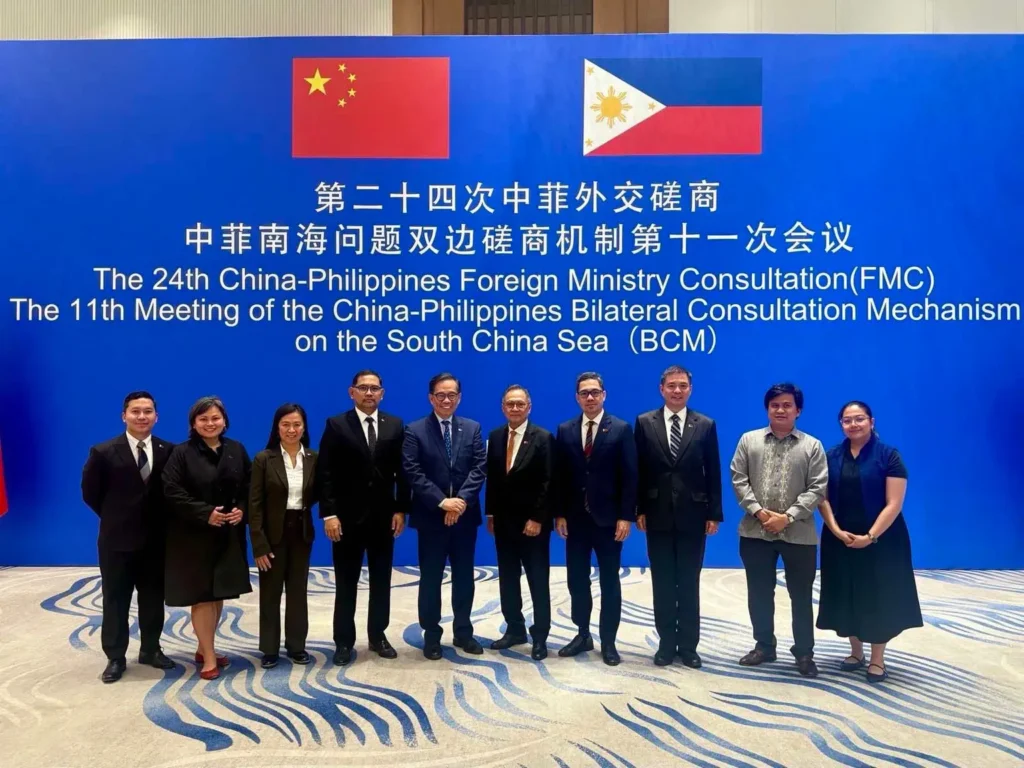
MANILA, Philippines — The Philippines and China have begun preliminary discussions aimed at strengthening trust and cooperation in maritime affairs, including early conversations on possible collaboration in oil and gas exploration in the South China Sea. According to a statement released by the Department of Foreign Affairs (DFA) late Saturday, March 28, officials from both countries explored practical steps that align with Philippine laws and national policies during a series of meetings held on March 27 and 28.
The talks were part of ongoing diplomatic efforts to maintain dialogue and manage issues related to the contested waters. During the meetings, both sides exchanged views on measures that could help build greater confidence and stability in the maritime domain while opening the door to potential cooperation in the development of energy resources.
READ MORE ARTICLES:
- SOVFA: Philippines, France Sign Visiting Forces Agreement
- PH Under Energy Emergency, Says PBBM Over Global Supply Concerns
- Roblox Ban in the Philippines
- 26 Filipinos from Labor Trafficking in Malaysia
- Malasiqui, Pangasinan: Hope in the Fight Against Child Stunting
- Pakistani Farmers Sue German Firms Over 2022 Floods
- Bato Dela Rosa’s, Call for ‘No Work, No Pay’
The Philippine government also confirmed that a meeting between the top diplomats of both nations is being planned within the year. Philippine Foreign Affairs Secretary Maria Theresa Lazaro and Chinese Foreign Minister Wang Yi are expected to hold discussions as part of efforts to continue diplomatic engagement between Manila and Beijing.
The Philippine delegation was led by DFA Undersecretary Leo Herrera-Lim, who met with Chinese officials during two key diplomatic platforms: the 24th Foreign Ministry Consultations (FMC) and the 11th Meeting of the Bilateral Consultation Mechanism (BCM) on the South China Sea. These meetings serve as formal channels for both governments to address maritime concerns and explore areas of cooperation despite ongoing territorial disputes.
The gathering in Quanzhou marked the first session of the Foreign Ministry Consultations since the previous meeting held in Manila in March 2023. It also represented the first Bilateral Consultation Mechanism meeting since January 2025, when representatives from both sides last convened in Xiamen. The renewed dialogue underscores the continued efforts of both countries to maintain communication and manage tensions in the region while exploring mutually beneficial initiatives.
During the Bilateral Consultation Mechanism (BCM) meeting—an established diplomatic platform where the Philippines and China address matters concerning the South China Sea—Philippine officials voiced serious concerns regarding recent incidents that have affected the safety and security of Filipino personnel and local fishermen operating in the disputed waters. According to the Department of Foreign Affairs (DFA), Manila raised issues involving actions that interfered with lawful maritime activities and created potential dangers for Filipinos at sea.
In its statement, the DFA emphasized that the Philippine delegation underscored the importance of continued diplomacy and open lines of communication in managing disagreements in the maritime region. Philippine representatives reiterated that resolving tensions must be anchored in respect for international law, particularly the provisions of the 1982 United Nations Convention on the Law of the Sea (UNCLOS) and the landmark 2016 South China Sea Arbitral Award. The ruling by the international tribunal invalidated China’s sweeping historical claims over much of the South China Sea and affirmed the Philippines’ sovereign rights within its 200-nautical-mile exclusive economic zone (EEZ), which Manila refers to as the West Philippine Sea. Beijing, however, continues to reject the arbitral decision and does not recognize its legal authority.
Despite the differences in territorial claims, the DFA reported that the recent talks produced some positive developments. Both sides made progress in discussions involving practical areas of cooperation, including the establishment of improved communication channels between the two countries’ coast guards, collaboration in ocean meteorology, and the initial exchange of views regarding the possibility of joint oil and gas exploration.
The topic of energy cooperation has gained renewed attention in recent days. Prior to the Philippine delegation’s trip to China, President Ferdinand Marcos Jr. suggested that global energy uncertainties could encourage Manila and Beijing to consider working together in developing offshore gas resources. In an interview with Bloomberg, the president noted that the oil market instability resulting from the conflict involving the United States, Israel, and Iran could serve as a potential catalyst for both countries to pursue cooperative energy initiatives in the contested waters.
During the Foreign Ministry Consultations (FMC), Philippine officials emphasized the importance of ensuring reliable and stable access to essential resources such as energy supplies and agricultural fertilizers—two sectors considered vital for national development and economic stability. According to the Department of Foreign Affairs (DFA), discussions between the Philippine and Chinese delegations also explored possible areas of cooperation in emerging sectors, including green and renewable energy, trade expansion, and agricultural development. Philippine representatives noted that reviving and strengthening appropriate bilateral mechanisms would be a key step toward advancing these collaborative initiatives.
Beyond economic cooperation, both sides also highlighted the significance of strengthening people-to-people connections between the Philippines and China. The DFA noted that tourism, cultural exchanges, and easier mobility for travelers were part of the discussions. Among the ideas raised were potential visa-free arrangements, improvements in transportation links, and the possibility of establishing additional direct air routes between cities in both countries. These initiatives aim to further encourage travel, business interactions, and cultural engagement. In recent months, the Philippine government has already taken steps in this direction by allowing visa-free entry for Chinese nationals through selected airports across the country.
Manila also reiterated its broader diplomatic role in the region. The DFA stated that the Philippines reaffirmed its commitment to acting responsibly and professionally as the current chair of the Association of Southeast Asian Nations (ASEAN). Philippine officials stressed that they would continue to guide regional discussions in a manner that upholds ASEAN’s central role in regional affairs while promoting a rules-based international order that contributes to peace, stability, and cooperation across Southeast Asia.
The recent meetings held in Quanzhou represent another step in what appears to be a gradual thaw in relations between the Philippines and China. Diplomatic engagement between the two nations had previously cooled in recent years due to heightened tensions in the South China Sea. However, recent developments suggest renewed efforts to maintain dialogue and rebuild cooperation.
President Ferdinand Marcos Jr., speaking in the same Bloomberg interview, indicated that a “reset” in bilateral relations may be increasingly likely as global geopolitical dynamics continue to evolve. He pointed to the shifting international landscape particularly tensions and conflicts in the Gulf region as factors that could influence both Manila and Beijing to reassess their relationship and seek areas of mutual interest.
Relations between the two countries experienced a particularly strained period from 2023 to 2025, when the Philippines adopted a more assertive and transparent approach in defending its maritime rights and sovereign entitlements in the West Philippine Sea. During that time, Manila intensified efforts to call attention to incidents in the disputed waters and to reinforce its claims under international law. Meanwhile, China continues to maintain expansive claims over nearly the entire South China Sea, a strategic maritime corridor that serves as one of the world’s most important routes for global trade and shipping.
Several key locations in the West Philippine Sea have continued to serve as major flashpoints for maritime tensions between the Philippines and China. Among these is Ayungin Shoal, internationally known as Second Thomas Shoal, where the Philippine Navy vessel BRP Sierra Madre has remained deliberately grounded for decades as a symbol of the country’s presence and sovereignty in the disputed waters. Another area frequently at the center of disputes is Scarborough Shoal, which has been effectively under Chinese control since 2012 following a standoff with Philippine forces. Other contested features include Sabina Shoal and Pag-asa Island also known internationally as Thitu Island which stands as the largest Philippine-occupied feature in the West Philippine Sea and is home to a small but permanent civilian community.
Tensions in the area have remained evident in recent incidents. On March 25, a Chinese naval vessel reportedly carried out risky and aggressive maneuvers near the BRP Benguet in waters close to Pag-asa Island. Philippine authorities described the actions as dangerous, while Chinese officials countered the allegation by asserting that it was the Philippine side that had behaved recklessly during the encounter.
Meanwhile, a “provisional arrangement” between Manila and Beijing has been in effect since 2024 to manage the Philippines’ rotational deployment and resupply missions to the BRP Sierra Madre. The arrangement came after a series of confrontations involving Chinese Coast Guard personnel and Filipino troops stationed near the grounded naval ship. In one of the most serious incidents, Chinese forces allegedly harassed Philippine resupply boats and even towed vessels used by Filipino soldiers operating near the area. The confrontation resulted in a Filipino serviceman losing his thumb, while several pieces of Philippine military equipment were reportedly damaged or destroyed.
Despite diplomatic efforts and temporary agreements intended to prevent further escalation, reports of harassment in other parts of the West Philippine Sea have continued. Philippine authorities have repeatedly accused Chinese vessels of engaging in hazardous maneuvers, including blocking or shadowing government ships. In some cases, Chinese vessels have also used powerful water cannons against Philippine coast guard boats and even small wooden fishing vessels operated by Filipino fishermen, heightening concerns over safety and escalating tensions in one of the region’s most strategically important maritime zones. – APTIKONS
- Worst Country I’ve Visited- Thailand Girl, Stark Warning After Disappointing Vietnam Trip
- Artemis II | NASA, Voyage, Mission & Moon
- A Prayer of Thanksgiving for Divine Blessings, Triumph, Forgiveness, and Good Health
- NASA’s Artemis II Departs Earth Orbit for Historic Moon Flyby
- NASA: The Artemis Generation Takes Flight with Historic Artemis II Mission
- Victor Glover | Life, Education & NASA Career
- Philippines vs China, When Betrayal Comes from Within: The Cost of Selling a Nation
- Supreme Court Affirms Dismissal of GMA Network’s Complaint Against ABS-CBN Over TV Ratings Dispute
- List of political ideologies
- Andrew Heywood | British author, Educationalist, & political theorist
- Holy Wednesday: A Solemn Reminder on Judas Iscariot Betrayal of Jesus Christ
- Judas Iscariot | About in the Bible, Betrayal & Apostle
- Relief or Rhetoric? Imee Marcos’ Call to Suspend Government Deductions Remains Without Action—Just Words
- Gatchalian Renews Push to Keep Minors Off Social Media
- Donald Trump Floats Seizing Iran’s Kharg Island Oil Hub, Wider Middle East Conflict