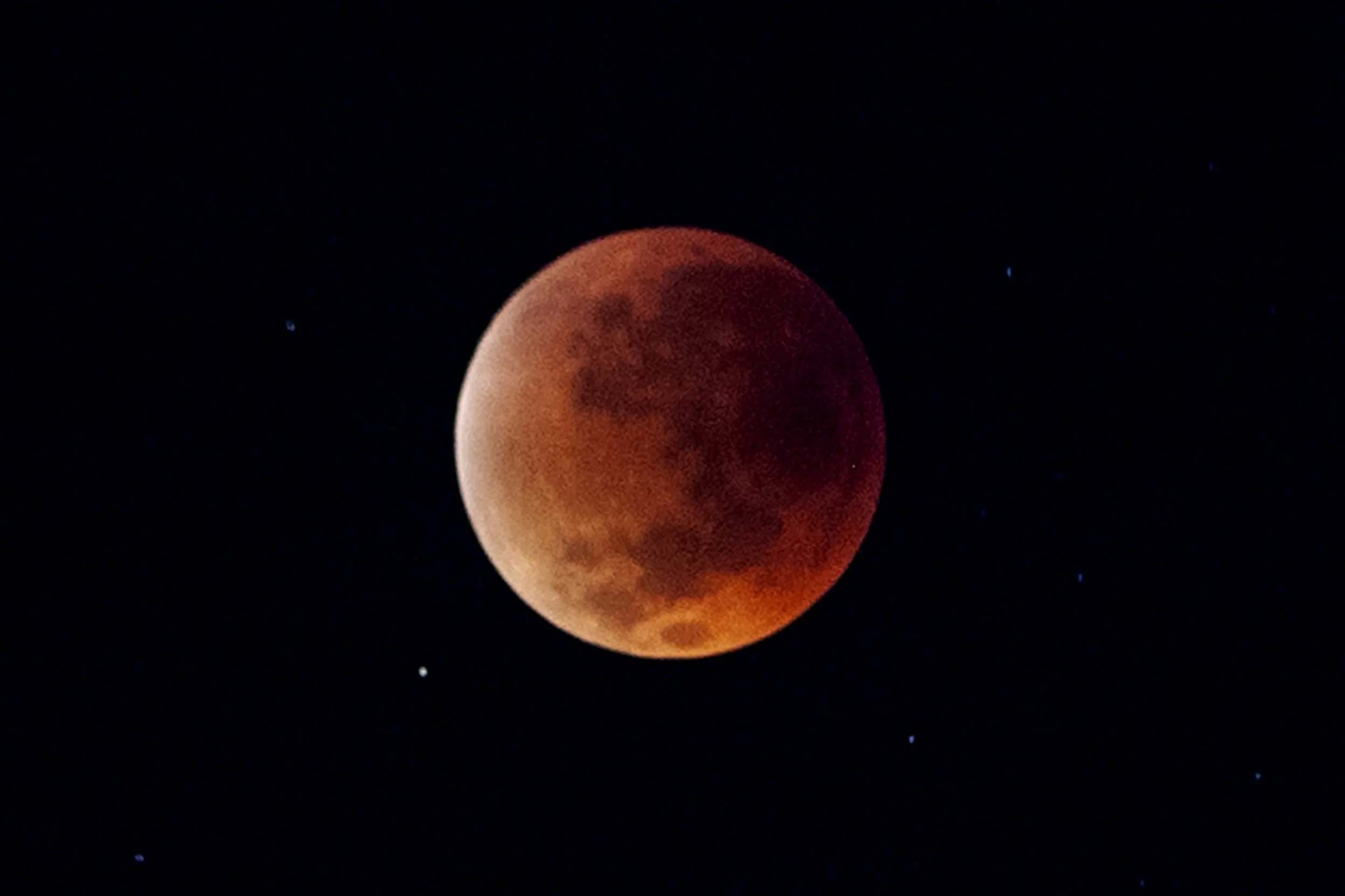
As winter’s chill begins to fade, the March full moon—known as the Worm Moon—ushers in the arrival of spring with its first signs of thawed ground and emerging life. This month, the celestial spectacle is even more extraordinary, as the Worm Moon coincides with a rare total lunar eclipse, turning it a striking blood-red hue. For skywatchers across North America, Asia, Australia, and the Pacific, this lunar event promises a breathtaking view and a perfect signal that spring is truly on its way.
VIEW PICTURE
This month’s full moon is the Worm Moon, and there’s a lunar eclipse, too. mashable PHOTO FILE/ VIEW PICTURE
The phases are:
- New Moon — The moon is between Earth and the sun, so the side we see is dark (so, we don’t see anything).
- Waxing Crescent — A small sliver of light appears on the right side
- First Quarter — Half of the moon is lit on the right side. It looks like a half-moon.
- Waxing Gibbous — More than half is lit up, but it’s not quite full yet.
- Full Moon — The whole face of the moon is illuminated and fully visible.
- Waning Gibbous — The moon starts losing light on the right side
- Third Quarter (or Last Quarter) — Another half-moon, but now the left side is lit.
- Waning Crescent — A thin sliver of light remains on the left side before going dark again.
READ MORE ARTICLES:
- LIST: Emergency Hotlines for Filipinos in Middle East
- March 2026 Full Moon: Blood moon lunar eclipse
- Strengthened SHS Program
- Donald Trump State of the Union Focuses on Jobs, Borders and Foreign Policy
- DepEd Links for EOSY 2025-2026 Assessment Materials
- Philippine Politics and Governance (PPG) CNHS
- Kimberly Pagong: Duterte’s War on Drugs — Saving Millions or Misunderstood Leadership?
- Philippines Celebrates 40th Anniversary of EDSA People Power
The March full moon, called the Worm Moon, will peak on March 3 at 6:37 a.m. ET, marking the first significant sign of spring as the ground begins to thaw. This month’s lunar event is unique because it aligns with a total lunar eclipse, transforming the moon into a vivid blood-red “Blood Moon” visible in parts of North America, Asia, Australia, and the Pacific. The full moon is part of the lunar cycle’s eight phases, which include the new moon, waxing and waning phases, and the full moon itself. The next full moon will occur on April 1, continuing the celestial rhythm that signals seasonal change and natural renewal.
The Worm Moon
The Worm Moon, which graces the sky each March, marks a significant transition in the seasonal calendar, symbolizing the reawakening of nature and the approach of spring. This illuminating phenomenon is characterized not only by its name but also by the observable changes in the environment, as plants begin to emerge from their winter slumber, signaling a period of growth and rejuvenation. The term ‘Worm Moon’ originates from the behavior of earthworms, which begin to reappear as the ground thaws, creating a habitat conducive to the resurgence of life.
In many cultures, this full moon held various meanings linked to agricultural practices and the rhythms of nature. With its appearance, farmers were spurred into action, preparing their lands for planting as the days grew longer and warmer. The Worm Moon is thus not merely a celestial event but also an indicator of ecological changes, as it heralds the time for sowing and nurturing new life.
As we observe the Worm Moon, we are reminded of the cyclical nature of the universe and the deep connections we share with the world around us. The vibrant energies associated with this full moon encourage reflection on our own growth and the opportunities that lie ahead. The sky’s luminescence serves as a backdrop to a time of new beginnings, inviting individuals to embrace the unfolding beauty of the coming warmer months. As the earth comes alive, the Worm Moon encourages all to engage with the changing seasons and appreciate the wonders that nature offers during this hopeful time of year.
What is a Full Moon? Understanding the Phenomenon
A full moon occurs when the moon’s entire illuminated surface is visible from Earth, marking a key phase in the lunar cycle. This phenomenon happens approximately once a month, specifically when the moon is on the opposite side of the Earth from the sun. As a result, the sunlight fully illuminates the moon’s surface, casting a bright glow in the night sky. The full moon typically rises at sunset and sets at sunrise, creating a stunning visual effect that has captivated humanity for centuries.
The lunar cycle comprises several phases, including new moon, waxing crescent, first quarter, waxing gibbous, full moon, waning gibbous, last quarter, and waning crescent. The full moon signifies a period of culmination, where projects or objectives may reach their peak. It is a time often associated with reflection, completion, and acknowledgment of efforts. Cultures around the world have attached significance to the full moon, using it to mark the passing of time or orient themselves spiritually.
In embracing the full moon, we are reminded not only of its astronomical significance but also of its deep-rooted presence in human culture and natural phenomena. It invites an appreciation for both scientific understanding and the emotional responses brought about by this mesmerizing celestial event.
When is the March Full Moon? Dates and Times
The March full moon, commonly referred to as the Worm Moon, is a celestial event that takes place annually. In 2023, this full moon reaches its peak illumination on March 7, at precisely 7:42 AM UTC. However, this timing can vary based on the observer’s geographical location. For those in the Eastern Time Zone of the United States, for example, the full moon will occur on March 6, at 2:42 AM EST, while viewers in Pacific Time will experience it slightly earlier at 11:42 PM PST on March 5.
The Worm Moon is a significant event, marking the onset of spring in many cultures. It is traditionally named after the earthworms that begin to emerge as the ground thaws, signaling the arrival of warmer weather. Such lunar events not only provide an opportunity for stargazers to appreciate the beauty of the night sky but also facilitate various cultural celebrations and rituals associated with the changing seasons.
To fully experience the Worm Moon, one should consider local atmospheric conditions, light pollution levels, and specific vantage points conducive to moon viewing. Observers in rural areas with minimal artificial light may have the best experience, allowing the full moon’s luminosity to shine unobstructed. It is important to note that even though the peak of the Worm Moon occurs on a specific date and time, its visual presence can be appreciated for several nights surrounding the peak, as the moon transitions through its phases.
The Special Significance of the Blood Moon
The March full moon, commonly referred to as the Worm Moon, presents an intriguing celestial phenomenon by coinciding with a total lunar eclipse. This rare event creates what is popularly known as a Blood Moon, a term that originates from the reddish hue that the moon adopts during the eclipse. The transformation occurs due to a combination of atmospheric scattering and the Earth’s shadow as it passes directly between the sun and the moon.
During a total lunar eclipse, when the Earth completely obscures sunlight from illuminating the moon, the remaining sunlight that reaches the lunar surface goes through the Earth’s atmosphere. This process filters out the shorter wavelengths of light, primarily blue and green, while allowing longer wavelengths, such as red and orange, to pass through. Consequently, the moon takes on a vibrant reddish tint, leading to its description as a Blood Moon.
This striking visual effect not only captivates astronomers but also adds to the significance of the lunar phenomenon. Throughout history, Blood Moons have been regarded with awe and fascination, often linked to various cultural and spiritual beliefs. They are frequently associated with transformative events, being seen as omens or signs in different cultures. The lunar eclipse offers a unique opportunity for observers to witness this rare phenomenon, as the shadow of the Earth crosses over the moon, casting it in hues that can shift from a deep crimson to shades of brown. Such stunning visual effects make the Worm Moon in March, with its accompanying Blood Moon, an event that should not be missed by skywatchers and astronomy enthusiasts alike.
Lunar Eclipses: How and Why They Happen
Lunar eclipses occur when the Earth passes between the Sun and the Moon, causing the Earth’s shadow to fall on the Moon. This astronomical event can only take place during a full moon when all three celestial bodies are aligned in a straight line. There are three primary types of lunar eclipses: total, partial, and penumbral.
A total lunar eclipse occurs when the entire moon passes through the Earth’s umbra, the darkest part of its shadow. During this phenomenon, the moon can take on a striking reddish color, often referred to as a “blood moon.” This coloration is caused by Rayleigh scattering of sunlight through the Earth’s atmosphere. When sunlight penetrates the Earth’s atmosphere, the shorter blue wavelengths scatter out, while the longer red wavelengths pass through and illuminate the moon, giving it a warm hue.
In contrast, a partial lunar eclipse occurs when only a portion of the moon enters the Earth’s umbra, resulting in a shadowed effect that darkens part of the lunar surface. The remaining portion remains illuminated by direct sunlight. This type of eclipse is less dramatic than a total eclipse but still captivates observers with its distinct appearance.
Lastly, a penumbral lunar eclipse is the subtle, often overlooked type of eclipse that occurs when the moon passes through the Earth’s penumbra, the outer part of its shadow. The shading during this eclipse is slight, making it difficult to observe without careful attention.
Understanding lunar eclipses and their variations adds to the appreciation of these extraordinary phenomena. These celestial events remind us of the intricate movements of our solar system and the mesmerizing beauty they produce.
Cultural Significance of Full Moons
The full moon has held a profound cultural significance across various societies around the globe, often associated with cycles of nature, spirituality, and celebration. The Worm Moon, which occurs in March, is particularly noteworthy as it marks a time of renewal and growth after winter. Many cultures have developed unique traditions surrounding this lunar event, driven by agricultural practices, mythological beliefs, and seasonal changes.
For instance, Native American tribes referred to this full moon as the Worm Moon, named for the earthworms that appear as the ground begins to thaw, making it an important time for planting and farming. This connection to agriculture reflects a deeper understanding of the natural world and its cycles, underscoring the significance of the moon in determining the rhythms of life.
In addition to agricultural practices, the full moon has often been linked to various spiritual and religious observances. Cultures around the world have celebrated lunar phases through festivals, rituals, and community gatherings. The Worm Moon, unlike other moons, is celebrated with an emphasis on fertility, rebirth, and the awakening of nature, symbolizing hope and a fresh start.
Furthermore, ancient civilizations such as the Greeks and Romans viewed the full moon as a time for reflection and introspection. Their myths often imbued lunar cycles with meanings of change and transformation. Today, many still partake in moon-gazing and meditation during the full moon, using it as a moment to reconnect with themselves and nature.
As science and technology continue to advance, the cultural significance of full moons remains strong, perpetuating traditions and encouraging practices that honor the ancient ties between humanity and the cosmos. The Worm Moon serves as a reminder of the interconnectedness of life and the natural world, inviting people to embrace change, renewal, and the beauty of the universe.
Optimal Locations for Viewing the Worm Moon and Lunar Eclipse
When seeking to experience the mesmerizing Worm Moon in March, alongside its captivating lunar eclipse, selecting the right viewing location is crucial. Open areas away from artificial light pollution enhance visibility and, therefore, offer a more enchanting experience. Ideal places include parks, rural settings, and elevated viewpoints that provide an unobstructed view of the night sky. The absence of city lights is vital, as it allows for greater appreciation of the moon’s details and the eclipse’s dynamic changes.
Timing and Preparation
To maximize your experience, familiarize yourself with the lunar eclipse’s timing, as it can differ by several hours depending on your geographic location. Websites and mobile applications dedicated to lunar calendars will help you determine the precise timing in your area. Arriving at your chosen location well ahead of time will allow you to set up your viewing equipment comfortably. Bring a chair or blanket for seating to enhance comfort during the wait.
Photography Tips
For photography enthusiasts aiming to capture the Worm Moon and the lunar eclipse, special techniques and equipment can significantly improve your results. A DSLR or mirrorless camera with a telephoto lens is ideal for zooming in on the moon. Utilizing a tripod stabilizes your shots, allowing for longer exposures without motion blur. Use manual settings to adjust for the moon’s brightness, as automatic settings may misinterpret the scene. It is also advisable to practice using these settings beforehand to become familiar with your camera’s controls.
Viewing Techniques and Equipment
While binoculars or telescopes can enhance visibility of the moon’s craters and surface features, it is equally important to train your eyes to appreciate the event without augmented vision. Allowing your eyes to adapt to the darkness will help you see the subtle changes as the lunar eclipse unfolds. Patience is key, as observing the process can invoke an invigorating connection to nature’s celestial rhythms.
Upcoming Full Moons: What to Look Forward To
The universe continues to unfold its celestial wonders, and future full moons certainly contribute to this cosmic tapestry. After March, the next significant full moon will occur in April, often referred to as the Pink Moon. This name originates not from the color of the moon itself, but rather from the blooming of pink phlox flowers that signify spring in North America. The Pink Moon, which will grace the night sky on April 6, 2023, not only carries the essence of renewal and growth but also encourages individuals to reflect on their aspirations for the coming months.
Moving forward to May, observers can look forward to the Flower Moon on May 5, 2023. Historically, this full moon has been known as the Flower Moon due to the abundance of blooming flowers during this season. Different cultures have various interpretations associated with this month, often linked to the themes of love and prosperity. It is a time when nature fully awakens, and vibrant colors fill the environment, echoing the full moon’s illuminating presence.
The month of June brings the Strawberry Moon, scheduled for June 4, 2023. This name derives from the short season for harvesting strawberries in North America. This full moon is symbolic of abundance, fertility, and a celebration of the warmer months ahead. Each full moon possesses distinct characteristics and cultural significances that are celebrated worldwide, from ceremonial gatherings to personalized reflections on life.
As we anticipate these celestial events, it’s essential to embrace the full moon in all its glory, using this time not only to observe the night sky but also to attune ourselves to the rhythms of nature and the cycles of life they represent. By appreciating each full moon, we can better understand our own growth and reflect on our time on this planet.
Welcoming Spring Under the Worm Moon
The Worm Moon, marking the final full moon of winter and ushering in the arrival of spring, provides a unique opportunity for reflection and connection with the natural world. As the days grow longer and the temperature begins to warm, individuals are encouraged to take a moment to appreciate the beauty that this time of year brings. This celestial event not only showcases the splendor of the moon but also symbolizes renewal and rebirth.
During the Worm Moon, one can witness the transformation of the earth as it begins to awaken from its winter slumber. This period signifies a time of growth and revitalization, prompting many to engage in personal reflection. It is a perfect occasion to ponder aspirations and set intentions for the seasons ahead. The moon’s captivating glow offers a serene backdrop for contemplation and a reminder of our connection to the universe.
As spring approaches, communities may come together to celebrate the Worm Moon through various rituals and gatherings, fostering a sense of unity. These events serve as a reminder of the shared joy that comes with seasonal transitions, highlighting the importance of nature in our lives. Whether through communal activities or solitary reverie, the Worm Moon encourages individuals to embrace the changes within themselves and the world around them.
The Worm Moon symbolizes more than just an astronomical event; it is a celebration of life and community as we step into the vibrant months ahead. As we welcome this marvelous spectacle, let us honor the connection between the moon, the earth, and our own personal journeys. Myriad opportunities await for those willing to embrace the spirit of the Worm Moon and the promise of spring it brings.
- Iran Names Google, Amazon, Microsoft as Possible Targets
- Iran–Philippines Ties to Become ‘Even Brighter,’ Says Ambassador
- Iranian Community in Philippines Faces Bank, GCash Issues & Stereotypes
- Ron Angeles Sex Scandal
- Rihanna’s LA Mansion Targeted in Gunfire Attack While She Was Home
- Mojtaba Khamenei
- Vladimir Putin Welcomes Mojtaba Khamenei as Iran’s New Leader
- Oil Prices Surge as Mojtaba Khamenei Takes Power Amid Middle East Tensions
- DepEd Ipinatupad ang 4-Day Work Week
- History of Iran