Israel launched what it described as a “preemptive” strike on Iran on Saturday, dramatically escalating tensions in the Middle East and casting doubt on already fragile diplomatic efforts over Tehran’s nuclear program. The operation, reportedly coordinated with the United States, has triggered warnings of a broader regional conflict as both sides signal readiness for further confrontation.
VIEW PICTURE
Ayatollah Ali Khamenei — who had dominated Iran’s theocratic system for decades as its supreme leader, transforming it into a regional force while clashing with Israel and the United States over its nuclear ambitions and suppressing pro-democracy movements at home — has died, Iranian state media confirmed early Sunday following a major joint U.S.-Israeli military strike AP PHOTO / VIEW PICTURE

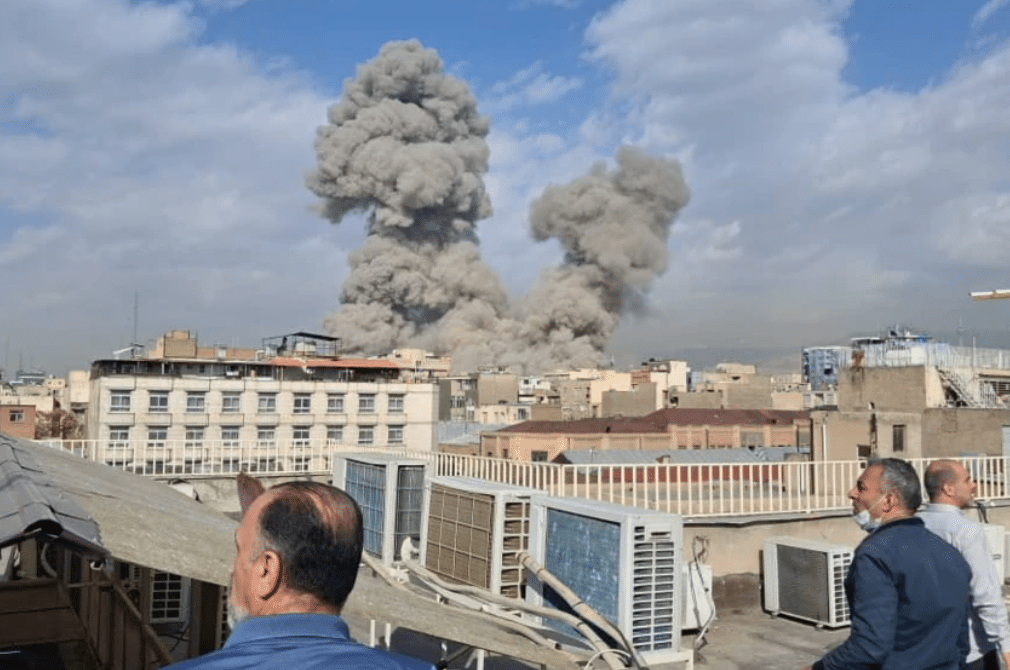
Smoke was seen rising in Tehran on Saturday after the U.S. and Israel said it launched an attack on Iran. The first apparent strike happened near the offices of Supreme Leader Ayatollah Ali Khamenei. / AP PHOTO FILE / VIEW PICTURE
READ MORE ARTICLES:
- Donald Trump State of the Union Focuses on Jobs, Borders and Foreign Policy
- Kimberly Pagong: Duterte’s War on Drugs — Saving Millions or Misunderstood Leadership?
- Philippines Celebrates 40th Anniversary of EDSA People Power
- Missing of Nancy Guthrie
- DepEd Heroes: Teacher Jeric Maribao Honored for Exceptional Dedication and Innovation
- China, Ukraine Reaffirm Strategic Ties, Push for Peace at Munich Security Conference
- Reward Increased in Nancy Guthrie Missing Person Case
- Truth Behind the Jeffrey Epstein Files and McDonald’s Claims
Israel said the attack was aimed at neutralizing threats linked to Iran’s nuclear enrichment and ballistic missile program, declaring a nationwide state of emergency as sirens sounded across the country. An Israeli defense official revealed that the strike had been planned for months in coordination with Washington. US President Donald Trump described the assault as “massive and ongoing,” and voiced support for regime change in Tehran.
Iran, which insists its nuclear program is strictly civilian, vowed a “crushing response.” Witnesses reported a large explosion inside Iran, though officials have yet to release full details. Analysts warn that the strike significantly weakens prospects for reviving nuclear negotiations between Tehran and Western powers.
Sun Degang, director of the Center for Middle Eastern Studies at Fudan University, said the coordinated US-Israel action could mark the beginning of a wider war. He suggested the recent rounds of US-Iran negotiations may have served as cover for military preparations, including the deployment of US aircraft carriers to the region.
According to Sun, Iran is expected to retaliate forcefully, potentially targeting not only military assets but also critical infrastructure to deter further strikes. He added that Tehran has prepared contingency leadership plans approved by Supreme Leader Ali Khamenei, signaling readiness for prolonged confrontation.
While neighboring Middle Eastern nations remain cautious and reluctant to be drawn into the conflict, experts warn that the risk of regional escalation is high, leaving peace and stability in a deeply precarious state.
A Tipping Point in Middle Eastern Relations
The recent military escalation between Israel and Iran has ushered in a new chapter of heightened tensions in the Middle East, drawing international attention to the shifting dynamics of the region. In recent months, the complex relationship between these two nations, characterized by longstanding hostilities, has reached a precarious tipping point following Israel’s preemptive strike against Iranian targets. This decisive military action not only signifies Israel’s defensive posture but also raises significant concerns regarding the stability of the broader geopolitical landscape.
Israel’s operations, aimed at curbing what it perceives as existential threats posed by Iran’s expanding influence and military capabilities, demonstrate a profound commitment to national security. The recent events have been marked by a series of confrontations, including airstrikes and cyber operations that target Iran’s nuclear ambitions and its support for various non-state actors in the region. As tensions have escalated, the potential for miscalculations and broader conflict has become increasingly evident, particularly as Iran vows to retaliate against perceived aggressions.
This circumstantial backdrop sets the stage for a crucial exploration of how these military developments affect diplomatic relations in the Middle East. The ramifications of Israel’s preemptive strike extend beyond bilateral interactions, challenging the already fragile alliances and peace efforts within the region. Other nations, such as the United States and various Gulf states, are observing closely as they navigate their own strategies in response to the evolving situation. Ultimately, the ongoing confrontation between Israel and Iran could dramatically reshape regional alliances, diplomacy, and security considerations.
Understanding Israel’s Preemptive Strike: Policies and Rationale
The Israeli government has long faced complex and escalating security challenges in the Middle East, particularly regarding its relationship with Iran. The decision to execute a preemptive strike against Iranian assets is informed by a carefully considered policy framework that originates from a commitment to national security. Central to this policy is the belief that Iran’s nuclear ambitions pose an existential threat to Israel. Israeli officials have often articulated that permitting Iran to develop a nuclear weapon would significantly alter the balance of power in the region and embolden hostile actions against Israel.
The timing of the strike is equally critical to understanding Israel’s rationale. Intelligence assessments often indicate that Iran’s nuclear capabilities are advancing, with fears that key thresholds could soon be crossed. Israeli leaders have maintained that they can no longer rely solely on the international community to ameliorate these threats, citing instances where diplomatic efforts have failed to curtail Iranian ambitions, particularly in the context of nuclear negotiations.
Israel perceives Iran’s ballistic missile programs as a direct danger, with the potential to target Israeli cities and military installations. This concern is accentuated by ongoing weapons transfers to proxy groups throughout the region, including Hezbollah in Lebanon and militia groups in Syria and Iraq, further integrating Iran into the regional security landscape. Such actions have led Israeli leaders to adopt a more proactive approach, opting for preemptive measures as a vital method of self-defense. Ultimately, the compound threats presented by an adversarial military infrastructure necessitate that Israel act decisively to protect its sovereignty and the safety of its citizens.
Iran’s Response: Threats and Preparations
In the wake of Israel’s preemptive strike against Iranian targets, Iranian officials have made several bold statements reflecting their discontent and intentions. High-ranking Iranian leaders, including members of the Islamic Revolutionary Guard Corps (IRGC), have pledged to deliver a decisive retaliation. The Iranian media has amplified these sentiments, depicting the military actions as critical to national pride and sovereignty. Clearly, the Iranian regime aims to project strength and resolve in the face of perceived aggression.
Iran’s strategic responses could encompass a range of military and non-military actions. Military experts suggest that Tehran may leverage its missile capabilities by launching targeted strikes against Israeli interests, both within the region and beyond. Such responses could further destabilize an already volatile Middle East, intensifying the cycle of retaliation that has characterized recent decades. Additionally, Iran might deploy asymmetric warfare tactics, drawing on its extensive network of proxy groups throughout the region. Groups like Hezbollah could be utilized to create distractions and diversions, thereby complicating Israel’s military calculus.
The Iranian leadership is also expected to ramp up defensive measures, utilizing this incident to consolidate domestic support amidst external pressure. By framing the Israeli strike as an existential threat, Iran may seek to unify its populace under the banner of national defense, diverting attention from internal issues. Furthermore, intelligence suggests that Iran is enhancing its military readiness, likely moving assets into strategic positions to deter further aggression and ensure that they are prepared for any escalatory measures from Israel.
This heightened state of alert not only impacts Iran’s military posture but also raises concerns among global observers regarding the potential for escalation into larger conflicts. The capabilities and intentions of the Iranian regime will be scrutinized closely by both regional and international actors in the coming weeks and months.
The relationship between the United States and Israel has long been characterized by a high degree of military cooperation and strategic alignment, especially regarding regional threats such as Iran. In the context of Israel’s preemptive strike against Iran, this partnership has drawn significant attention, particularly concerning the level of coordination between the two nations prior to the attack.
Recent developments indicate that the United States was not only supportive of Israel’s actions but actively involved in strengthening military ties. The Pentagon has consistently provided Israel with advanced weaponry and intelligence, which enhances its military capabilities. This ongoing collaboration enables Israel to maintain its qualitative military edge in the region, pivotal for addressing threats posed by Iran’s nuclear ambitions and proxy militant groups.
During the lead-up to the attack, President Trump made several statements that underscored the alignment of U.S. foreign policy with Israeli security interests. His administration has repeatedly emphasized the need to counter Iranian influence in the Middle East, framing the preemptive strike as an essential measure for regional stability. Trump’s endorsement of Israel’s actions serves not only as political backing but also reflects a strategic consensus on the necessity of addressing Iran’s aggression directly.
The official statements from both U.S. and Israeli leaders suggest that the attack was a result of shared intelligence assessments regarding imminent threats from Iranian bases. This showcases the integrated nature of military operations and the importance of constant liaison between U.S. and Israeli defense departments. The depth of this military cooperation raises questions about how the U.S. will navigate its foreign policy goals in the Middle East moving forward, especially in the face of growing tensions and the potential for retaliatory measures by Iran.
Understanding the dynamics of U.S. and Israel relations in the context of this attack is crucial for comprehending broader geopolitical strategies within the region.
The Longstanding Nuclear Dispute
The nuclear dispute involving Iran has a complex history that dates back several decades, marked by intermittent periods of negotiation and escalating tensions. The emergence of Iran’s nuclear program in the early 2000s prompted a series of diplomatic efforts aimed at curbing its potential to produce nuclear weapons. Major powers, including the United States, Russia, China, France, the United Kingdom, and Germany collectively known as the P5+1 engaged in talks with Iran to reach an agreement that would ensure the peaceful nature of its nuclear activities.
The culmination of these negotiations was the Joint Comprehensive Plan of Action (JCPOA), reached in July 2015. This landmark agreement imposed restrictions on Iran’s nuclear program in exchange for the lifting of economic sanctions. The JCPOA was viewed by its proponents as a crucial step towards stabilizing the Middle East and preventing nuclear proliferation. However, the agreement was met with skepticism by various factions, particularly in Israel and among U.S. policymakers who argued that it did not adequately prevent Iran from pursuing a nuclear arsenal in the long term.
Following the U.S. withdrawal from the JCPOA in May 2018 under the Trump administration, tensions in the region escalated dramatically. Iran resumed its nuclear activities, gradually exceeding the limits set by the original agreement. Subsequent attempts to revive the JCPOA through renewed talks have been fraught with challenges, largely due to mutual distrust and differing goals among the negotiating parties. As negotiations stagnate, the specter of a nuclear-armed Iran continues to loom, contributing to the heightened military tensions in the region.
This evolving situation illustrates how historical efforts to reconcile differences regarding Iran’s nuclear ambitions have shaped contemporary dynamics, ultimately fueling concerns over regional and global security.
Projected Developments in Military Conflict
The recent preemptive strike by Israel against Iranian targets has reignited concerns about the potential for a broader military conflict in the Middle East. Experts are closely monitoring the situation, as various factors could influence the trajectory of hostilities between Iran, Israel, and potentially the United States. One major concern is the possibility of retaliation from Iran, which has historically vowed to respond to any attacks on its sovereignty. This retaliation could take the form of asymmetric warfare, including cyber-attacks or indirect strikes via regional proxies, thereby complicating the conflict’s dynamics.
The involvement of the United States as an ally of Israel further complicates the situation. The U.S. has reaffirmed its commitment to support Israel’s defense measures, which could draw it deeper into the fray should hostilities escalate. Analysts suggest that Washington’s military presence in the region, already significant, could be amplified if Iranian actions against U.S. interests are perceived as direct provocations. This potential spiral into conflict raises the stakes considerably, not only for the nations involved but for global security as well.
Geopolitical factors play a critical role in shaping the conflict’s future. The shifting allegiances and historical tensions among Middle Eastern countries can lead to unpredictable outcomes. If Iran were to engage in aggressive posturing, it may prompt neighboring countries to take sides, thereby expanding the conflict. The balance of power in the region is precarious, and any miscalculation could spark a full-scale war, as nations navigate their alliances and rivalries. In conclusion, the risk of escalation following Israel’s strike remains high, with various factors potentially contributing to a wider conflict that could affect international stability.
The Regional Impact: Reactions from Middle Eastern Nations
The recent military actions and heightened tensions between Israel and Iran have elicited a range of responses from neighboring Middle Eastern countries. The precarious situation has led to significant concerns regarding regional stability, as nations grapple with the implications of the conflict and its potential spillover effects.
Countries like Saudi Arabia and the United Arab Emirates, which share a profound apprehension over Iran’s nuclear ambitions and military posturing, have expressed their support for Israel’s actions. This aligns with their long-standing strategy to curb Iranian influence in the region, highlighting the growing alignment among Gulf states and Israel against perceived threats. However, these reactions are laced with caution as the possibility of further escalation looms on the horizon, potentially drawing them into direct conflict.
On the contrary, Iran’s allies, such as Syria and various militant groups in Lebanon and Iraq, have condemned Israel’s strike, framing it as an aggressive act. Their sentiments reflect a broader narrative across many organizations in the region that view any Israeli military action as inherently destabilizing. These nations may bolster their military readiness, further complicating the delicate balance of power in the Middle East.
Turkey has articulated its position, calling for dialogue to de-escalate tensions. Ankara’s response stems from its interest in maintaining regional relationships and avoiding a further deterioration of security that could affect its own borders, thus advocating for diplomatic discourse over military confrontation.
The interplay of these diverse reactions paints a complex picture of the Middle East, where alliances are continuously evolving, and nations are forced to navigate their interests against the backdrop of escalating military actions. The regional impact of Israel’s preemptive strike against Iran serves as a stark reminder of the fragile dynamics in play, with significant implications for stability across the entire region.
In light of the renewed military tensions in the Middle East, particularly regarding Israel’s preemptive strike against Iran, it is crucial to examine Iran’s strategic response to these threats. The Iranian leadership, recognizing the scale and potential implications of an attack, has mobilized to develop contingency plans that ensure military readiness while maintaining internal stability.
Iran’s high command has enhanced its focus on military preparedness, attuned to both regional and international turmoil. The leadership has undertaken several initiatives that aim to bolster Iran’s defensive and offensive capabilities. This includes not only strengthening existing military assets but also engaging in complex military drills that simulate potential conflict scenarios. These preparations are strategically designed to deter adversaries, particularly Israel and the United States, by showcasing Iran’s readiness to respond swiftly and effectively.
The concept of asymmetric warfare has been a cornerstone in Iran’s military doctrine, enabling its forces to confront technologically advanced adversaries. Utilizing proxy groups, Iran seeks to extend its influence across the region while complicating the operational landscape for Israel. By empowering local militias and regional allies, Iran underscores its commitment to retaliate against any aggression, thereby maintaining a façade of stability amidst external threats.
The Iranian leadership has focused on internal cohesion through propaganda and public support initiatives aimed at reinforcing national unity. Such measures are critical in ensuring that the populace remains resilient and supportive of the state’s military strategies. The internal narrative surrounding these military preparations emphasizes Iran’s sovereignty and the necessity of defending its territory against perceived aggressors.
As tensions continue to escalate, the strategic military responses being formulated by Iran are indicative of a broader effort to secure its national interests while navigating a perilous geopolitical landscape. These contingency plans highlight the vigilance and adaptability of Iranian leadership in the face of imminent challenges.
Navigating Towards Stability Amidst Turmoil
The recent preemptive strike by Israel against Iranian targets has significant implications for the geopolitical landscape of the Middle East. Such military actions not only escalate tensions but also challenge the prospects for diplomatic resolutions in a region long marked by conflict. The ramifications of this strike necessitate a careful reassessment of strategies employed by both regional and international actors.
In light of the current circumstances, the role of international diplomacy becomes even more crucial. Engaging in proactive dialogues and establishing mediation channels can help address underlying grievances and mitigate the potential for further military confrontations. The need for a coordinated international approach is evident, involving key stakeholders such as the United Nations, the United States, and European nations, who must navigate these troubled waters with caution.
It is essential to recognize that sustained stability in the Middle East will require addressing not just immediate threats but also the broader socio-economic and political conditions that fuel conflict. Strategies aimed at fostering peace should include economic support, enhancing communication networks, and investing in grassroots initiatives that promote dialogue among the local populations. Such measures can create an environment conducive to long-term peace and security.
While the path to stability may be fraught with challenges following Israel’s military actions, diligent efforts to foster diplomatic relationships have the potential to transform tensions into opportunities for collaboration. The international community must prioritize conflict resolution through engagement rather than coercion to prevent further escalation and usher in a more peaceful era for the Middle East.
SOURCES
- What to know about the new US-Israel attacks on Iran
- The U.S. and Israel attacked Iran on Saturday
- Supreme Leader Ayatollah Ali Khamenei
- Israel, US attacks on Iran fuel tensions in region
- theocracy also has struggled with growing dissent following nationwide protests
- Iranian state media confirms death of Supreme Leader Ayatollah Ali Khamenei
- Iran’s supreme leader killed in major attack by US and Israel
- Treasury Department terminates union contracts for IRS and Bureau of the Fiscal Service workers
- North Korea’s Kim gifts rifles to officials and his daughter takes aim after party congress
- DHS says deported Babson student skipped flight. Her lawyers say agents wanted to detain her