The White House has nominated former Navy physician and public health official Dr. Erica Schwartz to lead the U.S. Centers for Disease Control and Prevention, placing a seasoned medical leader at the helm of an agency rocked by a year of upheaval. A former deputy surgeon general and rear admiral in the U.S. Coast Guard, Schwartz brings decades of experience in vaccine policy, pandemic response, and military medicine. Her nomination comes amid ongoing scrutiny of the CDC’s vaccine decision-making and leadership turmoil under Health and Human Services Secretary Robert F. Kennedy Jr., setting the stage for what is expected to be a closely watched Senate confirmation battle.
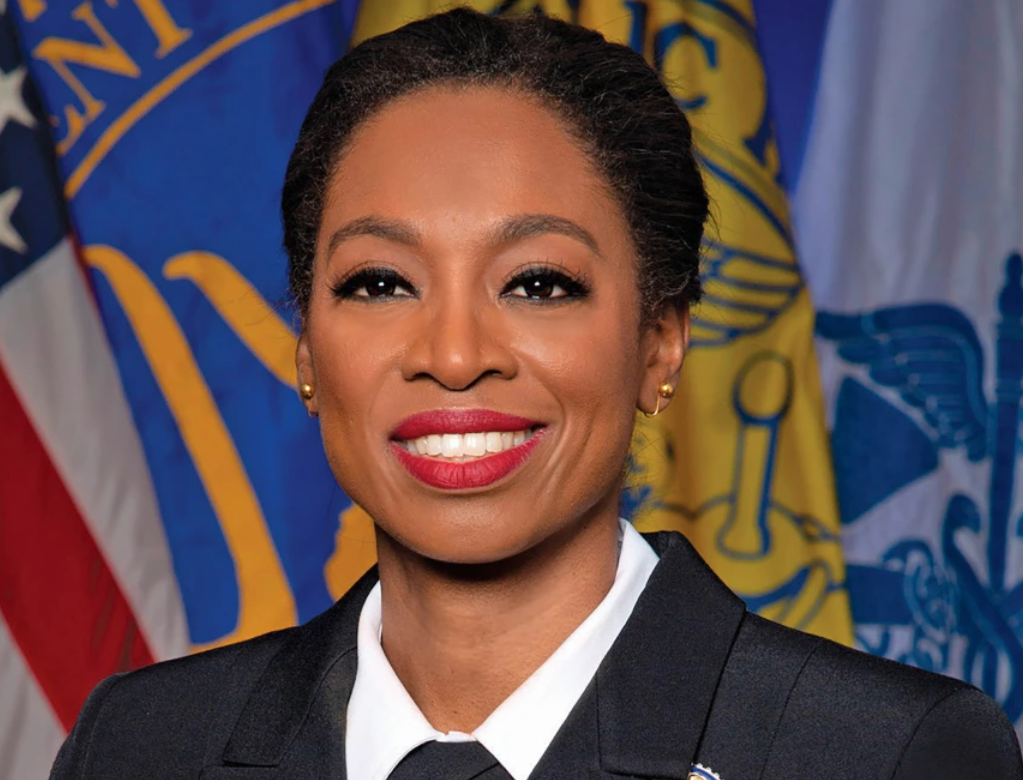
Washington D.C. – In a significant move that could reshape the direction of America’s top public health agency, the White House has nominated Dr. Erica Schwartz, a former Navy physician and Coast Guard rear admiral, to serve as the next director of the U.S. Centers for Disease Control and Prevention.
President Donald Trump announced the nomination on his Truth Social platform, praising Schwartz’s credentials and experience. “It is my Honor to nominate the incredibly talented Dr. Erica Schwartz,” he wrote. “She is a STAR!” Alongside Schwartz’s nomination, the president also named two additional senior officials to posts within the CDC and another to the U.S. Department of Health and Human Services, signaling a broader leadership reset within the nation’s public health apparatus.
READ MORE ARTICLES:
- US Commander Claims Sea Blockade Halts 90% of Iran’s Economy Amidst Peace Talks
- Soleimani Family Members Arrested in US; State Department Alleges Deception
- ROTC Students Stop ISIS-Linked Shooter at Old Dominion University
- Reward Increased in Nancy Guthrie Missing Person Case
- Missing of Nancy Guthrie
- Justin Fairfax Former Virginia Lt. Governor, Dies in Apparent Murder-Suicide That Killed Wife Dr. Cerina Fairfax
Schwartz brings decades of experience in military and federal health service to the nomination. During the first Trump administration, she served as deputy surgeon general a senior civil service role that is not politically appointed working inside the Office of the Surgeon General. Prior to that, she achieved the rank of rear admiral in the United States Coast Guard, where she was chief medical officer.
In the Coast Guard, Schwartz oversaw wide-ranging health initiatives affecting thousands of service members. She led vaccination efforts against anthrax and smallpox, helped develop policy frameworks for HIV prevention, and crafted response strategies to biological weapons threats. She also served on leadership teams during the Ebola outbreak and was recognized as a principal expert on pandemic influenza planning.
Her academic credentials reflect a multidisciplinary background: in addition to a medical degree, Schwartz holds a master’s degree in public health and a law degree from the University of Maryland, a combination that may prove valuable as the CDC navigates legal, regulatory and scientific challenges.
If confirmed by the Senate, Schwartz will assume control of the CDC at a moment of deep institutional strain. The agency has faced more than a year of internal turmoil, including leadership resignations, staffing losses, and heightened political scrutiny over its vaccine guidance.
The confirmation process is likely to focus heavily on vaccine decision-making and the CDC’s scientific independence. Robert F. Kennedy Jr., now serving as secretary of health and human services, dismissed former CDC chief Susan Monarez less than a month into her tenure last August. Monarez has alleged that her removal followed disagreements over Kennedy’s proposals to overhaul the country’s vaccine policiesan accusation that intensified concerns among public health advocates about political interference in scientific processes.
Since Monarez’s departure, the CDC has been led by a series of acting officials, including Jay Bhattacharya, the director of the National Institutes of Health. The revolving leadership has added to perceptions of instability within the agency.
The CDC’s internal challenges have been compounded by a traumatic security incident. Last August, a gunman fired nearly 500 rounds at the agency’s headquarters in Atlanta, killing a police officer. Months later, bullet holes reportedly remained visible in some of the building’s windows—a stark symbol of the turmoil that has enveloped the institution.
The agency has also seen the resignation of multiple senior officials and the departure of key scientific personnel. Critics argue that the losses have weakened institutional memory and diminished the CDC’s capacity to respond swiftly to emerging public health threats.
Schwartz would inherit not only the operational responsibilities of disease surveillance and outbreak response but also the broader task of restoring morale and rebuilding public trust.
Public health leaders have cautiously welcomed the nomination. Georges C. Benjamin, executive director of the American Public Health Association, said in a statement that Schwartz possesses “the medical background and public health knowledge to understand that the Centers for Disease Control and Prevention must be guided by evidence-based science.”
“We look forward to working with Dr. Schwartz to ensure we use the best science and evidence to improve the nation’s health,” Benjamin added.
Schwartz’s history as a vaccine proponent may play a pivotal role in reassuring lawmakers and the public. In recent months, the Trump administration has reportedly sought to soften the public messaging of Kennedy, whose long-standing skepticism of certain vaccines has drawn criticism and alienated some voters ahead of the midterm elections. According to Bloomberg, officials have placed Kennedy on what one source described as a “low-risk messaging diet.”
The nomination of Schwartz widely viewed as aligned with mainstream public health principles—may reflect a strategic effort to balance internal administration dynamics while calming concerns about vaccine policy shifts.
Schwartz’s elevation comes amid uncertainty surrounding another high-profile health nomination: wellness influencer Casey Means, whose bid to become U.S. surgeon general has stalled in the Senate. Means faced pointed questions during her confirmation hearing after sidestepping direct expressions of support for vaccines. In recent weeks, reports suggest the White House has wavered in its backing of her nomination.
At a recent hearing before the House Committee on Appropriations, Kennedy voiced support for Means, describing her as “not a political person,” and urged senators to confirm her. During the same session, he also expressed support for the administration’s CDC nominee, stating that the agency must be brought “back on track.”
Schwartz’s confirmation hearings are expected to test her views on vaccine governance, scientific independence, and the CDC’s role in shaping national health policy. Lawmakers from both parties are likely to probe how she would navigate tensions between political leadership and career scientists, and whether she would preserve long-standing evidence-based frameworks for immunization recommendations.
Should the Senate confirm her, Schwartz would take the helm of an agency tasked with monitoring disease outbreaks, responding to public health emergencies, and guiding the country through complex health challenges from pandemic preparedness to chronic disease prevention.
Her tenure, if approved, would begin at a crossroads moment for American public health where science, politics and public trust intersect more visibly than ever before.