President Donald Trump has stirred fresh international tensions by proposing that U.S. forces could take control of Iran’s key oil export infrastructure, including Kharg Island, as part of a plan to “take the oil.” He brushed off domestic criticism while tensions escalate in the Middle East, amid a major U.S. troop buildup and rising fears of a direct clash between Washington and Tehran that could disrupt global energy markets and diplomacy.
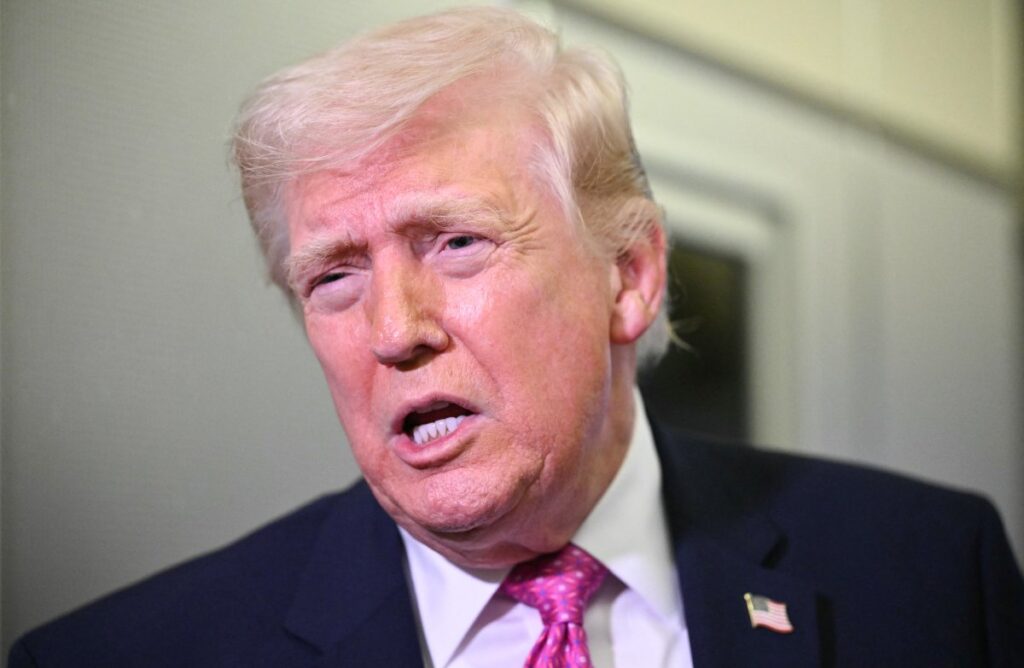
USA — President Donald Trump has openly floated the idea of seizing Iran’s oil resources, declaring that capturing the country’s primary export hub could serve American interests while dismissing domestic critics of the proposal as “stupid people.”
READ MORE ARTICLES:
- Pentagon Lawsuit May Shape Future AI Rules
- Donald Trump Delays Iran Strikes Amid Gulf Mining Threat
- Federal Judge Halts U.S. Plan to Scale Back Childhood Vaccine Recommendations
- Deadly Spring Storm Wreaks Havoc Across Eastern U.S.
- Donald Trump’s Mystery Claim: Ex-President ‘Regrets Not Bombing Iran’—But No One Confirms the Call
- ROTC Students Stop ISIS-Linked Shooter at Old Dominion University
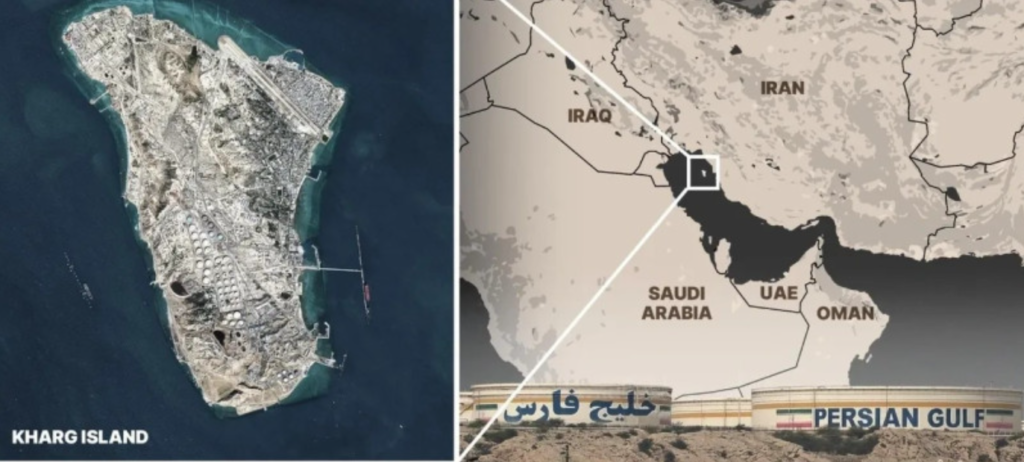
In a wide-ranging interview published Sunday,Donald Trump revealed that he is weighing the possibility of taking control of Kharg Island, Iran’s most critical oil export terminal. The island serves as the backbone of the country’s petroleum trade, handling the vast majority of crude shipments that sustain its economy. Trump indicated that unlike his administration’s long-term ambitions for Venezuela’s oil industry, which he suggested the United States would control “indefinitely” following the dramatic removal of its leader earlier this year, his approach toward Iran remains fluid.
“To be honest, my favorite thing would be to take the oil in Iran,” Donald Trump said candidly. “But some people back in the United States ask, ‘Why are you doing that?’ They’re stupid people.” He added that Washington has numerous strategic options on the table. “Maybe we take Kharg Island, maybe we don’t,” he said. “If we did, we’d likely have to stay there for some time.”
The remarks come as American military forces continue to build their presence in the Middle East amid a protracted and escalating conflict involving Iran and Israel, now entering its fifth week. In recent days, additional U.S. Marines have been deployed to the region, while plans are reportedly underway to send thousands more troops, including soldiers from the Army’s 82nd Airborne Division.
On Saturday, U.S. Central Command confirmed that approximately 3,500 additional service members arrived aboard the USS Tripoli, reinforcing the growing American footprint in the region. Behind closed doors, administration officials have reportedly been discussing the strategic and logistical implications of a potential operation targeting Kharg Island.
Kharg Island is widely regarded as the lifeline of Iran’s energy infrastructure. According to Iran’s Ministry of Petroleum, the facility functions as the central artery of the country’s oil sector. Crude oil from three major offshore fields — Aboozar, Forouzan, and Dorood — flows through an intricate web of subsea pipelines to onshore processing complexes before being stored and exported to global markets. Any disruption to this hub would deal a severe blow to Iran’s economy.
Iranian leaders have responded with sharp warnings. Parliamentary Speaker Mohammad Bagher Ghalibaf cautioned that any attempt to seize the island would trigger retaliatory strikes against the “vital infrastructure” of a regional state aiding such an operation, though he did not specify which country he meant.
On Sunday, Ghalibaf escalated his rhetoric further, issuing a direct threat toward U.S. ground forces. In a statement carried by the official IRNA news agency, he declared that Iranian fighters were prepared to confront American troops if they set foot on Iranian soil. “Our men are waiting for the arrival of American soldiers on the ground,” he said, vowing severe consequences not only for U.S. forces but also for their regional allies.
As tensions mount and troop deployments expand, Donald Trump remarks signal a bold and deeply controversial strategic posture. Whether the administration ultimately moves forward with any operation targeting Iran’s oil infrastructure remains uncertain. What is clear, however, is that the rhetoric and military maneuvers have heightened fears of a broader confrontation in an already volatile region.
Islamabad Summit: Regional Powers Race to Avert Wider Mideast War Amidst Escalating Conflict and Market Turmoil
Diplomacy intensifies in Islamabad as regional powers scramble to contain a war that is shaking energy markets and pushing the Middle East toward a broader confrontation.
Top diplomats from Pakistan, Saudi Arabia, Egypt, and Turkiye convened in Islamabad on Monday in an urgent bid to lay the groundwork for de-escalation in the war with Iran. The high-level talks reflect mounting alarm across the region as fighting disrupts global trade routes and sends oil prices sharply higher.
Brent crude, the global benchmark, climbed more than 3 percent in early trading to surpass $116 a barrel its highest level in nearly two weeks underscoring investor fears that prolonged instability could choke energy supplies. Roughly a fifth of the world’s oil typically transits the Strait of Hormuz, making any threat to the waterway a direct shock to the global economy.
The humanitarian toll continues to climb. Iran’s Ministry of Health reported that 2,076 people have been killed since the war began, including 216 children. At least 25 additional deaths have been recorded in member states of the Gulf Cooperation Council. The figures, which could not be independently verified, paint a grim picture of a conflict that shows few signs of slowing.
Speculation over Iran’s leadership has further fueled uncertainty. “We’ve not heard from him at all. He’s gone,” one official said, referring to the country’s head of state. Tehran, however, has firmly rejected rumors about his condition, insisting he is safe and in good health after an extended absence from public view triggered widespread conjecture.
The diplomatic push in Islamabad comes as former U.S. President Donald Trump unveiled what he described as a 15-point peace framework. Critics have labeled the proposal “maximalist,” arguing it demands sweeping concessions from Tehran without corresponding guarantees. Iranian officials have dismissed the plan outright, instead outlining their own conditions: an immediate halt to U.S.-Israeli attacks, reparations for wartime damage, and binding security assurances against future strikes.
In remarks to the Financial Times, Trump claimed Iran had agreed to allow 20 oil tankers to pass through the Strait of Hormuz beginning Monday “out of a sign of respect,” suggesting limited progress in backchannel negotiations. When pressed on the prospects for a ceasefire that would fully reopen the strait, Trump struck a combative tone.
“We’ve got about 3,000 targets left – we’ve bombed 13,000 targets and another couple of thousand targets to go. A deal could be made fairly quickly,” he said, adding, “We’re doing extremely well in that negotiation, but you never know with Iran because we negotiate with them and then we always have to blow them up.”
Trump also repeated claims that Iran’s new Supreme Leader, Mojtaba Khamenei, had been injured in the war. “The son is either dead or in extremely bad shape,” Trump said, referring to Mojtaba, the son of former Supreme Leader Ali Khamenei, who was killed on the first day of the war on February 28.
As rhetoric escalates and military operations continue, diplomats in Islamabad face a narrowing window to prevent the conflict from spiraling into a wider regional war one that could further destabilize global markets and redraw the strategic landscape of the Middle East.
The Art of the Deal Meets the Art of the Escalation
This report captures a quintessential Donald Trump-era paradox, one hand extending an olive branch through “direct and indirect” negotiations, while the other openly fantasizes about seizing Iran’s strategic oil hub, Kharg Island. The commentary here is not just about policy, but about the deliberate dismantling of diplomatic ambiguity.
The Normalization of Seizure as a “Favorite Thing”
Trump’s phrasing “my favorite thing is to take the oil” is extraordinary. It reduces an act of war (occupying Iranian territory) to a transactional preference, reminiscent of his earlier musings about taking Iraq’s oil. By calling his own advisors “stupid people” for questioning this, he signals that restraint is weakness. This language normalizes the idea that energy assets are legitimate spoils of conflict, a message that terrifies global commodity markets.
The Strategic Contradiction: Negotiation vs. Invasion
The article correctly highlights the volatile intersection of military escalation and energy security. What makes this moment uniquely dangerous is that Trump is telegraphing his red lines publicly. Typically, leaders conceal operational plans to maintain strategic surprise. Here, he openly dangles the possibility of seizing Kharg Island—Iran’s economic jugular while simultaneously claiming Iran is showing “goodwill” by letting oil pass. This incoherence is likely intentional: it keeps Tehran perpetually uncertain, unable to trust whether U.S. overtures are genuine or a prelude to invasion.
Kharg Island as a Pressure Point
Any move against Kharg Island would be catastrophic. As the article notes, it handles the vast majority of Iran’s crude exports. Seizing it would likely trigger an immediate Iranian response across the Strait of Hormuz, closing the world’s most critical chokepoint. Oil prices wouldn’t just rise; they could spike beyond $200 per barrel, triggering a global recession. Trump’s casual suggestion that a “sustained American presence” would be required ignores the quagmire risk: U.S. troops occupying Iranian soil would face relentless asymmetric warfare.
Iran’s Dignity
The response from Parliament Speaker Ghalibaf “we will never accept humiliation” is key. For Tehran, the issue is not just territorial integrity but surrender. Trump’s transactional mindset (oil for peace) collides with Iran’s revolutionary identity, which equates compromise with defeat. This is why “cautious optimism” about a deal may be misplaced: Iran might endure sanctions indefinitely, but it cannot endure the spectacle of U.S. troops planting a flag on Kharg Island.
A Negotiation Backed by a Loaded Gun
Trump appears to be practicing coercive diplomacy on steroids negotiating with one hand while describing the loaded gun in the other. But in the Middle East, such tactics often backfire. What he sees as leverage (“maybe we take it, maybe we don’t”) Tehran sees as proof that no agreement is safe. The article’s core insight is that the line between military escalation and diplomatic resolution has not just blurred it has been deliberately erased. The result is a volatile, unpredictable standoff where miscalculation, not strategy, may dictate the next war.
- Worst Country I’ve Visited- Thailand Girl, Stark Warning After Disappointing Vietnam Trip
- Artemis II | NASA, Voyage, Mission & Moon
- A Prayer of Thanksgiving for Divine Blessings, Triumph, Forgiveness, and Good Health
- NASA’s Artemis II Departs Earth Orbit for Historic Moon Flyby
- NASA: The Artemis Generation Takes Flight with Historic Artemis II Mission
- Victor Glover | Life, Education & NASA Career
- Philippines vs China, When Betrayal Comes from Within: The Cost of Selling a Nation
- Supreme Court Affirms Dismissal of GMA Network’s Complaint Against ABS-CBN Over TV Ratings Dispute
- List of political ideologies
- Andrew Heywood | British author, Educationalist, & political theorist
- Holy Wednesday: A Solemn Reminder on Judas Iscariot Betrayal of Jesus Christ
- Judas Iscariot | About in the Bible, Betrayal & Apostle
- Relief or Rhetoric? Imee Marcos’ Call to Suspend Government Deductions Remains Without Action—Just Words
- Gatchalian Renews Push to Keep Minors Off Social Media
- Donald Trump Floats Seizing Iran’s Kharg Island Oil Hub, Wider Middle East Conflict