A powerful late-winter storm system battered large parts of the United States on Monday, unleashing heavy snow, destructive winds, and a heightened risk of tornadoes that disrupted travel, forced school closures, and left thousands of flights grounded across the country.
Multifaceted storm system is delivering a punishing blow to the eastern United States, unleashing a chaotic mix of blinding snow in the Midwest, a high-stakes tornado threat in the mid-Atlantic, and paralyzing travel disruptions from the plains to the coast.
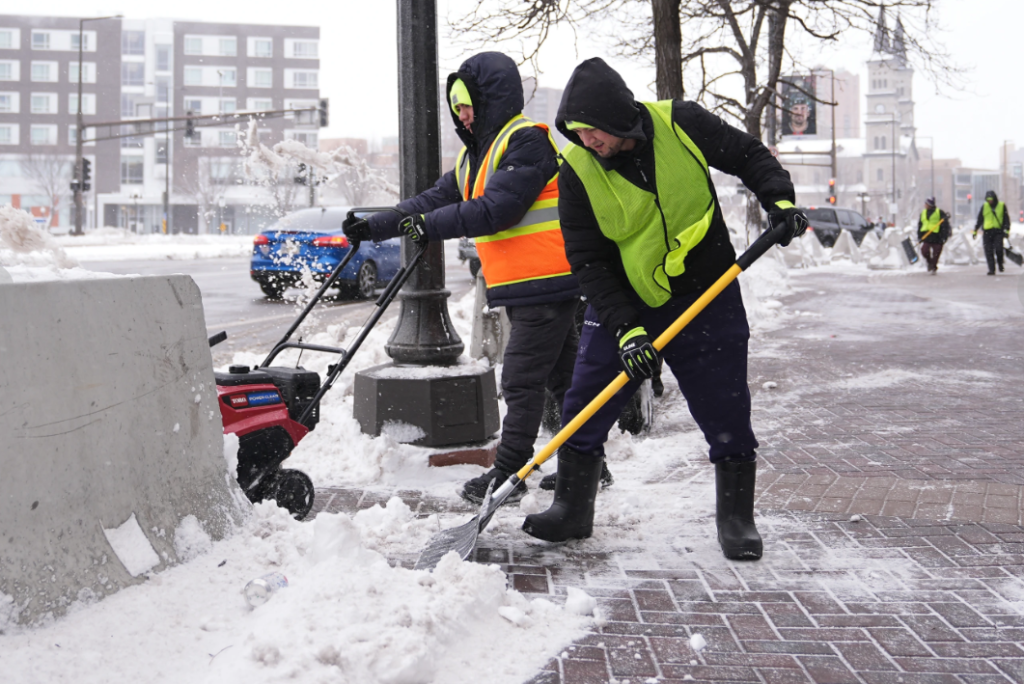
CHICAGO — It was a Monday of meteorological extremes as a potent cold front surged eastward, bringing what AccuWeather senior meteorologist Tyler Roys described as a series of “successive punches” to a vast swath of the nation. In the Upper Midwest, the punch was a wintry haymaker, with heavy snow and fierce winds creating blizzard-like conditions that rendered roads impassable and turned the landscape a featureless white. Further south and east, the atmosphere was primed for a different kind of violence.
OTHER STORIES:
- Deadly Spring Storm Wreaks Havoc Across Eastern U.S.
- ROTC Students Stop ISIS-Linked Shooter at Old Dominion University
- Iran Names Google, Amazon, Microsoft as Possible Targets
- Tragedy at Sea: Remembering Todd Meadows of ‘Deadliest Catch’
- LIST: Emergency Hotlines for Filipinos in Middle East
- Israel, US Strikes on Iran Fuel Middle East Crisis
- Donald Trump State of the Union Focuses on Jobs, Borders and Foreign Policy
- Kimberly Pagong: Duterte’s War on Drugs — Saving Millions or Misunderstood Leadership?
Forecasters warned that the greatest risk for high winds and tornadoes would target the densely populated mid-Atlantic, putting major cities and the nation’s capital on high alert. The culprit is a powerful line of severe storms—a “squall line”—expected to roar through the region.
“Whether it’s wind gusts from a squall line, blizzard or snow, or just wind because of the storm, you’re looking at several major airports being impacted,” Roys said, highlighting the storm’s immense reach. The numbers bore that out, with more than 2,000 flights canceled nationwide by Monday afternoon as airlines grappled with the sweeping conditions.
The Tornado Threat: A Race Against the Clock
The National Weather Service issued urgent warnings as the line of severe storms, which had fired up a day earlier, charged across the Mississippi, Tennessee, and Ohio Valleys. The energy was forecast to only intensify as it plowed into the Appalachians and then sped toward the East Coast. The agency warned of “severe thunderstorms with widespread damaging winds and several tornadoes.”
The zone of greatest concern stretched from parts of South Carolina up through Maryland. This corridor of risk includes major population centers like Raleigh, North Carolina; Richmond, Virginia; and Washington, D.C., where the timing of the storms—expected Monday afternoon and evening—posed a direct threat to the evening commute.
In anticipation of the impact, authorities across the region took no chances. Many school districts in North Carolina, South Carolina, and Virginia preemptively canceled classes for the day. In Maryland, numerous school systems announced early dismissals to get children home before the worst of the weather arrived. North Carolina Governor Josh Stein urged residents to enable emergency alerts on their phones, stressing the potential for danger as the state braced for possible wind gusts of up to 74 mph (119 kph).
A Frigid Aftermath and an Unrelated Hawaii Deluge
The storm’s fury, however, is just the opening act. By Tuesday, the powerful cold front is expected to push off the East Coast, and in its wake, it will usher in a dramatically different and dangerous cold.
Forecasters warned that by Tuesday morning, wind chills below freezing will plunge all the way to the Gulf Coast and the Florida Panhandle. Freeze warnings are already in effect for parts of the Southeast, extending into portions of Arkansas, Oklahoma, Louisiana, and Texas—a stark reminder that winter is not yet ready to relinquish its grip.
To the north, behind the front, the rain will transition to heavy snow. The central Appalachians of West Virginia could see accumulations of more than six inches, adding a blanket of late-winter snow to the rugged terrain.
Meanwhile, thousands of miles away in the Pacific, a separate and equally troublesome storm system continues to affect Hawaii, which endured severe flooding over the weekend. As the eastern half of the country battles wind, snow, and tornadoes, the islands are left mopping up from a deluge of their own.
The message from meteorologists is clear: this is a late-winter blast with a powerful, multifaceted punch, and for millions of Americans from the Great Lakes to the Gulf Coast, the worst is not yet over.
Storm of the Season Buries Great Lakes in 2 Feet of Snow, Paralyzes Travel, and Fans Flames on the Plains
A colossal, coast-to-coast storm system tightened its grip on the nation Monday, burying parts of the Upper Midwest in more than two feet of snow, grounding thousands of flights, and leaving a trail of power outages and even wildfire devastation in its wake.
From the blizzard-whipped shores of Lake Superior to the drought-stricken grasslands of Nebraska, the multifaceted tempest is proving to be one of the most impactful of the late winter season, delivering a series of knockout punches that have millions of Americans on edge.
The Upper Midwest: A World Turned White
In the Great Lakes region, the storm’s most dramatic chapter is being written in snow. Blizzard conditions persisted with a vengeance Monday across parts of Wisconsin and Michigan’s Upper Peninsula, where the storm had already unloaded as much as a staggering two feet of snow by morning—and it was far from over.
The National Weather Service issued urgent warnings that the worst was yet to come for some areas. An additional foot to 20 inches of snow, driven by powerful, gusty winds, was forecast for upper Michigan throughout the day, creating whiteout conditions and making travel not just difficult, but unthinkable.
“We’re basically prepared to just kind of hunker down for a few days if we need to,” said Jim Allen, 45, a resident of Michigan’s Upper Peninsula. He described the familiar, pre-storm rhythm of stocking up on necessities and preparing to make multiple passes with his shovel and snowblower. For Allen and thousands like him, Monday was a day to stay put as the world outside disappeared into a swirling mass of white.
The ferocity of the storm forced widespread closures. Schools in a number of communities across both states shuttered their doors, including in the city of Milwaukee and in Marquette, Michigan, where the snow piled high on empty streets and playgrounds.
Gridlock in the Sky and on the Roads
While snow depths of two feet captivated the north, even the comparatively lighter accumulations in major metropolitan hubs like Chicago and Milwaukee were enough to wreak havoc. AccuWeather meteorologist Tyler Roys warned that the combination of slushy roads and plummeting visibility would create a “troublesome” commute for millions.
That trouble extended to the nation’s air travel system, which found itself in the crosshairs of the storm’s immense reach. By early Monday, the flight-tracking website FlightAware reported more than 2,500 cancellations nationwide, with the chaos beginning to snowball. The disruptions followed a brutal Sunday that saw over 3,200 flights canceled and more than 10,200 delayed.
The ripple effects were felt at major hubs far from the heaviest snow. At Chicago’s O’Hare International Airport, a key nexus for global travel, more than 350 flights were grounded. Even in Atlanta, hundreds of miles from the blizzard, Hartsfield-Jackson International—the world’s busiest airport—saw more than 200 cancellations as aircraft and crews were stranded out of position by the sprawling system.
A Region Plunged into Darkness and a State Set Ablaze
As snow fell in the north, the storm’s powerful winds, which had gusted up to 85 mph in some areas as early as Friday, left a legacy of darkness. According to PowerOutage.us, more than 250,000 utility customers across six Great Lakes states were without electricity early Monday, many still waiting for the lights to come back on days after the initial winds snapped power lines and toppled trees.
The grid was even more fragile further south. Another half-million customers were in the dark in a band stretching from Texas to Kentucky, a testament to the storm’s continental scale.
But perhaps the most stark contrast to the frozen north was playing out in Nebraska, where the same powerful storm system, with its howling winds and bone-dry air, had created a tinderbox. State officials reported that approximately 30 National Guard members were deployed to combat multiple wildfires sweeping across a broad swath of range and grassland.
The flames, fanned by the same winds that were piling snowdrifts in Michigan, moved with terrifying speed. Tragically, the state reported at least one fatality related to the fires, a somber reminder that this storm’s currency is not just snow and ice, but also destruction by fire.
As Monday wore on, the message from the Upper Peninsula to the plains was the same: this was a day for vigilance. For Jim Allen in Michigan, it meant the quiet hum of a snowblower and the comfort of a stocked pantry. For families fleeing flames in Nebraska, it meant a frantic escape. And for millions in between, it meant watching the skies and waiting for a monster storm to finally pass.
Maui Bombarded by Historic Rainfall, Triggering Landslides and Daring Rescues
KĪHEI, Hawaii — The postcard-perfect image of Maui, with its sun-drenched shores and verdant peaks, has been temporarily replaced by a scene of relentless fury. As the heavens refused to close, the Valley Isle found itself in a battle against water on Sunday, with record-shattering rainfall turning serene streams into destructive torrents, swallowing roads and threatening homes.
In a stark reminder of nature’s awesome power, Maui County officials reported that some areas of the island were inundated with more than 20 inches (51 centimeters) of rain, a deluge that has transformed the landscape into a quagmire of mud and debris.
“We are in an unprecedented event,” Maui County Mayor Richard Bissen stated in a social media update, as the county scrambled to respond to widespread flooding, road closures, and the opening of emergency shelters for displaced families.
A Community on Edge
The heavy rains triggered a series of dramatic landslides that sheared away sections of coastal roads and sent torrents of mud sliding toward residential neighborhoods. Emergency crews were dispatched throughout the night for high-water rescues, pulling residents from stranded vehicles and inundated homes. In one harrowing incident, first responders evacuated a family after a home partially collapsed under the weight of the saturated ground and flowing water.
By Sunday evening, Maui County officials announced a downgrade of an earlier evacuation notice, offering a glimmer of relief. Crews are now working around the clock, operating pumps at full capacity to drain retention basins and prevent them from overtopping, a move aimed at stabilizing the immediate threat to nearby communities.
‘Never Seen This Much Rain’
For long-time residents, the scale of the flooding is beyond any memory. Jesse Wald, a real estate broker and resident who has called Maui home for two decades, watched in disbelief as a familiar coastal road crumbled into the surf. His video of the collapse, which quickly circulated on social media, shows a gaping wound in the asphalt where the ocean now churns.
“In the 20 years I’ve been here I’ve never seen this much rain,” Wald said, describing how other arteries were completely severed, not by the collapse of pavement, but by being choked off by thick rivers of mud and sediment.
His sentiment echoes across the island, where the storm has rewritten the rules of what is normal. The relentless downpour has saturated the ground to its breaking point, turning once-stable hillsides into slow-moving rivers of earth.
As the rain continues to fall into Sunday night and Monday morning, the focus remains on safety and recovery. Shelters remain open for those whose homes are no longer safe, and county officials are urging residents in low-lying and flood-prone areas to remain vigilant.
The storm serves as a sobering chapter in Maui’s history—a moment when the island’s tropical beauty was overshadowed by the raw, untamed force of a historic weather event. For now, the community hunkers down, waiting for the skies to clear and the long process of digging out to begin.
- Worst Country I’ve Visited- Thailand Girl, Stark Warning After Disappointing Vietnam Trip
- Artemis II | NASA, Voyage, Mission & Moon
- A Prayer of Thanksgiving for Divine Blessings, Triumph, Forgiveness, and Good Health
- NASA’s Artemis II Departs Earth Orbit for Historic Moon Flyby
- NASA: The Artemis Generation Takes Flight with Historic Artemis II Mission