On February 25, 2026, the Philippines commemorates the 40th anniversary of the historic EDSA People Power Revolution—a peaceful uprising that ended the 20-year dictatorship of Ferdinand Marcos Sr. and restored democratic rule. (VIEW PICTURE)
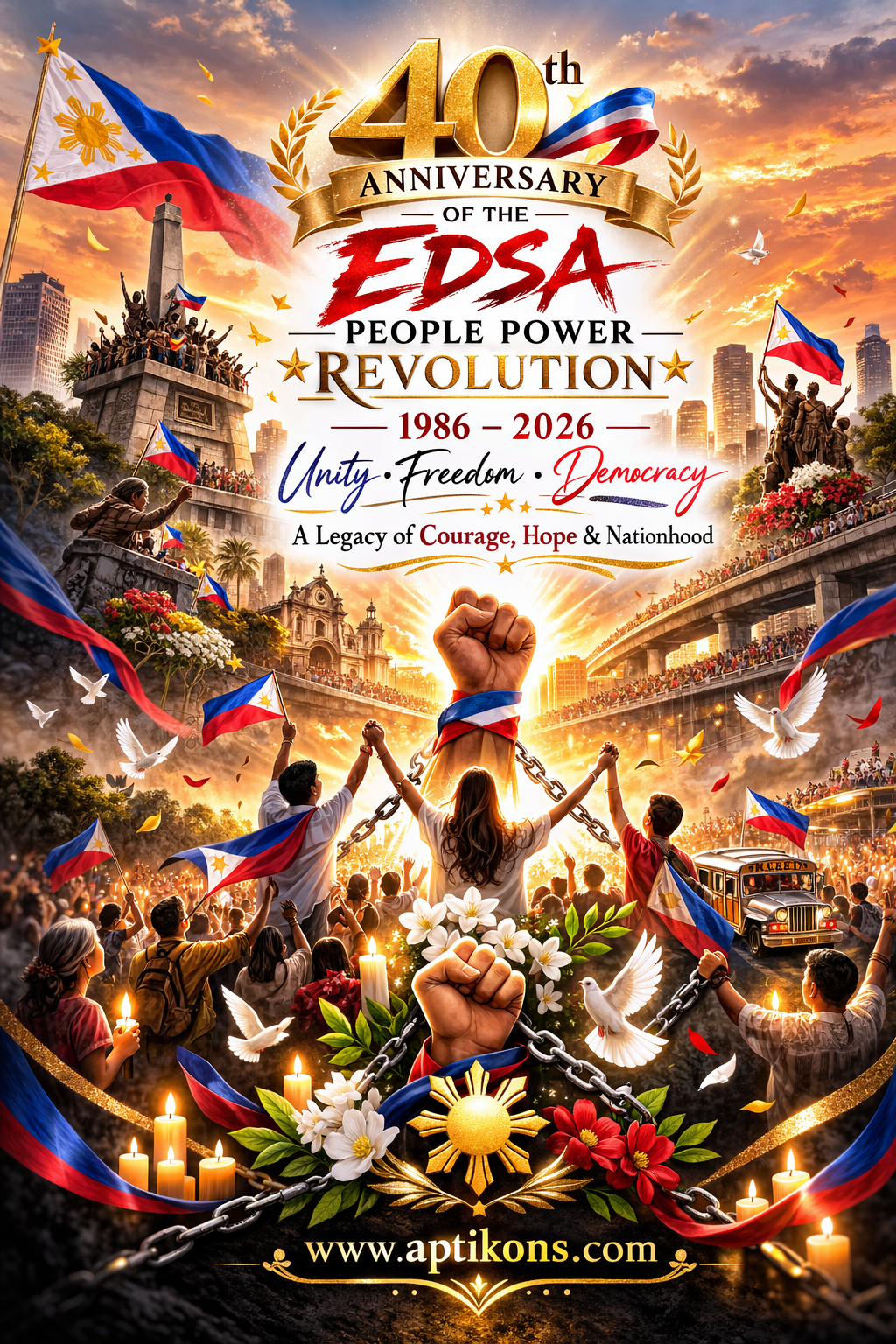
Four decades after millions of Filipinos filled Epifanio de los Santos Avenue in a dramatic display of unity, faith, and courage, the nation once again turns its gaze to EDSA—not only to remember the past, but to confront the present.
READ MORE ARTICLES:
- Missing of Nancy Guthrie
- DepEd Heroes: Teacher Jeric Maribao Honored for Exceptional Dedication and Innovation
- Reward Increased in Nancy Guthrie Missing Person Case
- Truth Behind the Jeffrey Epstein Files and McDonald’s Claims
- Meta Platforms to Shut Down Messenger.com
- U.S. Department of Justice Issues New Subpoenas in Probe of Donald Trump Adversaries
- Iran Seeks Mutually Beneficial Nuclear Deal with U.S.
A Milestone of Memory and Mobilizatio
This year’s theme echoes both commemoration and conviction. A major mobilization dubbed “EDSA 40: Tuloy ang Laban sa Korapsyon at Kahirapan” is set from 1:00 PM to 5:00 PM, drawing citizens to the historic EDSA Shrine and the People Power Monument.
Organizers say the gathering—also referred to as “Trillion Peso March Part 3”—aims to demand accountability over alleged corruption, including controversy surrounding a ₱1.9-trillion flood control project. Protest leaders emphasize that the spirit of 1986 lives on in today’s calls for transparency and good governance.
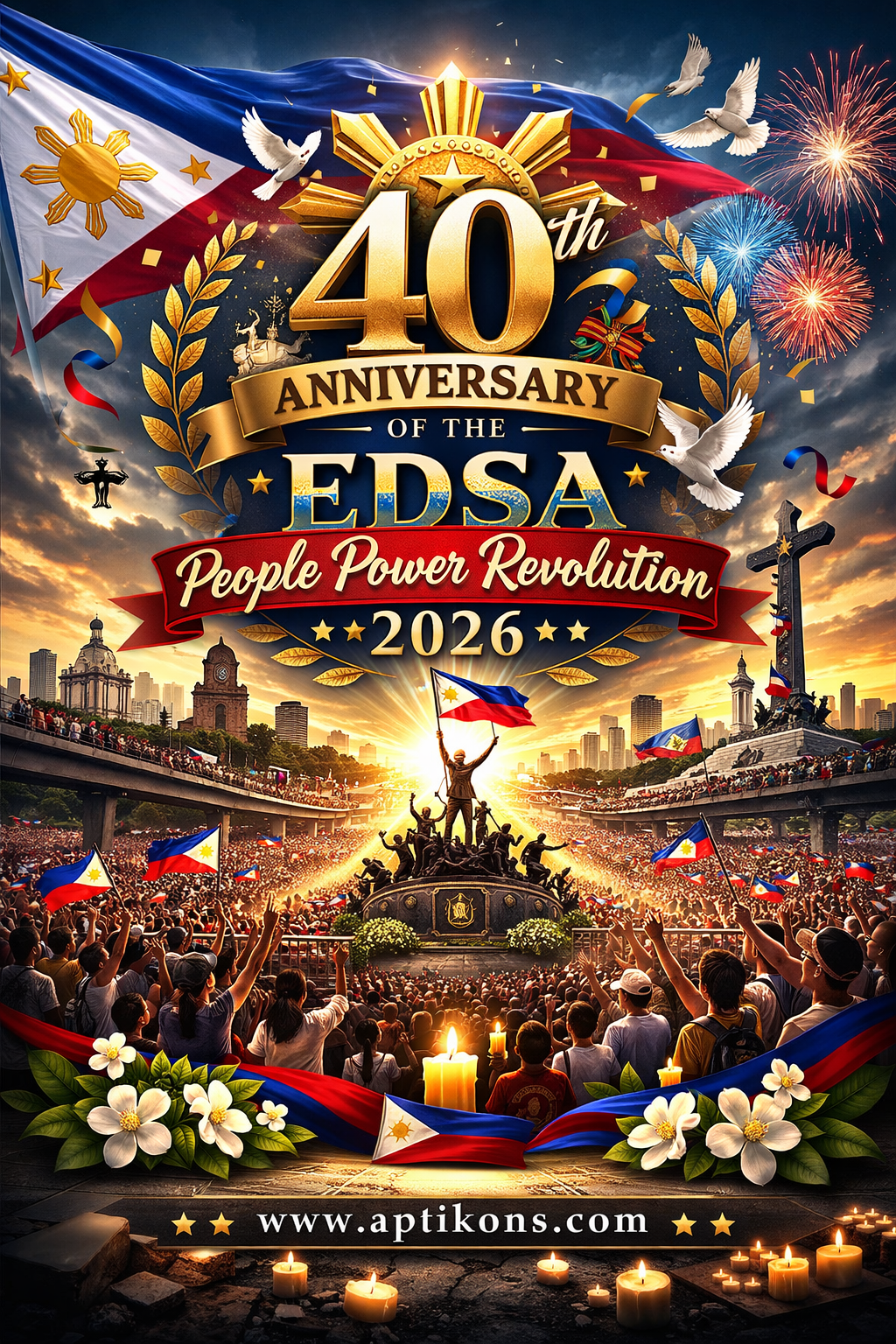
Meanwhile, music and memory intertwined during the “People Power 40 sa QC: Awit at Aksyon Kontra Korapsyon” kick-off concert held February 21 at the Quezon Memorial Circle. Celebrated Filipino acts including Rivermaya, Ebe Dancel, and Ice Seguerra performed before thousands, blending anthems of resistance with renewed civic engagement. (VIEW PICTURE)
Key Events and Activities
A major mobilization, dubbed “EDSA 40: Tuloy ang Laban sa Korapsyon at Kahirapan” (EDSA 40: Continuing the Fight Against Corruption and Poverty), is scheduled for February 25, drawing protesters to the EDSA Shrine (EDSA-Ortigas) and the People Power Monument. Participants are demanding accountability regarding alleged corruption, particularly focusing on the controversial ₱1.9-trillion flood control project.
In the lead-up to the anniversary, a concert titled “People Power 40 sa QC: Awit at Aksyon Kontra Korapsyon” (People Power 40 in QC: Song and Action Against Corruption) was held on February 21 at the Quezon Memorial Circle, featuring prominent artists such as Rivermaya, Ebe Dancel, and Ice Seguerra.
Official commemorative rites are being led by the National Historical Commission of the Philippines (NHCP) at the People Power Monument, honoring the historical significance of the event.
The Catholic Bishops’ Conference of the Philippines (CBCP) has issued a pastoral letter urging Filipinos to “remember, repent, and respond,” with a commemorative Mass expected to be held at the EDSA Shrine, emphasizing the spiritual dimension of the anniversary.
Official and Religious Observances
The National Historical Commission of the Philippines (NHCP) is leading formal rites at the People Power Monument, reaffirming the revolution’s place in the nation’s democratic narrative.
In a pastoral letter, the Catholic Bishops’ Conference of the Philippines (CBCP) urged Filipinos to “remember, repent, and respond.” A commemorative Mass at the EDSA Shrine is expected to draw faithful who credit the Church’s moral leadership as pivotal during the 1986 uprising.
Holiday Status and Academic Participation
February 25 has been declared a special working day nationwide. Despite this classification, several private institutions have opted to suspend classes to encourage reflection and participation.
Among them are Ateneo de Manila University, which declared a University Holiday; De La Salle Philippines schools; Miriam College, observing a Day of Reflection; and Adamson University.
Heightened Security Measures
The National Capital Region Police Office (NCRPO) has placed Metro Manila on full alert status, anticipating approximately 30,000 participants at the main events.
Authorities have designated the EDSA Shrine as a no-rally zone to manage traffic flow and public safety, directing mass demonstrations toward the People Power Monument area instead.
The Legacy at 40
The 1986 revolution remains one of the most cited examples of peaceful democratic transition in modern history. Images of civilians facing tanks with rosaries and yellow ribbons became global symbols of nonviolent resistance.
Forty years on, the anniversary is not merely a commemoration of a historic victory—it is a mirror held up to the present. For many Filipinos, EDSA at 40 is both celebration and challenge: a reminder that democracy is not a finished achievement, but an ongoing responsibility.
Forty years after the historic EDSA People Power Revolution, the legacy of this pivotal moment in Philippine history continues to shape the nation’s identity, governance, and collective consciousness. The peaceful uprising, which ousted the dictator Ferdinand Marcos Sr. in February 1986, stands as a powerful testament to the Filipino people’s courage, unity, and unwavering commitment to democracy.
A Triumph of People Power
The EDSA Revolution, also known as the People Power Revolution, demonstrated the extraordinary potential of non-violent resistance. Millions of Filipinos from all walks of life – students, religious leaders, activists, and ordinary citizens – converged on Epifanio de los Santos Avenue (EDSA) in Metro Manila, peacefully protesting against the Marcos regime. Their collective action, fueled by a desire for freedom and justice, inspired the world and set a precedent for similar movements in other countries.
Restoration of Democracy
One of the most significant achievements of the EDSA Revolution was the restoration of democracy in the Philippines after two decades of authoritarian rule. The revolution paved the way for the establishment of a new constitution, the reinstatement of civil liberties, and the holding of free and fair elections. Corazon Aquino, the widow of assassinated opposition leader Benigno “Ninoy” Aquino Jr., assumed the presidency, symbolizing a new era of hope and democratic governance.
Challenges and Unfulfilled Promises
Despite its transformative impact, the EDSA Revolution also faced challenges and unfulfilled promises. While democracy was restored, deep-seated social and economic inequalities persisted. Corruption, poverty, and political dynasties continued to plague the country, hindering progress and undermining the aspirations of many Filipinos.
A Continuing Struggle
The legacy of EDSA remains a subject of debate and interpretation. Some argue that the revolution failed to deliver on its promises of social justice and economic equality, while others emphasize its enduring significance as a symbol of democratic ideals and people power.
Today, as the Philippines commemorates the 40th anniversary of the EDSA Revolution, it is essential to reflect on its lessons and challenges. The spirit of EDSA calls for continued vigilance, active citizenship, and a renewed commitment to building a more just, equitable, and democratic society. The legacy of EDSA is not just a memory of the past but a living force that inspires Filipinos to strive for a better future.
Metro Manila Schools Suspend Classes for EDSA Revolution’s 40th Anniversary
In commemoration of the 40th anniversary of the EDSA People Power Revolution on February 25, 2026, numerous universities, colleges, and schools across Metro Manila have announced class suspensions, allowing students and faculty to participate in the day’s events.
Despite February 25 being declared a special working day nationwide, these educational institutions are prioritizing the opportunity for their communities to reflect on the significance of the 1986 EDSA Revolution. This historic event ousted the late President Ferdinand Marcos Sr. and ushered in Corazon Aquino, widow of the assassinated Senator Benigno “Ninoy” Aquino Jr., as the nation’s new leader.
As of February 20, the following schools have confirmed class suspensions:
- Ateneo de Manila University: Declared a University Holiday, encouraging its community to join EDSA events alongside other schools, communities, parishes, and organizations.
- De La Salle Philippines schools: Announced a class and work suspension to enable participation in mobilization efforts related to the EDSA anniversary.
- University of Santo Tomas: Suspended classes and office operations in commemoration of the EDSA anniversary.
- University of the East: Suspended classes at both its Manila and Caloocan campuses in observance of the EDSA anniversary.
- Colegio de San Juan de Letran: Announced an Academic Holiday, suspending both classes and office operations.
- Mapúa University: Will have no classes at its Intramuros, Makati, and Ayala Malls Manila Bay campuses.
- Adamson University: Declared a Non-Working School Holiday, meaning no classes and work in offices, encouraging its community to participate in EDSA events.
- Miriam College: Will observe a school holiday as a Day of Reflection on the EDSA anniversary.
The decision by these institutions reflects a broader effort to engage the younger generation in understanding and appreciating the historical importance of the EDSA People Power Revolution and its impact on the Philippines.
- Iran Names Google, Amazon, Microsoft as Possible Targets
- Iran–Philippines Ties to Become ‘Even Brighter,’ Says Ambassador
- Iranian Community in Philippines Faces Bank, GCash Issues & Stereotypes
- Ron Angeles Sex Scandal
- Rihanna’s LA Mansion Targeted in Gunfire Attack While She Was Home
- Mojtaba Khamenei
- Vladimir Putin Welcomes Mojtaba Khamenei as Iran’s New Leader
- Oil Prices Surge as Mojtaba Khamenei Takes Power Amid Middle East Tensions
- DepEd Ipinatupad ang 4-Day Work Week
- History of Iran
- Pacquiao Sues Over False Allegations in Mayweather Fight Dispute
- DepEd Targets 24,000 New Classrooms by the End 2026
- Tragedy at Sea: Remembering Todd Meadows of ‘Deadliest Catch’
- LIST: Emergency Hotlines for Filipinos in Middle East
- March 2026 Full Moon: Blood moon lunar eclipse