Iranian President Masoud Pezeshkian told the United Nations General Assembly on Wednesday that Iran “has never sought and will never seek to build a nuclear bomb,” emphasizing cooperation and mutual respect among nations.
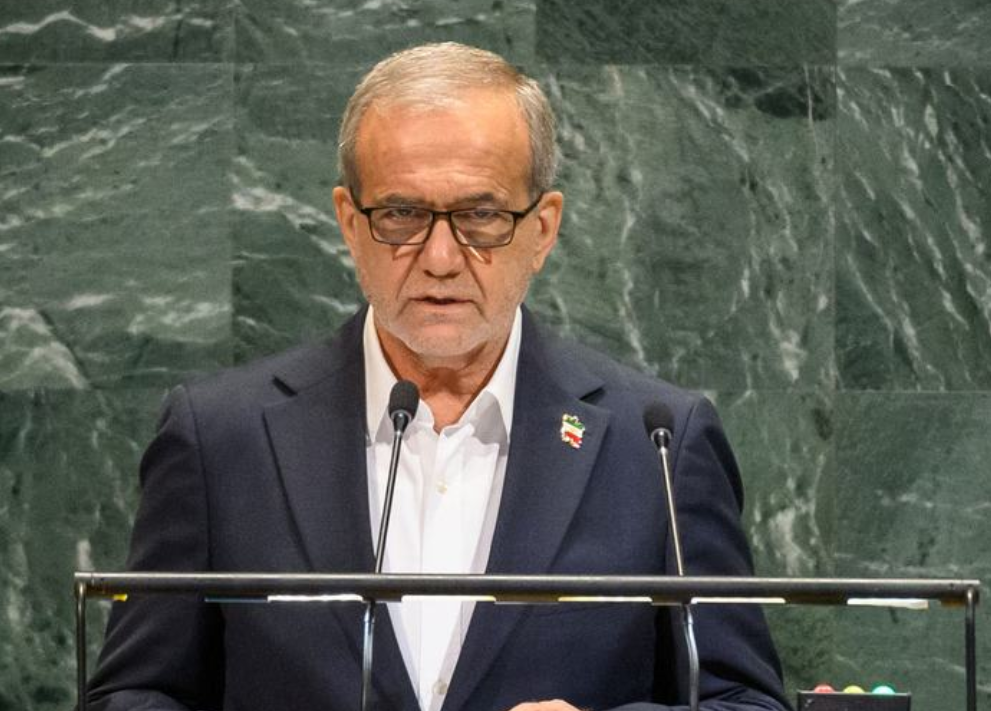
UNITED NATIONS – Iranian President Masoud Pezeshkian emphatically declared on Wednesday that his nation has no intention of developing nuclear weapons, using his address to the UN General Assembly to advocate for peace, equality, and regional stability. Pezeshkian’s remarks come amidst ongoing international scrutiny of Iran’s nuclear program and a backdrop of significant regional conflicts.
President Pezeshkian opened his address by emphasizing the universal principle of mutual respect and equality among all peoples, drawing parallels to the core tenets of divine religions and human conscience. “The bedrock of all divine religions and of the human conscience is this golden maxim: that which you would not approve for yourself, do not approve for others,” he stated, posing a rhetorical question to world leaders about their tolerance for atrocities like those witnessed in Gaza and Lebanon.
READ MORE ARTICLES:
- Donald Trump Delays Iran Strikes Amid Gulf Mining Threat
- Pakistani Farmers Sue German Firms Over 2022 Floods
- Iran Allows Select Ships Safe Passage Through Strait of Hormuz
- Iran Intel Chief Esmail Khatib Killed
- UAE Air Defences Intercept Iranian Missile and Drone Threats
- Israel says it kills Iran security chief Larijani, Basij commander
- Federal Judge Halts U.S. Plan to Scale Back Childhood Vaccine Recommendations
- Deadly Spring Storm Wreaks Havoc Across Eastern U.S.
The Iranian leader did not shy away from condemning recent events, referencing the “genocide in Gaza,” destruction in Lebanon, devastation in Syria, and assaults on Yemen, as well as the assassination of Iranian scientists. He specifically decried what he termed a “savage aggression” against Iran’s nuclear facilities and infrastructure in June, which he characterized as a “grave betrayal of diplomacy” occurring precisely when Iran was pursuing diplomatic negotiations. Pezeshkian warned that failing to address such breaches of international norms could lead to wider global instability.
Addressing regional dynamics, Pezeshkian spoke against the concept of a “Greater Israel,” instead advocating for a vision of a strong region where Iran and its neighbors cooperate for a “radiant future.” He reiterated Iran’s long-standing commitment to establishing a region free of weapons of mass destruction, while criticizing nations possessing the largest nuclear arsenals for imposing pressures on Iran based on “spurious allegations.”
In a direct reference to recent UN Security Council actions regarding sanctions against Iran, Pezeshkian criticized the efforts by “three European States” and the United States to reinstate sanctions, viewing it as a continuation of a decade of “bad faith.” He concluded his address with a firm reiteration: “I hereby declare once more before this Assembly that Iran has never sought and will never seek to build a nuclear bomb.” He stressed that the future should be built on cooperation, trust, and shared development for all nations.
Iran’s Commitment to Peace and Nuclear Non-Proliferation: Insights from President Pezeshkian’s UN Address
In recent years, the geopolitical landscape surrounding nuclear proliferation has become increasingly complex, especially concerning Iran. President Pezeshkian’s address at the United Nations General Assembly stands as a pivotal moment amid ongoing global discussions about nuclear policy, peace initiatives, and diplomatic relations. Historically, Iran has maintained a committed stance on the development of its nuclear program, citing energy needs and the pursuit of scientific advancement. However, this ambition has often brought the country into direct conflict with international norms and expectations, leading to sanctions and heightened scrutiny.
The backdrop of President Pezeshkian’s speech is rooted in this contentious history. The Joint Comprehensive Plan of Action (JCPOA), established in 2015, represented a significant diplomatic effort to curtail Iran’s nuclear ambitions in exchange for sanctions relief. Still, the agreement’s future has appeared precarious, particularly following the United States’ withdrawal in 2018. This tension underscores the importance of dialogue and reaffirmation of commitments to peace and non-proliferation. President Pezeshkian’s address aims to reiterate Iran’s willingness to engage with the international community on these critical issues.
The address also occurs within a larger context of shifting alliances and increasing concerns over nuclear capabilities in the Middle East, particularly with countries such as Israel and Saudi Arabia pursuing advanced military technology. The geopolitical stakes are high, necessitating a careful and considered approach in discussions related to nuclear policy. In this environment, the significance of President Pezeshkian’s speech is manifold. It reflects Iran’s broader aspirations for regional stability while also positioning the nation as a player committed to enriching the dialogue on nuclear non-proliferation, ultimately aiming for a peaceful resolution to long-standing tensions.
Key Quotes and Themes from the Address
In his recent address at the United Nations, President Pezeshkian articulated a vision centered around the principles of equality, mutual respect, and the moral responsibilities of global leaders. These themes resonate deeply within the context of international diplomacy and nuclear non-proliferation, reiterating the importance of cooperation over conflict.
One of the notable quotes from his speech emphasized, “True equality among nations is not merely a concept; it is a necessity for global stability and peace.” This statement underlines the need for nations to recognize each other’s sovereignty and equal standing on the world stage. By advocating for a world where no nation feels superior or inferior, President Pezeshkian calls for a collective approach to solving pressing issues, such as the proliferation of nuclear weapons.
Additionally, he stated, “Respect for international agreements is paramount to sustaining peace and security.” This declaration serves as a reminder that adherence to treaties and protocols is fundamental in fostering trust and accountability among nations. It highlights the philosophical underpinning of diplomacy, which relies heavily on the commitment of countries to uphold their obligations. In this context, the address sought to hold world leaders accountable for their roles in nurturing international peace and stability.
Moreover, President Pezeshkian underscored the moral obligation of leaders to prioritize humanitarian needs over military pursuits, asserting that, “The greatest weapon against war is compassion.” This poignant remark encapsulates the essence of diplomatic engagement, urging leaders to adopt a humane approach in addressing conflicts and fostering understanding. Thus, the address serves as a critical reflection on the ethical dimensions of diplomacy, inviting a discourse on the need for responsible leadership in an interconnected world.
Iran’s Stance on Nuclear Weapons
In his address at the United Nations, President Pezeshkian unequivocally declared that Iran has no intention of pursuing the development of nuclear weapons. This statement is pivotal not only in shaping regional dynamics but also in influencing global perceptions of Iran’s nuclear policy. Iran has consistently maintained that its nuclear program is focused solely on peaceful purposes, such as energy generation and medical applications, aligning with its rights as a signatory to the Treaty on the Non-Proliferation of Nuclear Weapons (NPT).
By affirming its non-developing stance on nuclear weapons, Iran seeks to alleviate the persistent concerns of its neighboring countries and the international community regarding its nuclear ambitions. This clarification may serve to foster a more stable regional environment that could lead to enhanced diplomatic relations and cooperation. The reassurance that Iran is not pursuing a nuclear arsenal is likely to impact how other nations engage with it, crafting a narrative of Iran shifting towards constructive dialogue rather than military confrontation.
Moreover, this statement is instrumental in countering long-standing accusations that have painted Iran as a rogue state bent on nuclear proliferation. It attempts to reshape the narrative and show that Iran’s policies are rooted in a commitment to peace and security in the Middle East. By addressing these concerns head-on, President Pezeshkian’s remarks aim to open the doors to constructive discussions that prioritize stability over fear.
In summary, Iran’s declaration not to pursue nuclear weapons carries significant implications, marking a potential turning point in regional relations and addressing global concerns over nuclear proliferation. Such assertions play a crucial role in redefining Iran’s image on the international stage and fostering an environment conducive to peace.
In his recent address to the United Nations, President Pezeshkian expressed significant concerns regarding the ongoing international aggression directed at Iran, particularly highlighting the military actions taken by the United States and Israel. These airstrikes not only challenge the sovereignty of the Iranian state but also raise profound questions about compliance with international law. Pezeshkian emphasized that such unilateral military interventions violate the principles outlined in the United Nations Charter, particularly the norms regarding the prohibition of the use of force against the territorial integrity of sovereign nations.
President Pezeshkian’s critique centers around the deleterious impact of these actions on global peace and security, particularly in the context of ongoing diplomatic negotiations surrounding Iran’s nuclear program. He argues that aggression undermines the possibility of fruitful dialogue, which is crucial for achieving long-term stability in the region. The bombardment tactics employed by external powers not only exacerbate tensions but also bolster extremist narratives that further complicate peaceful resolutions.
The implications of these military actions extend beyond Iran’s borders, potentially destabilizing neighboring countries and fostering an environment of mistrust. Pezeshkian urged the international community to reconsider the ramifications of such aggressive tactics, advocating instead for diplomatic engagement as a means to address mutual concerns surrounding nuclear proliferation. He posited that constructive dialogue—rather than military confrontation—remains essential in resolving differences and building partnerships based on respect and equality.
In summary, the criticism articulated by President Pezeshkian reflects a broader call for respect for international law and an end to actions that serve only to deepen divisions. By emphasizing the need for diplomatic engagement over aggression, the message resonates with calls for a cooperative framework focusing on peace, dialogue, and shared security interests.
Vision for Regional Cooperation
In his recent address to the United Nations, President Pezeshkian laid out a comprehensive vision for regional cooperation in the Middle East, emphasizing the importance of collaborative efforts among neighboring countries to foster peace and development. He posited that genuine regional alliances can address shared challenges, promote mutual interests, and ultimately enhance stability in the region. This approach stands in stark contrast to the disruptive geopolitical projects that, according to him, have historically contributed to instability and conflict.
Pezeshkian highlighted the potential for a framework based on respect, trust, and equal partnership among regional players. By inviting neighboring countries to engage in dialogues and joint initiatives, he envisions a path toward dismantling longstanding animosities and fears that have prevented cooperative endeavors. The focus of this regional cooperation would extend beyond mere political alliances, emphasizing economic collaboration, cultural exchanges, and joint efforts in tackling pressing issues such as climate change, public health, and terrorism.
Furthermore, the President underscored the necessity of excluding external interference in regional affairs, which he argued often exacerbates tensions and fosters hostility. By fostering a unified front among neighboring states, Pezeshkian believes that the region can present a consolidated effort to counter destabilization efforts projected by non-regional actors. This perspective invites a substantive reevaluation of how regional dynamics are constructed and how neighboring states can synergistically respond to external threats.
President Pezeshkian’s vision presents a hopeful narrative that transcends blame and seeks collective solutions. He stressed that to achieve lasting peace and mutual prosperity, Iran and its neighbors must prioritize partnership over polarization, framing a future where collaborative endeavors replace divisive agendas. This call for regional cooperation not only aims to transform the geopolitical landscape of the Middle East but also encourages a shared responsibility for building a resilient and peaceful community.
Historical Context of Violence in the Region
The Middle East has been a region marked by turbulence and unrest, with significant conflicts shaping its modern history. In recent years, particularly, the situation in Gaza, Lebanon, Syria, and Yemen has escalated, highlighting the urgent need for dialogue and peace. President Pezeshkian’s address at the United Nations brought attention to these ongoing crises, reflecting Iran’s perspective on the challenges faced in the region. Each conflict not only has unique historical roots but also resonates with broader themes of national sovereignty, sectarian tensions, and geopolitical interests.
The conflict in Gaza remains a tragic example of protracted violence, characterized by military confrontations and humanitarian crises. The Israeli-Palestinian conflict has perpetuated cycles of violence and has contributed to instability in not just Gaza but the entire region. In contrast, Lebanon’s situation is intertwined with the ramifications of the Syrian civil war and the influence of external powers, complicating its internal politics and leading to heightened sectarian strife.
Syria, once a relatively stable nation, has been devastated by civil war since 2011, resulting in significant loss of life and displacement. Iran views its involvement in Syria as a means to protect its interests and counter perceived threats, which adds layers of complexity to the situation. Furthermore, Yemen’s ongoing conflict, which has seen considerable humanitarian suffering, poses a challenge not only for the nation itself but for regional stability as well. The war in Yemen is often framed within the context of Iranian-Saudi rivalry, showcasing how regional powers influence local conflicts.
In this intricate landscape, President Pezeshkian’s remarks emphasize the necessity for a united front among Middle Eastern nations. He advocates for collaborative solutions to these crises, positing that peace and security can only be achieved through mutual understanding and diplomacy. Understanding these interconnected conflicts is essential for grasping Iran’s narrative regarding both the challenges and pathways to peace in the region.
The Call for a Weapons-Free Region
In his recent address to the United Nations, President Pezeshkian emphasized the pressing need for a weapons-free region. This advocacy aligns with Iran’s historical position on disarmament and non-proliferation, showcasing the nation’s commitment to fostering peace and stability not only within its borders but also in the broader Middle East. The complex geopolitical landscape, characterized by long-standing rivalries and heightened tensions, throws into relief the challenges faced in achieving such a goal.
Pezeshkian’s call for regional disarmament highlights the necessity of collaboration among nations to eliminate weapons of mass destruction (WMD). He reiterated that peace in the region can only be attained through concerted efforts aimed at disarmament and the establishment of mutual trust. This call resonates with various international treaties and agreements that strive to mitigate the proliferation of nuclear weapons, underscoring the idea that disarmament is not merely an idealistic pursuit but a practical necessity for regional security.
Furthermore, the complexities surrounding disarmament efforts are compounded by existing geopolitical tensions, including the contentious relationships between Iran and other nations within the region. Skepticism and mistrust often hinder negotiations, with many nations prioritizing their national security over collective disarmament initiatives. As such, President Pezeshkian advocates for a dialogue-based approach, urging nations to engage in open discussions that foster transparency and cooperation.
For Iran, the journey towards a weapons-free region is vital not just for its own security, but for the stability and prosperity of its neighbors. By promoting the idea of disarmament, President Pezeshkian is positioning Iran as a responsible global actor striving for peace, aiming to shift the narrative away from conflict towards a future characterized by dialogue and reconciliation. The path to achieving a nuclear-free region is fraught with challenges, but the commitment to this goal remains fundamental to Iran’s foreign policy objectives.
Challenges Faced by Iran in International Diplomacy
Iran has faced significant diplomatic challenges in the arena of international relations, particularly as it relates to its nuclear program and the broader geopolitical context. A key factor in these challenges is the imposition of economic sanctions by several Western nations, which have resulted in heightened tensions and a strained economy. The sanctions have not only impacted Iran’s ability to engage in normal trade practices and diplomatic interactions but have also generated a perception of Iran as a pariah state within certain international forums.
Moreover, the failure of negotiations surrounding the Joint Comprehensive Plan of Action (JCPOA) has underscored the difficulties that Iran encounters in its diplomatic engagements. Initially heralded as a landmark agreement aimed at curbing Iran’s nuclear ambitions in exchange for economic relief, the JCPOA has been plagued by volatility, particularly after the unilateral withdrawal of the United States in 2018. This development not only diminished trust between Iran and Western powers but also complicated ongoing efforts to revive the agreement or establish new frameworks for dialogue.
The repercussions of these diplomatic hurdles extend beyond immediate economic concerns, as they also influence Iran’s foreign relations with other countries. The polarizing nature of its nuclear policy has made it challenging for Iran to build alliances, particularly in regions where there are competing interests. Countries such as Saudi Arabia and Israel have taken a strong stance against Iran’s nuclear developments, further complicating the prospects for peaceful negotiations and collaboration in regional security initiatives.
As Iran navigates these complexities, it faces the dual challenge of advocating for its sovereign rights to develop its nuclear capabilities while simultaneously seeking to restore diplomatic reputations and relations on a global scale. These efforts require careful balancing, heightened engagement with multilateral organizations, and an emphasis on constructive dialogue to overcome the existing barriers in international diplomacy.
Looking Forward to Global Cooperation
In President Pezeshkian’s recent address at the United Nations, the underlying message centered on the urgent need for enhanced global cooperation. Acknowledging the intricate geopolitical landscape, he emphasized that fostering trust among nations plays a pivotal role in achieving long-lasting peace. This call for collaboration is particularly crucial in the context of nuclear non-proliferation, where collective vigilance and concerted efforts can prevent the escalation of tensions.
Pezeshkian’s vision for shared development outlines a pathway where nations prioritize mutual benefits rather than pursue self-interest. By aligning developmental goals, countries can tackle pressing issues such as poverty, climate change, and social inequality. Such a collaborative framework can not only alleviate regional tensions but also enhance the capacity for peaceful coexistence. Indeed, the principles of cooperation and trust serve as the foundation for any fruitful negotiation, particularly in environments laden with distrust and historical grievances.
Moreover, the emphasis on transparent dialogue underscores the importance of open communication channels in international relations. Through dialogue, countries can address misunderstandings and work towards consensus-based solutions, thereby de-escalating potential conflicts. This approach aligns with international norms, reinforcing commitments to peace and stability. The unity of purpose and shared aspirations can invigorate cooperative initiatives that transcend borders.
As we reflect on President Pezeshkian’s remarks, the call for cooperation, trust, and shared development emerges as not only a theoretical ideal but as a practical necessity for the future. The international community stands at a crossroads, where embracing these principles could usher in a new era of harmony. Looking forward, it remains essential for nations to be proactive in fostering collaborative efforts, thereby enhancing the prospects for global peace and stability.
References
Citations
“Non-member States”. United Nations. 7 August 2015. Archived from the original on 25 October 2017. Retrieved 2 November 2017.
“Red Cross-History-Objective”. International Committee of the Red Cross. 11 September 2017. Archived from the original on 23 June 2018. Retrieved 28 November 2018.
“League of Nations instituted”. history.com. 9 February 2010. Archived from the original on 4 December 2018. Retrieved 3 December 2018.
“League of Nations and Manchuria invasion”. www.johndclare.net. Archived from the original on 27 November 2018. Retrieved 30 November 2018.
Nault, Derrick M., ‘Haile Selassie, the League of Nations, and Human Rights Diplomacy’, Africa and the Shaping of International Human Rights (Oxford, 2020; online edn, Oxford Academic, 21 January 2021), https://doi.org/10.1093/oso/9780198859628.003.0004,
“Why the League failed”. johndclare.net. Archived from the original on 3 August 2018. Retrieved 3 December 2018.
United Nations, Dept of Public Information (1986). Everyone’s United Nations. UN. p. 5. ISBN 978-92-1-100273-7. Archived from the original on 16 November 2020. Retrieved 11 November 2020.
Tandon, Mahesh Prasad; Tandon, Rajesh (1989). Public International Law. Allahabad Law Agency. p. 421. Archived from the original on 16 November 2020. Retrieved 11 November 2020.
Lauren, Paul Gordon (2011). The Evolution of International Human Rights: Visions Seen. University of Pennsylvania Press. pp. 140–141. ISBN 978-0-8122-2138-1. Archived from the original on 15 December 2020. Retrieved 11 November 2020.
“Inter-Allied Council Statement on the Principles of the Atlantic Charter”. The Avalon Project. Lillian Goldman Law Library. 24 September 1941. Archived from the original on 3 August 2011. Retrieved 14 August 2013.
“Press Conference On Franklin Delano Roosevelt Disability Award”. UN Press. Archived from the original on 20 September 2022. Retrieved 17 July 2022.
“Without Global Cooperation Between Great And Small Alike, No Progress And No Peace Can Last Forever, Secretary-General States”. UN Press. Archived from the original on 17 July 2022. Retrieved 17 July 2022.
Ward, Geoffrey C.; Burns, Ken (2014). “Nothing to Conceal”. The Roosevelts: An Intimate History. Knopf Doubleday Publishing Group. p. 397. ISBN 978-0-385-35306-9. Archived from the original on 8 March 2022. Retrieved 5 December 2020.
“United Nations”. Wordorigins.org. 3 February 2007. Archived from the original on 31 March 2016. Retrieved 28 March 2016.
Roll, David (2013). The Hopkins Touch: Harry Hopkins and the Forging of the Alliance to Defeat Hitler. Oxford University Press USA. pp. 172–175. ISBN 978-0-19-989195-5.
Sherwood 1948, pp. 447–453.
Urquhart, Brian (16 July 1998). “Looking for the Sheriff”. New York Review of Books. Archived from the original on 26 June 2018. Retrieved 14 February 2007.
“1942: Declaration of The United Nations”. United Nations. Archived from the original on 8 November 2015. Retrieved 1 July 2015.
Bohlen, C.E. (1973). Witness to History, 1929–1969. New York: Norton. p. 159. ISBN 978-0-393-07476-5.
Video: Allies Study Post-War Security Etc. (1944). Universal Newsreel. 1944. Archived from the original on 4 December 2014. Retrieved 28 November 2014.
“Milestones 1941–1950: Dumbarton Oaks Conference”. United Nations. Archived from the original on 3 November 2018. Retrieved 22 November 2018.
Osmańczyk 2004, p. 2445.
“Charter of the United Nations”. United Nations. Archived from the original on 4 February 2017. Retrieved 29 December 2016.
“History of the United Nations”. United Nations. Archived from the original on 7 January 2017. Retrieved 29 December 2016.
“San Francisco – the birthplace of the United Nations”. San Francisco Chronicle. Archived from the original on 29 December 2016. Retrieved 29 December 2016.
“1945: The San Francisco Conference”. United Nations. Archived from the original on 12 January 2017. Retrieved 1 July 2015.
Miller, Russell A.; Bratspies, Rebecca M., eds. (2008). Progress in International Law. Leiden, the Netherlands: Martinus Nijhoff Publishers. p. 837.
“South Africa: Time Running Out”, The Study Commission on U.S. Policy Toward Southern Africa, University of California Press, p. 31, 1981, ISBN 978-0-520-04547-7
“Charter of the United Nations” (PDF). state.gov. U.S Department of State.
Hulen, Bertram D. “Charter Becomes ‘Law of Nations,’ 29 Ratifying It”. The New York Times. Retrieved 5 October 2025.
“Milestones 1941–1950”. United Nations. Archived from the original on 27 October 2017. Retrieved 1 November 2017.
“Charter of the United Nations and Statue of the International Court of Justice” (PDF). San Francisco, United States: Treaty Section, United Nations Office of Legal Affairs. 1945. pp. 6, 20, 31. Retrieved 29 October 2024.
Grant 2009, pp. 25–26.
“Poland and the United Nations”. Ministry of Foreign Affairs of the Republic of Poland. Archived from the original on 3 December 2013. Retrieved 29 November 2013.
Roberts, John Morris (1993). History of the world. New York: Oxford University Press. p. 778. ISBN 978-0-19-521043-9. OCLC 28378422.
Meisler 1995, p. 35.
Meisler 1995, pp. 58–59.
“UN Milestones Korean War”. United Nations. 4 August 2015. Archived from the original on 3 November 2018. Retrieved 22 November 2018.
“General Assembly”. Question of Palestine. 31 October 2024. Retrieved 14 October 2024.
“Legal Consequences arising from the Policies and Practices of Israel in the Occupied Palestinian Territory, including East Jerusalem” (PDF). INTERNATIONAL COURT OF JUSTICE (icj-cij.org).
“Nov. 29, 1947 | U.N. Partitions Palestine, Allowing for Creation of Israel”. The Learning Network. 29 November 2011. Archived from the original on 22 November 2018. Retrieved 22 November 2018.
Meisler 1995, pp. 51–54.
“UN Milestones 1951–1960”. United Nations. 6 August 2015. Archived from the original on 26 October 2017. Retrieved 1 November 2017.
Meisler 1995, pp. 114.
Meisler 1995, pp. 115–134.
Meisler 1995, p. 76.
Kennedy 2007, p. 60.
Fasulo 2004, pp. 17, 20.
Meisler 1995, pp. 127–128, 134.
Meisler 1995, pp. 156–157.
Meisler 1995, pp. 195–197.
Meisler 1995, pp. 208–210.
Meisler 1995, pp. 204–226, 213, 220–221.
“A/RES/3379 (XXX) of 10 November 1975”. Archived from the original on 6 December 2012.
Meisler 1995, pp. 167–168, 224–225.
Matanock, Aila M. (2020). “How International Actors Help Enforce Domestic Deals”. Annual Review of Political Science. 23 (1): 357–383. doi:10.1146/annurev-polisci-050718-033504. ISSN 1094-2939.
“Is China contributing to the United Nations’ mission?”. CSIS China Power. 7 March 2016. Archived from the original on 20 September 2016. Retrieved 25 August 2016.
Fasulo 2004, p. 43.
Meisler 1995, p. 334.
Renner, Michael. “Peacekeeping Operations Expenditures: 1947–2005” (PDF). Global Policy Forum. Archived (PDF) from the original on 30 March 2017. Retrieved 4 January 2014.
Meisler 1995, pp. 252–256.
Meisler 1995, pp. 264–277.
Meisler 1995, pp. 226–227.
Meisler 1995, pp. 234–237.
Lewis, Paul (6 August 1996). “Jean Gerard, 58, Reagan Envoy Who Led U.S. to Leave Unesco”. The New York Times. Archived from the original on 21 January 2014. Retrieved 6 January 2014.
Meisler 1995, pp. 285–286.
“Are UN reforms just reshuffling of the deck?”. New Straits Times. 16 January 1998. Archived from the original on 6 September 2015. Retrieved 5 November 2013.
Kennedy 2007, pp. 66–67.
For quotation “worldwide ridicule”, see Meisler 1995, p. 293; for a description of UN missions in Somalia and Bosnia, see Meisler 1995, pp. 312–329.
Kennedy 2007, p. 104.
Kennedy 2007, pp. 110–111.
Kennedy 2007, p. 111.
Smith-Spark, Laura (8 October 2013). “Syria: Chemical weapons team faces many dangers, says UN chief Ban”. CNN. Archived from the original on 2 December 2013. Retrieved 18 November 2013.
“UN failed during final days of Lankan ethnic war: Ban Ki-moon”. FirstPost. Press Trust of India. 25 September 2013. Archived from the original on 30 October 2013. Retrieved 5 November 2013.
“UN Milestones 2001–2010”. United Nations. 21 August 2015. Archived from the original on 6 November 2017. Retrieved 1 November 2017.
“UN summit agenda; The largest gathering of world leaders in history meets in New York to discuss the role of the United Nations in the 21st century”. BBC News. 7 December 2000. Archived from the original on 7 July 2007. Retrieved 22 November 2006.
“2005 World Summit Outcome” (PDF). United Nations. Archived (PDF) from the original on 9 November 2017. Retrieved 1 November 2017.
“Sustainable Development Goals”. United Nations. Archived from the original on 2 November 2017. Retrieved 2 November 2017.
“Communicating to a global constituency: UN Day in Paris”. United Nations University. 7 November 2011. Archived from the original on 24 November 2016. Retrieved 24 November 2016.
Falk, Pamela (13 July 2016). “Can U.N. regain trust with an experiment in transparency?”. CBS News. Archived from the original on 25 November 2016. Retrieved 24 November 2016.
Guterres, António (9 January 2017). “U.N. Secretary-General António Guterres: My Vision for Revitalizing the United Nations”. Newsweek. Archived from the original on 12 January 2017. Retrieved 13 January 2017.
Tedeneke, Alem (13 June 2019). “World Economic Forum and UN Sign Strategic Partnership Framework”. World Economic Forum. Archived from the original on 24 June 2019. Retrieved 5 May 2023.
“UN faces deepening financial crisis, urges members to pay up | UN News”. news.un.org. 19 May 2025. Retrieved 9 June 2025.
Chen, Eugene (August 2024). “The Liquidity Crisis at the United Nations How We Got Here and Possible Ways Out” (PDF). New York University Center on International Cooperation. Retrieved 9 June 2025.
Stoddard, Jill (29 April 2025). “The World Is Changing Rapidly: Can the United Nations Restructure to Stay Relevant?”. IPI Global Observatory. Retrieved 9 June 2025.
“China ‘ready for the fight’ if Xinjiang motion is brought to UN rights body”. Reuters. Archived from the original on 6 January 2025. Retrieved 2 November 2025.
Leppert, Rebecca (31 July 2025). “How the United Nations is funded, and who pays the most”. Pew Research Center. Retrieved 2 November 2025.
Daviesand, Maia; Foulkes, Imogen (30 January 2026). “UN risks ‘imminent financial collapse’, secretary general warns”. BBC News.
LEDERER, EDITH M. (30 January 2026). “United Nations faces ‘imminent financial collapse’ without urgent action, UN chief says”. AP News.
“UN faces ‘imminent financial collapse,’ Guterres says”. Le Monde. 30 January 2026.
Fasulo 2004, pp. 3–4.
Fasulo 2004, p. 8.
“United Nations Visitors Centre”. United Nations. 2017. Archived from the original on 6 November 2017. Retrieved 2 November 2017.
“United Nations Office at Geneva”. United Nations Office at Geneva. Archived from the original on 30 October 2013. Retrieved 6 November 2013.
“Welcome to the United Nations Office at Vienna!”. United Nations Office at Vienna. Archived from the original on 5 November 2013. Retrieved 6 November 2013.
“Welcome to the United Nations Office at Nairobi”. United Nations Office at Nairobi. Archived from the original on 25 February 2011. Retrieved 6 November 2013.
“General Assembly of the United Nations – Rules of Procedure”. UN Department for General Assembly. Archived from the original on 19 December 2010. Retrieved 15 December 2010.
“Jerusalem Court: No Immunity for UN Employee for Private Acts—Diplomatic/Consular Law and Sovereign Immunity in Israel”. Diplomaticlaw.com. 23 March 2009. Retrieved 27 April 2010.
Fasulo 2004, p. 4.
Fasulo 2004, pp. 4–7.
Salaries Archived 3 July 2015 at the Wayback Machine, United Nations website
ILO: Noblemaire principle Archived 14 August 2014 at the Wayback Machine, Judgement 986, consideration 7, and Judgment 831, Consideration 1.
The Noblemaire principle Archived 17 May 2017 at the Wayback Machine, ICSC
Americans Working at the U.N Archived 22 April 2017 at the Wayback Machine, World, The New York Times, 28 September 2009
“United Nations Charter, Chapter III: Organs”. United Nations. Retrieved 6 March 2023.
Fomerand 2009, pp. 131–133.
Fasulo 2004, pp. 69–70.
“Main Organs”. 18 November 2014. Archived from the original on 16 November 2018. Retrieved 21 November 2018.
“General Assembly of the United Nations: Rules of Procedure: XII – Plenary Meetings”. United Nations. Archived from the original on 13 January 2012. Retrieved 4 December 2013. Decisions of the General Assembly on important questions shall be made by a two-thirds majority of the members present and voting. These questions shall include: recommendations with respect to the maintenance of international peace and security, the election of the non-permanent members of the Security Council, the election of the members of the Economic and Social Council, the election of members of the Trusteeship Council in accordance with paragraph 1 c of Article 86 of the Charter, the admission of new Members to the United Nations, the suspension of the rights and privileges of membership, the expulsion of Members, questions relating to the operation of the trusteeship system, and budgetary questions.
Fasulo 2004, pp. 70–73.
“United Nations Charter: Chapter V”. United Nations. 17 June 2015. Archived from the original on 3 November 2017. Retrieved 2 November 2017.
Fasulo 2004, pp. 39–43.
Fasulo 2004, pp. 40–41.
“Security Council Presidency in 2017”. United Nations. Archived from the original on 12 October 2013. Retrieved 2 November 2017.
“Secretariat”. United Nations. Archived from the original on 10 March 2022. Retrieved 18 October 2021.
Fasulo 2004, p. 21.
Fomerand 2009, p. 285.
“United Nations Charter: Chapter XV”. United Nations. 17 June 2015. Archived from the original on 7 November 2017. Retrieved 2 November 2017.
Meisler 1995, pp. 31–32.
Kennedy 2007, pp. 59–62.
“Appointment Process”. United Nations. 22 April 2015. Archived from the original on 15 April 2016. Retrieved 2 November 2017.
“Former Secretaries-General”. United Nations. Archived from the original on 17 October 2013. Retrieved 6 November 2013.
“International Court of Justice | Definition, Cases, Purpose, & Facts”. Encyclopedia Britannica. Archived from the original on 8 March 2022. Retrieved 18 October 2021.
“The Court”. International Court of Justice. Archived from the original on 9 September 2018. Retrieved 2 November 2017.
Fomerand 2009, p. 183.
Fasulo 2004, pp. 100–101.
“Economic and Social Council | UN”. Encyclopedia Britannica. Archived from the original on 18 October 2021. Retrieved 18 October 2021.
Fomerand 2009, pp. 103–104.
“About ECOSOC”. ECOSOC. Archived from the original on 31 October 2013. Retrieved 5 November 2013.
Fasulo 2004, p. 156.
“Welcome to csonet.org | Website of the UN DESA NGO Branch. At your service”. csonet.org. Archived from the original on 27 November 2016. Retrieved 18 October 2021.
“United Nations Charter: Chapter IX”. United Nations. 17 June 2015. Archived from the original on 9 November 2017. Retrieved 2 November 2017.
“The UN System, Chief Executives Board for Coordination”. Unsceb.org. Archived from the original on 14 February 2020. Retrieved 22 January 2013.
“What are UN specialized agencies, and how many are there? – Ask DAG!”. ask.un.org. Archived from the original on 16 November 2020. Retrieved 14 November 2020.
“Structure and Organization”. Un.org. Archived from the original on 18 May 2019. Retrieved 22 January 2013.
Fasulo 2004, pp. 171–177.
“UN welcomes South Sudan as 193rd Member State”. UN News Centre. 28 June 2006. Archived from the original on 3 August 2015. Retrieved 4 November 2011.
“Charter of the United Nations: Chapter II”. United Nations. 17 June 2015. Archived from the original on 28 October 2017. Retrieved 2 November 2017.
“Repertory of Practice”. United Nations. Archived from the original on 25 October 2017. Retrieved 2 November 2017.
Gutierrez, Natashya (22 August 2016). “What happened when Indonesia ‘withdrew’ from the United Nations”. Rappler. Archived from the original on 1 November 2016. Retrieved 8 September 2018.
“The Member States of the Group of 77”. Group of 77. Archived from the original on 6 June 2012. Retrieved 7 November 2013.
“About the G77”. Group of 77. Archived from the original on 12 November 2013. Retrieved 5 November 2013.
Nicholls, Samuel Thomas (2019). A Moment of Possibility: The Rise and Fall of the New International Economic Order (Thesis thesis). Archived from the original on 13 December 2023. Retrieved 13 December 2023.
“Group of 24 (G-24): Meaning, Benefits, Criticisms”. Investopedia. Archived from the original on 13 December 2023. Retrieved 13 December 2023.
“Our Common Agenda”. United Nations. Archived from the original on 6 May 2023. Retrieved 6 May 2023.
“The UN75 Declaration, Our Common Agenda and the development of international law”. International Review of the Red Cross. 15 November 2022. Archived from the original on 6 May 2023. Retrieved 6 May 2023.
Fasulo 2004, p. 52.
Coulon 1998, p. ix.
Nobel Prize. “The Nobel Peace Prize 1988”. Archived from the original on 2 April 2011. Retrieved 3 April 2011.
“Where we operate”. United Nations Peacekeeping. Archived from the original on 10 March 2022. Retrieved 26 June 2021.
“UNMISS”. United Nations Peacekeeping. Archived from the original on 23 April 2021. Retrieved 26 June 2021.
“United Nations Peacekeeping Operations”. United Nations. 29 February 2016. Archived from the original on 23 March 2016. Retrieved 24 March 2016.
“The UN’s Role in Nation Building: From the Congo to Iraq” (PDF). RAND Corporation. Archived (PDF) from the original on 16 December 2008. Retrieved 30 December 2008.
“The Human Security Report 2005”. Human Security Centre. Archived from the original on 28 July 2009. Retrieved 8 February 2007.
Kennedy 2007, p. 56.
“A U.N. Peacekeeping Mission Is Afghanistan’s Best Hope”. World Politics Review. 7 May 2021. Archived from the original on 10 March 2022. Retrieved 23 June 2021.
Ball 2011, p. 46.
Kennedy 2007, p. 187.
Kennedy 2007, pp. 102–105.
Meisler 1995, pp. 294–311.
Lynch, Colum (16 December 2004). “U.N. Sexual Abuse Alleged in Congo”. The Washington Post. Archived from the original on 11 November 2013. Retrieved 21 November 2013.
“UN troops face child abuse claims”. BBC News. 30 November 2006. Archived from the original on 9 December 2013. Retrieved 21 November 2013.
“Aid workers in Liberia accused of sex abuse”. The New York Times. 8 May 2006. Archived from the original on 3 October 2014. Retrieved 22 November 2013.
Holt, Kate (4 January 2007). “UN staff accused of raping children in Sudan”. The Daily Telegraph. Archived from the original on 7 November 2013. Retrieved 21 November 2013.
“Peacekeepers ‘abusing children'”. BBC News. 28 May 2007. Archived from the original on 9 December 2013. Retrieved 21 November 2013.
Watson, Ivan; Vaccarello, Joe (10 October 2013). “U.N. sued for ‘bringing cholera to Haiti,’ causing an outbreak that killed thousands”. CNN. Archived from the original on 3 December 2013. Retrieved 18 November 2013.
“Resolutions Adopted by the General Assembly During its First Session”. United Nations. Archived from the original on 12 March 2008. Retrieved 24 March 2008.
Fasulo 2004, pp. 188–189.
Fasulo 2004, pp. 189–190.
“Mano River Basin, 25 years of peacekeeping”. United Nations Peacekeeping. Archived from the original on 13 March 2022. Retrieved 26 June 2021.
“United Nations Charter: Chapter I”. United Nations. 17 June 2015. Archived from the original on 28 October 2017. Retrieved 2 November 2017.
Kennedy 2007, pp. 178–182.
Fomerand 2009, p. 377.
Kennedy 2007, pp. 185, 188.
Fomerand 2009, pp. 70, 73.
Kennedy 2007, p. 192.
Fomerand 2009, p. 347.
“UN creates new human rights body”. BBC News. 15 March 2006. Archived from the original on 26 December 2013. Retrieved 18 November 2013.
“Frequently Asked Questions: Declaration on the Rights of Indigenous Peoples” (PDF). United Nations. Archived (PDF) from the original on 13 April 2013. Retrieved 18 November 2013.
Jordans, Frank (17 June 2011). “U.N. Gay Rights Protection Resolution Passes, Hailed As ‘Historic Moment'”. The Huffington Post. Associated Press. Archived from the original on 13 November 2013. Retrieved 18 November 2013.
Fomerand 2009, pp. 57, 194, 341.
“United Nations Permanent Forum on Indigenous Issues”. United Nations. Archived from the original on 1 November 2013. Retrieved 18 November 2013.
“We Can End Poverty”. United Nations. Archived from the original on 13 November 2013. Retrieved 18 November 2013.
Kennedy 2007, pp. 143–144.
“The UN Millennium Development Goals”. United Nations. Archived from the original on 4 May 2007. Retrieved 4 May 2007.
Fasulo 2004, pp. 169–170, 172.
Fomerand 2009, pp. 341–342.
Fomerand 2009, p. 126.
“About UNICEF: Who we are: Our History”. UNICEF. Archived from the original on 21 October 2013. Retrieved 21 November 2013.
“About UNICEF: Who We Are”. UNICEF. Archived from the original on 3 December 2013. Retrieved 21 November 2013.
“Factsheet – The IMF and the World Bank”. 3 June 2004. Archived from the original on 3 June 2004. Retrieved 8 August 2022.
“About Us–United Nations”. The World Bank. 30 June 2003. Archived from the original on 24 March 2007. Retrieved 2 August 2007.
Fomerand 2009, pp. 175, 191–192.
Fasulo 2004, pp. 176–177.
Fomerand 2009, pp. 199–200.
Fomerand 2009, p. 368.
Fasulo 2004, p. 183.
“Our Work”. World Food Programme. Archived from the original on 13 November 2013. Retrieved 22 November 2013.
“About Us”. Unhcr. Office of the United Nations High Commissioner for Refugees. Archived from the original on 4 December 2013. Retrieved 22 November 2013.
Fomerand 2009, pp. 348, 398.
Kennedy 2007, pp. 160–162.
“Organizations”. Intergovernmental Panel on Climate Change. Archived from the original on 12 December 2013. Retrieved 21 November 2013.
Fasulo 2004, p. 179.
“The United Nations and Decolonization”. United Nations. Archived from the original on 23 October 2013. Retrieved 6 November 2013.
“non-self-governing territories”. United Nations. Archived from the original on 27 February 2014. Retrieved 7 February 2014.
“United Nations Observances”. United Nations. Archived from the original on 4 November 2013. Retrieved 17 November 2013.
“UN Open Source Week 2025 | Office for Digital and Emerging Technologies”. www.un.org. Retrieved 16 June 2025.
{{cite web |url= https://www.datawrapper.de/_/F9NVv/ |title=A/Res/73/271: Scale of assessments for the apportionment of the expenses of the United Nations |access-date=15 March 2026
“Financial Statistics”. UN System Chief Executives Board for Coordination. 2023. Archived from the original on 31 December 2023. Retrieved 30 December 2023.
“Financial Statistics: Total Expenses”. UN System Chief Executives Board for Coordination. 2023. Archived from the original on 31 December 2023. Retrieved 30 December 2023.
“Fifth Committee Approves Assessment Scale for Regular, Peacekeeping Budgets, Texts on Common System, Pension Fund, as it Concludes Session (Press Release)”. United Nations. 22 December 2006. Archived from the original on 9 December 2013. Retrieved 8 November 2013.
Fasulo 2004, p. 117.
“Regular budget and working capital fund – Committee on Contributions – UN General Assembly”. United Nations. Archived from the original on 14 October 2022. Retrieved 19 December 2022.
Weiss & Daws 2009, p. 682.
Fasulo 2004, p. 115.
Contributions to UN Peacekeeping Operations by Country and Post Archived 24 February 2024 at the Wayback Machine (As of 30 November 2023), United Nations Peacekeeping Archived 30 June 2019 at the Wayback Machine.
“Where Your Money Goes”. World Food Programme. Archived from the original on 12 November 2013. Retrieved 9 November 2013.
“Overall funding trends”. UNICEF. 21 January 2013. Archived from the original on 9 November 2013. Retrieved 9 November 2013.
Lundgren, Magnus; Klamberg, Mark (2022). “Selective Attention: The United Security Council and Armed Conflict”. British Journal of Political Science. doi:10.1017/S0007123422000461. ISSN 0007-1234.
Fortna, Virginia Page (2008). Does Peacekeeping Work?: Shaping Belligerents’ Choices After Civil War. Princeton University Press. ISBN 978-0-691-13671-4. Archived from the original on 24 June 2021. Retrieved 23 June 2021.
Howard, Lise Morjé (2019). Power in Peacekeeping. Cambridge University Press. ISBN 978-1-108-45718-7. Archived from the original on 24 June 2021. Retrieved 23 June 2021.
Kennedy 2007, p. 290.
“France’s role at the UN”. Permanent Mission of France to the United Nations. Archived from the original on 2 December 2013. Retrieved 25 November 2013.
“Remarks to the Members of the United States Committee for United Nations Day”. The American Presidency Project. Archived from the original on 8 March 2022. Retrieved 23 June 2021.
Fomerand 2009, pp. cviii.
Meisler 1995, p. 339.
“All Nobel Peace Prizes”. Nobel Prize. Archived from the original on 22 November 2013. Retrieved 5 November 2013.
“The Nobel Peace Prize 2007”. Nobel Prize. Archived from the original on 23 November 2018. Retrieved 23 November 2018.
Greene, David L. (14 February 2003). “Bush implores U.N. to show ‘backbone'”. The Baltimore Sun. Archived from the original on 12 January 2014. Retrieved 12 January 2014.
Singh, Jasvir (2008). Problem of Ethnicity: Role of United Nations in Kosovo Crisis. Unistar Books. p. 150. ISBN 978-81-7142-701-7. Archived from the original on 16 November 2020. Retrieved 12 January 2014.
Normand, Roger; Zaidi, Sarah (2003). Human Rights at the UN: The Political History of Universal Justice. Indiana University Press. p. 455. ISBN 978-0-253-00011-8. Archived from the original on 16 November 2020. Retrieved 12 January 2014.
“UN failed to prevent ‘ethnic slaughter in Sri Lanka’ – Barack Obama”. Tamil Guardian. 22 November 2020. Archived from the original on 8 March 2022. Retrieved 25 November 2020.
“Obama’s best seller refers to ‘ethnic slaughter in SL'”. The Sunday Times (Sri Lanka). 29 November 2020. Archived from the original on 12 March 2022. Retrieved 29 November 2020.
Oliphant, Roland. “‘End Security Council veto’ to halt Syria violence, UN human rights chief says amid deadlock” Archived 28 January 2020 at the Wayback Machine, The Daily Telegraph, Dated 4 October 2016. Retrieved 10 May 2020.
“Amnesty calls on UN powers to lose veto on genocide votes”. BBC News. 25 February 2015. Archived from the original on 6 March 2020. Retrieved 10 May 2020.
Fomerand 2009, p. civ.
Brauer, M., & Bummel, A. (2020). A United Nations Parliamentary Assembly: A Policy Review of Democracy Without 18 Borders.
Gerbet, Pierre (1995). “Naissance des Nations Unies” [Birth of the United Nations]. Espoir (in French). No. 102. Archived from the original on 10 July 2009.
Kubek, Anthony (1963). How the Far East was lost: American policy and the creation of Communist China. Intercontex Publishers (England) Limited. ISBN 978-0-85622-000-5.
Hale, Erin (25 October 2021). “Taiwan taps on United Nations’ door, 50 years after departure”. Al Jazeera. Archived from the original on 2 May 2025. Retrieved 30 May 2025.
“Restoration of the lawful rights of the People’s Republic of China in the United Nations”. United Nations Digital Library. United Nations General Assembly (26th sess.: 1971). 25 October 1971. Retrieved 30 May 2025.
“Taiwan Challenges UN Exclusion on Sidelines of COP26 Summit”. Bloomberg.com. 6 November 2021. Archived from the original on 21 January 2022. Retrieved 13 July 2022.
“Why Taiwan has become a problem for WHO”. BBC News. 30 March 2020. Archived from the original on 12 May 2020. Retrieved 13 July 2022.
Lee, David Tawei (11 September 2017). “The United Nations Needs to Treat Taiwan Fairly”. The National Interest. Archived from the original on 14 September 2017. Retrieved 14 September 2017.
Husen, Van (2010). The Encyclopedia of the Korean War: A Political, Social, and Military History. ABC-CLIO. pp. 504–506. ISBN 978-1-85109-849-1.
“Character Sketches: Trygve Lie by Brian Urquhart”. UN News. United Nations. 13 February 2019. Archived from the original on 29 July 2022. Retrieved 29 July 2022.
“Sponsor Shrugs at Criticism of U.N. TV Series”. Lincoln Star. Lincoln, Nebraska. 20 September 1964. p. 5F. Archived from the original on 4 January 2024. Retrieved 27 September 2022 – via Newspapers.com.
Meisler 1995, pp. 72–73, 82.
Lyons, Matthew; Berlet, Chip (2000). Right-Wing Populism in America: Too Close for Comfort. New York: The Guilford Press. p. 179. ISBN 978-1-57230-562-5.
Spangler, Jerry D.; Bernick, Bob Jr. (16 June 2003). “John Birch Society forges on in Utah”. Deseret News. Archived from the original on 4 November 2022. Retrieved 26 July 2022.
Stewart, Charles J. (2002). “The Master Conspiracy of the John Birch Society: From Communism to the New World Order”. Western Journal of Communication. 66 (4): 437–438. doi:10.1080/10570310209374748. S2CID 145081268. Archived from the original on 4 November 2022. Retrieved 20 May 2021.
“Roll Call 163 Roll Call 163, Bill Number: H. R. 1757, 105th Congress, 1st Session”. Office of the Clerk, U.S. House of Representatives. 4 June 1997. Archived from the original on 14 November 2022. Retrieved 13 November 2022.
“H.Amdt.138 to H.R.1757”. Congress.gov. Archived from the original on 14 November 2022. Retrieved 13 November 2022.
“Rep. Paul Introduces American Sovereignty Restoration Act”. US Fed News Service. 1 March 1997. Archived from the original (subscription) on 5 November 2012. Retrieved 10 April 2008.
Lamb, Henry (16 May 2005). “Showdown at the U.N. corral”. Enter Stage Right. Archived from the original on 4 November 2022. Retrieved 11 April 2008.
Resnik, Judith (May 2006). “Law’s Migration: American Exceptionalism, Silent Dialogues, and Federalism’s Multiple Ports of Entry” (PDF). Yale Law Journal. 115 (7): 1659. doi:10.2307/20455664. JSTOR 20455664. S2CID 153301537. Archived from the original (PDF) on 14 December 2011. Retrieved 11 April 2008.
“H.R.7806 – 117th Congress (2019–2020): American Sovereignty Restoration Act of 2022 | Congress.gov | Library of Congress”. govtrack.us. 17 May 2022. Archived from the original on 4 November 2022. Retrieved 25 May 2022.
Satija, Neena; McCrimmon, Ryan (26 February 2015). “Conservative Lawmakers Target United Nations”. The Texas Tribune. Archived from the original on 22 January 2024. Retrieved 17 January 2024.
“State of Tennessee Public Chapter No. 479” (PDF). Tennessee Secretary of State. Archived (PDF) from the original on 20 January 2024. Retrieved 17 January 2024.
Sullivan, Kevin (15 May 2023). “Inside the Tennessee legislature, where a GOP supermajority reigns”. The Washington Post. Archived from the original on 29 May 2023. Retrieved 17 January 2024.
*For Gold, see Gold, p. 20.
For Wistrich, see Wistrich, p. 487.
For Dershowitz, see Dershowitz, Alan. The_Case_for_Peace: How the Arab-Israeli Conflict Can Be Resolved. Hoboken: John Wiley & Sons, Incorporated, 2005.
For Dreyfus, see “Don’t be lynch mob, lawyers urge U.N.” Archived 10 September 2012 at the Wayback Machine. JTA. 8 July 2009.
For Anti-Defamation League, see “ADL: UN Human Rights Council Resolution Reveals ‘Cancerous Bias’ Against Israel.” Archived 2 November 2012 at the Wayback Machine ADL. 7 July 2009.
“Human Rights Council president wants reform”, SwissInfo, 29 September 2007. Archived 11 August 2011 at the Wayback Machine.
Gedeon, Joseph (21 January 2025). “Trump UN nominee backs Israeli claims of biblical rights to West Bank”. the Guardian. Retrieved 25 January 2025.
Demirjian, Karoun (21 January 2025). “Elise Stefanik Pledges to Back Trump’s Vision of a ‘Reformed’ U.N.” The New York Times. ISSN 0362-4331. Retrieved 26 January 2025.
Samuels, Ben. “‘Antisemitic Rot’: Trump’s UN Pick Stefanik Backs Defunding UNRWA, Citing ‘Terrorist Ties’ to Hamas”. Haaretz. Retrieved 21 January 2025.
Al Jazeera Staff. “Trump’s UN ambassador pick says Israel has ‘biblical right’ to West Bank”. Al Jazeera. Retrieved 26 January 2025.
Los Angeles Times, 17 October 2002 “U.N. Resolutions Frequently Violated” Archived 17 March 2022 at the Wayback Machine
USIP Press Books, 1994, ISBN 978-1-878379-35-1
Book Review by Gail M. Gerhart in Foreign Affairs, March/April 1995 [1] Archived 2 April 2015 at the Wayback Machine
Norley, Matthew John Ribeiro (2013). “Is the United Nations an Effective Institution?”. E-International Relations. Archived from the original on 8 March 2022. Retrieved 16 February 2022.
Michelle Bachelet Jeria (2016). “The Challenges to International Law in the 21st Century”. Proceedings of the ASIL Annual Meeting. 110: 3–11. doi:10.1017/S0272503700102435. ISSN 0272-5037.
Mulligan, Michael (2020). “The Re-Emergence of Conquest: International Law and the Legitimate Use of Force”. Liverpool Law Review. 41 (3): 293–313. doi:10.1007/s10991-020-09250-3.
Reddy, Shravanti (29 October 2002). “Watchdog Organization Struggles to Decrease UN Bureaucracy”. Global Policy Forum. Archived from the original on 20 September 2006. Retrieved 21 September 2006.
“Q&A: Oil-for-food scandal”. BBC News. 7 September 2005. Archived from the original on 3 December 2013. Retrieved 27 November 2013.
e6ryfq