Iran’s Intelligence Minister Esmail Khatib may have been targeted in overnight airstrikes in Tehran, following confirmed Israeli strikes that killed top officials including Ali Larijani and Gholam Reza Soleimani, signaling a major escalation in the ongoing Iran war.
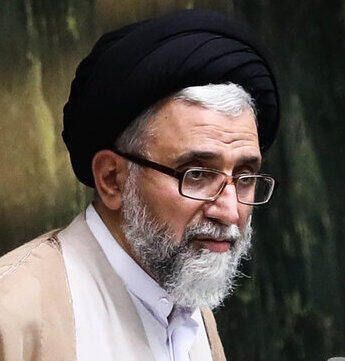
Tehran, Iran – Reports emerging from Israeli media indicate that Iran’s Intelligence Minister, Esmail Khatib, may have been targeted in overnight air strikes in Tehran, marking a potential escalation in the ongoing war between Israel, the United States, and Iran. The strikes reportedly aimed at high-value leadership within Iran’s intelligence apparatus, though Iranian authorities have yet to confirm the outcome.
OTHER ARTICLES:
- UAE Air Defences Intercept Iranian Missile and Drone Threats
- Israel says it kills Iran security chief Larijani, Basij commander
- 2026 Philippine Barangay and SK Elections
- Iran–Philippines Ties to Become ‘Even Brighter,’ Says Ambassador
- Iranian Community in Philippines Faces Bank, GCash Issues & Stereotypes
- Vladimir Putin Welcomes Mojtaba Khamenei as Iran’s New Leader
- Oil Prices Surge as Mojtaba Khamenei Takes Power Amid Middle East Tensions
- Pacquiao Sues Over False Allegations in Mayweather Fight Dispute
- DepEd Targets 24,000 New Classrooms by the End 2026
- LIST: Emergency Hotlines for Filipinos in Middle East
- Filipina Caregiver Dies Saving Elderly Ward in Tel Aviv Missile Strike
- Jesus Crispin Remulla Meets ICC on Rodrigo Duterte Case Witnesses
- Iran’s Supreme Leader Ayatollah Ali Khamenei Dead
- DepEd Rolls Out Strengthened SHS Curriculum Nationwide for SY 2026–2027
Multiple Israeli outlets, including Channel 12, suggested Khatib was among the intended targets. The operation comes on the heels of Iranian state media confirming the deaths of Ali Larijani, former secretary of Iran’s Supreme National Security Council, his son Morteza Larijani, and the head of his security detail. Statements carried by Mehr News Agency described Larijani as having “finally reached his long-cherished wish, answered the call of truth, and proudly attained the blessed rank of martyrdom in the service front.”
Earlier in the day, Iran also reported the death of Gholam Reza Soleimani, a senior Basij commander, in what Israel has claimed were precision airstrikes targeting Islamic Revolutionary Guard Corps infrastructure.
Appointed in 2021, Khatib is widely viewed as a close ally of Supreme Leader Mojtaba Khamenei, with Iran International noting his role in advising on internal security and warning against external interference during the build-up to nationwide protests. His potential loss would represent a significant blow to Iran’s intelligence leadership amid the intensifying conflict.
Israeli officials have yet to issue a formal statement on the Tehran operation, while Iranian authorities maintain a cautious public posture. The strikes underscore the growing intensity of the Iran war, with both sides focusing on high-profile strategic and political targets.
Analysts say these developments mark a dangerous escalation, heightening uncertainty across the Middle East as Israel continues to strike key Iranian military and intelligence figures, while Tehran vows retaliation against perceived aggressors.
Ali Larijani: Iran’s Powerbroker and Ideologue Who Shaped a Nation
Ali Larijani, who was recently confirmed killed in a series of strikes during the Iran-US-Israel war, was widely regarded as one of Iran’s most influential political figures, a statesman whose influence extended across the corridors of power and whose calm, strategic mind made him a key architect of the country’s domestic and foreign policy.
Born into what many described as the “Kennedys of Iran,” Larijani’s family wielded immense political and religious influence. His father was a respected religious scholar, while his brothers held senior positions in the judiciary and other pillars of Iranian governance, giving Larijani a foundation steeped in both tradition and authority.
Larijani’s personal connections further cemented his place among Iran’s revolutionary elite. He was married to the daughter of Morteza Motahhari, a close confidant of Ruhollah Khomeini, linking him to the inner circle of Iran’s founding leadership. Over decades, these familial and marital ties, combined with his intellect and political acumen, allowed him to rise steadily through the ranks of the Islamic Republic.
Academically, Larijani was uncommonly accomplished. He began with mathematics and computer science, fields that nurtured his analytical mind, before turning to Western philosophy, where he focused on the works of Immanuel Kant, developing a framework of logic and ethics that he would later apply in political strategy and negotiation. This blend of technical precision and philosophical depth was said to inform his calm demeanor and careful decision-making, traits that set him apart from more impulsive political figures in Tehran.
As secretary of Iran’s Supreme National Security Council, Larijani played a central role in shaping Iran’s strategic policies. He was considered a strong ideologue, deeply committed to the principles of the Islamic Revolution, yet pragmatic in his approach to governance and foreign diplomacy. His leadership style was described as measured, always balancing ideology with tactical realism, a skill that made him indispensable during times of crisis.
Larijani’s influence peaked in the early hours of the Iran-US-Israel war, when his guidance and counsel were crucial to coordinating Iran’s response to attacks on its leadership and infrastructure. Despite the chaos and violence surrounding the conflict, Larijani remained a steadying force, known for prioritizing strategic foresight over reactive measures.
His death marks not just the loss of a senior official but the passing of a figure whose career embodied the intertwining of intellectual rigor, revolutionary loyalty, and political pragmatism. Observers say that his absence will leave a vacuum in Iran’s intelligence and security apparatus, with far-reaching implications for both internal governance and regional diplomacy.
Ali Larijani’s legacy is one of intellectual depth, strategic influence, and steadfast dedication to his country. In life, he was a bridge between Iran’s revolutionary ideals and its modern geopolitical realities; in death, he is remembered as a statesman whose life was devoted to shaping the course of his nation.
- Worst Country I’ve Visited- Thailand Girl, Stark Warning After Disappointing Vietnam Trip
- Artemis II | NASA, Voyage, Mission & Moon
- A Prayer of Thanksgiving for Divine Blessings, Triumph, Forgiveness, and Good Health
- NASA’s Artemis II Departs Earth Orbit for Historic Moon Flyby
- NASA: The Artemis Generation Takes Flight with Historic Artemis II Mission