Senator Win Gatchalian has renewed his push to restrict minors from accessing social media platforms, citing Indonesia’s new ban on users under 16 and growing global concerns over online exploitation, addiction, and the impact of excessive screen time on students’ academic performance.
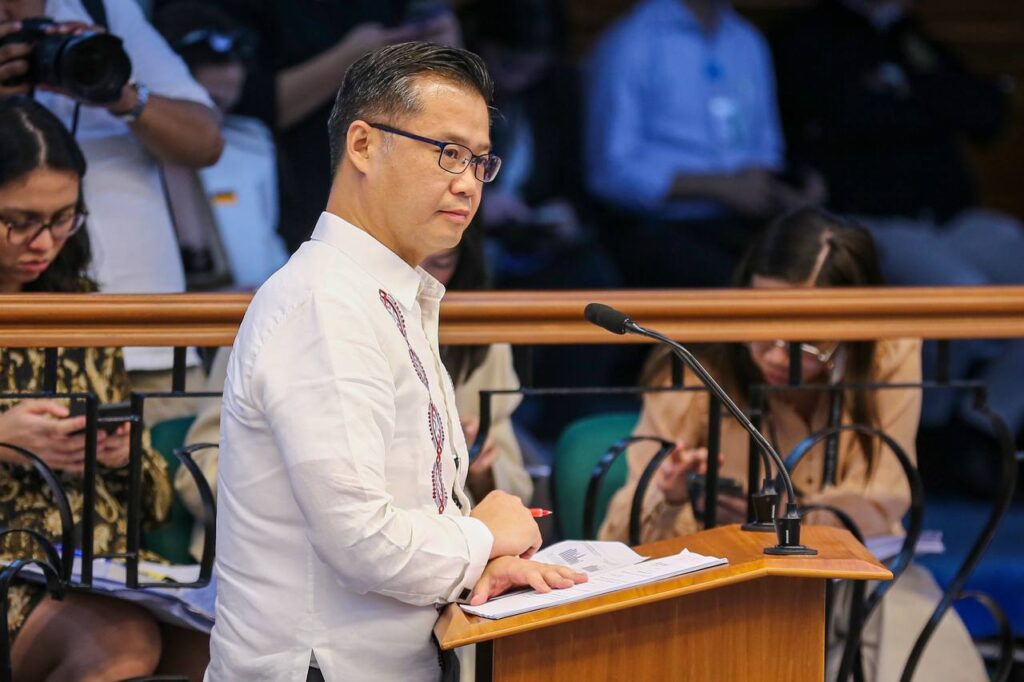
CEBU CITY, Philippines — Senator Win Gatchalian has renewed his call for stricter regulations that would prevent minors from accessing social media platforms, following Indonesia’s recent move to impose a ban on users under the age of 16.
Indonesia has become the first country in Southeast Asia to enforce such a measure. Under the new regulation, minors below 16 years old are prohibited from creating accounts on platforms considered “high-risk,” including Instagram, TikTok, Facebook, YouTube, X (Twitter), and Roblox, among others.
READ MORE ARTICLES:
- SOVFA: Philippines, France Sign Visiting Forces Agreement
- PH Under Energy Emergency, Says PBBM Over Global Supply Concerns
- Roblox Ban in the Philippines
- 26 Filipinos from Labor Trafficking in Malaysia
- Malasiqui, Pangasinan: Hope in the Fight Against Child Stunting
- Bato Dela Rosa’s, Call for ‘No Work, No Pay’
- Boracay Ati Demand Land Back from Ferdinand Marcos Administration
- 2026 Philippine Barangay and SK Elections
Gatchalian said the development highlights the growing recognition among governments that stronger safeguards are needed to protect young people from the risks associated with social media use, including exposure to harmful content and online exploitation.
The senator’s renewed push also comes as Philippine authorities continue to examine possible measures to strengthen child safety online. Earlier, the Cybercrime Investigation and Coordination Center (CICC) urged telecommunications companies to prepare for a potential nationwide block on the gaming platform Roblox amid concerns that the site could expose children to exploitation and inappropriate material.
READ : Roblox Ban in the Philippines
International developments have further intensified the debate on the effects of social media on minors. In the United States, a Los Angeles jury recently found technology giants YouTube and Meta liable in a case involving childhood social media addiction, a ruling that has drawn global attention to the platforms’ impact on young users.
Gatchalian also pointed to academic findings linking excessive screen time to declining student performance. According to the results of the 2022 Programme for International Student Assessment (PISA), every additional hour that 15-year-old Filipino students spend using digital devices for leisure corresponds to a four-point drop in their mathematics scores.
“Huwag na nating hayaang lumala pa ang problema bago tayo kumilos,” Gatchalian said, stressing the need for immediate action to address the growing influence of social media on young Filipinos.
Globally, governments have begun taking firmer steps to regulate minors’ access to social platforms. In 2024, Australia became the first country in the world to approve a nationwide ban on social media use for children under 16. The policy fully took effect in December 2025.
As similar initiatives gain traction abroad, Gatchalian said the Philippines must also consider decisive policies to ensure that digital spaces remain safe for children while promoting healthier learning and development.
COMMENTARY: Can the Philippines Really Keep Minors Off Social Media?
The renewed call of Senator Win Gatchalian to restrict minors from accessing social media platforms raises an important but complicated question for the Philippines: Is such a ban realistic in a country where social media has become deeply woven into the daily lives of young people?
For millions of Filipino children and teenagers, social media is no longer just a form of entertainment. It has become part of their everyday routine almost like a digital extension of their social life, school communication, and even their identity. Platforms such as Facebook, Messenger, TikTok, and Instagram are not simply apps they open occasionally; they are tools they use constantly to stay connected with friends, classmates, and even teachers.
Many young people would likely resist the idea of a social media ban. For them, the ability to send quick messages is essential. Messenger, in particular, has become one of the most widely used communication tools among Filipino students. Group chats are often where announcements are shared, homework is discussed, and project instructions are clarified. In some cases, even teachers use Facebook or Messenger to relay reminders about assignments, schedule changes, or school activities.
Because of this reality, removing social media access entirely may not only affect entertainment but also disrupt how students communicate and collaborate in their studies. In many schools, especially where formal digital learning platforms are limited, social media fills the gap. Students share notes, coordinate group work, and exchange information quickly through these channels.
However, the concerns raised by lawmakers and child protection advocates cannot simply be ignored. Social media has also exposed young users to serious risks. Online exploitation, cyberbullying, misinformation, and addictive digital habits are growing concerns worldwide. Children often encounter content that is inappropriate for their age, while some fall victim to online predators or harmful communities.
The Philippines, like many countries, is now grappling with how to balance these two realities. On one hand, social media provides convenience, connection, and access to information. On the other hand, it carries risks that many young users may not yet be mature enough to handle responsibly.
Countries such as Indonesia and Australia have decided to take the stricter route by banning social media use for minors under 16. Their goal is to reduce exposure to harmful content and encourage healthier childhood development. But implementing such policies is easier said than done.
One major challenge is enforcement. In today’s digital world, age restrictions are notoriously easy to bypass. Many children can simply create accounts using false birthdates. Without strong verification systems from social media companies, a nationwide ban could become difficult to implement effectively.
Another important question remains: Will millions of Filipino children actually accept such a restriction? For a generation that grew up with smartphones and constant connectivity, social media is not viewed as a privilege—it is seen as part of normal life.
This is why some experts argue that instead of outright bans, governments should also focus on digital education, parental guidance, and stronger platform accountability. Teaching young people how to navigate the internet safely may be just as important as limiting access.
Ultimately, the debate is not only about banning social media. It is about how society can protect children while still allowing them to benefit from the positive aspects of digital technology.
Senator Gatchalian’s proposal has opened a necessary conversation. But as policymakers consider the future of social media regulation in the Philippines, one critical question will remain: How can the country protect its youth without disconnecting them from the digital world they already live in?
Beyond the Ban, a brilliant blueprint for protecting filipino youth in a digital age In the Philippines, social media is not merely a technological platform it is the new barangay plaza, the extended sari-sari store conversation, the tambayan where young people gather, laugh, and build their identities. To propose a blanket ban on minors accessing these spaces is to misunderstand how deeply digital life has become woven into the fabric of Filipino adolescence.
Yet the dangers are real. Cyberbullying, online sexual abuse, digital addiction, and mental health crises threaten the very youth the nation seeks to protect. The question facing the Philippines is not whether to act, but how to act wisely. How can the country protect its youth without disconnecting them from the digital world they already inhabit as naturally as they breathe?
The answer lies not in prohibition, but in empowerment. A brilliant, uniquely Filipino solution must rest on four interconnected pillars: digital literacy as a life skill, digital parenting rooted in family values, platform accountability with teeth, and responsive legal frameworks. This is not a ban it is a bayanihan for the digital age.
Impact if Minors Do Not Use Social Media in the Philippines (Based on medical experts, legal perspectives, and international studies)
In the sweltering heat of the Philippine summer, the faint glow of a smartphone screen is often the primary source of companionship, education, and entertainment for millions of young Filipinos. The archipelago is famously the “Social Media Capital of the World,” where time spent on platforms like TikTok, Facebook, and Instagram ranks among the highest globally. For Filipino youth, social media is not merely a pastime; it is the town plaza, the classroom corridor, and the tiangge (market) rolled into one.
But what would happen if that access suddenly vanished?
Inspired by regulatory movements in countries like Australia, which has moved to legislate age cutoffs for social media use the Philippines is currently engaged in a heated national conversation. Policymakers, alarmed by rising rates of cyberbullying, anxiety, and digital addiction, are considering whether to slam the brakes on access to these platforms. To understand the true weight of such a decision, we must dissect the issue through three critical lenses: the medical well-being of the adolescent brain, the structure of modern education, and the constitutional and legal realities of the state.
- Worst Country I’ve Visited- Thailand Girl, Stark Warning After Disappointing Vietnam Trip
- Artemis II | NASA, Voyage, Mission & Moon
- A Prayer of Thanksgiving for Divine Blessings, Triumph, Forgiveness, and Good Health
- NASA’s Artemis II Departs Earth Orbit for Historic Moon Flyby
- NASA: The Artemis Generation Takes Flight with Historic Artemis II Mission
- Victor Glover | Life, Education & NASA Career
- Philippines vs China, When Betrayal Comes from Within: The Cost of Selling a Nation
- Supreme Court Affirms Dismissal of GMA Network’s Complaint Against ABS-CBN Over TV Ratings Dispute
- List of political ideologies
- Andrew Heywood | British author, Educationalist, & political theorist
- Holy Wednesday: A Solemn Reminder on Judas Iscariot Betrayal of Jesus Christ
- Judas Iscariot | About in the Bible, Betrayal & Apostle
- Relief or Rhetoric? Imee Marcos’ Call to Suspend Government Deductions Remains Without Action—Just Words
- Gatchalian Renews Push to Keep Minors Off Social Media
- Donald Trump Floats Seizing Iran’s Kharg Island Oil Hub, Wider Middle East Conflict