Iranian Women’s Football Team Returns Home After Declining Asylum in Australia. Uncertainty, global scrutiny, and personal choice define the team’s dramatic journey amid rising geopolitical tensions.
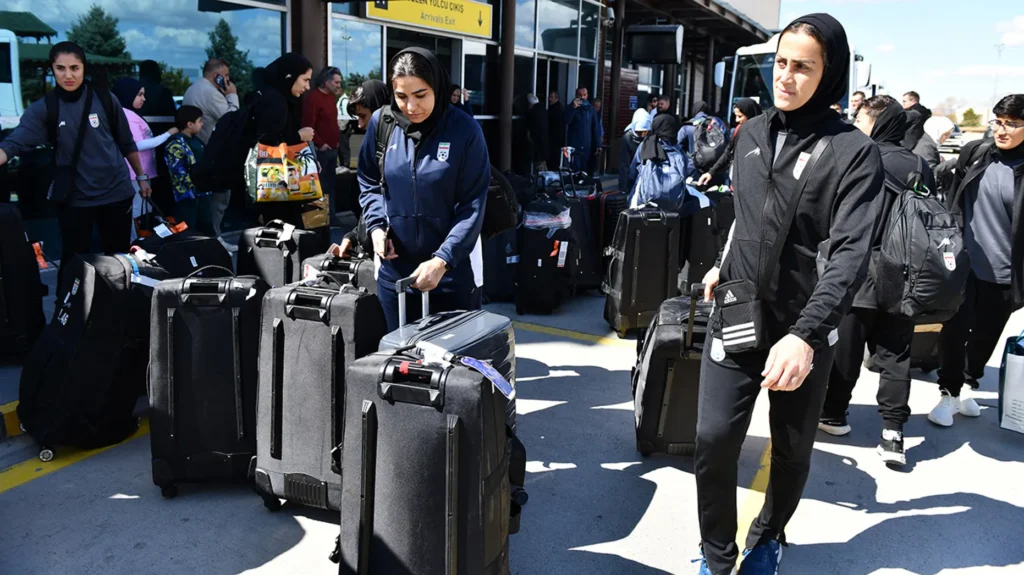
Most members of Iran’s national women’s football team have returned home after declining asylum offers in Australia, bringing to a close a tense and closely watched episode that unfolded against the backdrop of escalating conflict in the Middle East.
The team had been in Australia competing in the AFC Women’s Asian Cup when hostilities erupted following a joint military campaign launched by the United States and Israel against Iran in late February. Their presence abroad quickly took on political significance, as concerns grew over the players’ safety should they return to a country under bombardment.
READ MORE ARTCILES:
- Gatchalian Renews Push to Keep Minors Off Social Media
- Iran Women’s Footballers Return Home Post-Australia, Asylum Declined
- Pakistani Farmers Sue German Firms Over 2022 Floods
- Meghan Markle & Prince Harry Australia Trip
- LIST: Emergency Hotlines for Filipinos in Middle East
- Donald Trump State of the Union Focuses on Jobs, Borders and Foreign Policy
- Kimberly Pagong: Duterte’s War on Drugs — Saving Millions or Misunderstood Leadership?
- Philippines Celebrates 40th Anniversary of EDSA People Power
Earlier this month, Australia granted asylum to five members of the squad. However, as the tournament progressed and Iran was eliminated, most players who had initially considered seeking refuge reconsidered their decision.
According to unconfirmed reports from Iranian state media, all but two players ultimately chose to return to Iran. Footage circulating on social media showed the athletes arriving via Turkey, where they were seen crossing the border under the watch of multiple officials an image that underscored the sensitivity surrounding their return.
Two players, Fatemeh Pasandideh and Atefeh Ramezanisadeh reportedly remained in Australia and have since begun training with the Brisbane Roar FC, signaling a different path shaped by personal and professional considerations.
The team had already drawn international attention earlier in the tournament when several players stood in silence during Iran’s national anthem, a gesture widely interpreted as a subtle act of protest.
As debate intensified, Iranian diaspora groups in Australia, along with global political figures including Donald Trump, urged Australian authorities to offer protection to the athletes. Supporters cited fears over their safety, particularly given the volatile situation at home.
Iranian officials, however, dismissed such concerns. First Vice President Mohammad Reza Aref insisted that the returning players would face no danger, stating that the government “welcomes its children with open arms” and guarantees their security.
The situation has also spilled into the broader world of sport. Trump recently weighed in on Iran’s participation in upcoming international competitions, suggesting that while the men’s national team is technically welcome at the FIFA World Cup 2026, concerns about safety may complicate their involvement.
Iran’s men’s squad is scheduled to compete in matches across the United States this June, including fixtures in California and Seattle, as part of a tournament co-hosted by the U.S., Canada, and Mexico.
For the women’s team, however, the spotlight now shifts from global headlines back to life at home though the choices made by its players will likely continue to resonate far beyond the pitch.
The Iranian Women’s Soccer Team: A Return Amidst Turmoil
The Iranian women’s soccer team recently returned from a turbulent tournament experience in Australia, widely recognized as a defining moment in their journey. Their story is not just about soccer; it embodies the challenges faced by women in Iran, particularly in sports that have seen historical resistance, discrimination, and societal barriers. Amidst ongoing geopolitical tensions, their participation drew significant global attention, highlighting the dual struggle of athletes and women in a repressive environment.
The backdrop of the tournament was significantly influenced by military actions involving the U.S. and Israel against Iran, actions that have escalated tensions both nationally and internationally. These developments not only affected political landscapes but also had profound implications on women’s rights and their ability to participate in sports. For the Iranian women’s soccer team, playing in Australia was a statement of resilience and determination; a bold step in an arena often clouded by controversy and strife. It signified their courage to compete at a global level despite the immense obstacles placed in their path by both their own government and foreign powers.
The spotlight on these athletes transcended the sport itself. Across various media platforms, the players’ experiences galvanized discussions about women’s rights in Iran and the broader implications of international relations on personal freedoms. As they navigated the challenges of the tournament, the women faced not only their opponents on the field but also the oppressions dictated by unwarranted societal expectations and political strife. Their return home was not merely a homecoming; it represented an ongoing quest for equality and recognition on and off the field, further emphasizing the need for supportive environments for women athletes worldwide.
The Iranian women’s soccer team faced an unprecedented dilemma during their stay in Australia, as their initial victory in the World Cup qualification matches coincided with a broader societal outcry back home. Many players found themselves considering asylum as a means of seeking safety from the political repression and imminent threats they faced upon returning to Iran. The notion of applying for asylum stemmed from a deep-seated fear of persecution due to their roles as athletes in a country where women’s rights are systematically suppressed. The international attention their situation garnered added pressure, compelling several players to contemplate a future away from their homeland.
However, the emotional weight of such a decision weighed heavily on the players. The change of heart observed among most of them highlights the complexities of personal and national identity, loyalty, and the desire for a fulfilling life. While some players initially saw asylum as a path to freedom, others began to reconsider their options as they acclimated to their new environment in Australia. The emotional toll was significant; the prospect of leaving their families and the familiar backdrop of their lives for an uncertain future became a primary concern. Additionally, increasing dialogues about returning to Iran in the wake of political changes led many to reevaluate their decisions.
The political implications of such decisions are profound, with each player’s choice reflecting broader societal issues within Iran. As discussions around human rights and gender equality continue, the struggles of the Iranian women’s soccer team serve as a poignant reminder of the sacrifices made by women seeking equity and opportunity in sports and beyond. Their journey not only highlights the challenges faced by athletes from repressive regimes but also opens critical conversations around asylum processes and the humanitarian responses required in sports. In this context, the asylum applications emerge as a microcosm of the larger fight for women’s rights in Iran.
The Two Who Stayed: Fatemeh Pasandideh and Atefeh Ramezanisadeh
In the wake of significant upheaval, Fatemeh Pasandideh and Atefeh Ramezanisadeh emerged as vital figures within the context of the Iranian women’s soccer landscape. Both players made the pivotal decision to remain in Australia after participating in a training camp, a choice steeped in personal values and professional aspirations. For these two athletes, the journey has been marked by the desire for a safer existence, as well as the ambition to elevate women’s soccer both in Iran and on an international stage.
Fatemeh, who possesses notable skills as a forward, and Atefeh, recognized for her prowess as a midfielder, have focused their energies on training with Brisbane Roar, a prominent club renowned for its commitment to developing women’s soccer. Their experiences within this professional framework provide them with a unique platform to hone their abilities, receive mentorship, and cultivate invaluable teamwork insights that are often lacking in their home country.
Motivated by the pressing need for gender equality in sports and the opportunity to inspire future generations of female athletes in Iran, Pasandideh and Ramezanisadeh are emblematic of a larger movement. As they navigate their training schedules, balancing rigorous practice with fostering connections in the soccer community, both players express an unwavering commitment to returning someday to advocate for the growth of women’s soccer in Iran.
As they build on their technical skills and strive for success in regional and national competitions, their aspirations remain firmly aligned with the dream of effecting change. They envision a future where young girls in Iran can realize their soccer potential, free from societal constraints. Fatemeh and Atefeh’s presence in Australia serves not only to enhance their personal careers but also to pave the way for a broader acceptance of women’s sports in Iran.
Response from Iranian Authorities: Safety and Security Concerns
The return of the Iranian women’s soccer team has sparked significant concern from various sectors within the Iranian government. As the players arrived back in Iran, officials including Iran’s first vice president, Mohammad Mokhber, addressed the media regarding the safety and security of the athletes. In light of the nation’s complex political landscape, the government’s commitment to ensuring the well-being of these sportswomen has become a focal point of public discourse.
Vice President Mokhber emphasized that the return of the players was a source of pride for the nation. He stated that the government is taking all necessary measures to guarantee the safety of the athletes, especially considering the previous challenges faced by women in sports disciplines. This includes assessing potential risks and implementing security protocols as required. The authorities are aware of the mixed responses from the public, which range from ardent support for these players to apprehension about their treatment upon their arrival.
Moreover, the Iranian government has engaged in dialogue with various stakeholders, aiming to address not only security concerns but also the broader context of women’s rights within the country. As these players navigate the complexities surrounding their return, officials are focusing on ensuring that their experiences contribute to fostering a more supportive environment for female athletes in the future.
The changing narrative surrounding women’s sports in Iran, especially in light of recent political upheaval, has brought attention to the need for enhanced protections and policies that support and celebrate the achievements of female athletes. Through public statements and policy initiatives, the government appears to be making efforts towards creating a more secure and nurturing environment for women’s sports, amidst the ongoing challenges in implementing these changes.
The Team’s Journey Back: Video and Social Media Reactions
The return of the Iranian women’s soccer team to Iran has been met with powerful reactions across various social media platforms. Footage of the players arriving at the airport has circulated widely, highlighting both the joy and the tumult surrounding their return. The videos depict scenes of enthusiasm, with supporters eagerly welcoming the players, showcasing banners and chanting slogans that signify both solidarity and celebration.
Social media hashtags related to the team have trended, illustrating the public’s investment in this moment. Users from various parts of the world expressed their admiration for the team’s perseverance, especially given the backdrop of the political unrest currently plaguing the nation. Many social media commentators noted that their return serves as a beacon of hope, representing a step toward recognition and respect for women’s sports in Iran.
However, the players’ homecoming is set against a stark landscape of challenges. Despite their remarkable achievements on the pitch, the women’s soccer team navigates obstacles related to societal norms and governmental support. Responses on social media reflect an acute awareness of these struggles, with individuals calling for greater attention to women’s rights and opportunities in Iran. The juxtaposition of joy at their arrival and the underlying tension is apparent, as users articulate the complexities of celebrating this victory amid ongoing challenges.
As these discussions unfold online, the narrative surrounding the team becomes more than just about sport; it evolves into a dialogue about empowerment, resilience, and the vital role of women in society. Ultimately, the Iranian women’s soccer team exemplifies the pursuit of progress in a climate characterized by adversity, which resonates deeply with many who are engaging through social media platforms.
International Reaction: Calls for Asylum and Support
The plight of the Iranian women’s soccer team has garnered significant attention on the international stage, leading to widespread calls for asylum and support for the athletes. The situation has evolved following various incidents related to political turmoil and restrictions placed on women’s rights in Iran. As a response, Iranian expatriate groups, particularly in countries like Australia, have taken it upon themselves to advocate for the players, highlighting their struggle and the urgent need for sanctuary.
In Australia, Iranian communities have organized rallies and campaigns aimed at raising awareness about the challenges faced by these athletes. They argue that by providing asylum, their host country would not only protect the players but also send a potent message regarding the importance of women’s rights globally. This grassroots movement is bolstered by a growing awareness of the broader issues surrounding gender inequality in Iran, where women face systemic challenges in various sectors, including sports.
Prominent figures, including former President Donald Trump, have also weighed in on this matter. Trump took to social media to express his support for the players and criticize the oppressive regime in Iran. His comments have amplified the visibility of the team’s plight and have encouraged other politicians and activists to take a stand. Such endorsements from high-profile individuals lend additional weight to the arguments being made for asylum and underline the global significance of the Iranian women’s struggle.
The implications of these reactions extend beyond the immediate situation of the soccer players. They reflect a growing global awareness of women’s rights and the intersection of sports and politics. As more voices join the conversation, the hope is that the plight of the Iranian women’s soccer team will inspire meaningful change, both for the athletes themselves and for women in Iran who continue to fight for their rights in a repressive environment.
Cultural Significance: National Anthem Silence and Protest
The Iranian Women’s Soccer Team recently made headlines not only for their performance on the field but also for the poignant act of silence during the national anthem at their first game. This act, deeply intertwined with the cultural fabric of Iran, holds significant implications for the ongoing dialogue around women’s rights in the nation. By choosing not to sing the anthem, the players actively participated in a form of protest against a backdrop of societal and political unrest in Iran.
The team’s silence resonated with broader public sentiment, reflecting the frustrations and aspirations of many Iranian women. In a country where women have historically faced numerous challenges and restrictions, the players’ action illuminated the ways in which sports can serve as a platform for social change. Their quiet defiance became a powerful statement, amplifying calls for gender equality and women’s rights. The silence was a moment of collective acknowledgment of the struggles faced by women, especially in a society where their presence in arenas—both literal and metaphorical—has often been marginalized.
This act of solidarity is not merely a sporting gesture but rather a cultural statement deeply rooted in the collective consciousness of those advocating for reform. The current discourse surrounding women’s soccer in Iran is, therefore, more than just about the sport; it mirrors the aspirations of a society yearning for progress. The national anthem, traditionally a symbol of unity, became a controversial focal point, revealing the tension between national pride and the fight for women’s rights. Thus, the players’ solidarity during the national anthem has become a symbol of resistance, inspiring further dialogue on gender issues and cultural dynamics in contemporary Iran.
Future Prospects for the Iranian Women’s Soccer Team
The return of the Iranian women’s soccer team to the international stage brings both promise and challenges. For players who have returned to Iran, the future prospects in the realm of soccer and beyond appear nuanced. While playing at a competitive level in the national team enhances their skills, cultural and systemic obstacles could impede their professional growth. The lack of resources and support for women’s sports in Iran may hinder players from fully pursuing their careers in soccer. This reality underscores the importance of creating pathways for development, training facilities, and financial backing.
On the other hand, many players who chose to remain abroad are likely to experience a different set of opportunities. They can integrate into more established leagues and gain exposure to diverse playing styles, coaching methodologies, and tactical variations that are not readily available in Iran. These experiences can improve their skills and raise their profiles internationally. They may also gain access to media opportunities and sponsorship deals that can enhance their visibility beyond soccer.
Moreover, many athletes, regardless of their location, may choose to explore careers in fields related to sports management, coaching, or sports journalism after their playing days. Such avenues can ensure that their contributions to the sport continue beyond just their participation on the field. The potential for advocacy in women’s rights and empowerment through sports can also be a significant part of their journey. Despite the challenges faced, the resilience of these athletes underscores their commitment to advancing the sport of soccer for women in Iran.
As the landscape evolves, continuous support from organizations and communities will be essential in unlocking the full potential of these remarkable athletes. The interplay between challenges and opportunities will shape the future of not only the team but the entire women’s soccer ecosystem in Iran.
Conclusion: The Resilience of the Iranian Women’s Soccer Team
The journey of the Iranian women’s soccer team encapsulates not only a sports narrative but also a profound statement on resilience and courage. Despite facing significant challenges rooted in societal restrictions and political turmoil, these athletes have demonstrated an unwavering spirit in their pursuit of athletic excellence. The perseverance shown by these women in the face of adversity serves as an inspiring testament to their commitment, not just to soccer, but to advancing women’s rights in a country where such freedoms are often curtailed.
Throughout their experiences, the players have become symbols of hope and strength, reflecting a collective aspiration for greater gender equality within sports and beyond. Their story is a microcosm of the broader fight for female empowerment, showcasing how women can break barriers and challenge societal norms through their dedication and achievements in athletics. The Iranian women’s soccer team is not just a group of athletes; they are trailblazers who are forging new paths for future generations of female athletes in Iran and the region.
Their ability to navigate the challenges posed by both their sport and their environment highlights the intersection of athletic ambition and the quest for personal freedoms. As they continue to train, compete, and advocate for change, their legacy will undoubtedly inspire many. It is essential to recognize that their efforts extend beyond the soccer field; they contribute to a larger dialogue surrounding women’s rights and the need for systemic change.
In conclusion, the resilience of the Iranian women’s soccer team exemplifies the power of sports as a platform for social change. Their courage, determination, and unwavering resolve serve as a guiding light for future movements advocating for gender equality and empowerment in all facets of life.
References
Crafton, Adam (February 24, 2026). “Miami may have to cancel World Cup Fan Fest over funding delay, warns committee chief” – via NYTimes.com.
“FIFA World Cup 26 – Match Schedule” (PDF). FIFA. February 4, 2024. Archived (PDF) from the original on February 5, 2024. Retrieved February 4, 2024.
“Michel Platini calls for 40-team World Cup starting with Russia 2018”. The Guardian. October 28, 2013. Archived from the original on September 15, 2018. Retrieved January 24, 2015.
“Michel Platini’s World Cup expansion plan unlikely – Fifa”. BBC Sport. October 29, 2013. Archived from the original on April 21, 2014. Retrieved January 24, 2015.
“Infantino suggests 40-team World Cup finals”. Independent Online. South Africa: IOL. Reuters. March 30, 2016. Archived from the original on December 30, 2016.
Macguire, Eoghan (December 15, 2016). “World Cup: Europe’s top clubs oppose FIFA’s expansion plans”. CNN. Archived from the original on December 24, 2016.
“Low confirms opposition to 40-team World Cup”. sbs.com.au. Australian Associated Press. October 2, 2016. Archived from the original on October 5, 2016.
Martín, Idafe (January 10, 2017). “Mundial de 48 equipos: durísimas críticas en Europa”. Clarín (in Spanish). Archived from the original on January 12, 2017.
“Críticas a decisión de la FIFA de jugar el Mundial 2026 con 48 selecciones”. El Universo (in Spanish). Agence France-Presse. January 10, 2017. Archived from the original on January 11, 2017.
“Unanimous decision expands FIFA World Cup to 48 teams from 2026”. FIFA. January 10, 2017. Archived from the original on January 10, 2017. Retrieved January 10, 2017.
“FIFA Council approves international match calendars”. FIFA. March 14, 2023. Archived from the original on March 14, 2023. Retrieved March 14, 2023.
Ingle, Sean (March 14, 2023). “World Cup 2026: four-team groups and 104 game-tournament confirmed by Fifa”. The Guardian. Archived from the original on April 11, 2023. Retrieved April 11, 2023.
Bushnell, Henry (March 14, 2023). “FIFA scraps ill-fated 2026 World Cup format, but new plan presents other pros and cons”. Yahoo! Sports. Archived from the original on April 11, 2023. Retrieved April 11, 2023.
Ziegler, Martyn (March 14, 2023). “World Cup will be a week longer — but Fifa scraps three-team group plan”. The Times. Archived from the original on March 14, 2023. Retrieved March 14, 2023.
Slater, Matt; Ornstein, David (March 14, 2023). “World Cup 2026 format expands again with four-team groups and 104 matches”. The Athletic. Archived from the original on March 14, 2023. Retrieved March 14, 2023.
Conn, David (January 10, 2017). “Fifa approves Infantino’s plan to expand World Cup to 48 teams from 2026”. The Guardian. Archived from the original on January 10, 2017. Retrieved January 10, 2017.
“World Cup: Gianni Infantino defends tournament expansion to 48 teams”. BBC Sport. January 10, 2017. Archived from the original on March 31, 2017.
“New Fifa chief backs 48-team World Cup”. HeraldLIVE. October 7, 2016. Archived from the original on October 10, 2016. It’s an idea, just as the World Cup with 40 teams is already on the table with groups of four or five teams.
Dunbar, Graham (December 23, 2016). “FIFA’s 5 options for a 2026 World Cup of 48, 40 or 32 teams”. Yahoo! Sports. Associated Press. Archived from the original on January 10, 2017.
“FIFA World Cup format proposals” (PDF). FIFA. December 19, 2016. Archived from the original (PDF) on September 15, 2018. Retrieved January 10, 2017.
Guyon, Julien (April 30, 2020). “Risk of Collusion: Will Groups of 3 Ruin the FIFA World Cup?”. Journal of Sports Analytics. 6 (4): 259–279. doi:10.3233/JSA-200414.Archived August 3, 2024, at the Wayback Machine
“Penalty shootouts may be used to settle drawn World Cup matches”. World Soccer. January 18, 2017. Archived from the original on October 28, 2020. Retrieved November 12, 2020.
Ziegler, Martyn (April 1, 2022). “Format for 2026 World Cup could be revamped amid ‘collusion’ fears, says Fifa vice-president”. The Times. London. Archived from the original on November 13, 2022. Retrieved November 5, 2022.
“Current allocation of FIFA World Cup confederation slots maintained”. FIFA. May 30, 2015. Archived from the original on May 30, 2015.
“FIFA Council discusses vision for the future of football”. FIFA. October 14, 2016. Archived from the original on October 17, 2016.
“FIFA blocks Europe from hosting 2026 World Cup, lifting Canada’s chances”. Canadian Broadcasting Corporation. Associated Press. October 14, 2016. Archived from the original on October 14, 2016.
Hill, Tim (March 9, 2017). “Trump travel ban could prevent United States hosting World Cup”. The Guardian. Archived from the original on November 14, 2021. Retrieved March 24, 2017.
“USA, Mexico, Canada announce bid to host ’26 WC”. Sports Illustrated. April 10, 2017. Archived from the original on April 11, 2017.
Carlise, Jeff (April 10, 2017). “U.S., Mexico and Canada officially launch bid to co-host 2026 World Cup”. ESPN. Archived from the original on April 11, 2017.
Garcia, Arriana (March 9, 2022). “Mexico violence almost cost World Cup 2026 hosting duties – Liga MX president”. ESPN. Archived from the original on March 17, 2022. Retrieved March 9, 2022.
Graham, Bryan Armen (June 13, 2018). “North America to host 2026 World Cup after winning vote over Morocco – as it happened”. The Guardian. Archived from the original on July 18, 2018. Retrieved July 12, 2018.
“World Cup 2026: Canada, US & Mexico joint bid wins right to host tournament”. BBC Sport. June 13, 2018. Archived from the original on January 14, 2021. Retrieved June 13, 2018.
Gyamera-Antwi, Evans (June 12, 2018). “Ghana & Kosovo excluded from Fifa Congress ahead of 2026 World Cup vote”. Goal.com. Archived from the original on October 21, 2023. Retrieved June 13, 2018.
“Breaking News: President Akufo-Addo dissolves GFA”. myjoyonline.com. June 7, 2018. Archived from the original on June 12, 2018. Retrieved June 14, 2018.
“Fifa bans Ghana football head Kwesi Nyantakyi over ‘cash gift'”. BBC News. June 8, 2018. Archived from the original on June 9, 2018. Retrieved June 14, 2018.
“FIFA Congress confirms next steps of the bidding process for the 2026 FIFA World Cup – FIFA.com”. May 15, 2017. Archived from the original on May 15, 2017. Retrieved April 16, 2024.
“Scandal-plagued FIFA postpones 2026 World Cup bidding”. ABC News. June 10, 2015. Archived from the original on April 16, 2024. Retrieved April 16, 2024.
“Forty-one Cities Across Canada, Mexico and the United States Submit Bids to Serve as Host Cities in United Bid for 2026 FIFA World Cup”. Archived from the original on September 8, 2017. Retrieved September 7, 2017.
Carlisle, Jeff (March 16, 2018). “United States-led World Cup bid cuts list of potential host cities to 23”. ESPN. Archived from the original on November 25, 2021. Retrieved November 25, 2021.
“Montreal withdraws from host city selection process for 2026 World Cup”. Sportsnet. July 6, 2021. Archived from the original on August 16, 2021. Retrieved July 6, 2021.
“Update on FIFA World Cup 2026 candidate host city process”. FIFA. April 14, 2022. Archived from the original on July 12, 2022. Retrieved April 14, 2022.
“FIFA unveils stellar line-up of FIFA World Cup 2026 Host Cities”. FIFA. June 16, 2022. Archived from the original on June 16, 2022. Retrieved June 16, 2022.
Tannenwald, Jonathan (November 2, 2022). “FIFA goes to college to study how to grow grass indoors for the 2026 men’s World Cup”. The Philadelphia Inquirer. Archived from the original on November 7, 2022. Retrieved November 6, 2022.
Bonagura, Kyle (February 4, 2024). “2026 World Cup final set for MetLife Stadium, USMNT kicks off in L.A.” ESPN. Archived from the original on February 4, 2024. Retrieved February 4, 2024.
Cattry, Pardeep (April 22, 2021). “Toronto FC to expand BMO Field to host 2026 World Cup matches”. Major League Soccer. Archived from the original on November 24, 2022. Retrieved November 24, 2022.
“World Cup 2026 host cities confirmed: What you need to know about the 16 venues”. ESPN. June 16, 2022. Archived from the original on November 7, 2022. Retrieved November 6, 2022.
Jones, J. Sam (June 16, 2022). “Your guide to 2026 World Cup stadiums and locations in the US, Mexico and Canada”. MLSsoccer.com. Archived from the original on November 7, 2022. Retrieved November 6, 2022.
Platt, Oliver (September 7, 2017). “Rogers Centre removed from list of potential World Cup 2026 venues”. Waking The Red. Retrieved October 21, 2025. Mosaic Stadium and TD Place Stadium do not currently meet the minimum-capacity requirement
Booth, Chuck; Gonzalez, Roger (June 17, 2022). “FIFA World Cup 2026 host cities: Los Angeles, New York/New Jersey among top venues; Washington D.C. snubbed”. CBS Sports. Archived from the original on June 27, 2022. Retrieved June 27, 2022.
Pelit, Asli (February 16, 2024). “FIFA RULES MAY COST METLIFE $80M IN WORLD CUP FINAL BRAND VALUE”. Sportico. Archived from the original on February 16, 2024. Retrieved July 21, 2024.
“The FIFA World Cup 26 stadiums”. FIFA. July 15, 2025. Retrieved November 17, 2025. Stadium official names for the FIFA World Cup 26 have been matched with Host City names and may differ from the common designation used locally.
“United 2026 bid book” (PDF). united2026.com. Archived (PDF) from the original on September 15, 2021. Retrieved April 30, 2018.
“Presidente de la FIFA confirma cantidad de plazas de Concacaf para el Mundial de 2026”. ESPN Deportes (in Spanish). August 31, 2022. Archived from the original on September 22, 2022. Retrieved October 18, 2022.
Vargas, Dinia (August 31, 2022). “Infantino anuncia cuántos cupos tendrá la Concacaf para el Mundial de 2026”. CRHoy.com (in Spanish). Archived from the original on August 31, 2022. Retrieved October 18, 2022.
“FIFA Council highlights record breaking revenue in football”. FIFA. February 14, 2023. Archived from the original on February 14, 2023. Retrieved February 14, 2023.
“FIFA confirms U.S., Mexico, Canada automatically in ’26 World Cup”. Reuters. February 14, 2023. Archived from the original on February 15, 2023. Retrieved February 14, 2023.
“Bureau of the Council recommends slot allocation for the 2026 FIFA World Cup”. FIFA. March 30, 2017. Archived from the original on June 19, 2022. Retrieved August 5, 2022.
“World Cup 2026: Fifa reveals allocation for 48-team tournament”. BBC. March 30, 2017. Archived from the original on March 30, 2017.
“FIFA Council prepares Congress, takes key decisions for the future of the FIFA World Cup”. FIFA. May 9, 2017. Archived from the original on June 18, 2017.
Tazarit, Imad al-Din (November 2, 2023). “Eritrea national team withdraws from the “Moroccan national team group” in the 2026 World Cup qualifiers”. Dehai News. Archived from the original on November 9, 2023. Retrieved November 9, 2023.
Aarons, Ed; Cizmic, Alex (November 13, 2023). “Eritrea withdrew from 2026 World Cup qualifying ‘over fears players will flee'”. The Guardian. Archived from the original on November 13, 2023. Retrieved January 3, 2024.
“Eritrea withdraw from FIFA World Cup qualifiers”. FIFA. November 10, 2023. Archived from the original on November 13, 2023. Retrieved November 10, 2023.
“Suspension of the Congolese Football Association (FECOFOOT) from 6 February 2025 until further notice” (PDF). FIFA Circular. No. 1922. February 6, 2025. Archived (PDF) from the original on February 11, 2025. Retrieved February 8, 2025.
“FIFA suspends Congo Republic and Pakistan”. Reuters. February 7, 2025. Archived from the original on February 8, 2025. Retrieved February 8, 2025.
“Schedule & Results”. CAFonline.com. CAF. Archived from the original on May 16, 2025. Retrieved March 16, 2025.
“Scores & Fixtures”. FIFA. Archived from the original on November 28, 2023.
“Lifting of the suspension of the Congolese Football Association (FECOFOOT)” (PDF). FIFA Circular. No. 1933. May 14, 2025. Archived (PDF) from the original on May 17, 2025. Retrieved May 15, 2025.
“Cabo Verde seal historic World Cup qualification”. FIFA. October 13, 2025. Retrieved October 14, 2025.
Wilson, Jonathan. “Curaçao complete fairytale with battling draw in Jamaica to qualify for World Cup”. The Guardian. Retrieved November 19, 2025.
Millar, Colin (June 5, 2025). “Uzbekistan, Jordan qualify for World Cup for first time”. The New York Times. ISSN 0362-4331. Retrieved November 19, 2025.
“Norway Qualifies for 2026 World Cup and Sends Italy To Dreaded Playoff”. Fox Sports. November 16, 2025. Retrieved November 16, 2025.
“Austria, Belgium, Scotland, Spain and Swiss reach World Cup”. FIFA. Retrieved November 19, 2025.
“The Boys are back in town”. FIFA. October 14, 2025. Retrieved November 19, 2025.
“Qatar and Saudi Arabia qualify for 2026 World Cup”. ESPN. October 14, 2025. Retrieved October 15, 2025.
“Groups revealed in star-studded Final Draw”. FIFA. December 5, 2025. Retrieved December 6, 2025.
“Procedures for the Final Draw for the FIFA World Cup 2026 revealed”. FIFA. November 25, 2025. Retrieved November 25, 2025.
“Draw Procedures for the FIFA World Cup 2026” (PDF). FIFA. November 25, 2025. Retrieved November 25, 2025.
Bushnell, Henry; Crafton, Adam (August 22, 2025). “2026 World Cup draw to be held at Kennedy Center, President Trump announces”. The New York Times. ISSN 0362-4331. Retrieved August 22, 2025.
Johnson, Dale (November 25, 2025). “Fifa to keep top seeds apart in World Cup draw”. BBC Sport. Retrieved November 25, 2025.
“FIFA Men’s World Ranking: 19 November 2025”. FIFA. November 19, 2025. Retrieved November 19, 2025.
“FIFA shares potential World Cup 26 Team Base Camp locations”. fifa.com. June 12, 2024. Archived from the original on June 12, 2024. Retrieved June 12, 2024.
“FIFA World Cup 26 expands Team Base Camp brochure: 26 new options added”. FIFA. November 21, 2024. Archived from the original on November 21, 2024. Retrieved January 15, 2025.
“14 new Team Base Camp options added as road to 2026 continues”. inside.fifa.com. April 17, 2025. Archived from the original on April 17, 2025.
Schirgi, Heimo. “Team Base Camp brochure”. FIFA. Retrieved October 23, 2025.
Jackson, Malik; Kuntz, Harold; Holt, John (January 21, 2026) [January 20, 2026]. “Argentina, England, Netherlands, Algeria to base 2026 World Cup camps in Kansas City metro: Sources”. Fox4 Kansas City. Retrieved January 25, 2026.
“Rock Chalk Park”. The University of Kansas. Retrieved January 25, 2026.
“The Oakland Roots/Soul Training Facility Has Been Selected by the Australian National Team to Be a Base Camp Training Site Ahead of the World Cup”. Oakland Roots SC. SportsEngine, Inc. February 12, 2026. Retrieved February 12, 2026.
Flores, Pricila (February 4, 2026) [February 4, 2026]. “Austrian National Soccer Team Selected to Stay in Goleta, Practice at UCSB”. Noozhawk. Retrieved February 4, 2026.
Vandewalle, Ludo (January 9, 2026). “De Rode Duivels hebben hun WK-droomlocatie in Seattle beet” [The Red Devils have secured their World Cup dream location in Seattle]. Nieuwsblad (in Dutch). Retrieved February 15, 2026.
Arnold, Christian (January 14, 2026). “Brazilian national team to train at Red Bull NY’s brand new facility during 2026 World Cup”. New York Post. Retrieved January 19, 2026.
“New Zealand looking at various options for World Cup base camp”. Sports Business Journal. December 17, 2025. Retrieved February 14, 2026.
Mitchell, Ryan (January 27, 2026). “It is not the United States! The Colombian national team knows its official venue for the 2026 World Cup”. Marca. Retrieved January 27, 2026.
Thrasher, Tyler (January 17, 2026). “Croatia national soccer team to base FIFA World Cup training in Alexandria”. Fox5 DC. Retrieved January 17, 2026.
Evertsz, Pa E. (January 17, 2026). “Curaçao sets Boca Raton as 2026 World Cup base camp, FAU to host training”. Deporte Awe. Retrieved January 17, 2026.
“La seleccion ecuatoriana de futbol tendra en Columbus su sede de entrenamiento durante la copa del mundo” (in Spanish). January 12, 2026. Retrieved February 6, 2026.
“Coupe du Monde 2026: Didier Deschamps à la recherche du camp de base ! (INSIDE)”. YouTube (in French). January 12, 2026. Retrieved January 12, 2026.
Silverman, Alex (January 9, 2026). “Wake Forest to serve as Germany’s World Cup base camp training site in U.S.” SBJ. Retrieved January 19, 2026.
Goulston, Robert (February 19, 2026). “Will the Boston area host many World Cup soccer teams in 2026?”. NBC10 Boston. Retrieved February 20, 2026. Ghana picked Bryant University in Rhode Island
Barr, Jason (February 12, 2026). “Reports: Iran National Soccer team to train in Tucson for World Cup”. KGUN9. Retrieved February 12, 2026.
“‘Les Éléphants’ to Call Philadelphia Union’s Stadium Its Home During the Tournament”. Philadelphia Union. February 17, 2026. Retrieved February 17, 2026.
Broderick, Kelly (January 18, 2026). “Japan’s national football team will be using Nashville as a home base for the 2026 FIFA World Cup”. WTVF. Retrieved January 19, 2026.
“اتحاد كرة القدم ينظم دورة رباعية دولية بمشاركة النشامى.. ويكشف خطة إعداد المونديال” [The Football Association is organizing a four-team international tournament with the participation of the Jordanian national team, and has revealed its World Cup preparation plan]. Jordanian Football Association (in Arabic). February 20, 2026. Retrieved February 20, 2026. [will settle in its official camp during the World Cup in the American city of Portland.]
Beltrán, Jesús F. (February 10, 2026). “Gabriela Cuevas anuncia qué selecciones se concentrarán en México para el Mundial 2026” [Gabriela Cuevas announces which teams will train in Mexico for the 2026 World Cup]. infobae (in Spanish). Retrieved February 13, 2026. [El Tri will hold its training camp at the Mexican Football Federation’s High Performance Center, located in the Tlalpan borough.]
“All Whites secure FIFA World Cup base in San Diego, the scene of Team New Zealand’s first America’s Cup win”. Stuff. March 2, 2026. Retrieved March 2, 2026.
Austerheim, Daniel (January 24, 2026). “Bekreftet: Dette blir Norges basecamp under VM”. Nettavisen Sport (in Norwegian). Retrieved January 24, 2026. [Greensboro, North Carolina, will be Norway’s home base ahead of and between the group matches in Norway’s first men’s World Cup finals in 28 years. The NFF does not specify which hotel they will stay in, but there is only one option in FIFA’s catalog for Greensboro. It’s called Grandover Resort, and is described as a premium resort with access to golf courses and a spa, among other things.]
Stevens, Paul (February 12, 2026). “Ontario Base Camp Confirmed for Panama’s Men’s National Soccer Team at FIFA World Cup”. Sports Travel Magazine. Retrieved February 13, 2026.
“La selección paraguaya ultima detalles logísticos para su estreno mundialista” [The Paraguayan national team is finalizing logistical details for its World Cup debut]. ABC Paraguay (in Spanish). February 11, 2026. Retrieved February 15, 2026. […we’ve already received confirmation that they’ll grant us our first choice. We’re considering San José, which is near Santa Clara, close to Levi’s Stadium, where we’ll play our two matches on the second and third matchdays.]
“World Cup: Cristiano Ronaldo, Portugal to train in Palm Beach Gardens”. Palm Beach Post. March 5, 2026. Retrieved March 12, 2026.
“Lopetegui inspects Qatar’s World Cup base in California”. The Peninsula. January 30, 2026. Retrieved February 1, 2026.
“Saudi National Team Selects Austin as Main Camp Base for World Cup 2026”. Asharq Al-Awsat. February 5, 2026. Retrieved February 5, 2026.
Atkinson, Mark (February 12, 2026). “Harvey Barnes snubs Scotland as Steve Clarke confirms World Cup base – but issue with FIFA hotel”. The Scotsman. Retrieved February 12, 2026.
Carino, Jerry (March 5, 2026). “Rutgers chosen as ‘base camp’ by FIFA World Cup qualifier”. Asbury Park Press. Retrieved March 6, 2026.
Kim, Young-joon (January 22, 2026). “South Korea’s World Cup Base Camp in Guadalajara”. The CHOSUN Daily. Retrieved January 22, 2026.
MacCoon, Patrick (January 13, 2026). “Spain reportedly chooses Chattanooga as headquarters for first two rounds of 2026 FIFA World Cup”. Chattanooga Times Free Press. Retrieved January 19, 2026.
“The Swiss national team will be staying in this luxury hotel during the World Cup”. blue News. January 15, 2026. Retrieved January 15, 2026.
Carrick, Buzz (March 3, 2026). “Toyota Stadium and Texas Health Mansfield Stadium selected as World Cup training sites”. 3rdDegree.
Tenorio, Paul (November 19, 2025). “USMNT’s 2026 slate takes shape: World Cup sendoff in Chicago, March friendlies booked”. The Athletic. Retrieved November 19, 2025.
Selección Uruguaya (January 14, 2026). “FIFA confirmó nuestra base operativa en la Copa Mundial: Playa del Carmen”. X (in Spanish). Retrieved January 14, 2026.
Razzakov, Shuhrat (March 3, 2026). “Uzbekistan is preparing for major challenges at the World Cup from Atlanta”. Zamin. Retrieved March 3, 2026.
“FIFA World Cup 26 final to be held in New York New Jersey, Mexico City to host historic opening match as schedule revealed”. FIFA. February 4, 2024. Archived from the original on February 7, 2024. Retrieved February 4, 2024.
“FIFA World Cup 26 match schedule Q&A” (PDF). FIFA. February 4, 2024. Archived (PDF) from the original on February 5, 2024. Retrieved February 4, 2024.
“FIFA World Cup 26 shares teams’ “homes away from home”; host nations’ potential pathways to glory unveiled”. FIFA. June 12, 2024. Archived from the original on July 12, 2024. Retrieved June 14, 2024.
“Updated match schedule to be unveiled live in Washington DC on 6 December”. FIFA. December 1, 2025. Retrieved December 1, 2025.
Dominski, Michael (February 4, 2024). “World Cup 2026 schedule announcement live updates: Latest as FIFA selects host city for final”. The Athletic. Archived from the original on February 6, 2024. Retrieved February 4, 2024.
“Toronto Argonauts to play three extra away games during 2026 FIFA World Cup”. 3DownNation. August 15, 2025.
Abbott, JC (May 29, 2025). “B.C. Lions weighing different markets, temporary stadium for 2026 World Cup eviction”. 3DownNation.
“MLB announces 2026 regular season schedule”. MLB. August 26, 2025.
“FIFA World Cup 2026 Regulations” (PDF). FIFA. May 2025. Archived (PDF) from the original on June 23, 2025. Retrieved June 7, 2025.
“Scores & Fixtures”. FIFA. Retrieved December 10, 2025.
“Cristiano Ronaldo: Portugal captain avoids ban for start of nation’s 2026 World Cup campaign”. Sky Sports. Retrieved November 25, 2025.
“Disciplinary overview: FIFA World Cup 26 Qualifiers” (PDF). FIFA. October 7, 2025. Retrieved November 16, 2025.
“Disciplinary overview: FIFA World Cup 26 Qualifiers” (PDF). FIFA. November 5, 2025. Retrieved November 16, 2025.
Cook, Glenn (May 17, 2023). “FIFA Unveils Logo For 2026 World Cup in North America”. SportsLogos.Net News. Archived from the original on May 18, 2023. Retrieved May 18, 2023.
Cook, Glenn (May 18, 2023). “‘Is That It?’: Reaction to 2026 World Cup Logo Swift, Overwhelmingly Negative”. SportsLogos.Net News. Archived from the original on May 18, 2023. Retrieved May 18, 2023.
Cook, Glenn (May 19, 2023). “FIFA, Host Cities Roll Out Specific Branding for 2026 World Cup”. SportsLogos.Net News. Archived from the original on November 25, 2023. Retrieved November 25, 2023.
“Unprecedented Host City brands launched to bring FIFA World Cup 26 destinations to life”. www.fifa.com. Archived from the original on November 25, 2023. Retrieved November 25, 2023.
Shah, Parshva (May 18, 2023). “‘It’s beautiful’ – USMNT striker Jesus Ferreira disagrees with people who hate FIFA’s World Cup 2026 logo”. Goal.com. Archived from the original on May 18, 2023. Retrieved May 19, 2023.
Borg, Simon (May 18, 2023). “Fans rip FIFA World Cup 2026 logo after official reveal for men’s tournament in USA, Mexico and Canada”. Sporting News. Archived from the original on May 19, 2023. Retrieved May 19, 2023.
“Official Tournament Poster”. FIFA. March 3, 2026. Retrieved March 3, 2026.
“The 2026 World Cup Posters Revealed”. footyheadlines.com/. April 22, 2025. Retrieved April 22, 2025.
Deitsch, Richard (February 12, 2015). “FIFA grants Fox, Telemundo U.S. TV rights for World Cup through 2026”. Sports Illustrated. Archived from the original on April 8, 2020. Retrieved June 26, 2018.
Sandomir, Richard (February 26, 2015). “Why FIFA Made Deal With Fox for 2026 Cup”. The New York Times. Archived from the original on April 8, 2020. Retrieved June 26, 2018.
“FIFA extending TV deals through 2026 World Cup with CTV, TSN and RDS”. The Globe and Mail. February 12, 2015. Archived from the original on April 10, 2016.
“FIFA World Cup 26 Media Partners” (PDF). FIFA. March 4, 2025.
Rosenbaum, Steven (December 11, 2024). “Dallas approves $15 million spending to serve as media hub for the 2026 FIFA World Cup”. CBS News. Archived from the original on December 12, 2024.
“2026 FIFA World Cup International Broadcast Center will be in Dallas”. FOX News. December 11, 2024. Archived from the original on December 11, 2024.
“FIFA World Cup 26™ International Broadcast Centre to be hosted in Dallas”. FIFA. March 5, 2025. Archived from the original on March 18, 2025. Retrieved March 5, 2025.
“FIFA picks TikTok as video content partner at 2026 World Cup”. ESPN. Associated Press. January 8, 2026. Retrieved March 18, 2026.
“YouTube, FIFA agree to live broadcast deal for World Cup”. ESPN. Associated Press. March 17, 2026. Retrieved March 18, 2026.
“Após parceria com YouTube, Fifa confirma exclusividade digital da CazéTV no Brasil para Copa 2026”. Máquina do Esporte (in Brazilian Portuguese). March 19, 2026. Retrieved March 22, 2026. “Trata-se de um acordo global entre o YouTube e a Fifa, respeitando sempre as particularidades de cada mercado”.
[“This is a global agreement between YouTube and FIFA, while always taking into account the specific characteristics of each market.”
“No Brasil, a parceria do YouTube para a Copa do Mundo é com a CazéTV. Portanto, não há qualquer mudança na operação local. O acordo, na prática, amplia as possibilidades de colaboração entre YouTube e CazéTV ao longo da competição”, acrescentou a nota.
“In Brazil, YouTube’s partnership for the World Cup is with CazéTV. Therefore, there are no changes to local operations. In practice, the agreement expands the possibilities for collaboration between YouTube and CazéTV throughout the tournament,” the statement added.]
Laloni, Marco (March 13, 2026). “YouTube e CazéTV lançam o filme publicitário “A Agente do Hexa””. MKT Esportivo. Retrieved March 22, 2026.
“FIFA and adidas extend partnership until 2030”. FIFA. November 21, 2013. Archived from the original on June 28, 2017. Retrieved May 10, 2017.
“Aramco and FIFA announce global partnership”. FIFA. April 25, 2024. Archived from the original on April 25, 2024. Retrieved April 25, 2024.
Matthews, Sam (November 22, 2005). “Coca-Cola renews Fifa football sponsorship until 2022”. Campaign. Archived from the original on August 27, 2017. Retrieved May 10, 2017.
“Hyundai and Kia renew FIFA partnerships until 2030, with Boston Dynamics and Supernal to showcase future mobility solutions”. FIFA. May 25, 2023. Archived from the original on March 26, 2024. Retrieved March 26, 2024.
“Lenovo named Official FIFA Technology Partner”. FIFA. Archived from the original on November 4, 2024. Retrieved October 15, 2024.
“FIFA renews longstanding partnership with Qatar Airways, extending through to 2030”. FIFA. November 22, 2023. Archived from the original on March 26, 2024. Retrieved March 26, 2024.
“FIFA extends global partnership with Visa, including FIFA World Cup 2026”. inside.fifa.com. Archived from the original on March 26, 2024. Retrieved March 26, 2024.
“FIFA announces AB InBev as official beer sponsor of FIFA Women’s World Cup 2023 and FIFA World Cup 2026”. FIFA. Archived from the original on March 26, 2024. Retrieved March 26, 2024.
“American Airlines joins as Official North American Airline Supplier of FIFA World Cup 26™”. Archived from the original on April 18, 2025.
“FIFA announces Bank of America as Official Bank Sponsor of FIFA World Cup 26”. FIFA. Archived from the original on August 16, 2024. Retrieved August 15, 2024.
“Lay’s named Official Sponsor of FIFA World Cup 26 and FIFA Women’s World Cup 2027”. FIFA. Archived from the original on September 12, 2024. Retrieved September 12, 2024.
“Hisense continues long-standing partnership with FIFA by becoming FIFA World Cup 26™ Sponsor”. FIFA. September 5, 2025.
“FIFA and McDonald’s renew long-standing partnership, with collaboration continuing for FIFA Women’s World Cup 2023 and FIFA World Cup 2026”. FIFA. Archived from the original on March 26, 2024. Retrieved March 26, 2024.
“Mengniu extends FIFA Women’s World Cup and FIFA World Cup sponsorship until 2030”. FIFA. Archived from the original on March 26, 2024. Retrieved March 26, 2024.
“Unilever personal care brands unveiled as Official Sponsors of FIFA Women’s World Cup 2023”. FIFA. May 12, 2023. Archived from the original on March 26, 2024. Retrieved March 26, 2024.
“Verizon named Official Telecommunication Services Sponsor for FIFA World Cup 26 and Official Tournament Supporter for FIFA Women’s World Cup 2027”. FIFA. September 24, 2024. Archived from the original on September 24, 2024. Retrieved September 24, 2024.
“DoorDash named Official Tournament Supporter of the FIFA World Cup 2026 and FIFA Women’s World Cup 2027”. FIFA. November 18, 2025.
“Marriott Bonvoy to provide unmatched fan access to FIFA World Cup 2026”. FIFA. January 6, 2025.
“FIFA announces multi-year agreement with Rock-it Cargo as Official Logistics Provider of FIFA World Cup 26”. FIFA. Archived from the original on November 21, 2024. Retrieved November 21, 2024.
“Valvoline Global confirmed as Official FIFA World Cup 26 Supporter”. FIFA. Archived from the original on May 30, 2025.
“Airbnb and FIFA announce major multi-tournament partnership”. Inside FIFA. June 12, 2025. Archived from the original on June 15, 2025.
“Diageo named Official Spirits Supporter in North, Central and South America for FIFA World Cup 26™”. FIFA. Archived from the original on May 12, 2025.
“FIFA and Globant sign expanded partnership to deliver innovative digital services”.
“FIFA welcomes The Home Depot as Official Home Improvement Retail Supporter for FIFA World Cup 26 in North America”. inside.fifa.com. Archived from the original on December 4, 2024. Retrieved December 4, 2024.
Kelley, Collin (June 11, 2025). “Atlanta marks one year until FIFA World Cup with sponsors, projects”. Rough Draft Atlanta. Archived from the original on June 7, 2025.
“FIFA World Cup 26 Atlanta™”. FIFA 2026 Atlanta. Archived from the original on June 7, 2025.
Silverman, Alex (September 11, 2025). “Atlanta adds NAPA as World Cup host city supporter”. Sports Business Journal.
“FIFA World Cup 2026™ in Boston”. Meet Boston. Retrieved December 22, 2025.
“State Street, Meet Boston, Sanofi named Boston World Cup sponsors”. Sports Business Journal. February 25, 2026. Retrieved February 25, 2026.
Wilen, Holden (June 11, 2025). “Coca-Cola Southwest signs on as Dallas’ first World Cup sponsor”. Dallas Business Journal. Archived from the original on June 27, 2025.
Prisbell, Eric (December 3, 2025). “Choctaw becomes Official Dallas World Cup 2026 Host City Supporter”. Dallas News. Retrieved December 4, 2025.
Prisbell, Eric (February 23, 2026). “UT Southwestern becomes Dallas World Cup 2026 local sponsor”. Dallas Morning News. Retrieved February 23, 2026.
“FWC26 Houston | FIFA World Cup 2026 | Houston, TX, USA”. FIFA 2026 Houston. Archived from the original on June 17, 2025.
Traub, Matt (February 10, 2025). “NRG Energy Signs on as Official Houston Supporter for FIFA 2026 World Cup”. Archived from the original on March 23, 2025.
Stipes, Chris (January 30, 2026). “Rice University named Official Houston World Cup 2026 Host City Supporter”. Rice University. Retrieved January 30, 2026.
Bragg, Trason (September 3, 2025). “Sugar Land embraces World Cup fever with new host city supporter role”. khou.com.
“Kansas City leads the way with FIFA Fan Festival™ Concepts, Host City Supporter for the FIFA World Cup 26™”. Yahoo. October 28, 2025.
“Host City Supporters”. FIFA World Cup 26™ Kansas City. Retrieved November 20, 2025.
Dornbrook, James (June 11, 2025). “KC unveils Purina and Populous as World Cup sponsors”. Kansas City Business Journal. Archived from the original on June 17, 2025. Retrieved June 17, 2025.
“FIFA World Cup 26 Los Angeles™”. Los Angeles FIFA World Cup 26™ Host Committee. Retrieved December 10, 2025.
“LA Tourism | Discover Los Angeles”. Los Angeles Tourism & Convention Board.
Ashford, Andy (June 6, 2025). “LA Metro Joins The Los Angeles Sports & Entertainment Commission As The Official Public Transit Provider For The Los Angeles World Cup 2026 Host City”.
“FIFA World Cup 2026 Miami Host Committee”. FIFA World Cup 2026 Miami Host Committee.
Silverman, Alex (January 30, 2026). “Eagles, Comcast among Philadelphia eight World Cup supporters”. Sports Business Journal.
“Royal Caribbean Named Official Miami World Cup 2026 Host City Supporter”. Royal Caribbean. Retrieved February 5, 2026.
Bergeron, Tom (December 9, 2025). “Bristol Myers Squibb is latest N.J. company to sign on as supporter of Host Committee”. BINJE. Retrieved February 25, 2026.
“Hackensack Meridian Health Named Official New York New Jersey World Cup 2026 Host City Supporter, Championing Community Health and Investment”. Hackensack Meridian Health. December 8, 2025.
“Onyx Equities announced as first Official New York New Jersey World Cup 26 Host City Supporter”. FIFA World Cup 2026™ NYNJ. July 16, 2025.
“Paul, Weiss Launches Dedicated Sports Practice; Named Official Law Firm of the New York New Jersey World Cup 2026 Host Committee”. Paul, Weiss. October 20, 2025.
Bergeron, Tom (December 4, 2025). “PSEG ready to power FIFA World Cup”. BINJE. Retrieved December 10, 2025.
Joyce, Ethan (January 19, 2026). “Sports Illustrated joins as official sponsor of NY/NJ Host Committee for 2026 FIFA World Cup”. Sports Business Journal.
“FIFA World Cup 26™”. Bay Area Host Committee. Archived from the original on June 17, 2025.
“Seattle FIFA World Cup 2026”. seattlefwc26.org. Archived from the original on June 18, 2025.
“City of Toronto partners with Humber Polytechnic on local delivery of FIFA World Cup 2026™ Host City volunteer program”. City of Toronto. August 28, 2025.
“City of Toronto signs Ontario Power Generation as first Official FIFA World Cup 2026™ Toronto Host City Supporter”. City of Toronto. June 10, 2025. Archived from the original on June 27, 2025.
“FIFA World Cup 26™ Toronto”. City of Toronto.
Blum, Ronald (February 11, 2025). “Fan fest in Jersey City will be open for all 104 World Cup matches next year”. NBC New York. Archived from the original on February 12, 2025. Retrieved March 25, 2025.
Traub, Matt (June 20, 2024). “Philadelphia to Host FIFA Fan Festival at Lemon Hill in 2026”. SportsTravel. Archived from the original on June 20, 2024. Retrieved March 25, 2025.
“City of Toronto announces Fort York and The Bentway for its FIFA Fan Festival location” (Press release). City of Toronto. May 7, 2025. Archived from the original on June 1, 2025. Retrieved May 15, 2025.
Jenkins, Cassandra (June 11, 2024). “EaDo selected as site for 2026 FIFA World Cup Fan Festival; officials lay out preparation plan for games”. CommunityImpact. Archived from the original on June 22, 2024. Retrieved March 25, 2025.
“FIFA to use dynamic pricing for World Cup tickets”. ESPN.com. September 3, 2025. Retrieved September 3, 2025.
“FIFA World Cup 26™ mascots make video game debut as playable characters in FIFA® Heroes”. FIFA. Archived from the original on October 2, 2025. Retrieved October 15, 2025.
Hernandez, Cesar (September 25, 2025). “Who are the 2026 World Cup mascots? Maple, Zayu and Clutch!”. ESPN.com. Retrieved September 25, 2025.
“Colourful trio of mascots unveiled for FIFA World Cup 26”. FIFA. Retrieved September 25, 2025.
Steiner, Ben (May 2, 2025). “FIFA World Cup 2026 ‘Trionda’ Match Ball Leaks, Featuring U.S., Mexico and Canada Colors”. Sports Illustrated. Archived from the original on May 2, 2025.
“FIFA celebrates launch of Official Match Ball of FIFA World Cup 26™: TRIONDA”. FIFA. October 2, 2025. Retrieved October 2, 2025.
The Official FIFA World Cup 26™ Theme. May 17, 2023. Archived from the original on May 30, 2025 – via YouTube.
“Official FIFA World Cup 26™ Sonic IDs celebrate diversity and creativity of Host Cities”. FIFA. February 26, 2025. Archived from the original on February 26, 2025.
“FIFA Peace Prize – Football Unites the World”. FIFA. December 5, 2025. Retrieved December 6, 2025.
Gupta, Shirin (December 6, 2025). “What is the FIFA Peace Prize? Trump wins peace prize from FIFA President Gianni Infantino; watch”. Hindustan Times. Retrieved December 6, 2025.
Graham, Bryan Armen; Beaumont, Peter (December 5, 2025). “Trump awarded inaugural Fifa peace prize at World Cup draw in Washington”. The Guardian. London. Retrieved December 6, 2025.
Kim, Seung Min (December 5, 2025). “FIFA gives Trump a peace prize in a departure from its traditional focus on sport”. AP News. Associated Press. Retrieved December 6, 2025.
“Donald Trump awarded FIFA peace prize at World Cup draw”. Sky News. December 5, 2025. Retrieved December 6, 2025.
“Donald Trump awarded first FIFA ‘peace prize’ at football World Cup draw”. Dawn. Karachi. December 6, 2025. Retrieved December 6, 2025.
Church, Ben (December 6, 2025). “What is the FIFA Peace Prize and why did Donald Trump win?”. Radio New Zealand. Retrieved December 6, 2025.
Harb, Ali (December 6, 2025). “Infantino’s ‘Peace Prize’ to Trump raises questions about FIFA’s neutrality”. Al Jazeera. Retrieved December 6, 2025.
“Global: FIFA needs to act on human rights”. Amnesty International. December 4, 2025. Retrieved December 6, 2025.
“Asia’s deadly rains, Haiti’s election plan, and Trump’s peace prize – Cheat sheet”. The New Humanitarian. December 5, 2025. Retrieved December 6, 2025.
Smith, David (December 5, 2025). “Trump wins his peace prize from Fifa – any chance of a VAR review?”. The Guardian. ISSN 0261-3077. Retrieved December 9, 2025.
Dunbar, Graham (November 6, 2025). “What to know about FIFA’s new peace prize and who might receive it”. AP News. Retrieved November 30, 2025.
Crafton, Adam (December 5, 2025). “Human Rights Watch questions FIFA over ‘Peace Prize,’ receives no response”. The New York Times. ISSN 0362-4331. Retrieved December 6, 2025.
Bedigan, Mike (December 5, 2025). “‘This is pathetic:’ Fans react as Trump receives first ever FIFA Peace Prize”. The Independent. Archived from the original on December 6, 2025. Retrieved December 6, 2025.
“Human Rights Watch criticizes FIFA’s Peace Prize”. Yahoo News. DPA. December 3, 2025. Retrieved December 6, 2025.
“World Cup 2026: FIFA needs to act on human rights”. sportanddev. December 4, 2025. Retrieved December 6, 2025.
Boffey, Daniel (December 4, 2025). “Myanmar junta ‘crony’ given key role behind Fifa peace prize”. The Guardian. Retrieved December 6, 2025.
Dalby, Chris (December 4, 2025). “FIFA’s Peace Prize Is Run by a Man Accused of Aiding Ethnic Cleansing”. Sports and Crime Briefing. Retrieved December 6, 2025.
Crafton, Adam (December 17, 2025). “FIFA Council approves record $655m prize fund for 2026 World Cup”. The New York Times. Retrieved December 17, 2025.
MacInnes, Paul (December 17, 2025). “World Cup prize money increased by 50% as Fifa offers $50m for 2026 winners”. The Guardian. Retrieved December 17, 2025.
“Rethink kick-off times during 2026 FIFA World Cup to protect footballers from extreme heat”. Queen’s University Belfast. January 30, 2025. Archived from the original on April 26, 2025.
Hoefling, Jon (June 23, 2025). “Extreme heat at the Club World Cup: Latest weather updates at tournament venues”. USA Today. Archived from the original on June 24, 2025. Retrieved June 24, 2025.
Shephard, Sarah; Pelit, Asli (June 23, 2025). “Extreme heat at the Club World Cup: Players and fans voice concerns as temperatures soar”. The Athletic. Archived from the original on June 24, 2025. Retrieved June 24, 2025.
“All World Cup matches to have hydration breaks”. BBC Sport. December 8, 2025. Retrieved December 9, 2025.
Bushnell, Henry (December 8, 2025). “2026 World Cup to feature three-minute hydration breaks in every half throughout tournament”. The Athletic. Retrieved December 9, 2025.
L, Jennifer (March 27, 2025). “How Soccer’s Carbon Footprint Adds Up: A Closer Look at the Global Game Called Football”. Carbon Credits. Archived from the original on March 28, 2025.
Roan, Dan (July 9, 2025). “World Cup 2026 ‘most polluting ever’ claims report”. BBC Sport. Retrieved December 10, 2025.
Das, Andrew (June 12, 2018). “How 3 Letters From Trump Might Help Bring the 2026 World Cup to the U.S.” The New York Times. Archived from the original on June 12, 2018. Retrieved September 28, 2020.
Madarang, Charisma (May 7, 2025). “Trump Admin Warns FIFA World Cup Fans: ‘Don’t Overstay Your Visa'”. Rolling Stone. Archived from the original on May 7, 2025. Retrieved May 7, 2025.
“World Cup: A Year Out, Growing Attacks on Rights”. Sport & Rights Alliance. June 11, 2025. Archived from the original on June 12, 2025.
Kunti, Samindra (June 12, 2025). “Pressure groups unite to urge FIFA action on human rights at World Cup”. Inside World Football. Archived from the original on June 12, 2025.
“Los Angeles protests live: Troops sent by Trump arrive in LA with more immigration raid protests expected”. BBC News. June 7, 2025. Archived from the original on June 13, 2025. Retrieved June 8, 2025.
Roan, Dan (January 30, 2026). “2026 World Cup: Fan group ‘extremely concerned’ by ICE raids in US before summer tournament”. BBC Sport. Retrieved February 2, 2026.
Abnos, Alexander (June 5, 2025). “Trump travel ban includes exemption for World Cup and Olympic athletes”. The Guardian. Archived from the original on June 5, 2025. Retrieved June 5, 2025.
Abnos, Alexander (December 17, 2025). “World Cup countries Senegal and Côte d’Ivoire among additions to Trump travel ban”. The Guardian. Retrieved December 17, 2025.
“Fact Sheet: President Donald J. Trump Further Restricts and Limits the Entry of Foreign Nationals to Protect the Security of the United States”. The White House. December 16, 2025. Retrieved December 18, 2025.
Crafton, Adam (November 20, 2025). “U.S. Government’s travel bans mean many Haitian fans will not be able to go to World Cup”. The New York Times. ISSN 0362-4331. Retrieved November 25, 2025.
“Travel Ban and its impact for the nationals of Cuba, Haiti and Venezuela. What you need to know. – WOLA”. WOLA. Archived from the original on September 20, 2025. Retrieved November 25, 2025.
Miceli, Cristina (November 20, 2025). “U.S. Travel Ban Could Block Thousands Of Fans From The 2026 FIFA World Cup”. The Travel. Retrieved November 25, 2025.
MacInnes, Paul (November 28, 2025). “Iran to boycott World Cup draw over lack of visa for federation president”. The Guardian. Retrieved November 28, 2025.
“Iran says to attend World Cup draw in apparent U-turn”. Radio France Internationale. Agence France-Presse. December 3, 2025. Retrieved December 3, 2025.
Kamiar, Babak (January 15, 2026). “Iranian footballers killed in protests as former national team captain slams FIFA silence”. Euronews. Retrieved February 12, 2026.
Duerden, John (January 14, 2026). “Iran’s footballers face battle to be heard as regime brutally clamps down on protests”. The Guardian. Retrieved February 12, 2026.
MacInnes, Paul (January 15, 2026). “Geopolitical football: Iran? Trump? How the game can stand strong in a fractured world”. The Guardian. Retrieved February 12, 2026.
Abedi, Hooman (January 25, 2026). “Iran’s bid for normalcy via sport: Matches return but players refuse the script”. Iran International. Retrieved February 12, 2026.
Aarons, Ed (January 26, 2026). “Iran football great Ali Karimi leads call for Infantino to speak up on protest deaths”. The Guardian. Retrieved February 8, 2026.
Weinthal, Benjamin (February 7, 2026). “Kick Iran out of Olympics, World Cup for execution of over 30 athletes, activists demand”. FOX News. Retrieved February 12, 2026.
Ogden, Mark (February 28, 2026). “FIFA to ‘monitor developments’ in Iran ahead of 2026 World Cup”. ESPN. Retrieved February 28, 2026.
Buckingham, Philip; Bushnell, Henry (February 28, 2026). “FIFA focused on ‘everybody participating’ at World Cup after U.S. attack on Iran”. The Athletic. Retrieved February 28, 2026 – via New York Times.
Fish, Hal (February 28, 2026). “Iran now ‘unlikely’ to attend 2026 World Cup – nation most likely to replace them is revealed”. GiveMeSport.
Hughes, Matt (March 2, 2026). “Iraq or UAE could take Iran’s World Cup finals spot due to Middle East crisis”. The Guardian. ISSN 0261-3077. Retrieved March 5, 2026.
Whitebloom, Grey (March 11, 2026). “Three Potential Replacements for Iran at 2026 World Cup”. Sports Illustrated. Retrieved March 12, 2026.
Hughes, Matt (March 9, 2026). “Iran could face possible Fifa tournament ban if they withdraw from World Cup”. The Guardian. Retrieved March 10, 2026.
“After women players defect, Iran hints men will skip World Cup”. France 24. March 10, 2026.
“Trump will welcome Iran at World Cup – Infantino”. BBC. March 11, 2026. Retrieved March 11, 2026.
“U.S. President Trump: Iran should skip World Cup ‘for their safety'”. ESPN. March 13, 2026. Retrieved March 13, 2026. The Iran National Soccer Team is welcome to The World Cup, but I really don’t believe it is appropriate that they be there, for their own life and safety. Thank you for your attention to this matter! President DONALD J. TRUMP.
Salley, Emily (March 12, 2026). “US and Iran call for each other’s World Cup absence”. BBC. Retrieved March 13, 2026. Certainly, no-one can remove the Iranian national team from the World Cup. Rather, the country that should be removed is the one that merely carries the title of host but does not have the ability to ensure security for the teams participating in this event.
Makayasa, Adhe (March 13, 2026). “Iran respond to Donald Trump over World Cup fiasco after national team quit tournament over USA conflict”. Goal. Retrieved March 13, 2026.
“Sports minister rules out Iran participation at World Cup in US”. DPA International. March 11, 2026. Retrieved March 11, 2026.
Hughes, Matt (March 11, 2026). “Iran’s sports minister says football team will not play at 2026 World Cup”. The Guardian. ISSN 0261-3077. Retrieved March 12, 2026.
“Iran negotiating with FIFA to move World Cup games to Mexico from US”. CNN. Reuters. March 17, 2026. Retrieved March 17, 2026.
Hughes, Matt (March 17, 2026). “Fifa will not agree to move Iran’s World Cup matches from US to Mexico”. The Guardian. Retrieved March 18, 2026.
“Mexico grants visas to some Iraq players for World Cup qualifier in Monterrey”. Associated Press. March 11, 2026. Retrieved March 12, 2026.
Gonzalez, Dante (March 9, 2026). “2026 World Cup intercontinental playoffs face possible setback as Iraq requests postponement from FIFA”. World Soccer Talk. Retrieved March 12, 2026.
“‘Sleepless nights’: Arnie’s desperate FIFA plea as war throws Cup qualifying bid into chaos”. Fox Sports (Australia). Agence France-Presse. March 10, 2026. Retrieved March 12, 2026.
“Travel chaos threatens Iraq’s participation in World Cup playoffs”. SuperSport. Reuters. March 5, 2026. Retrieved March 12, 2026.
“FIFA arrange private jet to get Iraq to Mexico for 2026 final qualifier”. Inside World Football. March 16, 2026. Retrieved March 17, 2026.
“Learn About Iraq’s Journey to Mexico”. Yalla Shoot. March 17, 2026. Retrieved March 18, 2026.
Smith, Emma (December 8, 2025). “2026 World Cup ‘Pride Match’ to feature Egypt and Iran”. BBC Sport. Retrieved December 9, 2025.
James, Alastair (December 9, 2025). “Iran and Egypt object to playing World Cup ‘Pride Match'”. PinkNews. Retrieved December 9, 2025.
“Iran objects to ‘Pride Match’ branding of World Cup game against Egypt”. The Straits Times. December 9, 2025. ISSN 0585-3923. Retrieved December 9, 2025.
Smith, Emma (December 9, 2025). “2026 World Cup: Seattle ‘Pride Match’ set to happen despite Egypt objections”. BBC Sport. Retrieved December 10, 2025.
MacInnes, Paul (March 11, 2025). “Fifa accused of blocking labour inspection at 2026 World Cup stadium”. The Guardian. Archived from the original on March 11, 2025. Retrieved March 24, 2025.
Janetsky, Megan (February 25, 2026). “Cartel violence fuels doubts about FIFA World Cup games in Mexico”. AP News. Retrieved February 25, 2026.
Garcia, Adriana (February 25, 2026). “FIFA have ‘complete confidence’ Mexico can host World Cup despite unrest”. ESPN. Retrieved February 25, 2026.
Poole, Harry (March 6, 2026). “World Cup 2026: Co-hosts Mexico plan to deploy 100,000 security personnel”. BBC Sport. Retrieved March 10, 2026.
Willman, Chris (September 28, 2024). “Global Citizen to Produce Halftime Show for FIFA World Cup Final, Starting in 2026”. Variety. Retrieved December 19, 2025.
Marcotti, Gabriele (March 8, 2025). “FIFA, Infantino can have a World Cup halftime show: Just end it in 15 minutes”. ESPN. Retrieved December 19, 2025.
Smith, Brian T. (March 5, 2025). “‘Nobody wants this’ – FIFA angers fans with major 2026 World Cup announcement that could turn Final into NFL Super Bowl show”. talkSPORT. Retrieved December 19, 2025.
Crafton, Adam (February 26, 2026). “Boston’s World Cup games hang in balance amid finger pointing over a missing $7.8m”. The Athletic. The New York Times.
“Why Foxborough is Holding up a Key FIFA World Cup 2026 License for Gillette Stadium — and What Happens Next”. NESN. February 26, 2026.
Margain, Oscar; Prichard, Matt (February 17, 2026). “FIFA flap: Foxborough mulls license for World Cup games over security funds”. NBC10 Boston.
Olivieri, Anthony (February 7, 2026). “Foxborough demands clarity on $8M World Cup security funding”. ESPN.
Olivieri, Anthony (March 13, 2026). “Kraft Group guarantees upfront funding for Boston World Cup games”. ESPN. Retrieved March 13, 2026.
Fleming, Margaret (February 24, 2026). “World Cup Cities Scaling Back Fan Fest Plans”.
“FIFA Fan Fest Cancelled Ahead of 2026 World Cup: Organizers Shift Strategy | The Parking Station Blog”. theparkingstation.com.
7um1y3