President Donald Trump will use Tuesday night’s State of the Union address to defend his hard-line immigration actions, assert economic gains and rally support for Republican candidates ahead of the November midterms even as a recent Supreme Court ruling struck down his sweeping tariff program and public approval remains low.
VIEW PICTURE
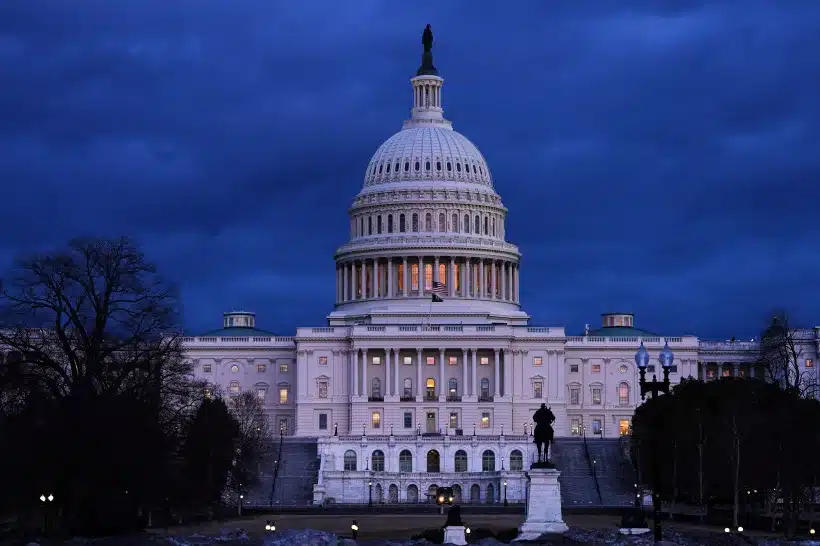
The U.S. Capitol stands illuminated after sunset in Washington on February 23, 2026, as preparations continue ahead of President Donald Trump’s State of the Union address, capturing a moment of anticipation before one of the nation’s most significant political events. VIEW PICTURE
WASHINGTON — The annual State of the Union address holds significant importance in the political calendar of the United States, serving as a platform for the sitting president to communicate key messages to both Congress and the American public. For President Trump, this upcoming address is particularly critical, as it offers an opportunity to advocate for his policies amidst an evolving political landscape. With the midterm elections approaching, the address may become a pivotal moment for reinforcing his position and agenda.
READ MORE ARTICLES:
- Kimberly Pagong: Duterte’s War on Drugs — Saving Millions or Misunderstood Leadership?
- Philippines Celebrates 40th Anniversary of EDSA People Power
- Missing of Nancy Guthrie
- DepEd Heroes: Teacher Jeric Maribao Honored for Exceptional Dedication and Innovation
- China, Ukraine Reaffirm Strategic Ties, Push for Peace at Munich Security Conference
- Reward Increased in Nancy Guthrie Missing Person Case
- Truth Behind the Jeffrey Epstein Files and McDonald’s Claims
As President Trump prepares to deliver his address, the current political environment presents both challenges and opportunities. The recent shifts in public opinion, legislative actions, and the dynamics within Congress play a vital role in shaping the themes potentially emphasized during the address. Trump’s administration has faced various hurdles in recent years, including contentious debates over immigration, healthcare, and economic policy. Each of these issues remains at the forefront of national discourse, influencing how the State of the Union may be received.
The president’s address will likely reflect on recent achievements and outline future objectives. This is particularly important as Trump seeks to galvanize support from his base while also reaching out to undecided voters who may influence the upcoming elections. The address could serve as a significant marketing tool for his campaign, highlighting accomplishments and proposing new initiatives aimed at improving the nation’s standing on the global stage.
The State of the Union address is more than just a speech; it represents a pivotal moment for President Trump to shape the narrative surrounding his presidency, address pressing issues, and rally support as the midterm elections draw near.
Trump’s Immigration Policies: A Central Theme
During the upcoming State of the Union address, President Trump is expected to place a significant emphasis on his immigration policies, which have been a defining aspect of his administration. With a focus on national security and economic stability, the Trump administration’s approach to immigration has consistently garnered both support and criticism. Proponents argue that strict immigration policies are vital for safeguarding American jobs and security, while opponents often point to the humanitarian implications of such policies.
One of the major initiatives that may feature prominently in the address is the continued enforcement of border security measures, notably the construction of a border wall between the United States and Mexico. This initiative has been controversial from its inception, eliciting strong reactions from various communities and advocacy groups. Supporters of the border wall contend that it is an essential deterrent against illegal immigration and drug trafficking, while critics argue it is an ineffective and inhumane solution that disrupts communities and families.
President Trump may address his administration’s aggressive stance on deportations and the rescission of programs like DACA (Deferred Action for Childhood Arrivals), which has left many individuals uncertain about their future. The implications of these policies extend beyond just border control; they also affect community relations and trust between immigrant populations and law enforcement agencies. The controversies surrounding these policies have highlighted profound societal divides, raising questions about the balance between security and compassion.
As the President outlines his visions for immigration in the address, it will be crucial to consider the broader impact of these stances, not only on national security but also on the diverse fabric of American society. An understanding of how these policies resonate within communities will be paramount in assessing their long-term effectiveness and the implications for future immigration reform.
As President Trump prepares for his upcoming State of the Union Address, one of the most significant topics anticipated is the state of the U.S. economy. In recent years, the Trump administration has touted robust economic growth, citing increases in domestic manufacturing and significant job creation across various sectors. This perception of a booming economy, however, often diverges from the complex realities faced on the ground.
Supporters of the President assert that policies implemented during his tenure, including tax reform and deregulation, have spurred a revival in manufacturing. They argue that these initiatives have enabled companies to invest in domestic operations, thereby creating jobs and fostering a more favorable economic landscape. According to certain metrics, such as unemployment rates, there is evidence that job creation in specific industries has seen a positive trend, which proponents attribute to governmental efforts and initiatives.
The critics of the administration’s economic narrative highlight concerns regarding wage stagnation and income inequality. While the figures may present an optimistic view, many workers continue to struggle with stagnant wages and a lack of benefits, calling into question the overall impact of the economic policies in place. The concerns about the sustainability of such growth have emerged, as external factors like global market fluctuations and trade tensions could pose significant threats.
Public perception of economic stability can often be influenced by immediate experiences rather than long-term data. Therefore, while the government may present statistics reflecting a booming economy, it is crucial to balance these claims against the widespread sentiment among everyday Americans who may not feel the benefits equally. The discourse surrounding economic promotion under President Trump is indicative of broader themes that will likely shape key discussions in the upcoming address.
Federal Government Reassessment: Cuts and Concerns
In recent months, the administration of President Trump has taken a steadfast approach towards reassessing the functions and funding of the federal government. This initiative emphasizes significant reductions across various governmental agencies and programs, prompting both support and opposition among different segments of the political spectrum. The main goal of these budget cuts appears to be the reduction of the national deficit while streamlining government operations, yet the implications of such drastic measures raise pertinent questions regarding the overall impact on citizen services.
Critics argue that slashing funding could weaken the essential services that numerous citizens rely upon, particularly in areas such as education, healthcare, and social security. Federal initiatives designed to support lower-income families, assistance for veterans, and public health programs may face considerable reductions, contributing to a larger discourse on equity and access to necessary services. The political ramifications extend into party lines as Democrats and moderate Republicans express concern that the cuts disproportionately affect vulnerable populations—a point that could galvanize opposition and fuel electoral challenges in upcoming elections.
Proponents of these cuts argue that reducing federal spending is a vital step toward fostering economic growth and encouraging greater fiscal responsibility. This perspective posits that a leaner government approach can ultimately lead to increased investment and innovation in the private sector. However, navigating this discussion necessitates a careful examination of the essential services that federal funding supports, as a loss in these areas could potentially incite public backlash and shift the political landscape.
As the State of the Union address approaches, it is anticipated that President Trump will elucidate his administration’s stance on these cuts and further define the long-term strategy for federal government reassessment. Engaging with the nuances of this topic is vital for understanding not only the fiscal responsibility of the government but also the many implications for American citizens.
Tariff Controversies: Navigating Supreme Court Rulings
President Trump’s administration has faced significant challenges in implementing its tariff policies, particularly following recent Supreme Court rulings that deemed certain tariffs unconstitutional. In response, Trump has publicly expressed his dissatisfaction with the Court’s intervention, arguing that the tariffs were essential to protect American industries and promote domestic manufacturing. This ruling has sparked a debate on the balance of power between the executive and judicial branches regarding trade policies.
To navigate the legal hurdles presented by the Supreme Court’s ruling, President Trump has proposed a series of strategies aimed at circumventing these judicial constraints. One approach includes the possibility of re-framing tariffs under different legislative provisions, thereby attempting to sidestep the ruling’s limitations. This maneuver could potentially lead to increased tensions with both Congress and the judiciary, further complicating the already contentious trade environment.
The implications of Trump’s proposed strategies extend beyond the legal realm and could significantly impact international trade relations. By pursuing alternative methods of implementing tariffs, the administration could exacerbate trade conflicts, particularly with key partners such as China and the European Union. Economic analysts warn that such actions might provoke retaliatory measures, thus destabilizing the current trade equilibrium and adversely affecting global markets.
The uncertainty surrounding the administration’s tariff policies could have lasting effects on domestic economic stability. Businesses reliant on international supply chains may face increased costs, prompting them to pass these costs onto consumers, which could ultimately lead to inflationary pressures. As President Trump navigates this complex landscape, the effectiveness of his strategies to counteract Supreme Court rulings will be critical in shaping the future of U.S. trade policy and its broader economic implications.
Military Funding and Quick-Hit Action: A Defense Focus
Increased military funding has become a focal point of President Trump’s administration, reflecting a broader strategy aimed at asserting U.S. dominance on the global stage. The emphasis on enhancing military capabilities, particularly in regions experiencing turmoil, aligns with Trump’s proposition of quick-hit action. Such an approach pivots the focus from prolonged engagements to swift military responses, evidenced by recent actions in nations like Iran and Venezuela.
The administration’s push for heightened military funding underscores a commitment to modernizing the armed forces, enhancing defense readiness, and expanding operational capabilities. This funding is not merely about acquiring advanced weaponry; it signifies a strategic pivot that prioritizes rapid responses to perceived threats. For instance, the recent military operations in Iran and Venezuela illustrate a tactical approach designed to achieve immediate objectives while minimizing prolonged military exposure.
Critics of this strategy argue that quik-hit operations can lead to unforeseen consequences, heightening tensions rather than alleviating them. The implications of such military actions resonate beyond immediate military engagements, influencing diplomatic relations and the perception of U.S. intentions globally. The administration’s position is predicated on the belief that a robust military presence can deter adversaries and safeguard national interests.
As military strategy evolves under Trump’s leadership, the implications of increased funding become evident not only in terms of military readiness but also in shaping the geopolitical landscape. The balance between defense spending and diplomatic engagement remains a critical discourse among both supporters and detractors of this approach, with ongoing discussions about its long-term sustainability and effectiveness.
Voter Identification Requirements: A Polarizing Proposal
The voter identification laws have emerged as a significant topic of discussion in the American political landscape, and President Trump’s upcoming State of the Union address is expected to touch upon this contentious issue. The President is likely to advocate for tighter voter identification requirements, arguing that they are essential for preventing voter fraud and ensuring electoral integrity. However, these proposed laws have sparked bipartisan criticism and concern regarding their implications for voter rights, particularly among marginalized communities.
Critics of stringent voter ID laws contend that such measures disproportionately affect minorities, the elderly, and low-income individuals, who may lack the required identification. This raises critical questions about access to the ballot box and the foundational principle of democratic participation. For many, the fear is that stringent voter ID requirements not only disenfranchise voters but also perpetuate existing inequalities in the electoral process.
Moreover, studies have consistently shown that instances of voter impersonation are extremely rare, calling into question the necessity of stricter identification measures. The debate has thus evolved into one centered on the balance between securing elections and protecting voting rights; each side presenting its arguments with fervor. Advocates for voter ID laws argue that they enhance the public’s confidence in the electoral system, while opponents claim they undermine the rights of eligible voters, thereby creating a divisive political atmosphere.
As Trump’s administration pivots towards advocating for such proposals in his address, it will be imperative to consider the broader implications of these policies. Will they indeed foster a more secure electoral environment, or will they serve as barriers to participation for vulnerable populations? The upcoming address presents an opportunity to explore these themes and their long-term effects on American democracy.
President Donald Trump’s approach to delivering his State of the Union address represents a distinctive blend of celebration and conviction, which adds a unique layer to the traditional format of such speeches. Unlike many predecessors, Trump exhibits a charismatic ability to engage the audience while navigating between the celebratory tone of accomplishments and the more assertive demeanor reflecting his policies and vision for the country. This duality is a defining feature of his rhetoric.
When examining Trump’s presentation style, it is essential to recognize that he often deviates from the scripted material typical of such formal addresses. His off-the-cuff remarks can introduce a level of spontaneity, which tends to resonate well with supporters who value authenticity. This connection to the audience is particularly crucial in a format as significant as the State of the Union, where millions tune in to hear not just policy but the personality behind the presidency. While some may argue his informal style risks undermining the solemnity of the occasion, others contend that it injects a necessary energy and relatability into politics.
Trump’s delivery is characterized by a strong use of emotional appeals intertwined with his narratives. By combining assertive language with patriotic symbols and themes, he creates a dynamic atmosphere that strives to unite his audience behind the message he presents. The positive assertions about national achievements serve as a celebratory reminder of his administration’s goals, while the more assertive points might call his supporters to action regarding upcoming challenges. This balancing act forms a crucial part of his ability to galvanize public sentiment, ensuring that his messages resonate on multiple levels.
Assessing the Political Landscape Moving Forward
The political landscape following President Trump’s upcoming State of the Union Address will undoubtedly evolve as various themes are presented, each carrying implications for the midterm elections. The address serves as a platform for Trump to highlight achievements and set the tone for the Republican party’s direction moving forward. It is likely that the issues articulated will resonate within the context of the upcoming elections, influencing candidates’ campaigns and voter sentiments.
One significant challenge that Republican candidates may face is the necessity of defending Trump’s record, which has been characterized by divisive policies and fluctuating public support. Candidates will need to strategically navigate the complexities of Trump’s legacy while appealing to a broader base that includes independents and moderate Republicans who may harbor reservations about the former President’s approach. Furthermore, addressing key issues such as the economy, healthcare, and immigration reform could be pivotal as these subjects remain top priorities for many voters.
Beyond the immediate implications of the State of the Union Address, it is essential for candidates to anticipate the influence of public perception, especially in light of controversies and scandals that have historically surrounded Trump’s administration. The ability to connect Trump’s policies to their potential impact on constituents’ lives will be vital for candidates seeking election or re-election. Moreover, the themes discussed may sharpen the focus on contrasting visions between Republican candidates and their Democratic opponents, who are likely to capitalize on any weaknesses stemming from Trump’s tenure.
As the midterm elections approach, understanding how the themes within the State of the Union are assimilated by both candidates and the electorate will be critical in assessing the prospects of the Republican party. The potential implications for both parties will shape the political landscape and could very well influence the nation’s governance for years to come.
Trump’s State of the Union: A Dive into the Disarray
The anticipation surrounding Donald Trump’s upcoming State of the Union address serves as a reflection of the challenges and dynamics within American politics. Historically, this speech carries significant weight, since it provides an opportunity for the president to outline the administration’s priorities and engage with both the public and Congress. As we look ahead to his address, especially in the context of recent economic hurdles, the stakes appear to be particularly high.
Expectations surrounding Trump’s speeches have been mixed, often influenced by the realities of his prior addresses. While some considered earlier efforts to be a clarion call for unity and advancement, others observed that the rhetoric frequently veered toward partisan topics. Consequently, this perception has created a complex backdrop as citizens and lawmakers alike await his words, especially amid electoral pressures that could shape the future of the presidential office.
Factors such as fluctuating economic indicators, rising inflation, and domestic policies are expected to play a prominent role in Trump’s speech. The economy is a deeply entrenched issue; therefore, how he addresses the topic may dictate the reception of his message and the subsequent public response. Moreover, with midterm elections approaching, the necessity for a strong narrative cannot be understated. Such an environment creates an uneasy balance between the curated presentation of success and an honest accounting of challenges faced by his administration.
Trump prepares for this significant moment, both the content of his address and the surrounding circumstances may influence how his presidency is viewed moving forward. Whether he can effectively communicate his vision in light of existing difficulties remains to be seen, but the implications of his speech are sure to resonate widely. The State of the Union is, after all, a critical touchstone in evaluating the administration’s standing and future direction.
Throughout his tenure and particularly in recent addresses, former President Donald Trump has exhibited a notable tendency to deviate from the prepared remarks, frequently engaging in a narrative that centers around his personal grievances. This deviation is especially pronounced regarding the contentious issue of the 2020 presidential election, which Trump continues to assert was marred by widespread fraud.
Trump’s recounting of his electoral challenges serves a dual purpose: it reinforces his connection with his base while simultaneously framing his narrative of victimization and political persecution. By repeatedly emphasizing his grievances, he taps into a profound sense of injustice felt by many of his supporters. This strategy is effective in mobilizing a dedicated following that resonates deeply with feelings of disenfranchisement. For these individuals, Trump’s anecdotes of being wronged resonate on emotional and relational levels, fostering a fierce loyalty that is characteristic of his political identity.
This personal touch in his rhetoric poses a significant risk of alienating broader audiences. While Trump’s loyalists may find comfort and validation in his grievances, those outside of his immediate support base often perceive these narratives as unsubstantiated and detracting from substantive policy discussions. Critics argue that this focus on personal grievance detracts from the pressing issues facing the country and cultivates a divisive atmosphere, ultimately hampering bipartisan dialogue.
Trump’s reliance on a grievance-centric communication style raises questions about the implications for future political discourse. As more individuals gravitate towards personal narratives rather than collective solutions, the political landscape may increasingly favor divisiveness over unity. The challenge posed by this approach is whether it can sustain the energy of his base while enticing undecided voters to engage with his message. Ultimately, Trump’s tendency to prioritize personal grievances continues to be a defining characteristic of his communication strategy.
The Economic Reality: Inflation and Public Sentiment
The state of the economy has been a pivotal point of discussion during Trump’s presidency, with an administration often highlighting optimistic statistics about job creation and GDP growth. However, this rosy narrative stands in stark contrast to the daily experiences of many Americans, particularly in light of rising inflation and escalating living costs. The inflation rate has surged in recent years, applying pressure on household budgets across the nation. Essential items such as food, housing, and fuel have all seen significant price increases, prompting widespread concern among citizens.
While government reports may suggest a recovering economy, the sentiments expressed by ordinary Americans reveal a different story. Surveys indicate that a substantial portion of the populace feels the impacts of inflation more acutely than official statistics might suggest. For many, it is a struggle to stretch their wages to cover basic needs, leading to frustration and anxiety regarding financial stability. The relationship between economic indicators and public perception becomes evident when looking at consumer confidence levels, which have been notably affected by perceptions of inflation.
Conversations surrounding economic discontent often highlight a disconnect between policymakers and the constituents they serve. Many citizens express skepticism towards claims that the economy is thriving while their experiences tell a different tale. This growing sense of discontent fosters an environment ripe for political discourse, influencing voter sentiment as the nation approaches elections. Addressing inflation and cost of living issues will be crucial as leaders seek to resonate with the electorate, who are increasingly prioritizing economic stability in their decision-making processes.
The Perils of Messaging Discipline: A Presidential Dilemma
The ability of a president to effectively communicate their agenda to the electorate is crucial for governance and political success. In the case of former President Donald Trump, his messaging strategies often diverged sharply from those seen in previous administrations. Unlike traditional presidencies that employed a more structured approach to communication, Trump’s style was characterized by spontaneity and controversial assertions, which sometimes alienated key demographics.
The successful presidents have maintained a consistent narrative that resonates with the American public, particularly on pressing kitchen-table issues such as healthcare, employment, and education. This discipline allows for a clearer connection between a president’s policies and the lived experiences of everyday citizens. However, Trump faced significant challenges in this area. His inclination to prioritize bold, attention-grabbing statements frequently overshadowed substantive discussions on critical issues.
The difficulties encountered by Trump in establishing a coherent message are particularly evident when one contrasts his presidency with others who were able to formulate long-term communication strategies. For instance, presidents such as Barack Obama and Bill Clinton effectively used storytelling to engage the public on complex topics, enhancing their relatability. Trump’s frequent policy shifts and provocative tweets often muddied his messaging, leaving voters uncertain about his true stance on important issues.
Trump’s approach has implications beyond his administration. The disjointed messaging contributes to a polarized political environment, where voters may become increasingly detached from traditional political discourse. As such, the perils of messaging discipline are evident, as effective communication remains a cornerstone of successful governance and public trust.
Democrat Response: Protests and Alternative Narratives
The Democratic response to President Trump’s State of the Union address was marked by significant protests and the emergence of alternative narratives that aimed to counter the administration’s claims. Prominent Democratic lawmakers announced their decision to boycott the event, which they deemed an opportunity for Trump to further his divisive agenda rather than a forum for unity and constructive dialogue. The boycott highlighted a growing rift between the Democratic Party and the Trump administration, emphasizing their discontent with many of the policies and rhetoric employed by the President.
In addition to legislative boycotts, various grassroots organizations and activist groups organized protests outside the venue where the State of the Union was held. These demonstrations served to voice disapproval of the administration’s policies, particularly regarding issues such as immigration, healthcare, and environmental protection. They aimed to amplify the concerns of marginalized communities who felt their voices were ignored during the address. The protests also sought to mobilize public sentiment against what many perceive as a troubling trajectory in American governance under Trump.
The significance of platforms like the ‘People’s State of the Union’ rally cannot be overstated. This alternative event provided a space for ordinary citizens and progressive leaders to present their own narratives and discuss policy issues that were often overshadowed by the official address. It served as a counterpoint to Trump’s rhetoric, allowing citizens to share their stories and engage in discussions about the future of the country. By utilizing social media, these alternative narratives were disseminated widely, creating a counter-discourse that challenged the administration’s assertions and fostered a more inclusive dialogue among the populace.
In evaluating President Trump’s foreign policy, one finds a tapestry of notable achievements intertwined with significant challenges. His administration frequently highlighted military successes, particularly the elimination of high-profile terrorists such as Abu Bakr al-Baghdadi and Qassem Soleimani. These actions were portrayed as decisive moves to enhance U.S. security and demonstrated a willingness to confront adversaries directly. Moreover, Trump’s commitment to reducing U.S. troops in conflict zones resonated with a segment of the electorate fatigued by prolonged military engagements, fostering the narrative of an administration dedicated to prioritizing American lives.
This narrative is juxtaposed against a backdrop of fraying alliances, especially within NATO. Trump’s criticisms regarding member nations’ defense spending led to increased tensions among allies. While advocating for equitable financial contributions from NATO members is justifiable, the rhetoric employed often appeared to undermine long-standing commitments to multilateral defense agreements. This could result in doubts regarding the reliability of U.S. partnerships, which have historically provided a semblance of stability in uncertain global terrains.
Relations with Russia also experienced a notable shift under Trump’s administration. The embrace of dialogue with the Russian leadership, including summits with President Vladimir Putin, prompted scrutiny and skepticism among critics. While some proponents argue that engaging directly represents a pragmatic approach to diplomacy, others contend that it risks legitimizing a regime characterized by aggressive actions against both Western interests and international norms.
The challenge lies in effectively framing these complexities for American voters. Balancing achievements in military operations against the reality of strained international relationships requires a nuanced discourse that acknowledges both the successes and flaws inherent in these foreign policy decisions.
Connecting Foreign Affairs to Domestic Concerns
The interrelationship between foreign affairs and domestic concerns has become increasingly prominent in today’s political landscape. Events occurring in regions such as Venezuela or the Middle East often resonate with citizens on a local level, influencing perceptions of national stability and economic health. The degree to which international developments can impact domestic economic conditions is nuanced and multifaceted, deserving thorough exploration.
Effective communication plays a pivotal role in shaping public understanding of how foreign policy decisions and international crises can have domestic repercussions. For instance, an economic downturn fueled by sanctions on foreign nations may result in rising prices for essential goods, directly affecting households. Public awareness and comprehension of these dynamics can help foster a more informed electorate, capable of engaging with policy discussions that bridge international and national concerns.
The portrayal of foreign relations in the media often highlights a selective narrative that may overlook critical economic implications for citizens. When actions in the Middle East, such as military interventions or diplomatic negotiations, are reported without context regarding their domestic ramifications, misunderstandings can proliferate. A lack of clarity may lead to discontent with foreign policy, even when the underlying justification for such actions is tenuous and tied closely to broader strategic goals.
Policymakers and communicators must prioritize transparent dialogue that elucidates the connections between foreign affairs and domestic situations. By frameworking these topics together, the electorate can better appreciate the broader implications of governmental decisions, thus fostering a more cohesive understanding of national priorities. Since economic conditions are often tied to international actions, the interdependence of these realms ultimately underscores the necessity for coherent communication strategies.
Key Takeaways from Trump’s Address: What to Watch For
As we prepare for Trump’s State of the Union address, several critical themes and messages are anticipated that could shape both his narrative and the broader political landscape. One of the paramount focuses will undoubtedly revolve around the state of the economy. Trump is likely to highlight job growth, tax reforms, and regulatory changes that have been introduced during his tenure, aiming to project an image of economic success. Notably, this is expected to resonate with his base, particularly in battleground states where economic performance plays a pivotal role in voter sentiment.
Another essential theme expected to emerge is national security. Trump’s administration has frequently positioned itself as a protector against perceived threats, both domestic and international. This year, he may emphasize border security and immigration policies, reiterating his administration’s stance on strict immigration control. Such rhetoric is particularly potent as it aligns with the priorities of many voters who seek to see bold action on these issues.
Trump’s address may incorporate discussions around social issues, including healthcare and education. He has been known to advocate for reforms aimed at reducing the costs of healthcare and enhancing the education system, which he can utilize to appeal to working-class families. These topics not only reflect pressing social concerns but also serve as strategic points to connect with a diverse electorate.
To consider the political implications of Trump’s address, especially with critical elections on the horizon. His words could influence the strategies of both his party and the opposition, potentially affecting candidate positioning and campaign narratives leading up to the elections. Observers should thus monitor how Trump’s rhetoric shapes political discourse in the coming months.
Conclusion: The Future of Trump’s Messaging Strategy
As we assess the landscape of American politics following Trump’s tenure, it is essential to reflect on the implications of his unique communication style and the potential trajectory of his political future. Trump’s approach to messaging has always been both polarizing and effective, rallying strong support from his base while simultaneously attracting criticism from opponents and mainstream media. This duality creates a complex environment where his ability to resonate with the electorate can significantly influence public perception and electoral outcomes.
Trump’s messaging strategy appears poised to maintain its confrontational and unorthodox nature. His affinity for social media, particularly platforms like Twitter now rebranded as X has revolutionized the way candidates communicate with voters. By bypassing traditional media channels, he directly engages and mobilizes his supporters, ensuring that his voice remains prominent in political discourse. However, this method also raises concerns regarding misinformation and accountability, which could impact his long-term credibility.
The broader context of American politics suggests that while Trump’s unique style may energize his dedicated followers, it may alienate moderates and independent voters. As the electorate evolves, candidates must be attuned to the shifting sentiments within the populace. The implications of Trump’s messaging extend beyond his personal legacy; they signify a transformative moment in political communication that could shape the strategies of future candidates regardless of party affiliation.
Trump’s future as a political figure will largely hinge on his ability to adapt his messaging strategy to address the changing dynamics of American society. His approach will need to balance the efficacy of rallying his core base with the necessity of appealing to a broader audience if he seeks sustained political relevance. This evolving narrative will undeniably play a critical role in defining not only Trump’s legacy but also the contemporary political landscape as a whole.
Donald Trump, immigration crackdowns, slashing of the federal government, widespread tariffs, Supreme Court just struck down, increasingly wary Americans, whirlwind first year, tighten voter identification requirements, following the shooting deaths of two American citizens, denying that he lost the 2020 presidential election, propel Democratic wins around the country on Election Day last November.