The Department of Education (DepEd) is making moves to overhaul the academic calendar, proposing a shift to a three-term system starting in the school year 2026-2027. This initiative aims to address declining proficiency levels among Filipino learners and alleviate the workload of teachers, marking a potentially significant change in the country’s basic education framework. (VIEW PICTURE)
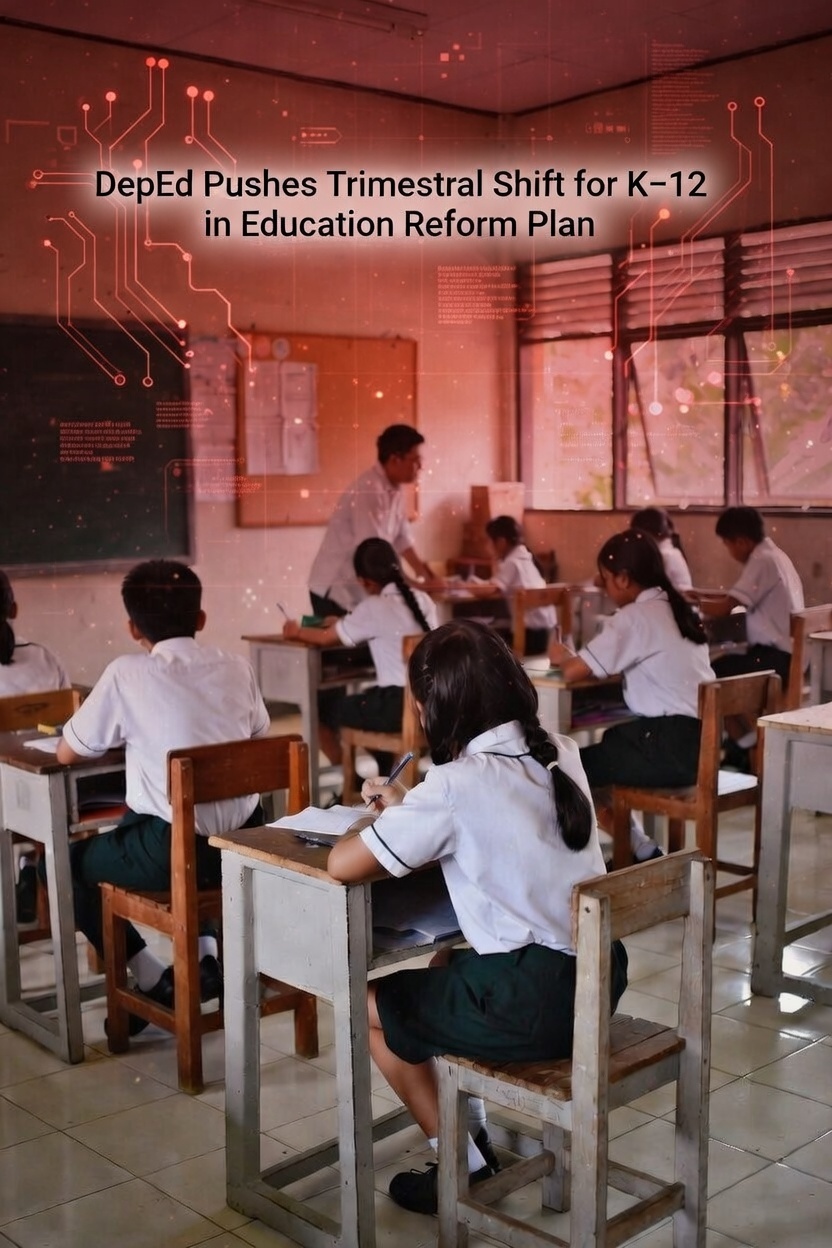
MANILA, Philippines – The Department of Education (DepEd) is charting a major transformation in the country’s academic calendar, proposing a shift from the traditional four-quarter system to a three-term structure for students from Kindergarten to Grade 12 beginning School Year 2026–2027.
Education Secretary Sonny Angara said the move forms part of a broader, “holistic approach” aimed at strengthening learning outcomes and easing the workload of teachers nationwide.
READ MORE ARTICLES:
- Meta Platforms to Shut Down Messenger.com
- U.S. Department of Justice Issues New Subpoenas in Probe of Donald Trump Adversaries
- Iran Seeks Mutually Beneficial Nuclear Deal with U.S.
- Mia Amor Mottley Wins Third Straight Clean Sweep in Barbados Election
- Trump’s Endorsement Fails to Unite GOP Field in Battle to Replace Marjorie Taylor Greene
- DepEd Pushes Trimestral Shift for K–12 in Education Reform Plan
- U.S. Sends Second Aircraft Carrier to Middle East Amid Iran Tensions
“Itinutulak natin ito upang magkaroon ng mas mahahabang, tuloy-tuloy na panahon ng pagkatuto, mas maayos na pacing ng mga aralin, at mas mababang administrative burden para sa ating mga guro,” Angara said in a statement on Friday, February 13.
Under the current setup, the school year runs from June to March, divided into four quarters, with a semestral break in late October and a Christmas break during the last two weeks of December.
How the Proposed Trimester System Will Work
If approved, the academic year will be divided into three trimesters:
- First Trimester: June to September
- Second Trimester: September to December
- Third Trimester: January to March
DepEd assured that the revised calendar will still comply with the mandated 201 school days.
Each term will be structured into two distinct phases:
- Instructional Block (54–61 days): Dedicated to uninterrupted teaching and learning, with minimal non-academic disruptions.
- Enrichment Block: Allotted for remediation, enrichment programs, grade computation, preparation and checking of school forms, and wellness breaks.
For the first term, an opening block will be reserved for school opening activities, ensuring smoother transitions and better preparation at the start of the academic year.
DepEd emphasized that scheduled breaks between terms will provide teachers with crucial time for planning, assessment, and professional responsibilities — a move expected to enhance overall instructional delivery and reduce burnout.
Reform Driven by Learning Gaps
The proposal comes on the heels of concerns raised by the Second Congressional Commission on Education (EDCOM 2), which flagged “worrying declines in proficiency” among Filipino learners, particularly in Grades 3, 6, 10, and 12 — key transition stages in the K–12 system.
Education analysts say the trimester model could offer more sustained learning periods and better curriculum pacing, potentially addressing the proficiency gaps highlighted in recent evaluations.
As consultations continue, DepEd maintains that the proposed shift is not merely a calendar adjustment but a strategic recalibration of the country’s basic education framework — one aimed at delivering deeper learning, stronger outcomes, and a more sustainable teaching environment.
If implemented, the reform could mark one of the most significant structural changes in Philippine basic education in recent years.
DepEd to Integrate School Observances Into Daily Lessons to Protect Instructional Time
The Department of Education (DepEd) is set to roll out a key reform that will integrate mandated school activities and national celebrations directly into classroom lessons, in a bid to safeguard instructional time and improve learning outcomes.
Under the proposed approach, observances traditionally marked by full-day programs and school-wide events will instead be woven into regular teaching. National and cultural celebrations may be incorporated into reading materials, writing exercises, science discussions, and project-based learning activities. Schools may also opt for shorter in-class reflections or discussions rather than suspending regular lessons for an entire day.
DepEd said the move responds to data showing that the current academic calendar structure has led to compressed instructional time. Schools often struggle to balance teaching core subjects with numerous mandated observances, reporting requirements, and administrative tasks.
“DepEd data show that the current calendar structure has contributed to compressed instructional time, as schools must accommodate numerous mandated observances, reporting requirements, and administrative tasks,” the agency said in a statement.
The reform aligns with earlier findings from EDCOM 2, which flagged the growing number of legislated school activities as a major factor in reduced classroom hours. While acknowledging that such activities are valuable for character formation and civic awareness, EDCOM 2 noted that they often take away time meant for core academic subjects.
According to the commission, around 150 legislated activities currently “crowd an already shortened school year,” adding pressure on teachers and students to meet curriculum targets within limited time.
Education officials maintain that the new strategy will not eliminate meaningful observances but will instead ensure they enhance, rather than interrupt, learning. By embedding these themes into structured lessons, DepEd aims to create a more cohesive and efficient academic calendar while preserving the educational value of national and cultural commemorations.
The reform is part of broader efforts to improve the quality of basic education and ensure that students receive sufficient time to master essential competencies without sacrificing holistic development.