United States has imposed a complete halt on maritime trade with Iran, a move U.S. Central Command chief Admiral Brad Cooper claims will impact 90% of the nation’s economy. This stringent blockade, implemented within 36 hours, has seen U.S. forces intercepting Iran-linked oil tankers. Coinciding with this economic pressure, President Donald Trump has indicated that peace talks between U.S. and Iranian officials could potentially resume this week in Islamabad, Pakistan, signaling a complex interplay of conflict and diplomacy.
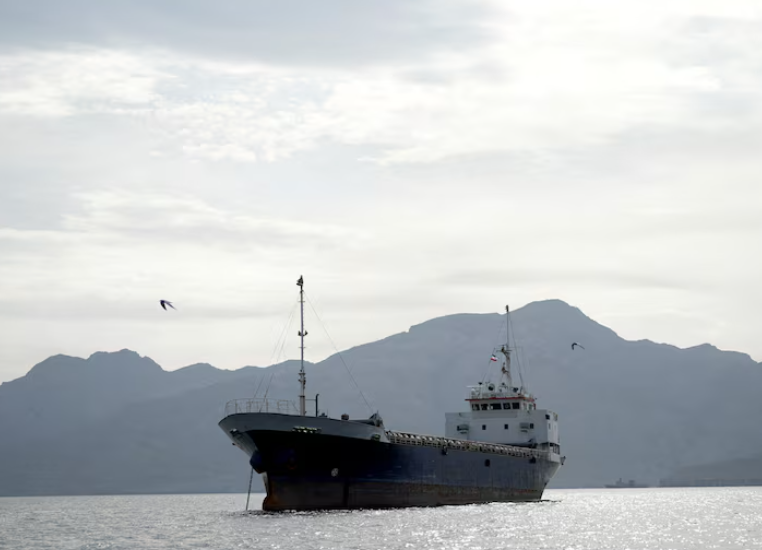
WASHINGTON, April 15 – In a significant escalation of economic pressure, the United States announced its military has completely halted maritime trade with Iran, a move U.S. Central Command chief Admiral Brad Cooper claims affects 90% of the nation’s economy. This development comes as President Donald Trump indicated that peace talks between U.S. and Iranian officials could potentially resume this week in Islamabad, Pakistan.
Admiral Cooper stated on X, the social media platform formerly known as Twitter, that “In less than 36 hours since the blockade was implemented, U.S. forces have completely halted economic trade going into and out of Iran by sea.” This assertion follows reports from the Wall Street Journal that the U.S. military intercepted eight Iran-linked oil tankers since the blockade began on Monday.
READ MORE ARTICLES IN US GLOBAL UPDATE:
- Donald Trump Turns on Ally PM Giorgia Meloni After Public Clash Over Pope and Iran Policy
- Dave Chappelle Supports Revival of Ohio Radio Station, Preserving Hometown Roots Through Building Restoration
- Soleimani Family Members Arrested in US; State Department Alleges Deception
- Donald Trump Delays Iran Strikes Amid Gulf Mining Threat
- Deadly Spring Storm Wreaks Havoc Across Eastern U.S.
Despite the stringent blockade, President Trump expressed optimism about resuming negotiations, suggesting that talks could restart in Pakistan within the next two days. Vice President JD Vance, who recently led discussions that concluded without a definitive agreement, shared a positive outlook. “I think you’re going to be watching an amazing two days ahead,” Trump told ABC News reporter Jonathan Karl, adding his belief that a deal would be preferable for Iran’s rebuilding efforts. He also remarked, “They really do have a different regime now. No matter what, we took out the radicals.”
Sources from Pakistan, Iran, and the Gulf region also indicated that negotiating teams might return to Pakistan later this week. However, a senior Iranian source cautioned that no specific date had been finalized.
Adding to the complex geopolitical landscape, the United Kingdom and Canada have joined eight other nations in condemning the recent killings of UN peacekeepers.
Meanwhile, the U.S. blockade continues to impact international shipping. A U.S.-sanctioned and Chinese-owned tanker, the Rich Starry, was reportedly turned back on Wednesday while attempting to return to the Strait of Hormuz after departing the Persian Gulf. This incident underscores the broad reach of the U.S. maritime interdiction, even as diplomatic channels appear to be reopening. The effectiveness and long-term implications of this blockade on Iran’s economy and the broader region remain a subject of intense scrutiny.
Tensions Ease as US-Iran Peace Talks Show Promise, But Blockade Continues
A fragile calm has settled over global markets as signs of diplomatic engagement aimed at ending the protracted conflict between the United States and Iran emerge. Benchmark oil prices dipped for a second consecutive day on Wednesday, reflecting cautious optimism that a resolution might be on the horizon. Asian stocks followed suit, showing gains, while the U.S. dollar stabilized after a significant seven-session decline.
The conflict, which officially began on February 28, has had a devastating impact, claiming approximately 5,000 lives, with an estimated 3,000 casualties in Iran and 2,000 in Lebanon. The hostilities have also led Iran to effectively close the Strait of Hormuz, a vital global chokepoint for crude oil and natural gas transportation, severely disrupting shipments from the Persian Gulf to international markets, particularly in Asia and Europe.
President Donald Trump, in comments to the New York Post on Tuesday, expressed confidence that U.S. negotiators would soon re-engage with Iran. He attributed this potential breakthrough largely to the efforts of Pakistan’s army chief, Field Marshal Asim Munir, who has been instrumental in moderating the talks. “You are not going to solve that problem overnight,” Trump acknowledged, “but I think a deal is preferable because then they can rebuild.”
This diplomatic overture follows a statement by U.S. Vice President JD Vance at an event in Georgia on Tuesday. Vance indicated that President Trump is seeking a “grand bargain” with Iran, while also acknowledging the significant mistrust that persists between the two nations.
Adding another layer to the complex situation, Admiral Brad Cooper, head of U.S. Central Command, asserted that American forces have implemented a complete maritime blockade, halting all trade in and out of Iran by sea. Cooper stated that this action affects an estimated 90% of Iran’s economy. The U.S. military reported intercepting eight Iran-linked oil tankers since the blockade’s inception on Monday, according to the Wall Street Journal. This blockade continues even as diplomatic efforts gain momentum, creating a paradoxical scenario of escalating pressure alongside peace negotiations.
The international community is also responding to related crises. The United Kingdom and Canada have joined eight other countries in condemning the recent killings of UN peacekeepers, highlighting the broader instability in the region.
The coming days are critical, with U.S. and Iranian teams potentially returning to Islamabad this week for further discussions. While the path to a lasting peace remains uncertain and fraught with challenges, the renewed diplomatic engagement offers a glimmer of hope for de-escalation and the eventual reopening of crucial global trade routes. The success of these talks will undoubtedly hinge on the ability of both sides to navigate the deep-seated mistrust and find common ground for a sustainable resolution.
Iran Nuclear Talks: A Complex Web of Ambitions, Sanctions, and Regional Tensions
Hopes for a breakthrough in Iran’s nuclear program negotiations were tempered this past weekend as key sticking points, particularly the duration of a potential moratorium on nuclear activities, remained unresolved. The United States had put forth a proposal for a comprehensive 20-year suspension of all nuclear activities by Iran, a significantly longer timeframe than Tehran’s suggested three to five-year halt, according to sources close to the discussions.
Rafael Grossi, the head of the International Atomic Energy Agency (IAEA), speaking from Seoul, characterized the length of any moratorium on Iranian uranium enrichment as a “political decision.” He expressed cautious optimism, suggesting that Tehran might consider a compromise as a gesture of goodwill and confidence-building. This sentiment underscores the delicate balance of diplomacy at play, where political will is as crucial as technical specifications.
Adding another layer of complexity, the U.S. has insisted on the removal of any enriched nuclear material from Iran. Conversely, Tehran has made the lifting of international sanctions against it a prerequisite for any agreement. This deadlock over sanctions relief and material removal highlights the deep-seated mistrust and the significant economic and political stakes involved for all parties.
Despite the challenges, there are glimmers of progress. A source involved in the negotiations in Pakistan indicated that back-channel talks held since the weekend have yielded positive results, narrowing the gap between the two sides. This suggests a potential pathway towards a deal that could be presented at a future round of talks, signaling a continued commitment to diplomatic engagement.
However, the fragile peace prospects have been significantly complicated by ongoing Israeli military actions in Lebanon. Israel’s continued attacks, targeting Hezbollah, an Iran-backed militant group, have cast a shadow over the diplomatic efforts. While Israel and the U.S. maintain that these operations are not encompassed by the existing ceasefire, Iran firmly asserts that they are a violation. This regional escalation poses a direct threat to the broader stability that the nuclear talks aim to foster.
The international community has voiced its concern over the escalating violence. On Tuesday, a joint statement issued by the UK, Canada, Japan, and seven other nations condemned the killing of UN peacekeepers in Lebanon, issuing an urgent call for an end to hostilities. This statement follows the tragic deaths of three Indonesian peacekeepers last month and underscores the growing international pressure for de-escalation. While these nations welcomed the ceasefire previously agreed upon by the U.S., Israel, and Iran, the continued conflict in Lebanon demonstrates the precariousness of the current situation.
The situation remains fluid, with the international community watching closely as diplomatic efforts continue amidst a backdrop of regional instability. The outcome of these negotiations will not only determine the future of Iran’s nuclear program but also have significant implications for global security and the geopolitical landscape of the Middle East.
US Destroyer Blocks Iranian Oil Tankers in Strategic Waterway
A U.S. Navy destroyer intercepted two oil tankers attempting to depart Iran’s Chabahar port on the Gulf of Oman, a day after President Donald Trump’s naval blockade officially went into effect. The warships reportedly ordered the tankers to turn around, according to a U.S. official who spoke on condition of anonymity.
The incident occurred as the vessels were navigating the waters of the Gulf of Oman. The U.S. warship made radio contact with the tankers, instructing them to alter their course and return to an Iranian port. Details regarding any further warnings or actions taken remain unclear.
This interdiction provides crucial insight into the initial stages of President Trump’s blockade, a policy designed to exert pressure on Iran to cease its de facto control over the Strait of Hormuz. This vital maritime passage is a critical chokepoint, through which approximately 20% of the global oil supply transits.
The Trump administration’s objective with this blockade is to compel Iran to accept U.S. terms for resolving the ongoing conflict, which was initiated by the United States and Israel on February 28th. A key demand includes the reopening of the Strait of Hormuz. President Trump has indicated that securing this waterway was also a prerequisite for the continuation of a week-old ceasefire agreement with Iran, which is set to expire next week.
The U.S. official’s statement corroborates an earlier announcement by the U.S. Central Command on Tuesday. At that time, the command stated that six merchant vessels had complied with orders to “turn around to re-enter an Iranian port on the Gulf of Oman.” The two tankers intercepted by the destroyer are believed to be part of this group.
The situation underscores the heightened tensions in the region and the strategic importance of the Strait of Hormuz in global energy markets. The effectiveness and implications of the U.S. blockade are expected to unfold in the coming days and weeks.
- Donald Trump Calls Nominee Dr. Erica Schwartz a “STAR” as She’s Tapped for CDC Chief
- Justin Fairfax Former Virginia Lt. Governor, Dies in Apparent Murder-Suicide That Killed Wife Dr. Cerina Fairfax
- US Commander Claims Sea Blockade Halts 90% of Iran’s Economy Amidst Peace Talks
- Donald Trump Turns on Ally PM Giorgia Meloni After Public Clash Over Pope and Iran Policy
- Dave Chappelle Supports Revival of Ohio Radio Station, Preserving Hometown Roots Through Building Restoration