PHILIPPINES — The International Criminal Court (ICC) has announced that it will issue its long‑awaited decision on April 22 regarding a key legal challenge raised by former Philippine president Rodrigo Duterte, whose crimes against humanity case stems from the deadly anti‑drug campaign carried out during his time in office. The ruling will determine whether the tribunal has the authority to continue hearing the case, a question that strikes at the heart of the court’s reach and the legal consequences of a state’s withdrawal from the Rome Statute.
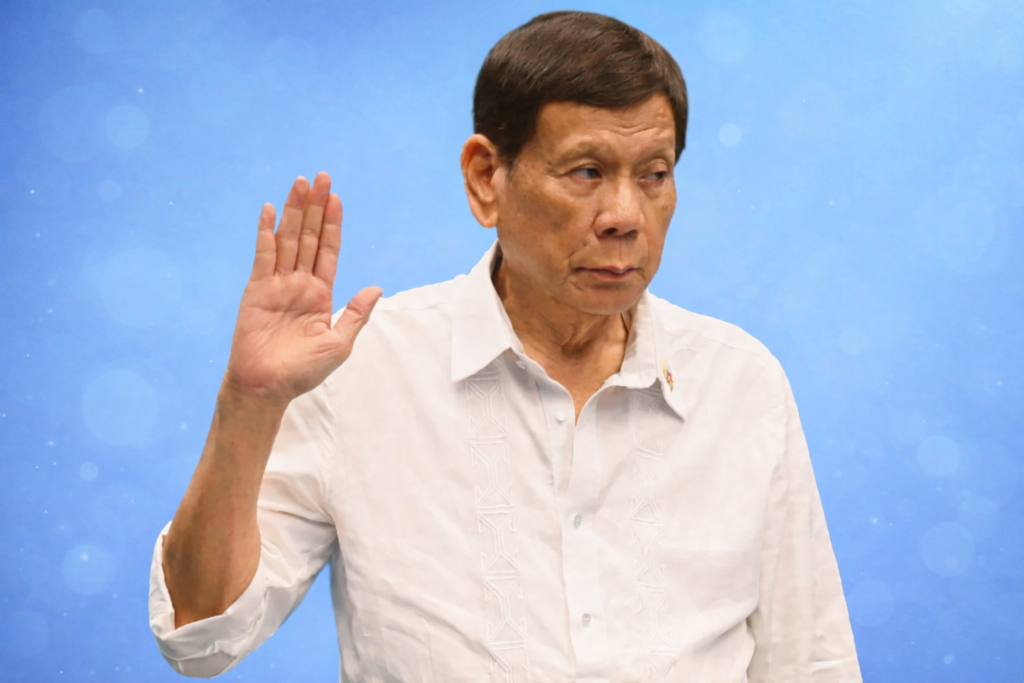
In an official statement released by the court, the ICC disclosed that its Appeals Chamber is set to resolve whether the earlier decision of Pre‑Trial Chamber I should stand or be overturned. That earlier ruling rejected arguments from Duterte’s defense team, which claimed that the court lacked jurisdiction over the alleged offenses connected to the drug war that claimed thousands of lives.
At the center of the appeal is Duterte’s contention that his arrest in March 2025 was unlawful because, according to his lawyers, the ICC overstepped its mandate. The former president’s camp maintains that the court did not have proper jurisdiction when it moved forward, asserting that the Philippines was no longer a member of the ICC at the time a formal investigation was initiated.
READ MORE ARTICLES:
- ICC Sets April 22 Ruling on Rodrigo Duterte Jurisdiction Appeal
- PNP Sustains Full-Scale Holy Week Operations, Seizes ₱121.6 Million in Illegal Drugs and Contraband
- Party-Lists Named in DPWH P14.4-B ‘Wishlist’ Project Leak
- Court’s Final Decision Favors Rappler in 2018 SEC Shutdown Case
- Supreme Court Affirms Dismissal of GMA Network’s Complaint Against ABS-CBN Over TV Ratings Dispute
- Philippines, China Begin Talks on Sea Energy Cooperation
- SOVFA: Philippines, France Sign Visiting Forces Agreement
The Philippines formally withdrew from the ICC in 2019, after Duterte announced his decision in protest against scrutiny of his anti‑drug policies. However, under the Rome Statute the founding treaty of the ICC a country’s withdrawal does not automatically shield it or its nationals from accountability for acts that were already being examined by the court prior to the withdrawal taking effect. This provision has become a central pillar of the prosecution’s argument.
Duterte’s legal team has sought to exploit what it describes as a critical timing gap. According to the defense, while ICC prosecutors had begun a so‑called “preliminary examination” into the situation in the Philippines shortly before Manila notified the United Nations of its intention to leave the court, this early phase was insufficient to constitute a case that was formally “under consideration.” In their view, only the authorization of a full investigation—approved by ICC judges in 2021 could trigger the court’s continuing jurisdiction, and that authorization came too late.
Prosecutors, however, have rejected this interpretation, arguing that the preliminary examination represented a serious and substantive review of available information, including reports of widespread and systematic killings. They maintain that this stage of the process is not a trivial or symbolic step, but an essential part of determining whether the legal criteria for opening a full investigation are met.
Judges of Pre‑Trial Chamber I sided with the prosecution when they examined the defense challenge. In their ruling, they emphasized that the preliminary examination carried real legal weight and was sufficient to place the Philippine situation within the court’s purview before the country’s withdrawal became effective. Even though judicial authorization for a full investigation was granted later, the judges ruled that the matter had already been taken up by the court in a meaningful way.
That decision effectively cleared the path for the case to proceed, prompting Duterte’s lawyers to elevate the issue to the Appeals Chamber. The upcoming April 22 ruling will now serve as a critical test of the ICC’s interpretation of its own rules and its ability to assert jurisdiction in cases involving former member states.
Legal observers note that the Appeals Chamber’s decision could have ramifications beyond this single case. A ruling affirming the lower chamber’s findings would reinforce the principle that countries cannot easily evade accountability by withdrawing from the ICC once scrutiny has begun. Conversely, a reversal could narrow the court’s jurisdiction and potentially complicate future cases involving withdrawals.
As the date approaches, attention remains fixed on The Hague, where the Appeals Chamber is expected to either confirm the court’s authority to move forward or grant the defense a significant procedural victory. Either outcome will shape the next chapter of one of the most closely watched cases in the history of the International Criminal Court.
Timeline of Rodrigo Duterte’s ICC Case
As of 6 April 2026, Rodrigo Duterte remains in ICC custody in The Hague, the confirmation of charges hearing has already ended, and the judges are still deliberating on whether the case should proceed to full trial. At the same time, a separate Appeals Chamber judgment on jurisdiction is scheduled for 22 April 2026, but that ruling has not yet happened as of today.
| Date | Event |
|---|---|
| 7 March 2025 | The ICC issued a sealed arrest warrant for Rodrigo Duterte, citing reasonable grounds to believe he was indirectly responsible for crimes against humanity related to murder during the “war on drugs.” |
| 10 February 2025 | The ICC Prosecutor had formally applied for the arrest warrant against Duterte for alleged crimes against humanity, including murder. |
| 11 March 2025 | The arrest warrant became public, and Duterte was arrested in Manila by Philippine authorities after arriving from Hong Kong. |
| 12 March 2025 | Duterte was formally surrendered to ICC custody and transferred to The Hague. |
| 12 March 2025 | The Philippine Supreme Court did not immediately grant a temporary restraining order to stop Duterte’s arrest. |
| 13 March 2025 | The Supreme Court consolidated habeas corpus petitions related to Duterte’s detention but allowed the transfer to ICC custody to proceed. |
| 14 March 2025 | Duterte made his initial appearance before the ICC via video link, where his identity, allegations, and rights were confirmed. |
| June – August 2025 | Duterte’s defence requested interim release from ICC detention while proceedings continued. |
| 26 September 2025 | The ICC denied Duterte’s request for interim release, citing ongoing risks and insufficient safeguards. |
| 8 September 2025 | The confirmation of charges hearing was postponed at the defence’s request due to health concerns. |
| 23 October 2025 | The ICC ruled that it has jurisdiction over Duterte’s case despite the Philippines’ withdrawal from the Rome Statute. |
| 28 October 2025 | Duterte’s defence filed an appeal challenging the ICC’s jurisdiction. |
| 14 November 2025 | The defence submitted a detailed appeal brief against the ICC’s authority over the case. |
| 28 November 2025 | The Appeals Chamber upheld the denial of interim release, keeping Duterte in custody. |
| 26 January 2026 | The ICC ruled Duterte fit to participate in pre-trial proceedings and rejected an indefinite adjournment. |
| 26 January 2026 | The ICC reviewed detention and decided to keep Duterte in custody. |
| 20 February 2026 | Duterte waived his right to attend the upcoming confirmation of charges hearing. |
| 23–27 February 2026 | The confirmation of charges hearing took place in The Hague to determine if there was enough evidence to proceed to trial. |
| 25 February 2026 | Duterte also waived attendance at the annual detention hearing held during the same period. |
| 27 February 2026 | The confirmation hearing concluded, and judges began deliberations with a decision expected within 60 days. |
| 6 March 2026 | The Appeals Chamber confirmed Duterte should remain in ICC custody, rejecting his detention appeal. |
| 2 April 2026 | The ICC scheduled the next major hearing, with the jurisdiction appeal judgment set for 22 April 2026. |
Duterte Camp Pushes Back, Citing Legal Flaws in ICC Interpretation
Former Philippine President Rodrigo Duterte’s legal camp has mounted another forceful challenge against the proceedings linked to the International Criminal Court (ICC), asserting that critical misinterpretations of both law and fact have fundamentally undermined the case against him. In a renewed appeal, Duterte’s lawyers identified what they described as three significant legal and factual errors, all centered on how the ICC has interpreted provisions of the Rome Statute following the Philippines’ withdrawal from the treaty.
At the heart of the submission is the argument that the Rome Statute does not authorize the opening of a formal investigation after a state has already withdrawn from the Court’s jurisdiction. Duterte’s legal team maintained that the Philippines’ effective withdrawal should have curtailed the ICC’s authority to proceed any further, particularly with respect to investigations initiated after that withdrawal took effect.
The lawyers also took issue with the ICC’s treatment of a preliminary examination, arguing that it was incorrectly characterized as a “matter under consideration” by the Court. According to the appeal, such an interpretation stretches the meaning of the term beyond what the Rome Statute allows. The defense further contended that the Office of the Prosecutor should not be automatically included in references to “the Court” under Article 127(2) of the Statute, a provision governing the consequences of withdrawal by a State Party.
In challenging the ICC’s approach, Duterte’s camp argued that the Pre-Trial Chamber I committed a serious legal error by treating Article 127 as a lex specialis—meaning a special legal rule that overrides more general rules within the same legal framework. The defense described this interpretation as legally unsound and unsupported by either the text of the Statute or established principles of treaty interpretation.
According to the appeal, there is no basis to elevate Article 127 to the level of a special rule capable of displacing other relevant provisions of the Rome Statute. The defense emphasized that for lex specialis to apply, there must be a clear legal conflict between provisions, something they argued was entirely absent in this case. Without such a conflict, they asserted, there is no justification for resorting to a doctrine that fundamentally reshapes how withdrawal provisions are understood.
The Duterte camp went further, describing the Pre-Trial Chamber’s reliance on lex specialis as a “legal novelty.” They criticized the ruling as lacking support not only from jurisprudence but also from the Statute’s own drafting history. In underscoring this point, the defense noted that the term “lex specialis” does not appear anywhere in the extensive preparatory materials associated with the Rome Statute, which span more than ten thousand pages of documented negotiations.
They stressed that neither the travaux préparatoires nor recognized academic commentaries on the Rome Statute lend support to the Chamber’s interpretation. In their view, the absence of such support highlights the unprecedented and speculative nature of the ruling, raising concerns about the consistency and predictability of the Court’s legal reasoning.
Another major point of contention raised in the appeal concerns the Chamber’s treatment of preliminary examinations and formal investigations as equivalent “matters under consideration.” Duterte’s lawyers argued that this conflation represents a fundamental misunderstanding of how the ICC operates procedurally.
The defense maintained that preliminary examinations and investigations are distinct processes governed by different rules, initiated at different stages, and handled by different organs of the Court. A preliminary examination, they explained, is conducted by the Office of the Prosecutor to determine whether the legal criteria for opening an investigation have been met. By contrast, the decision to authorize an investigation involves judicial oversight and engages the Pre-Trial Chamber itself.
“These processes are plainly not identical,” the appeal emphasized, pointing out that each is subject to separate provisions of the Rome Statute and serves a different institutional function. Treating them as interchangeable, the defense argued, distorts the legal framework of the ICC and improperly expands its reach beyond what the treaty allows.
Duterte’s legal team asserted that the cumulative effect of these errors ranging from misapplied legal doctrines to blurred procedural distinctions has resulted in a flawed interpretation of the Rome Statute. They warned that such interpretations risk setting dangerous precedents, particularly for states that have exercised their sovereign right to withdraw from the Court.
The appeal underscores the ongoing and deeply contested legal battle surrounding the ICC’s jurisdiction over alleged crimes committed during Duterte’s presidency, a dispute that continues to raise complex questions about international law, state sovereignty, and the limits of judicial authority.
Duterte Remains in ICC Custody as Appeal Hearing Draws Global Attention
Former Philippine President Rodrigo Duterte has remained under the custody of the International Criminal Court (ICC) since March 12 of last year, following a dramatic sequence of legal and diplomatic developments that culminated in his arrest and transfer to The Hague. His detention marked one of the most consequential moments in recent Philippine political history, bringing the long-running international scrutiny of his administration’s anti-drug campaign into a formal judicial setting.
Duterte was apprehended on March 11 upon his arrival at the Ninoy Aquino International Airport in Manila. The arrest was carried out after authorities received a warrant issued by the ICC and transmitted through the International Criminal Police Organization (INTERPOL). The implementation of the warrant immediately set in motion procedures that resulted in Duterte being handed over to international authorities, signaling a rare instance of a former head of state being subjected to an international arrest process tied to alleged crimes against humanity.
The ICC has accused Duterte of criminal responsibility as an “indirect co-perpetrator” in connection with the crime against humanity of murder, as defined under Article 7(1)(a) of the Rome Statute. The allegation rests on the claim that, while he may not have personally carried out the killings, he is criminally liable for acts allegedly committed as part of a widespread and systematic campaign that resulted in numerous deaths. The charge underscores the ICC’s application of command responsibility and indirect participation doctrines within international criminal law.
Since his transfer to The Hague, Duterte has been held under the authority of the ICC, where his legal team has pursued various procedural and jurisdictional challenges aimed at contesting the Court’s authority and the substance of the accusations. These efforts form part of a broader legal strategy to undermine the basis of the case and to question the ICC’s reach following the Philippines’ withdrawal from the Rome Statute.
The next phase of this legal battle is set to unfold publicly, as the ICC has confirmed that the hearing on Duterte’s appeal will be broadcast live. The proceedings will be accessible to a global audience through multiple platforms, including the official ICC website, as well as its Facebook page and YouTube channel. The livestream reflects the Court’s commitment to transparency and allows observers worldwide to follow the arguments being presented in real time.
Presiding over the appeal is a five-member chamber composed of senior ICC judges from diverse legal backgrounds. The panel is led by Presiding Judge Luz del Carmen Ibáñez Carranza, alongside Judge Tomoko Akane, Judge Solomy Balungi Bossa, Judge Gocha Lordkipanidze, and Judge Erdenebalsuren Damdin. Together, the judges are tasked with assessing the legal merits of Duterte’s appeal, including questions related to jurisdiction, procedural interpretation, and the application of international criminal law.
The composition of the chamber highlights the international character of the Court, drawing on judicial expertise from multiple legal traditions. Their deliberations will play a critical role in determining whether the appeal advances or whether the case proceeds under the existing framework established by earlier ICC decisions.
As the hearing approaches, the case continues to attract intense international attention, not only because of Duterte’s prominence as a former leader, but also due to the broader implications for international justice, state accountability, and the enforcement powers of the ICC. The outcome of the appeal is expected to influence ongoing debates about the scope of the Court’s jurisdiction and the responsibilities of former heads of state under international law.
For supporters and critics alike, the livestreamed proceedings mark another pivotal chapter in a case that has come to symbolize the intersection of domestic policy, international legal norms, and global accountability mechanisms.
How Rodrigo Duterte Was Arrested for the ICC Case, What the Legal Basis Is, Whether Politics Played a Role, and How Filipinos Reacted
The arrest of former Philippine President Rodrigo Duterte in March 2025 did not come as a sudden, unilateral action by law enforcement. Instead, it represented the culmination of a painstaking international legal process tied to the International Criminal Court’s ongoing scrutiny of alleged killings linked to the Philippines’ controversial anti-drug campaign and operations attributed to the so-called Davao Death Squad. The events under investigation occurred during a period when the Philippines was still a State Party to the Rome Statute, the treaty establishing the ICC’s authority and jurisdiction.
The Court’s involvement stretches back several years, adhering to formal procedures mandated under international criminal law. According to ICC records, the Office of the Prosecutor filed a formal application for an arrest warrant against Duterte on 10 February 2025. This step followed an extensive review of evidence collected throughout the investigation, which ICC judges must assess before any coercive measures such as an arrest can be authorized.
Following careful deliberation, ICC judges issued an arrest warrant on 7 March 2025. Initially, the warrant was kept under seal, a standard international practice designed to prevent potential flight, witness tampering, or interference with judicial proceedings. The warrant was later unsealed and publicly disclosed on 11 March 2025.
The next day, Philippine authorities complied with the ICC request and formally took Duterte into custody. On 12 March 2025, he was surrendered to the Court, officially placing him under ICC jurisdiction and triggering the pre-trial phase in The Hague.
According to statements from the ICC, the case revolves around allegations of crimes against humanity, particularly murder and attempted murder, occurring between 1 November 2011 and 16 March 2019. This period covers Duterte’s tenure as mayor of Davao City as well as his presidency and concludes when the Philippines’ withdrawal from the Rome Statute became legally effective.
At this stage, the ICC has not issued a verdict. Judges have indicated that there are “reasonable grounds” to believe Duterte may bear criminal responsibility, a threshold necessary to justify the issuance of an arrest warrant and transfer to pre-trial proceedings. This preliminary determination does not constitute a conviction; it is a legal standard designed to ensure that the case proceeds within proper judicial protocols.
The pre-trial process provides the Court the opportunity to formally present charges, safeguard the accused’s legal rights, and assess whether the evidence is sufficient to advance the case to trial. All proceedings are governed by the Rome Statute and the ICC’s Rules of Procedure and Evidence, which establish frameworks for evidentiary disclosure, legal challenges, and jurisdictional arguments.
Former Philippine President Rodrigo Duterte’s arrest in March 2025 unfolded as the culmination of a carefully orchestrated international legal process rather than an abrupt crackdown. According to reports, Duterte returned to Manila from Hong Kong on March 11, where he had attended a political event. Upon arrival, Philippine authorities, acting on an Interpol notice connected to an ICC warrant, served him with the arrest order. He was held for several hours at Villamor Air Base before being flown that same night to The Hague on a government-chartered plane.
The transfer was reportedly tense. Officials told the Associated Press that Duterte resisted fingerprinting, threatened legal challenges, and openly protested the decision to send him to The Hague. Despite these confrontations, both the International Criminal Court and the Philippine government confirmed that he was ultimately handed over and placed in ICC custody.
Importantly, the operation was not a consequence of the Philippines formally rejoining the ICC. Manila’s official position emphasized that the arrest occurred in response to an Interpol-mediated request tied to the ICC warrant, and that domestic law and executive cooperation mechanisms provided legal authority for the action. The distinction carried political weight: Malacañang and allied figures framed the handover not as a surrender of national sovereignty, but as a lawful compliance with international policing procedures and Philippine statutes addressing grave international crimes.
From a procedural standpoint, Duterte’s arrest and transfer adhered strictly to established international legal norms. Each step from the prosecutor’s application to judicial approval, public release, arrest, and eventual transfer followed the statutory procedures of the ICC rather than any improvised or politically motivated maneuver.
As the proceedings continue, ICC judges will decide whether the charges will be confirmed and if the case will move to a full trial. Until such decisions are made, the allegations remain under judicial review, and no final determination on criminal responsibility has been reached.
What legal grounds does the ICC cite for asserting jurisdiction?
At the heart of the International Criminal Court’s position is its reading of the Rome Statute, particularly Article 127(2), which deals with the effects of a country’s withdrawal from the treaty. The court has consistently maintained that leaving the ICC does not automatically wipe away its authority over cases or situations that were already under review before the withdrawal became effective. In the Philippine case, the ICC argues that the key legal threshold was crossed well before Manila formally pulled out of the court, locking in jurisdiction that could not later be undone by an act of withdrawal.
According to court records, the alleged crimes under scrutiny took place while the Philippines was still a full State Party to the Rome Statute. This timing has been central to the ICC’s legal reasoning. Prosecutors note that the court’s preliminary examination into the Philippine situation began in February 2018, more than a year before the country’s withdrawal became effective in March 2019. ICC judges later echoed this view when they dismissed a jurisdictional challenge raised by former president Rodrigo Duterte, ruling that withdrawal from the treaty cannot be used retroactively to block accountability for conduct already being assessed by the court.
In an October 2025 decision, pre-trial judges reaffirmed this interpretation, stating plainly that Article 127 does not function as a legal escape hatch. In their view, once the court has lawfully acquired jurisdiction over alleged crimes, a state’s subsequent departure does not erase the ICC’s mandate, nor does it shield individuals from potential prosecution. Both ICC filings and reporting by the Associated Press have emphasized that this timeline investigation first, withdrawal later forms the backbone of the court’s claim to continuing authority.
Beyond the technical question of treaty withdrawal, the ICC also grounds its case in the seriousness and classification of the alleged offenses. Prosecutors are pursuing the case as one involving crimes against humanity, specifically murder and attempted murder, which the court says were committed as part of a widespread and systematic attack against a civilian population. Under international law, such crimes fall squarely within the ICC’s core jurisdiction, reinforcing the court’s assertion that it has both the legal mandate and responsibility to act.
In public documents, the ICC has explained that the arrest warrant was based on a limited number of representative incidents. This approach, the court says, was intended to make judicial analysis manageable while still reflecting the broader pattern that prosecutors allege. That larger pattern includes killings linked to Duterte’s time as mayor of Davao City as well as deaths associated with the nationwide anti-drug campaign after he became president.
Human rights organizations, including Human Rights Watch, have echoed the ICC’s framing, noting that prosecutors allege a sustained campaign of violence rather than isolated abuses. Crucially, they point out that the court has confined its examination to acts alleged to have occurred up to 16 March 2019 the day before the Philippines’ withdrawal took effect. By drawing this clear temporal boundary, the ICC argues that all conduct under review remains firmly within the jurisdiction it lawfully held while the Philippines was still a treaty member.
Taken together, these two legal pillars the timing of the investigation relative to withdrawal and the characterization of the alleged acts as crimes against humanity define the ICC’s case. The court’s position is that international accountability mechanisms cannot be neutralized by political decisions taken after the fact, particularly when the alleged crimes fall among the gravest offenses recognized under international law.
What legal grounds did the Philippine government invoke?
From the Philippine government’s perspective, the legality of the arrest was defended through a combination of international cooperation obligations, domestic statutory authority, and procedural justifications. Officials framed their position as one grounded not in political preference, but in an existing legal framework that they argued left the state with little room to maneuver once the arrest request was received.
A central plank of the government’s argument was its continued participation in Interpol, the international police cooperation body that transmitted the arrest request. Philippine authorities stressed that although the country had withdrawn from the International Criminal Court, it had not severed its ties with Interpol, which operates independently of the ICC. Because the notice was coursed through Interpol channels, the government maintained that it remained duty-bound to act on the request under longstanding international law enforcement cooperation mechanisms.
Alongside this international dimension, officials also pointed to Republic Act No. 9851, the Philippine statute that incorporates international humanitarian law into domestic legislation. Known formally as the Philippine Act on Crimes Against International Humanitarian Law, Genocide, and Other Crimes Against Humanity, the law explicitly recognizes the seriousness of atrocity crimes and provides for cooperation with international judicial bodies. Government-aligned legal statements emphasized that this statute supplied an internal legal basis for engaging with an external tribunal where alleged crimes fall within the law’s scope.
In particular, attention was drawn to Section 17 of RA 9851, which allows Philippine authorities to refrain from pursuing local prosecution if another court or an international tribunal is already conducting an investigation or prosecution for the same acts. Officials argued that this provision was designed precisely for cases involving international crimes, where accountability may be pursued beyond national borders. In their interpretation, the existence of active proceedings at the ICC triggered this clause, giving the government legal latitude to defer to the international process rather than initiate parallel domestic cases.
Beyond questions of jurisdiction and cooperation, the government also defended the arrest on procedural grounds. During an official briefing, ICC-accredited lawyer Joel Butuyan articulated the view that the arrest was consistent with the substance of Article 59 of the Rome Statute, which governs arrest procedures in ICC cases. According to this interpretation, Philippine officers were not required to obtain a separate local judicial warrant, provided that the identity of the individual was beyond doubt and that due process standards were respected at the moment of arrest.
Government representatives said these standards were met, noting that Duterte was informed of his rights, was afforded legal counsel, and was treated in accordance with procedural safeguards. They further argued that Philippine law grants the executive branch discretion in matters concerning the surrender of individuals to international courts, particularly where domestic statutes and international obligations intersect.
Whether or not these arguments ultimately withstand judicial scrutiny remains a matter of legal debate. Critics have questioned the breadth of executive discretion claimed and the applicability of ICC procedures following withdrawal from the Rome Statute. Nonetheless, taken together, the Interpol framework, RA 9851, and the procedural interpretation of Article 59 form the backbone of the legal rationale publicly advanced by the Philippine government after the arrest a rationale it has consistently defended as lawful, deliberate, and rooted in existing legal commitments rather than political expediency.
How did the Philippine Supreme Court respond?
In the critical days following the arrest and impending transfer, the Philippine Supreme Court took a cautious, procedural approach rather than issuing an immediate intervention. Contrary to expectations in Duterte’s camp, the Court did not move to swiftly halt the process. On 12 March 2025, the justices declined to grant an urgent temporary restraining order (TRO) sought by former president Rodrigo Duterte and Senator Ronald “Bato” dela Rosa. In its brief but significant ruling, the Court said the petitioners failed to demonstrate a “clear and unmistakable right” to the extraordinary relief they were requesting.
That decision carried immediate consequences. By refusing to issue a TRO, the Court effectively removed any instant judicial obstacle that might have stopped the executive branch from continuing its cooperation with the arrest and transfer. For Duterte’s legal team, it was a serious early setback: without emergency relief, the machinery of surrender was allowed to move forward unimpeded.
Still, the Court did not close the door on judicial scrutiny altogether. The following day, 13 March 2025, it took up a separate but related set of filings petitions for habeas corpus submitted by Duterte’s children, including Sebastian and Veronica Duterte, later joined by Paolo Duterte. Rather than dismissing these outright, the Supreme Court consolidated the petitions and directed government respondents to explain, within 24 hours, why a writ of habeas corpus should not be issued.
That move signaled that while the Court was unwilling to intervene reflexively, it remained prepared to examine the legality of the detention process on procedural grounds. Habeas corpus, after all, cuts to the heart of constitutional protections against unlawful restraint, and the Court’s order required the government to justify its actions under that standard.
Further developments unfolded over the next several days. On 18 March 2025, the justices formally noted that the Office of the Solicitor General had recused itself from the proceedings. The Court acknowledged receipt of the Department of Justice’s consolidated compliance responding to the habeas petitions and instructed the petitioners to file a traverse, effectively allowing them to rebut the government’s arguments. In judicial terms, the case remained alive active on the docket, procedurally moving forward even as events on the ground were overtaking it.
What the Supreme Court did not do, however, was issue any order that stopped the surrender itself. There was no injunction, no writ compelling the government to reverse course, and no declaration that the arrest was unlawful. As a result, while the Court continued to process filings and require written explanations, the transfer proceeded without being judicially frozen.
The government, for its part, pressed a clear argument before the Court: that by the time the habeas petitions were being deliberated, the issue had already become legally moot. According to the Department of Justice, Duterte was no longer in Philippine custody, having already been transferred to the Netherlands. Habeas corpus, the DOJ argued, is generally enforceable only within Philippine territory and against custodians subject to Philippine jurisdiction.
The DOJ further insisted that there had been no illegal deprivation of liberty in the first place. It anchored its defense on the existence of an International Criminal Court arrest warrant and the Philippines’ asserted legal authority to cooperate through Interpol and domestic law, particularly Republic Act No. 9851. In that framing, the arrest was neither arbitrary nor clandestine, but conducted under color of law and in coordination with international mechanisms.
Taken together, the Supreme Court’s actions amounted to a careful balancing act. It neither rubber-stamped the government’s position nor rushed to block it. Instead, the justices confined themselves to procedural rulings, allowing briefs to be exchanged and arguments to be ventilated but stopping short of issuing a decisive order that would alter the course of events.
As reflected in publicly available court records and reporting, the judicial actions taken during this period were measured and contested, but ultimately non-dispositive. They did not yield a ruling that declared the arrest illegal, nor did they produce an order compelling Duterte’s return. The result was a constitutional moment defined less by dramatic intervention than by restraint a Supreme Court that kept its doors open to legal challenge, even as the arrest and surrender moved beyond its immediate reach.
So was it law — or politics?
The most defensible conclusion lies somewhere in between. What unfolded was unmistakably a legal process, but one that played out within an intensely political landscape. The two forces were not mutually exclusive; rather, they overlapped in ways that shaped how the arrest happened, how it was interpreted, and how it resonated across the country.
On the legal side, the record is difficult to dismiss. The International Criminal Court’s involvement did not originate under President Ferdinand Marcos Jr., nor was it triggered by a sudden shift in domestic political alignments. The roots of the case stretch back to 2018, when the ICC launched its preliminary examination into killings linked to the drug war. That process moved slowly, stalled and resumed as legal battles over jurisdiction and complementarity unfolded, and advanced only after ICC judges themselves authorized further investigative steps. In other words, the machinery of international justice was already in motion years before the current administration took office, strongly undercutting claims that the case was improvised as a short-term political maneuver.
Yet to stop there would be to ignore reality. Politics almost certainly influenced the context in which the arrest occurred its timing, the level of cooperation extended by the state, and the way it was publicly framed. Multiple analyses described the arrest as taking place against the backdrop of a widening political fracture between the Marcos and Duterte camps, once allied and now openly estranged. For Duterte loyalists, the arrest was framed as a betrayal, even persecution, enabled by a rival political bloc. For critics, it was portrayed not as revenge but as accountability long delayed, justice finally catching up after years of institutional paralysis.
International and domestic coverage consistently situated the event within this broader power struggle. The legal process may have been authentic, but it was undeniably entangled with elite political conflict. That interplay shaped public perception, media narratives, and the ferocity of the reactions that followed. The arrest did not land in a vacuum; it landed in the middle of an unresolved contest for influence, loyalty, and historical judgment.
So if the question is whether political considerations were present, the most candid answer is yes, particularly in the surrounding environment and in how the arrest was carried out and interpreted. But a different question deserves a different answer: does political context alone invalidate the case itself? On that point, the publicly available record offers little support for claims of fabrication. The investigation predates the current administration, and the arrest warrant was not issued by Philippine officials but by ICC judges who reviewed prosecutorial submissions and determined there were reasonable grounds to proceed. The legal engine, whatever political winds surrounded it, did not originate in Malacañang.
How did the public respond?
If the legal debate was complex, the public reaction was emotionally stark and sharply divided. For families of those killed during the drug war, for human rights advocates, and for Duterte’s long-standing critics, the arrest was widely seen as historic. Many described it as the first genuine step toward accountability after years of stalled investigations, dismissed complaints, and failed domestic remedies. Reports captured scenes of quiet grief mixed with relief: parents who lost sons, widows who never saw a courtroom take their cases seriously, and communities that felt, for the first time, that their experiences had been acknowledged by a court with the power to act.
At the same time, Duterte’s supporters moved swiftly and visibly. Prayer vigils, solidarity rallies, and street demonstrations were reported in Davao City and other parts of the country, reflecting enduring loyalty to the former president. The response was not confined to Philippine soil. Overseas supporters staged protests outside the ICC detention facility in The Hague, transforming a legal proceeding into a transnational political moment.
Online, the divide was even more pronounced. Newsrooms and analysts described an aggressive information battle playing out across social media, with Duterte’s supporters emphasizing themes of sovereignty, alleged illegality, and foreign interference. Opponents countered with narratives of justice, victimhood, and the limits of nationalist arguments in the face of alleged crimes against humanity. Each side spoke past the other, reinforcing conviction rather than building consensus.
The result was a country emotionally split not merely over a former leader, but over the meaning of justice itself. For some, the arrest represented dignity restored and the possibility, however distant, of truth and accountability. For others, it symbolized humiliation, external overreach, and the targeting of a leader they still credited with restoring order. Relief and rage, mourning and defiance, played out simultaneously, leaving little middle ground.
What emerged was not closure, but polarization a moment that exposed unresolved wounds, competing histories, and profoundly different ideas about who gets to define justice in the Philippines, and at what cost
SOURCES
Duterte arrest in Philippines: What is in the ICC warrant?
International Criminal Court judges reject jurisdiction challenge in Duterte case
Following arrest warrant issued by ICC: Duterte arrested
https://www.washingtonpost.com/world/2025/03/12/icc-arrest-duterte-philippines-authoritarianism
. [icc-cpi.int], [icc-cpi.int]
. [icc-cpi.int], [icc-cpi.int]
[icc-cpi.int], [icc-cpi.int]
[icc-cpi.int], [icc-cpi.int]
[icc-cpi.int], [abs-cbn.com], [youtube.com]
[icc-cpi.int], [icc-cpi.int]
. [icc-cpi.int], [icc-cpi.int]
. [icc-cpi.int], [icc-cpi.int]
[icc-cpi.int], [icc-cpi.int]
. [icc-cpi.int], [icc-cpi.int]
[icc-cpi.int], [icc-cpi.int]
[icc-cpi.int], [icc-cpi.int]
. [icc-cpi.int], [abs-cbn.com]
. [icc-cpi.int], [icc-cpi.int]
[icc-cpi.int], [icc-cpi.int]
- D-F CELE March 2026 Results Civil Engineer Licensure Exam List of Passers
- A-C CELE March 2026 Results Civil Engineer Licensure Exam List of Passers
- CELE March 2026 RESULTS: Civil Engineer Licensure Exam List of Passers
- March 2026 PLE Results: Complete List of Physician Licensure Exam Passers
- ICC Sets April 22 Ruling on Rodrigo Duterte Jurisdiction Appeal
- LET Results March 2026 Elementary and Secondary List of Passers
- Artemis II Crew Makes Historic Lunar Flyby, Ushering in New Era of Moon Exploration
- PNP Sustains Full-Scale Holy Week Operations, Seizes ₱121.6 Million in Illegal Drugs and Contraband
- Pag-aaral ng Kasaysayan at Lipunang Pilipino
- RESULTS: March 2026 LET Elementary List Passers
- RESULTS : March 2026 LET Secondary List Passers
- Day 36 of the US-Israel Attacks on Iran
- Iran Hangs Abolhassan Montazer & Vahid Baniamerian After Supreme Court Upholds Death Sentences
- Party-Lists Named in DPWH P14.4-B ‘Wishlist’ Project Leak
- TMZ Founder Harvey Levin Targets Congress with Vacation Photos Amid Historic Government Shutdown
- Worst Country I’ve Visited- Thailand Girl, Stark Warning After Disappointing Vietnam Trip
- Artemis II | NASA, Voyage, Mission & Moon
- A Prayer of Thanksgiving for Divine Blessings, Triumph, Forgiveness, and Good Health
- NASA’s Artemis II Departs Earth Orbit for Historic Moon Flyby
- NASA: The Artemis Generation Takes Flight with Historic Artemis II Mission
- Victor Glover | Life, Education & NASA Career
- Philippines vs China, When Betrayal Comes from Within: The Cost of Selling a Nation
- Court’s Final Decision Favors Rappler in 2018 SEC Shutdown Case
- Supreme Court Affirms Dismissal of GMA Network’s Complaint Against ABS-CBN Over TV Ratings Dispute
- List of political ideologies
- Andrew Heywood | British author, Educationalist, & political theorist
- Holy Wednesday: A Solemn Reminder on Judas Iscariot Betrayal of Jesus Christ
- Judas Iscariot | About in the Bible, Betrayal & Apostle
- Relief or Rhetoric? Imee Marcos’ Call to Suspend Government Deductions Remains Without Action—Just Words
- Gatchalian Renews Push to Keep Minors Off Social Media
- Donald Trump Floats Seizing Iran’s Kharg Island Oil Hub, Wider Middle East Conflict
- Kharg Island | Geography, Historical and Importance of Iran
- Mary, mother of Jesus Christ
- SURVEY: Who would you vote as Philippine President in 2028?
- Matty Juniosa Gets Golden Buzzer on Britain’s Got Talent