The U.S. State Department announced the arrest of Qasem Soleimani’s niece and grand-niece, Hamideh Soleimani Afshar and Sarinasadat Hosseiny, revoking their permanent resident status. The State Department alleges fraudulent asylum claims, citing travel to Iran, while the family vehemently denies any connection to Soleimani and calls the U.S. claims false. The detained individuals are in ICE custody pending removal.
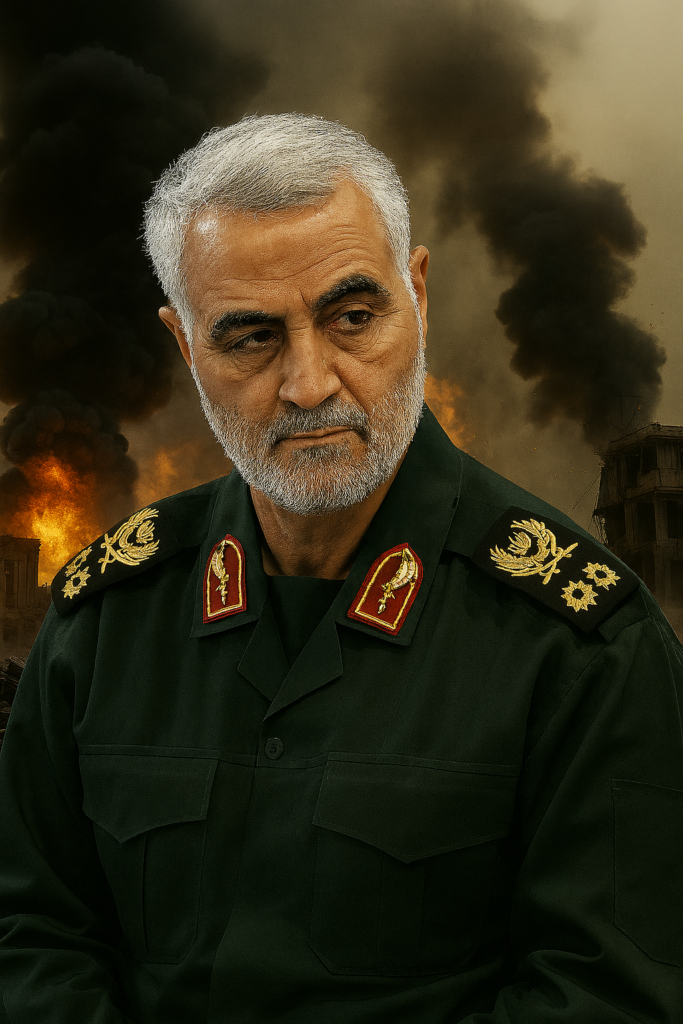
Washington D.C. – In a move that has sent ripples through international diplomatic circles, the United States State Department announced on Saturday the arrest and detention of two individuals identified as the niece and grand-niece of the late Iranian Revolutionary Guard Corps (IRGC) commander, Qasem Soleimani. The State Department, through a statement released by Secretary of State Marco Rubio, declared that Hamideh Soleimani Afshar and her daughter, Sarinasadat Hosseiny, had their lawful U.S. permanent resident status revoked.
According to the statement, both women, who were reportedly “green card holders living lavishly in the United States,” are currently in the custody of U.S. Immigration and Customs Enforcement (ICE) and are pending removal from the country. Secretary Rubio further elaborated on X, formerly Twitter, that Soleimani Afshar’s asylum claims were allegedly fraudulent, citing her multiple visits to Iran after obtaining her green card as evidence.
READ MORE ARTICLES:
- Soleimani Family Members Arrested in US; State Department Alleges Deception
- Donald Trump Delays Iran Strikes Amid Gulf Mining Threat
- Deadly Spring Storm Wreaks Havoc Across Eastern U.S.
- Donald Trump’s Mystery Claim: Ex-President ‘Regrets Not Bombing Iran’—But No One Confirms the Call
- ROTC Students Stop ISIS-Linked Shooter at Old Dominion University
- Iran Names Google, Amazon, Microsoft as Possible Targets
- Missing of Nancy Guthrie
The Department of Homeland Security (DHS) provided a timeline of Soleimani Afshar’s immigration history. She reportedly entered the U.S. on a tourist visa in 2015, was granted asylum in 2019, and subsequently became a green card holder in 2021. The DHS claims that during her naturalization application process in 2025, she disclosed four visits to Iran since receiving her permanent residency. “Her trips to Iran illustrate her asylum claims were fraudulent,” the DHS stated.
The DHS also detailed the immigration status of her daughter, Sarinasadat Hosseiny. Hosseiny arrived in the U.S. in 2015 on a student visa, was granted asylum in 2019, and obtained a green card in 2023.
The State Department characterized Hamideh Soleimani Afshar as an “outspoken supporter of the totalitarian, terrorist regime in Iran” and accused her of promoting “Iranian regime propaganda” on her social media accounts. The statement also indicated that Soleimani Afshar’s husband has been barred from entering the U.S., though his name was not disclosed.
However, these claims have been vehemently denied by Narjes Soleimani, identified as Qasem Soleimani’s daughter. In a strong rebuttal, she stated, “The individuals arrested in the US have no connection whatsoever to Martyr Soleimani and the claims made by the US State Department are false.” She further asserted that the U.S. has “become so weak and insignificant” and is resorting to “fabricating lies against a great figure.”
Qasem Soleimani, a pivotal figure in Iran’s military establishment, was killed in a U.S. drone strike in Iraq in 2020, an operation ordered by then-President Donald Trump.
When approached by the BBC for further comment, the State Department stated it had “nothing to add.” The situation remains a developing story, with significant implications for U.S.-Iran relations and the ongoing discourse surrounding immigration and national security.
The U.S. State Department’s announcement presents a narrative centered on alleged immigration fraud and ties to a regime it designates as a state sponsor of terrorism. The core of their claim rests on Hamideh Soleimani Afshar’s alleged fraudulent asylum application, evidenced by her travel to Iran after securing permanent residency. This is framed within a broader context of condemning the Iranian regime and its supporters.
Conversely, the statement from Narjes Soleimani offers a direct counter-narrative, dismissing the U.S. claims as fabricated and emphasizing a lack of connection between the arrested individuals and her father. This response positions the U.S. action as a desperate attempt to tarnish the legacy of a significant Iranian figure.
The differing accounts highlight a stark divergence in perspectives, typical of the complex geopolitical tensions between the United States and Iran. The U.S. narrative focuses on legal and security concerns within its borders, while the counter-narrative emphasizes political motivations and historical grievances. The lack of further comment from the State Department suggests a strategic decision to let the initial statement stand, while the strong denial from Soleimani’s daughter underscores the sensitivity and political weight attached to the family’s name.
- Asylum Fraud Allegations: The U.S. government’s case hinges on the alleged fraudulent nature of Soleimani Afshar’s asylum claim, with travel to Iran being the primary piece of evidence. This raises questions about the vetting processes for asylum seekers and the criteria used to determine fraud.
- Geopolitical Implications: The arrest of individuals linked, however distantly, to a prominent Iranian military figure, especially one killed in a U.S. operation, is inherently political. It could be interpreted as a symbolic act or a strategic move within the broader U.S.-Iran adversarial relationship.
- Family Denials: The direct denial from Narjes Soleimani challenges the U.S. narrative and introduces the possibility of misidentification or politically motivated accusations.
- Immigration Status: The case also sheds light on the complexities of U.S. immigration law, particularly concerning asylum, permanent residency, and the revocation of such statuses based on alleged misrepresentations or actions deemed contrary to national interests.
This situation underscores the intricate web of international relations, immigration policy, and personal narratives that often intersect in high-profile cases. The differing accounts leave room for further scrutiny and potential developments as more information may emerge.
Trump Reflects on Soleimani Strike: Calls Late General an “Evil Genius,” Cites Iran’s “Stronger Position” Had He Lived
Former President Donald Trump has once again addressed the January 2020 strike that killed Iranian Revolutionary Guard Corps (IRGC) commander Qasem Soleimani, describing the late general as an “evil genius” and a “horrible human being” while also suggesting Iran might have been in a stronger military position had he remained alive.
Soleimani, who was 62 at the time of his death, spearheaded Iran’s military operations across the Middle East as the head of the elite Quds Force. He was killed in a U.S. drone strike at Baghdad airport, an operation ordered by Trump during his presidency, alongside other Iran-backed militia figures.
During a national address on Wednesday, Trump referenced the strike, stating, “I killed Gen Qasem Soleimani in my first term. He was an evil genius, brilliant person, a horrible human being however, the father of the roadside bomb, and he lived just horrible, what he did.” The former president’s remarks highlight the complex and often contradictory assessment of Soleimani, acknowledging his strategic capabilities while condemning his actions.
Adding a provocative layer to his commentary, Trump asserted that Iran would have been “perhaps in a far better, stronger position” in the ongoing regional conflicts if Soleimani had still been alive. This statement suggests a strategic calculus where Soleimani’s leadership, despite his alleged atrocities, presented a specific type of challenge or dynamic that his absence has altered.
The killing of Soleimani was a significant escalation in tensions between the United States and Iran, drawing widespread international attention and condemnation from Tehran, which vowed retaliation. Soleimani was a central figure in Iran’s foreign policy and military strategy, responsible for clandestine operations and supporting allied militias throughout the region. His death marked a critical moment in U.S.-Iran relations, the ramifications of which continue to be felt. Trump’s continued focus on the event underscores its perceived importance in his foreign policy legacy.
- Day of Valor (Araw ng Kagitingan), Philippines Commemorates Heroism & Sacrifice
- LEYTE LEYTE: Isyu sa PUP‑Leyte, Komunidad Humihingi ng Hustisya, LGU Iginigiit ang Legalidad ng Proyekto
- TOP SCHOOLS Performance PLE March 2026 Physician Board Exam
- TOP 10 PLE March 2026 Physician Licensure Exam Results
- R-Z March 2026 PLE Results Physician Licensure Exam List of Passers