In a rare but scientifically significant event, Earth has gained a fleeting celestial companion. According to data from NASA Jet Propulsion Laboratory, the asteroid 2024 PT5 began its temporary gravitational capture on September 29 and is expected to remain under Earth’s influence until November 25. Unlike Earth’s permanent natural satellite the Moon, which has orbited the planet for about 4 billion years this newly captured object will not complete a full orbit. Instead, it will briefly linger before escaping back into its usual path around the sun.
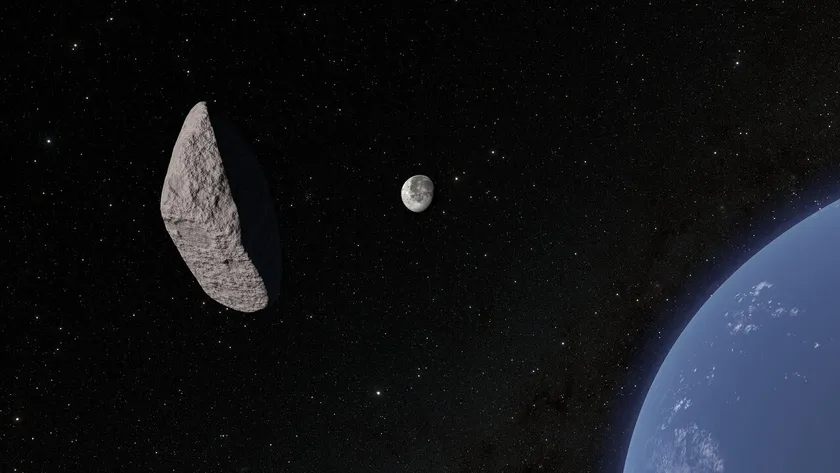
NASA — Scientists from NASA have confirmed that Earth has temporarily captured a small asteroid, informally dubbed a “mini-moon,” offering a rare but scientifically valuable celestial event.
The object, known as asteroid 2024 PT5, began its short-lived gravitational capture on Sunday, Sept. 29, according to data from NASA’s Jet Propulsion Laboratory Horizons system. The asteroid is expected to remain loosely bound to Earth until Nov. 25 before continuing its journey around the sun.
READ MORE ABOUT SPACE:
- NASA Verify Earth Briefly Captures ‘Mini-Moon’ Asteroid 2024 PT5
- Artemis II Crew Makes Historic Lunar Flyby, Ushering in New Era of Moon Exploration
- Artemis II | NASA, Voyage, Mission & Moon
- NASA’s Artemis II Departs Earth Orbit for Historic Moon Flyby
- NASA: The Artemis Generation Takes Flight with Historic Artemis II Mission
Despite the excitement surrounding the idea of a “second moon,” experts emphasize that this visitor is far from comparable to Earth’s natural satellite. While the Moon has orbited Earth for roughly 4 billion years, 2024 PT5 will linger for only a few weeks and will not even complete a full orbit.
“This is not a true satellite,” explained Carlos de la Fuente Marcos, a professor at Universidad Complutense de Madrid, in an interview with Space.com. “If a real satellite is like a customer shopping inside a store, this asteroid is more like a window shopper it comes close but doesn’t fully commit.”
Asteroid 2024 PT5 originates from the so-called Arjuna asteroid belt, a group of near-Earth objects that follow orbits strikingly similar to Earth’s path around the sun. These objects can occasionally drift close enough to be temporarily captured by Earth’s gravity, especially when moving at relatively low speeds.
While such events may sound extraordinary, astronomers say they are not uncommon. Short-duration captures like this occur several times each decade, though longer captures lasting weeks or months are far rarer.
One of the biggest differences between Earth’s Moon and this mini-moon lies in visibility. Measuring only about 37 feet (roughly 11 meters) across, 2024 PT5 is minuscule compared to the Moon’s 3,475-kilometer diameter. This makes it more than 300,000 times smaller and far too dim to be seen with the naked eye or standard amateur telescopes.
Only professional observatories equipped with large telescopes and advanced imaging sensors are expected to capture images of the asteroid during its brief visit.
After its departure in late November, 2024 PT5 will resume its orbit around the sun, rejoining the population of near-Earth objects that quietly share Earth’s cosmic neighborhood.
The findings on this temporary capture have been documented in The Research Notes of the AAS, contributing to growing scientific understanding of how Earth interacts with nearby asteroids.
While fleeting and invisible to most, Earth’s latest “mini-moon” serves as a reminder that our planet’s environment extends far beyond its atmosphere into a dynamic and ever-changing region of space.
What Is Asteroid 2024 PT5?
Asteroid 2024 PT5 is a noteworthy celestial object that has gained attention due to its unique characteristics. This small asteroid, measuring approximately 15 to 25 meters across, is categorized as a member of the Arjuna asteroid belt, which lies between the orbits of Mars and Jupiter. The size of 2024 PT5 places it in the category of mini-moons, which are typically smaller than the larger asteroids that inhabit the belt. The compact dimensions contribute to its distinctive classification, setting it apart from larger celestial bodies.
In terms of composition, asteroid 2024 PT5 is primarily composed of rock and metal, similar to many other asteroids within the belt. Its surface may exhibit a range of minerals, indicative of its formation history, which is closely related to the early solar system’s development. Some scientists suggest that studying such mini-moons may yield insights into the primordial materials that contributed to planet formation.
The orbit of 2024 PT5 is another factor that distinguishes it from our permanent moon. This asteroid has an eccentric orbit that brings it into proximity to Earth at irregular intervals. Unlike the Moon, which follows a consistent lunar cycle, asteroid 2024 PT5’s movements are less predictable, making it a temporary resident of Earth’s gravitational influence. This orbit also means that its sessions of visibility from Earth can vary significantly, contributing to the minor moon aspect associated with it.
Overall, asteroid 2024 PT5 stands as an intriguing study subject within planetary science, showcasing characteristics that not only amplify our understanding of the asteroid population but also enrich our knowledge about the dynamics of our solar system.
The Capture Event: Timeline and Duration
The capture event concerning Asteroid 2024 PT5 is an intriguing phenomenon that showcases the dynamic relationship between celestial bodies. Initially discovered in 2024, this asteroid is projected to come remarkably close to Earth, particularly on December 15, 2024, making this a significant date for astronomers and space enthusiasts alike. At its closest approach, 2024 PT5 is expected to be within approximately 50,000 kilometers of Earth’s surface, a distance that is roughly one-eighth of the average distance to the Moon.
The total duration of 2024 PT5’s stay near Earth is anticipated to be around 10 months, starting from its initial capture in December 2024 until its eventual departure in October 2025. During this period, scientists will have the opportunity to conduct extensive studies on the asteroid’s composition, orbital dynamics, and potential risks associated with near-Earth objects. Precise timing of this event is critical, as it allows for adequate preparations for observation and research.
To forecast these timings accurately, scientists employ various methodologies, including gravitational simulations and enhanced tracking techniques. Observatories equipped with high-resolution telescopes will monitor 2024 PT5’s trajectory using radar and optical observations. These methods allow for real-time adjustments to predictions as new data becomes available, ensuring that the scientific community remains well-informed about the asteroid’s path. This proactive approach is vital not only for academic pursuits but also for ensuring that any potential hazards are identified well in advance.
Understanding the trajectory and behavior of 2024 PT5 during its brief tenure as Earth’s mini-moon provides invaluable insights into asteroid dynamics and contributes to the broader knowledge of our solar system’s vast and complex environment.
The Arjuna Asteroid Belt
The Arjuna asteroid belt is a significant region in our solar system, serving as a reservoir of ancient celestial bodies that offer critical insights into the formation and evolution of planetary bodies. It is situated between the orbits of Mars and Jupiter, spanning vast distances and hosting a diverse array of asteroids, including the renowned asteroid 2024 PT5. This belt plays a pivotal role in understanding the broader dynamics of our solar system.
The types of asteroids found within the Arjuna belt vary widely in composition, size, and structure. They range from large, rocky bodies to smaller, metallic fragments, each contributing to the study of planetary genesis. Many of these asteroids are thought to be remnants from the early solar system that never coalesced into planets, providing a unique window into the primordial materials that formed terrestrial worlds like Earth.
A notable characteristic of the Arjuna asteroid belt is the orbital behavior of its constituents. Most asteroids in this region follow relatively stable and predictable paths, albeit subject to perturbations caused by the gravitational influences of neighboring planets. Over time, some of these asteroids can be nudged into new orbits, leading them to interact more closely with Earth. Such interactions raise important questions about the potential impact threats these objects may pose, as well as the opportunities they present for exploration and resource utilization.
The proximity of the Arjuna asteroid belt to Earth makes it a focal point for scientific inquiry. Understanding the asteroids available in this belt is also crucial for future missions aimed at harvesting resources or establishing bases for longer-term exploration. Thus, the study of the Arjuna asteroid belt not only enriches our understanding of the solar system’s history but also shapes future interplanetary endeavors.
Gravitational Capture
Gravitational capture refers to a process whereby an object, such as an asteroid or a comet, enters a gravitational field of a larger body in this case, Earth and becomes temporarily or permanently bound to it. This phenomenon occurs when the velocity of the smaller object is low enough during its approach, allowing the larger body’s gravity to draw it in. While gravitational capture is a well-understood mechanism, such events are relatively rare, especially for terrestrial planets like Earth.
The instances of mini-moons, or temporary moons, becoming gravitationally captured by Earth provide insight into the frequency of this occurrence. For example, it has been estimated that Earth captures small asteroids as mini-moons approximately every few years. One of the most notable examples is the asteroid 2006 RH120, which orbited Earth from September 2006 until June 2007. This event showcased a short-capture scenario, where the asteroid spent only a limited time in Earth’s orbit before escaping back into space.
In contrast, there are instances of longer-term captures as seen with the case of 1991 VG, which orbited Earth for about a year before departing. Such long-capture events indicate that while gravitational capture can lead to temporary binding, the trajectories of these asteroids can vary significantly. Depending upon their velocities and the gravitational influences of nearby celestial bodies, captured mini-moons can either remain for a brief period or have an extended presence in Earth’s gravitational grip, albeit typically not lasting long enough to become permanent additions to the Moon system.
Differences Between Mini-Moons and the Moon
The exploration of celestial bodies has revealed a variety of intriguing objects in orbit around Earth, including the well-known Moon and temporary visitors known as mini-moos, such as asteroid 2024 PT5. Understanding the differences between these two types of objects is essential in appreciating their unique characteristics and roles within Earth’s gravitational influence.
One of the most notable differences lies in size. The Moon is a significant satellite, with a diameter of approximately 3,474 kilometers, while mini-moons are considerably smaller. Asteroid 2024 PT5, for instance, measures only a few meters across. This size disparity contributes to the mini-moon’s ability to be classified as a temporary occupant of Earth’s orbit, whereas the Moon’s substantial mass and size allow it to be a permanent fixture of the Earth-Moon system.
Another critical difference is lifespan. Mini-moons typically have a transient existence, captured by Earth’s gravity for a limited time before being flung back into space or colliding with Earth. In contrast, the Moon has remained in a stable orbit for billions of years, showcasing a long-lived relationship that has implications for both geological and biological processes on our planet.
Visibility further distinguishes these celestial bodies. The Moon is brightly illuminated by the sun and can be seen at various phases throughout its monthly cycle, presenting a consistent and reliable presence in the night sky. On the other hand, mini-moons are often not visible to the naked eye due to their small size and the limited time they spend in orbit around Earth.
Lastly, the roles of these bodies differ in Earth’s orbital dynamics. The Moon significantly influences tides and stabilizes Earth’s axial tilt, affecting climate over geological timescales. In contrast, mini-moons like 2024 PT5 play a negligible role in such phenomena, primarily existing as interesting subjects of study within the broader context of asteroids and natural satellites.
Observing Asteroid 2024 PT5: Possibilities and Challenges
Asteroid 2024 PT5 presents a fascinating case for astronomers, with its recent discovery and classification as a temporary mini-moon of Earth eliciting interest among both amateur and professional observers. Nonetheless, the ability to observe this celestial object is marked by significant challenges, particularly for amateur astronomers. One of the primary difficulties in viewing asteroid 2024 PT5 lies in its size and distance from Earth. Measuring just a few meters in diameter, it is considerably less bright than larger asteroids, making it more challenging to detect. Furthermore, its trajectory often places it at a significant distance from Earth, which compounds the difficulties in observation.
For amateur astronomers, standard equipment such as small telescopes and binoculars may not provide sufficient resolution to capture such a faint target. Typically, amateur setups are optimized for viewing celestial bodies like the Moon or bright planets, rather than diminutive, distant asteroids. As a result, those wishing to attempt observation of asteroid 2024 PT5 will likely require more advanced telescopes equipped with sensitive cameras or larger aperture instruments capable of gathering ample light. The use of digital imaging techniques can also enhance the chances of capturing images of such faint bodies.
On the other hand, professional astronomers possess access to more sophisticated observatories and advanced instrumentation, allowing for better opportunities to observe asteroid 2024 PT5. These facilities often utilize high-powered telescopes, spectrometers, and specialized software for tracking and analyzing minor celestial bodies. Additionally, professionals can exploit coordinated observation campaigns and share data across various institutions, thereby improving their chances of successful observation. Thus, while the prospect of observing asteroid 2024 PT5 is intriguing, it comes with notable challenges, particularly for those without access to professional-grade equipment.
Scientific Importance of the Mini-Moon Capture
The capture of mini-moons like 2024 PT5 offers unique opportunities for scientific research and understanding of our solar system. Such occurrences provide a rare chance to study the dynamics and characteristics of asteroids that temporarily orbit Earth. By analyzing these celestial bodies, researchers can gain insights into their composition, structure, and behavior, which can help reveal fundamental truths about the origins and evolution of asteroids.
One of the critical scientific significances of capturing mini-moons is the potential to conduct direct observations and experiments that are otherwise impossible. When an asteroid is captured into a temporary orbit, it becomes more accessible for detailed study. For instance, various techniques can be employed, such as spectrometry and imaging, to understand its mineralogy and physical properties. These investigations could lead to advancements in planetary protection, resource utilization, and the understanding of asteroid impacts on Earth.
Furthermore, the capture of mini-moons provides insights into gravitational interactions and the mechanics governing such bodies. Studying the behavior of 2024 PT5 could enhance our knowledge of gravitational capture processes and the influence of Earth’s gravity on the motion of near-Earth objects (NEOs). This research is vital for predicting future asteroid encounters and potential impacts that could affect our planet.
The occurrence of mini-moon captures also fosters interdisciplinary collaboration among scientists, including astronomers, geologists, and physicists, each bringing unique expertise to the analysis. This synergy can lead to groundbreaking discoveries about our solar system and its formation processes. Ultimately, the scientific study of mini-moons like 2024 PT5 is integral to advancing our understanding of celestial dynamics and informing humanity’s future actions regarding asteroid monitoring and potential mitigation strategies.
The Wonder of Celestial Events
In examining the recent discovery of Earth’s temporary mini-moon, asteroid 2024 PT5, we have uncovered the fascinating nature of transient celestial bodies and the complexity of our solar system. This rare phenomenon, where an asteroid intermittently enters Earth’s orbit, is not only a remarkable scientific event but also a reminder of our planet’s dynamic relationship with other celestial bodies. These temporary moons remind us of the diversity found in near-Earth objects, which can exhibit varying sizes, compositions, and orbits.
Through the course of this blog post, we have observed how such phenomena capture the imagination of astronomers and enthusiasts alike, shedding light on the gravitational interactions between our planet and asteroids. The role that asteroids play in our solar system is significant, as they are remnants from its formation and can provide crucial insights into the building blocks of planets. The excitement surrounding temporary mini-moons fosters a deeper curiosity about our cosmic environment, prompting further research and exploration.
As we anticipate the next occurrence of similar celestial events, it is important for the public to stay informed and engaged. Astronomical events like the visitation of Earth’s temporary mini-moon highlight the continuous evolution of our understanding of space. Keeping an eye on the movements and discoveries of near-Earth objects can be both thrilling and enlightening. We encourage readers to actively participate in observing and learning about these occurrences, as they may provide unexpected opportunities to witness the wonders of our universe.
What is Asteroid 2024 PT5
Asteroid 2024 PT5, often referred to as a mini-moon, is a fascinating celestial object that has garnered attention since its discovery. This small asteroid is classified as a near-Earth object (NEO) due to its orbit, which brings it relatively close to our planet. The asteroid was first identified in 2024, and scientists quickly recognized its significance in the context of Earth’s cosmic neighborhood.
Measuring approximately 40 meters in diameter, Asteroid 2024 PT5 is relatively small compared to many other asteroids circulating within the solar system. Despite its size, its proximity to Earth makes it an object of study among astronomers and planetary scientists. The object is classified as a mini-moon due to its orbital characteristics, which resemble that of a natural satellite, albeit temporarily.
The significance of Asteroid 2024 PT5 lies not only in its classification but also in its orbit. This asteroid orbits the Sun, but its trajectory brings it close enough to Earth that it can be classified as a NEO. This close approach presents unique opportunities for researchers to observe and analyze its composition and trajectory. Such studies are essential as they contribute to our understanding of the evolution of small celestial bodies and their potential interactions with Earth.
Moreover, the study of asteroids like 2024 PT5 enhances our knowledge about potential threats posed by NEOs. As these objects travel through space, understanding their size, orbit, and behavior is critical for assessing any risks they may pose to our planet in the future. In summary, Asteroid 2024 PT5 is an intriguing example of the many small bodies that exist in our solar system, highlighting the need for continued monitoring and research into near-Earth objects.
What is a Mini-Moon?
A mini-moon is a temporary natural satellite that orbits Earth for a limited duration before either falling back to the planet or being propelled into a different trajectory. Unlike traditional moons, which are typically large celestial bodies that have been captured by a planet’s gravity over a long period, mini-moons are smaller asteroids that have inadvertently entered the Earth’s orbit. They are generally less than a few meters in diameter, making them distinct from the larger, more permanent satellites that are commonly associated with planetary systems.
Mini-moons differ from asteroids in that they enter a stable orbit around Earth, albeit temporarily. During their orbital period, these bodies can be subjected to gravitational influences from both the Earth and the Moon, producing a dynamic and often unpredictable path. This temporary nature can be attributed to their velocity and trajectory as they approach our planet; many mini-moons have orbits that intersect with Earth due to gravitational perturbations, which often results in their eventual ejection back into space or a collision with the Earth’s atmosphere.
The classification of 2024 PT5 as a mini-moon is based on its size, shape, and orbital characteristics. Observations have indicated that it meets the required parameters for a mini-moon, as it has been captured by Earth’s gravitational influence, albeit temporarily. The study of such objects not only enhances our understanding of near-Earth space but also serves to inform potential impact risks and the broader dynamics of small solar system bodies. Mini-moons, like 2024 PT5, provide valuable scientific insights, allowing astronomers to refine methods for tracking and predicting the behaviors of celestial entities in close proximity to our planet.
The Purpose of Asteroid 2024 PT5
Asteroid 2024 PT5, classified as a mini-moon, has garnered attention within the scientific community due to its potential to unlock insights about the early solar system. Studying such asteroids helps researchers understand the physical and chemical properties of celestial bodies that date back to the formation of our solar neighborhood. These investigations can provide crucial data regarding the building blocks of planets and the conditions that may have contributed to the emergence of life on Earth.
One of the primary purposes of studying Asteroid 2024 PT5 is to analyze its composition. Understanding the types of materials that make up this mini-moon can help scientists draw comparisons to other asteroids and planetary bodies. Such analysis could reveal variations in mineralogy and elemental makeup that may indicate different formation processes. Additionally, by examining the surface features and geological history of 2024 PT5, researchers can glean information about the environmental conditions that influenced its development and evolution.
Furthermore, mini-moons like Asteroid 2024 PT5 may harbor valuable resources such as metals and water ice, which could be critical for future space exploration. The extraction of these resources could support missions to other celestial bodies, paving the way for sustainable human presence beyond Earth. The implications of discovering a water-rich mini-moon are particularly significant, as water is essential for life and can be used for propellant in deep-space travel.
Lastly, the investigation of Asteroid 2024 PT5 provides scientists with a more comprehensive understanding of the solar system’s history. The study of such objects can help trace the evolutionary timeline of asteroids, unveiling how they interact with gravitational influences and other cosmic phenomena. Collectively, these efforts contribute to our knowledge of the broader workings of our celestial neighborhood.
How Asteroid 2024 PT5 Relates to Earth
The gravitational relationship between Earth and Near-Earth Objects (NEOs) like Asteroid 2024 PT5 is a subject of significant interest in planetary defense and space exploration. Asteroid 2024 PT5 is classified as a potential mini-moon due to its orbital path that brings it within close proximity to Earth. Its trajectory suggests that it will make a close approach, potentially influencing both its own orbit and the gravitational field of our planet.
As this asteroid nears Earth, it will enter an orbital range that is classified as a close encounter. During such events, the gravitational interactions between the asteroid and Earth could lead to observable effects on both bodies. While the gravitational effect of a small asteroid such as 2024 PT5 on Earth is relatively minor, understanding these dynamics is crucial for predicting any potential alterations to its trajectory. Even minor gravitational perturbations can significantly impact the long-term path of NEOs as they interact with the Earth’s gravitational influence.
From a risk assessment perspective, the approach of Asteroid 2024 PT5 does not currently present a significant threat to Earth. Continuous monitoring ensures that any potential risks can be assessed with precision. Scientists utilize radar and telescopic observations to accurately calculate the asteroid’s trajectory and predict its future positions. While asteroid impacts are rare, studies regarding 2024 PT5 add valuable data to our knowledge about the myriad of celestial bodies traversing near our planet.
In addition, the study of such asteroids has broader implications for understanding planetary formation, resource availability in space, and the history of impacts on Earth. Research into mini-moons like 2024 PT5 not only broadens our understanding of celestial mechanics, but also enhances our preparedness in addressing potential planetary defense challenges in the future.
Potential Positive Effects of Asteroid 2024 PT5
Asteroid 2024 PT5, categorized as a mini-moon, is more than just an object of scientific curiosity; it represents a unique opportunity for advancing our understanding of space and planetary science. As it approaches Earth, scientists and researchers anticipate several significant positive implications. One of the most promising aspects of this mini-moon is the potential for scientific discoveries. By studying its composition, structure, and trajectory, researchers can glean insights into the early solar system, as asteroids like 2024 PT5 are considered remnants from its formation. This research may help elucidate the origins of planetary bodies and the chemical processes that shaped them.
Moreover, 2024 PT5 provides an exceptional opportunity for space exploration efforts. As space agencies and private companies seek to broaden their horizons, mini-moons like this asteroid could serve as stepping stones for further investigation of more distant celestial bodies. The concept of asteroid mining also gains traction, and understanding how to approach smaller asteroids may pave the way for more extensive resource utilization in future missions. For example, extracting water or minerals could support long-duration human missions to Mars and beyond.
In addition to these scientific benefits, the study of asteroid 2024 PT5 will enhance our understanding of planetary defense mechanisms. With the ongoing concern surrounding larger asteroids that pose a threat to Earth, investigating smaller bodies can offer valuable information on impact risk assessment and mitigation strategies. By analyzing how 2024 PT5 navigates its orbit and interacts with Earth’s gravitational field, researchers can better prepare for potential future collisions with larger objects. Thus, the mini-moon serves not only as a subject of fascination but as a crucial element in advancing scientific knowledge and ensuring the safety of our planet.
Potential Negative Effects of Asteroid 2024 PT5
The discussion surrounding asteroid 2024 PT5, classified as a near-Earth object (NEO), inevitably leads to concerns regarding its potential negative effects. One of the foremost implications is the risk of collision with Earth. While the probability of such an event is currently assessed as low, the impact of even a small asteroid cannot be underestimated. Historical events, such as the Tunguska event in 1908, highlight the potential for significant destruction caused by asteroid airbursts. If a larger asteroid were to collide with Earth, the consequences could be catastrophic, leading to loss of life, property damage, and long-term environmental changes.
Furthermore, the possible aftermath of an asteroid collision includes tsunamis, wildfires, and the release of massive quantities of dust and debris into the atmosphere. This, in turn, could lead to dramatic climate alterations, often referred to as a “nuclear winter” effect, whereby sunlight is obstructed, leading to a decline in temperature and disruption of agriculture. Such scenarios necessitate comprehensive analysis and preparedness strategies to mitigate the risks associated with asteroid impacts.
To adequately address the potential threats posed by asteroids like 2024 PT5, monitoring and tracking of NEOs is of paramount importance. Advances in astronomical technology allow scientists and space agencies to detect these objects well in advance. Programs dedicated to tracking their trajectories enable researchers to predict potential impacts with increased accuracy. Furthermore, international cooperation in space surveillance is essential for ensuring global safety, forming a united front against the common threat of asteroid collisions.
In conclusion, while the immediate threats posed by asteroid 2024 PT5 may appear manageable, it is crucial to remain vigilant. The ongoing monitoring and understanding of these celestial bodies play a vital role in safeguarding our planet from potential disasters.
Comparative Analysis with Other Mini-Moons
In the study of mini-moons, Asteroid 2024 PT5 presents a unique addition to the growing family of such celestial objects orbiting Earth. Mini-moons are typically defined as smaller asteroids that temporarily capture into Earth’s orbit for varying periods. Notable examples include 2006 RH120 and 2020 CD3, both of which exhibited distinctive characteristics that set them apart from permanent moons.
Asteroid 2006 RH120, for instance, was known for its irregular shape and relatively short orbital period, being retained in Earth’s orbit briefly before returning to its heliocentric path. Unlike RH120, which lingered for approximately a year, 2024 PT5’s expected duration in orbit remains uncertain. However, its size, comparable to other mini-moons, suggests that its interaction with Earth’s gravitational field will be of significant interest.
Another noteworthy mini-moon, 2020 CD3, was particularly unique due to its composition, believed to be a fragment of a larger asteroid, which adds complexity to its origin. In contrast, while specific compositional data on 2024 PT5 is not yet available, initial observations indicate it may also possess similar origins, being a fragment from the asteroid belt. Comparative size analyses further reveal that most mini-moons, including 2024 PT5, tend to range between 1 to 10 meters in diameter, allowing for focused studies on potential impacts and interactions with Earth’s atmosphere.
The investigation and comparison of 2024 PT5 with established mini-moons enhance our understanding of their role within the Earth-Moon system and contribute to a deeper insight into the transient nature of these intriguing celestial bodies. Each mini-moon offers vital research opportunities that not only reveal their distinct features but also inform astronomers about the dynamics of smaller asteroidics in close proximity to our planet.
Future of Mini-Moons and Asteroid Exploration
The future of mini-moons, such as Asteroid 2024 PT5, presents intriguing possibilities as our understanding of these cosmic objects continues to evolve. With advancements in technology, we anticipate significant improvements in asteroid exploration missions. The growing interest and investment in space exploration are likely to yield new findings related to mini-moons and their characteristics.
Upcoming missions, such as NASA’s Psyche spacecraft, which aims to explore a metallic asteroid, highlight the increasing focus on understanding not just mini-moons but a wide array of asteroids. Technologies such as advanced imaging systems, autonomous robotic explorers, and enhanced propulsion methods are poised to revolutionize how we investigate these celestial bodies. These innovations may allow for more detailed surveys and studies, revealing critical insights into the formation and evolution of our solar system.
Additionally, the potential for collecting samples from mini-moons is becoming a realistic goal. Missions similar to the Japanese Hayabusa program demonstrate that return samples can be obtained efficiently and safely. Such missions enhance our knowledge not only of asteroids’ physical properties but also their chemical composition, which can provide evidence of early solar system conditions.
The implications of increased exploration are profound. By studying mini-moons, we can develop a better understanding of potential threats posed by near-Earth objects. This research can lead to effective strategies for planetary defense, ensuring that we are prepared for any future encounters with asteroids. Moreover, as we continue to explore the cosmos, these mini-moons may hold clues to the origins of water and organic material, which are vital to understanding the potential for life beyond Earth.
The Importance of Monitoring Asteroids like 2024 PT5
As we conclude our discussion regarding Asteroid 2024 PT5 and the concept of mini-moons, it is imperative to reflect on the valuable insights this exploration has provided. Mini-moons, including 2024 PT5, play a critical role in informing our understanding of near-Earth objects (NEOs) and their interactions with our planet. The study of such celestial bodies can reveal essential information regarding their composition, origin, and potential trajectories, thus equipping us with tools to predict any threats they may pose to Earth.
The significance of monitoring asteroids like 2024 PT5 extends beyond mere curiosity; it is a necessity driven by the potential risks these space rocks could represent. Through ongoing surveillance and research, we enhance our capability to devise mitigation strategies should any asteroid approach our planet. This vigilance is bolstered by advancements in technology and collaborative efforts among various space agencies worldwide, allowing for more precise tracking of these objects over time.
Moreover, the knowledge garnered from studying mini-moons aids in our broader understanding of the solar system’s history and the evolution of planetary bodies. As we glean more data about NEOs, we not only prepare ourselves for possible threats but also enrich our comprehension of cosmic phenomena. Emphasizing the continuous monitoring of asteroids like 2024 PT5 supports a proactive approach in planetary defense and fosters public awareness about the importance of space research. Ultimately, the implications of our findings about mini-moons underscore the necessity of sustained scientific inquiry and international cooperation in safeguarding our planet from unforeseen cosmic events.