Super Typhoon Sinlaku tore through the Northern Mariana Islands with destructive force, slamming into Tinian and Saipan as the strongest typhoon of 2026 so far. Packing ferocious winds and relentless rain, the storm uprooted trees, damaged homes, knocked out power across the islands, and triggered flash flooding in nearby Guam, prompting emergency declarations and urgent calls for residents to remain indoors.
Super Typhoon Sinlaku Devastates Northern Mariana Islands, Leaves Widespread Damage and Power Outages
Super Typhoon Sinlaku has unleashed its fury across the remote U.S. territories in the Pacific, battering the Northern Mariana Islands with ferocious winds and torrential rain, leaving a trail of destruction in its wake.
The powerful storm slammed directly into the islands of Tinian and Saipan, uprooting trees, tearing through rooftops, and sending debris flying through the air. Coastal areas were plunged into near-zero visibility as sheets of rain and gale-force winds swept across communities, forcing residents to seek immediate shelter.
READ MORE ABOUT WEATHER:
- Super Typhoon Sinlaku Hit the Mariana Islands, Unleashing Powerful Winds and Heavy Rains Across the Pacific Region
- Category 5 Super Typhoon Sinlaku Explosively Intensifies, Guam and Northern Marianas in Potential Direct Path
- Bagyong Basyang, Magdadala ng Matinding Ulan at Landslide sa Mindanao
Meteorologists have described Sinlaku as the strongest typhoon of 2026 so far, citing its sustained intensity and prolonged impact over land. Unlike fast-moving systems that quickly pass, Sinlaku lingered over the region, compounding structural damage and heightening the risk to life and property.
Emergency officials reported widespread power outages across the Northern Mariana Islands, with crews unable to conduct immediate repairs due to hazardous conditions. In nearby Guam, heavy rainfall triggered flash flooding, inundating low-lying areas and prompting urgent advisories from local authorities.
Flying debris and unstable infrastructure have posed serious threats, prompting government leaders to issue emergency declarations and urge residents to remain indoors until conditions improve. Shelters were activated as a precautionary measure, particularly for those living in vulnerable coastal and flood-prone communities.
As the storm system continues to move across the Pacific, disaster response teams are assessing the full extent of the damage. Officials warn that recovery efforts may take time, especially in remote areas where access is limited.
For now, the focus remains on ensuring public safety and restoring essential services, as communities brace for the long process of rebuilding in the aftermath of one of the year’s most powerful storms.
Super Typhoon Sinlaku Devastates Northern Mariana Islands, Residents Urged to Stay Indoors
A powerful super typhoon unleashed destructive winds and relentless rainfall across the Northern Mariana Islands before dawn Wednesday, leaving a trail of damaged homes, flooded streets, and shattered infrastructure in its wake.
Super Typhoon Sinlaku, described by the National Weather Service as the strongest tropical cyclone on Earth this year, battered the islands of Tinian and Saipan for hours, intensifying its impact by slowing down as it moved through the region. The storm packed sustained winds of up to 150 mph at landfall, tearing through communities home to nearly 50,000 residents.
In the village of Susupe on Saipan, fierce gusts ripped the roof off a commercial building and snapped tree branches, while a blue sedan was overturned by the powerful winds. Resident Dong Min Lee captured dramatic footage showing a car resting on top of two others in his apartment complex’s parking lot. Part of his balcony railing was also torn away.
“I hope people will take an interest and help. The damage is really huge here,” Lee said in a Facebook message.
Preliminary reports point to widespread flooding, uprooted trees, and downed power lines across Saipan, according to Jaden Sanchez, spokesperson for the mayor’s office. Despite the severe destruction, there have been no confirmed reports of fatalities.
Authorities strongly advised residents to remain indoors and avoid exposure to dangerous winds. Saipan Mayor Ramon “RB” Jose Blas Camacho was reportedly out assessing the damage across affected areas as conditions allowed.
The storm’s reach extended beyond the Northern Marianas. On Guam, a U.S. territory south of Saipan with a population of about 170,000 and several key U.S. military installations, tropical-force winds and torrential rains triggered flash flooding. U.S. military officials instructed personnel to shelter in place, mindful of the widespread power outages caused by Typhoon Mawar in 2023.
Earlier, Sinlaku swept across the outer islands and atolls of Chuuk in the Federated States of Micronesia before intensifying over open waters.
The American Red Cross and its partners provided shelter to more than 1,000 residents across Guam and the Northern Marianas, spokesperson Stephanie Fox confirmed.
For longtime residents, the storm evoked memories of past disasters. Glen Hunter, who grew up on Saipan and has endured numerous typhoons, described Sinlaku as possibly the strongest he has experienced.
“It was a losing battle because the rain was coming through everywhere,” Hunter said. “Every house is just flooded with water, no matter what type of structure you’re in.”
Ed Propst, a former Saipan lawmaker now working in the governor’s office, recounted hearing “banging and clanging through the night” as debris was hurled by the wind. He credited residents for heeding warnings to seek shelter, particularly in concrete structures, for the apparent absence of casualties.
Meteorologists expect winds of 75 mph or higher to persist through Wednesday afternoon as the storm’s eye moves northwest of Saipan and Tinian. Even as winds gradually weaken to around 50 mph, officials warn conditions will remain too hazardous for outdoor activity for at least another day and a half.
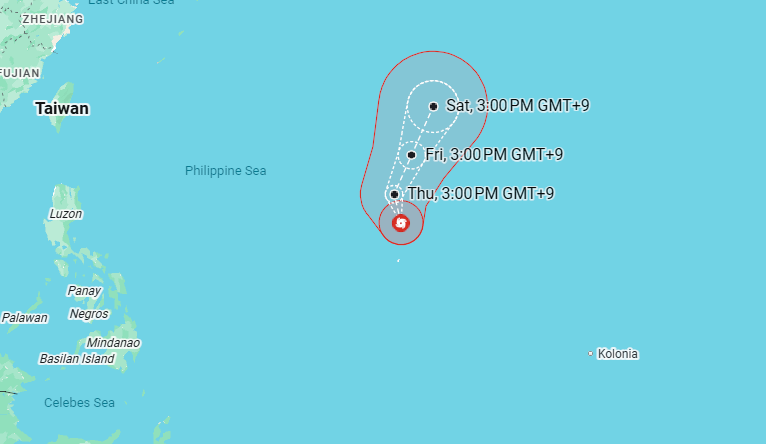
Sinlaku is forecast to curve toward sparsely populated volcanic islands in the far northern Marianas.
For tourism-dependent Saipan, the storm represents another setback in a long recovery. The island was still rebuilding from 2018’s Super Typhoon Yutu when the COVID-19 pandemic dealt a further blow to its economy.
Northern Marianas College, which suffered extensive damage from Yutu—losing 85% of its Saipan campus—secured $100 million in grant funding to rebuild, according to its president, Galvin Deleon Guerrero.
“Just as we were finally beginning to recover and rebuild, we get hit with this,” Guerrero said. “Climate change is real.”
He also expressed concern for residents still coping with trauma from previous disasters.
“We are an incredibly resilient people,” Guerrero said, identifying as Chamorro, the Indigenous people of the Mariana Islands. “But just because we’re resilient doesn’t mean that we should be subjected to this on this frequent basis.”
As emergency crews continue assessments and recovery efforts begin, communities across the Northern Marianas brace for the long road ahead. NBC News
- ABS-CBN Denies Preferential Pension Payouts, Defends P2-B Funding Request
- Mariana Islands | Pacific Islands, US Territory History, Geography, & Cultural Pride
- Saint Abbondio – April 15 | Feast, Saint Journey, Hagiography, & Christianity
- Super Typhoon Sinlaku Hit the Mariana Islands, Unleashing Powerful Winds and Heavy Rains Across the Pacific Region
- Roblox Corp. Unveils Comprehensive Safety Overhaul for Young Users 5 to 15 Age