Philippine government has formally demanded that Meta Platforms, Inc. take urgent and concrete action to halt the spread of false and panic-inducing content across its social media platforms, warning that inaction could expose the tech giant to criminal liability under Philippine law. Framing the issue as both a national security and economic stability concern amid a deepening global oil crisis, authorities have imposed a strict compliance deadline 48 hours to acknowledge the directive and seven days to submit a detailed action plan signaling one of the strongest regulatory warnings yet issued to a global technology firm operating in the country.
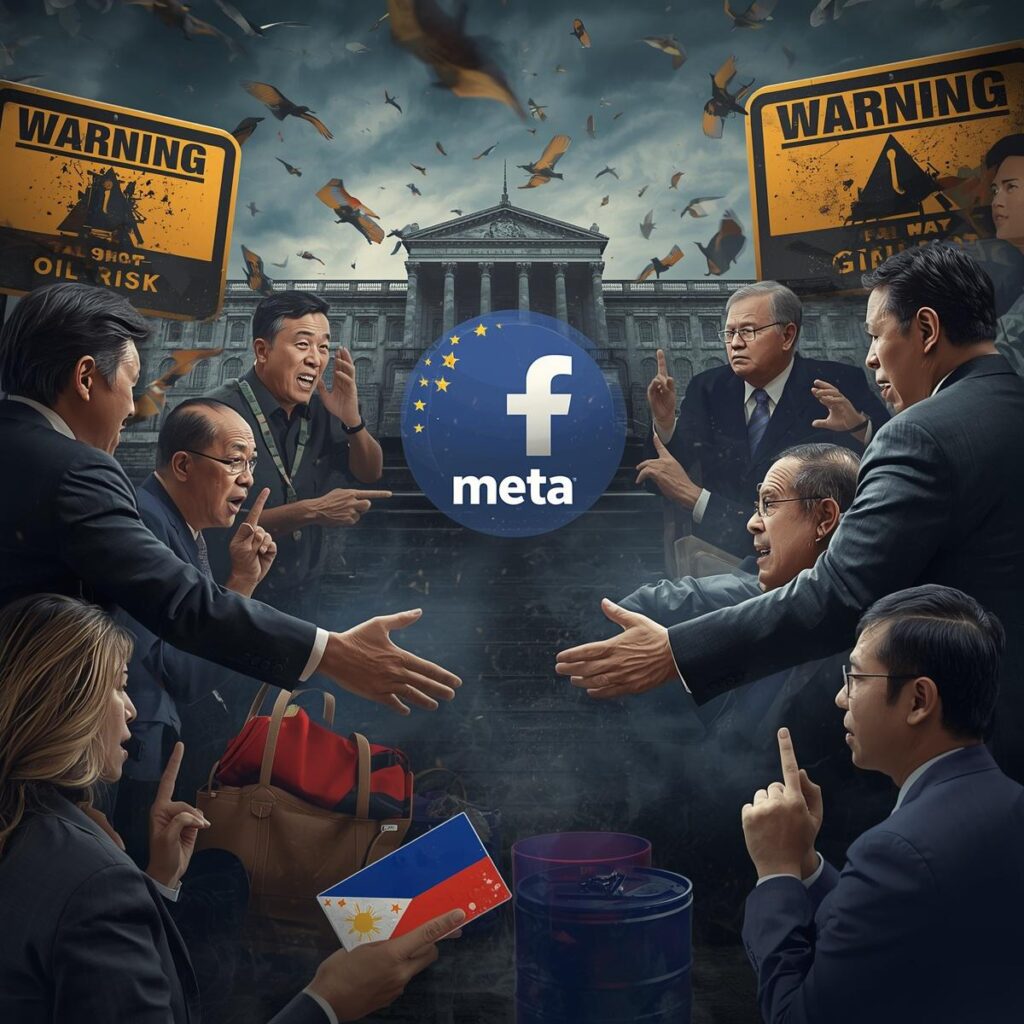
MANILA, Philippines — In one of its strongest actions yet against a global technology giant, the Philippine government has formally called on Meta Platforms, Inc. to urgently curb the spread of disinformation across its social media platforms, warning that failure to act could expose the company to potential criminal liability under Philippine law.
The move comes as the country grapples with mounting economic strain triggered by a prolonged global oil crisis that has sharply driven up fuel prices and, in turn, the cost of essential goods. Officials say the volatile environment has made the public particularly susceptible to misleading or manipulative information especially content that could further inflame economic anxiety.
READ MORE ATICLES:
- Philippines Ramps Up Pressure on Meta Over Oil Crisis Disinformation, Cites National Security Risks and Legal Breaches
- Ormoc LGU Presents Ownership Documents, Proceeds with Demolition in Dahlia and Rosal
- Roblox No Longer Facing Ban in the Philippines After Complying With Child Safety Measures & Security Requirements
- President Marcos Jr, Appoints Trade Envoy Dita Angara-Mathay as New Secretary of Tourism
- ICC Sets April 22 Ruling on Rodrigo Duterte Jurisdiction Appeal
- PNP Sustains Full-Scale Holy Week Operations, Seizes ₱121.6 Million in Illegal Drugs and Contraband
- Party-Lists Named in DPWH P14.4-B ‘Wishlist’ Project Leak
In a letter dated April 10 and jointly signed by Presidential Communications Office (PCO) Acting Secretary Dave Gomez and Department of Information and Communications Technology (DICT) Secretary Henry Aguda, the government formally addressed the issue to Meta’s top leadership. The communication was directed to Chief Executive Officer Mark Zuckerberg and coursed through Chief Operating Officer Javier Olivan, underscoring what officials described as a coordinated, whole-of-government approach to what is now being framed as both a national security and economic stability concern.
Philippine authorities have outlined what they describe as an alarming spectrum of harmful online content circulating amid the country’s heightened economic vulnerability, warning that the digital landscape is being weaponized in ways that could endanger public order and financial stability.
The Department of Information and Communications Technology (DICT) and the Presidential Communications Office (PCO) said they have identified multiple categories of disinformation and malicious online activity that are gaining traction across social media platforms.
Among the most concerning are fabricated reports predicting drastic oil price increases and imminent fuel supply shortages claims that officials say are often presented in urgent, sensational language designed to provoke fear and trigger panic buying. Authorities noted that such narratives, even when entirely baseless, can influence consumer behavior and disrupt supply chains simply through the power of virality.
Equally troubling, the agencies said, are false claims regarding the supposed illness or death of national leaders. In recent weeks, doctored medical documents and manipulated images have allegedly been circulated online to create confusion about the health and status of senior government officials. Officials stressed that such fabrications are not merely irresponsible—they have the potential to unsettle markets, destabilize political confidence, and create unnecessary alarm domestically and internationally.
The DICT and PCO also flagged misleading narratives targeting banks, financial institutions, and digital payment systems. These include unfounded rumors of institutional collapse, system breaches, or imminent shutdowns of electronic payment platforms. In a country where millions rely on digital banking and mobile wallets for daily transactions, authorities warned that such falsehoods could trigger bank runs, disrupt commerce, and erode trust in the financial system.
Further compounding the concern are fake reports involving alleged military mobilizations or law enforcement operations. According to officials, fabricated announcements about security incidents or troop movements can generate public anxiety and, in extreme cases, incite unrest.
Authorities also pointed to what they described as coordinated inauthentic behavior—organized campaigns carried out by networks of fake or automated accounts aimed at systematically discrediting public institutions. These efforts, they said, are often designed to amplify divisive narratives, undermine confidence in government responses, and distort public discourse.
In their statement, the agencies emphasized that these actions may not only be unethical but criminal in nature.
“We note that the commission of such criminal acts falls within the ambit of Republic Act No. 10175, or the Cybercrime Prevention Act of 2012, particularly where these are committed through digital platforms or involve aiding or abetting cyber-related offenses,” the agencies said.
Officials explained that under the Cybercrime Prevention Act, the use of digital platforms to deliberately spread false information, manipulate electronic data, or assist in online criminal conduct may expose perpetrators and potentially those who enable such activities to legal consequences.
They cited specific examples that have surfaced in recent monitoring efforts: falsified medical records purporting to show the hospitalization or death of senior officials; fabricated advisories crafted to resemble official government announcements capable of inducing widespread panic; coordinated attacks targeting financial institutions with misleading claims; and online narratives encouraging citizens to disregard lawful government directives.
According to the PCO and DICT, the continued proliferation of these types of content signals that current platform safeguards and moderation systems may be insufficient to address the magnitude of the threat.
“The persistence of these content categories demonstrates that existing safeguards are not commensurate with the current level of public risk,” the agencies said, underscoring the widening gap between the scale of digital harm and the mechanisms in place to contain it.
Beyond cybercrime statutes, authorities also raised the possibility that certain forms of disinformation may violate economic protection laws. The agencies stressed that the malicious dissemination of false news that leads to panic buying, artificial price spikes, or supply chain disruptions could fall under Republic Act No. 7581, also known as the Price Act.
The Price Act penalizes practices such as hoarding, profiteering, and market manipulation offenses that may arise when misinformation artificially distorts supply and demand dynamics. Officials warned that if viral falsehoods result in tangible economic harm, legal accountability may extend beyond those who create the content to those who exploit the resulting market instability.
Taken together, the government’s expanded warnings reflect a growing recognition that digital misinformation is no longer confined to the realm of online discourse. In times of economic fragility, authorities argue, it can spill over into real-world consequences fueling panic, distorting prices, undermining institutions, and challenging national stability.
Economic Crisis Meets Digital Risk
“The Philippines is currently confronting heightened economic and public vulnerability driven by the ongoing global oil crisis,” the PCO and DICT said in their joint statement. “Rising fuel costs and increasing prices of essential goods have materially heightened public sensitivity to information related to economic stability and government response.”
According to officials, the convergence of economic hardship and the rapid spread of online misinformation presents a dangerous mix. False or misleading posts about fuel supply disruptions, fabricated government policies, or manipulated economic data can quickly shape public perception, potentially influencing consumer behavior, fueling panic buying, and distorting market dynamics.
Government sources emphasized that unchecked misinformation may directly affect fuel pricing trends, household spending patterns, and overall economic confidence — all at a time when stability is paramount.
Philippine authorities have issued a stark warning that false and misleading narratives surrounding oil prices, fuel supply, and the broader economy are no longer fringe concerns confined to online chatter. Instead, officials now consider them active and escalating threats capable of destabilizing markets, provoking public panic, and weakening trust in institutions.
In a strongly worded statement, the Presidential Communications Office (PCO) and the Department of Information and Communications Technology (DICT) underscored that disinformation during a time of economic fragility carries tangible, real-world consequences.
“In this environment, the rapid proliferation of false, misleading, and panic-inducing content particularly that relating to oil prices, economic disruptions, and government actions poses a direct and escalating threat to public order, economic confidence, and national security,” the agencies said.
They further emphasized that the immense reach and speed of dissemination on social media platforms significantly intensify the dangers. “The scale and velocity of such content on Meta’s platforms significantly amplify these risks,” they added, pointing to how viral posts can shape national sentiment within hours.
Possible Legal Violations Cited
Beyond moral and civic responsibility, authorities pointed to possible legal consequences. The letter warned that certain forms of disinformation could constitute violations of Article 154 of the Revised Penal Code, which penalizes the unlawful publication of false news that may endanger public order, as well as provisions under the Cybercrime Prevention Act of 2012.
Officials stressed that the warning was not merely rhetorical. Should online content demonstrably cause public harm or economic disruption, enforcement mechanisms under existing laws could be activated.
Legal analysts note that while global technology firms often operate across jurisdictions, they remain subject to local laws in countries where they maintain operations or generate revenue. The Philippine government’s position signals its readiness to assert regulatory authority more firmly over digital platforms.
Officials noted that as global oil prices fluctuate and domestic fuel costs rise, Filipinos are increasingly turning to social media for real-time updates and explanations. However, instead of verified information, many are encountering a surge of sensationalized or fabricated claims.
These include exaggerated reports of impending fuel price spikes, unfounded rumors of supply shortages, and false assertions of institutional breakdowns. According to authorities, such narratives are not merely misleading they are influencing consumer behavior in measurable ways.
Reports of panic buying at gasoline stations and speculative price adjustments in local markets have surfaced in recent weeks, developments that officials believe are partly fueled by viral misinformation. The government warned that when citizens act on inaccurate information, it can create a self-fulfilling cycle of disruption.
“Disinformation in times of crisis is not harmless,” a senior communications official said. “It can distort public perception, trigger unnecessary fear, and ultimately destabilize the very systems people rely on for security and stability.”
A Shift Beyond Traditional Policy Tools
Historically, government responses to oil-related crises have centered on fiscal measures, subsidies, fuel price monitoring, and coordination with energy stakeholders. This time, however, the administration’s strategy appears to extend beyond economic policy and into the digital information ecosystem.
By directly engaging Meta the parent company of Facebook and other widely used platforms the government is effectively acknowledging the outsized role social media now plays in shaping economic narratives and public sentiment.
“This is no longer just about supply and demand,” one senior official familiar with the discussions said. “It is about how information accurate or otherwise influences markets, behavior, and trust in institutions.”
The Philippines is among the world’s most active social media markets, with millions relying on online platforms as their primary source of news and updates. That reach, officials argue, amplifies both the benefits and the risks of digital communication.
Strongest Warning Yet
Observers describe the letter as one of the firmest warnings issued by the Philippine government to a global tech platform in recent years. While authorities have previously called for greater accountability in combating fake news, this latest move ties the issue directly to economic security and public welfare.
By elevating the matter to the highest levels of Meta’s corporate leadership, the government signaled the seriousness of its concerns and its expectation of swift compliance.
The administration’s stance also reflects a broader global trend in which governments are increasingly scrutinizing how digital platforms manage harmful or misleading content particularly during times of crisis.
Balancing Regulation and Free Expression
Despite the strong language, officials maintained that the objective is not to curtail legitimate discourse or suppress criticism. Rather, they emphasized the need to prevent demonstrably false information from exacerbating economic instability.
“We recognize the importance of free expression,” a DICT official said, “but freedom must be exercised responsibly, especially when misinformation can have real-world consequences for millions of Filipino families.”
As the oil crisis continues to test economic resilience, the government’s message to Meta is clear: digital platforms must act decisively to ensure that their networks do not become conduits for content that could deepen uncertainty or disrupt public order.
Whether Meta will introduce new safeguards, strengthen content moderation, or engage directly with Philippine authorities remains to be seen. What is certain is that the battle against disinformation has entered a new and more consequential phase one where economic security and digital governance are now deeply intertwined.
Philippine government has imposed a clear and urgent timeline on Meta, signaling that its directive is not merely advisory but demands immediate corporate attention and concrete action.
Authorities have given the technology giant 48 hours to formally acknowledge receipt of the government’s order. Beyond acknowledgment, Meta has been instructed to submit, within seven days, a comprehensive and detailed implementation plan outlining the specific measures it will undertake to curb the spread of false and misleading content across its platforms in the Philippines.
Officials stressed that the required plan must go beyond general assurances. It is expected to include operational steps, enforcement mechanisms, monitoring systems, and accountability measures that demonstrate how the company intends to address the risks posed by viral disinformation particularly narratives that may disrupt economic stability and public order amid the ongoing oil crisis.
The government made clear that failure to comply within the prescribed timeframe would not be without consequences. Non-compliance, officials warned, could prompt regulatory and legal interventions from key state agencies. Among those prepared to act are the National Telecommunications Commission (NTC), which oversees telecommunications and digital service providers; the Cybercrime Investigation and Coordinating Center (CICC), tasked with addressing online offenses; and the Department of Justice (DOJ), which holds prosecutorial authority.
Authorities emphasized that these institutions possess the mandate and legal tools to pursue enforcement actions should the situation warrant it. Potential measures could include investigations, administrative sanctions, or other remedies allowed under Philippine law.
In closing, the agencies reiterated that the government stands ready to exercise all appropriate legal and regulatory options if the risks posed by unchecked disinformation remain unresolved. The message, officials said, is unequivocal: safeguarding public order, economic confidence, and national stability in a time of crisis is a responsibility that extends to digital platforms operating within the country. #APTIKONS
- Category 5 Super Typhoon Sinlaku Explosively Intensifies, Guam and Northern Marianas in Potential Direct Path
- LET Results March 2026 Elementary and Secondary List of Passers
- Philippines Ramps Up Pressure on Meta Over Oil Crisis Disinformation, Cites National Security Risks and Legal Breaches
- Ormoc LGU Presents Ownership Documents, Proceeds with Demolition in Dahlia and Rosal
- Roblox No Longer Facing Ban in the Philippines After Complying With Child Safety Measures & Security Requirements
#Philippines #Meta #OilCrisis #Disinformation #Security