Backed by decades-old court rulings, the City Government of Ormoc on April 8, 2026, laid out what it describes as irrefutable legal proof of its ownership over disputed land in Purok Dahlia and Purok Rosal, Barangay Cogon hours before demolition crews moved in to clear homes from the site. The action, carried out under the administration of Mayor Lucy Torres-Gomez, reignited a long-running land conflict that has spanned more than 60 years, pitting the enforcement of final judicial decisions against the pleas of residents who insist they hold valid titles to the property.
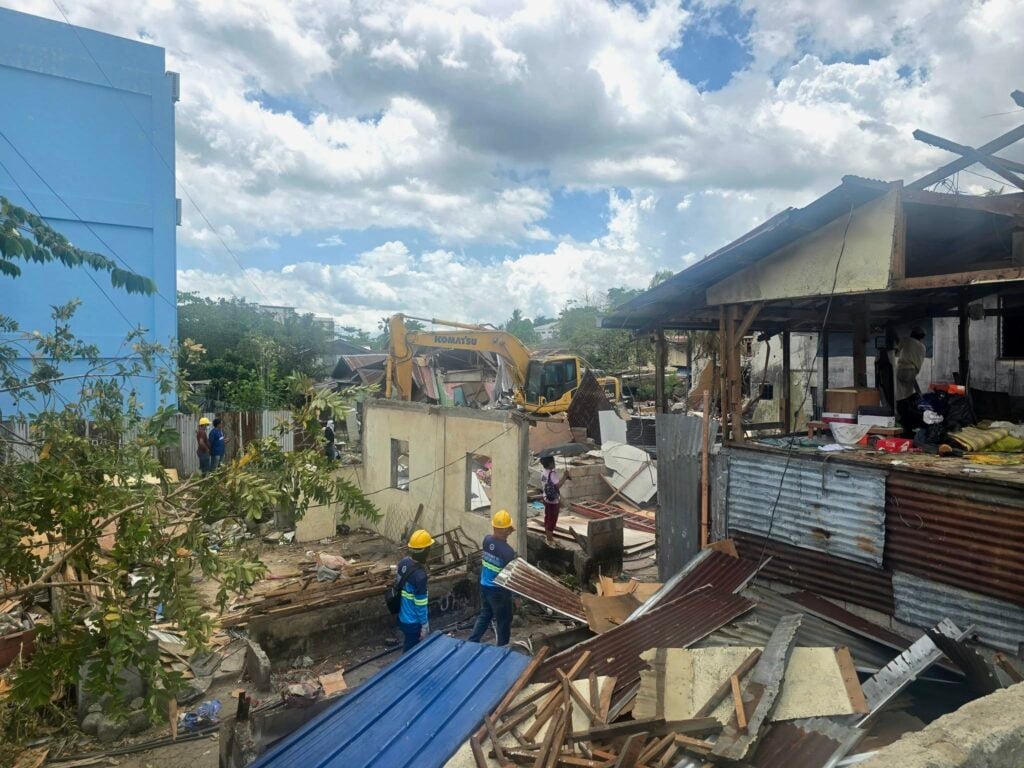
ORMOC CITY, Leyte — In a decisive and highly scrutinized move, the City Government of Ormoc on April 8, 2026, publicly presented a series of legal documents asserting its long-standing ownership of parcels of land in Purok Dahlia and Purok Rosal, Barangay Cogon — a contested property that became the center of tension as demolition operations were carried out the same day.
The action, undertaken under the administration of Mayor Lucy Torres-Gomez, marks the culmination of a legal battle that has stretched back more than six decades, weaving through multiple courts and generations of residents.
READ MORE ARTICLES:
- Roblox No Longer Facing Ban in the Philippines After Complying With Child Safety Measures & Security Requirements
- President Marcos Jr, Appoints Trade Envoy Dita Angara-Mathay as New Secretary of Tourism
- ICC Sets April 22 Ruling on Rodrigo Duterte Jurisdiction Appeal
- PNP Sustains Full-Scale Holy Week Operations, Seizes ₱121.6 Million in Illegal Drugs and Contraband
- Party-Lists Named in DPWH P14.4-B ‘Wishlist’ Project Leak
- Court’s Final Decision Favors Rappler in 2018 SEC Shutdown Case
City officials maintain that the demolition is not sudden nor arbitrary, but rather anchored in final and executory court decisions dating back to the 1960s and 1970s.
A Legal Dispute Rooted in 1965
According to documents presented by the Ormoc City Legal Office, the controversy traces its origins to 1965, when the local government filed an expropriation case against Patricio Ocubillo and other occupants residing in what was then identified as a strategic site for a future government center.
On June 30, 1965, the court ruled in favor of the City Government of Ormoc, affirming its authority to acquire the land for public use. The decision declared the LGU as the lawful owner, paving the way for its planned development.
However, the matter did not end there.
In 1971, Genoveva Bantasan and other residents elevated the case to the Court of Appeals, challenging the ruling. Eight years later, in 1979, the appellate court upheld the earlier decision, reaffirming that ownership rested with the local government.
The Court of Appeals further directed the LGU to compensate the affected residents to facilitate their relocation.
On August 3, 1982, the city government deposited ₱200,000 with the then Court of First Instance now the Regional Trial Court as payment intended for the residents in compliance with the court’s directive.
Despite the ruling, demolition did not immediately proceed in 1979.
“There was no available funding at that time to construct government infrastructure,” explained Atty. Joanna Tan of the Ormoc City Legal Office. “While the decision was clear, implementation required financial capacity which the government did not yet have.”
Renewed Legal Challenges
Decades later, the dispute resurfaced.
In 2015, the Parilla family filed a quieting of title case, asserting ownership claims over the property. The Regional Trial Court ruled against them. In 2025, they elevated their cause to the Supreme Court by filing a petition accompanied by a request for a Temporary Restraining Order (TRO).
As of this writing, the Supreme Court has not issued a ruling on the TRO.
“There is no decision from the Supreme Court regarding their petition or motion,” Atty. Tan clarified. “If there is a decision, we will suspend the demolition. But as it stands, the 1979 Court of Appeals ruling remains the legal basis. Since 1979, the land has been declared owned by the LGU of Ormoc.”
Residents contest the city’s position.
Redentor Parilla maintains that they possess land titles that have not been transferred to the City Government’s name. He argues that such titles constitute proof of private ownership.
But Atty. Tan questioned the validity and legal standing of those claims.
“A title can be presented by anyone,” she said. “The question is what is written at the back of that title and whether it had been subjected to a case before. The Court of Appeals already declared that the LGU is the owner.”
Her statement underscores the city’s assertion that judicial determinations outweigh documentary claims that may have been overtaken by prior rulings.
Notices and Relocation
City officials also emphasized that demolition was preceded by months of consultations and notices.
According to the Legal Office, multiple meetings were conducted as early as 2024 to inform residents of impending enforcement actions. However, some occupants allegedly refused to vacate the premises voluntarily.
The contested property forms part of a broader government complex plan. Portions of the land were previously utilized during the term of former mayor Eric “Beboy” Codilla, including areas where the New Ormoc City Hall now stands.
This time, officials say, funding is available.
“The government now has allocated funds for infrastructure development in the area,” Tan added, noting that national government agencies may eventually establish offices within the site.
For displaced families, the LGU has provided temporary relocation in Cagbuhangin along with ₱24,000 in cash assistance per affected household.
City authorities further assured that permanent housing is currently under development in Barangay Mabini.
A Collision of Law and Livelihood
While the city frames the demolition as a lawful execution of decades-old court decisions, the human cost is palpable.
For many families, Dahlia and Rosal are not merely geographic designations on legal documents, but homes built over generations. The dismantling of structures represents not just the enforcement of ownership but the unraveling of community ties.
Yet for the city government, the issue transcends sentiment. Officials argue that public interest and infrastructure development demand the full implementation of judicial mandates long delayed by budgetary and political constraints.
As the legal process at the Supreme Court remains pending, the situation in Barangay Cogon stands as a powerful illustration of how unresolved land disputes in the Philippines can span lifetimes and how the eventual enforcement of court rulings can ignite fresh tensions even decades later.
For now, the City Government of Ormoc stands firm in its position: the land belongs to the public, as affirmed in 1979. The demolition, they insist, is not an act of aggression, but the long-overdue execution of a court’s judgment.
Whether the Supreme Court will weigh in and potentially reshape the narrative remains a question that hangs over the city’s evolving skyline.
Ormoc LGU Enforces Demolition in Dahlia and Rosal, Cites Court Ruling and RA 7279 Compliance
Armed with a decades-old appellate court decision and invoking compliance with Republic Act 7279, or the Urban Development and Housing Act, the City Government of Ormoc carried out demolition operations on the morning of April 8, 2026, in Purok Dahlia and Purok Rosal, Barangay Cogon a move that displaced 81 affected households and revived a long-standing property dispute.
City officials said the enforcement was anchored on a 1979 ruling of the Court of Appeals affirming that the land belongs to the local government, a decision they maintain remains valid and executory to this day. The demolition, they added, was conducted in accordance with the safeguards and social preparation required under RA 7279, which mandates relocation and financial assistance for affected informal settler families.
Under the law, local government units are required to provide adequate relocation and ensure that evictions or demolitions are carried out in a just and humane manner.
Legal Basis and Pending TRO
The dispute over the property stretches back to 1965, when the city initiated expropriation proceedings. The Court of Appeals ultimately ruled in 1979 that ownership rests with the government.
However, the Parilla family has continued to contest the claim. In 2025, they filed a petition before the Supreme Court seeking a Temporary Restraining Order (TRO) to halt the demolition. As of this writing, no ruling has been issued by the High Court.
Despite the pending petition, city authorities proceeded with the demolition, citing the absence of any injunction or restraining order from the Supreme Court.
The Parilla family, for its part, argued that a court order should have been secured prior to the demolition and maintained that the welfare of the landowners remains at stake. They continue to assert ownership claims over the contested property.
Notices Issued Prior to Demolition
According to the LGU, due process was observed before the clearing operations began.
Officials confirmed that three formal notices were issued to the affected families:
- Notice to Vacate
- Notice of Demolition
- Final Notice
Records show that residents received the Notice of Demolition on February 26, 2026, followed by a Final Notice on April 1, 2026 one week before the actual demolition.
City representatives said multiple consultations and dialogues were also conducted to inform families of the government’s plans and available assistance.
Relocation and Cash Assistance
In line with RA 7279 provisions, the LGU provided a temporary relocation site in Barangay Cagbuhangin, Ormoc City. Each affected family was allocated a 60-square-meter lot intended as an interim settlement area.
Beyond temporary relocation, the city government also committed to developing a permanent housing site for displaced residents.
Additionally, families who voluntarily dismantled their own homes were granted ₱24,000 in financial assistance. Officials described the amount as transitional support to help families rebuild and cover immediate expenses during relocation.
A Community in Transition
While the city government frames the demolition as a lawful and necessary enforcement of a long-settled court decision, the operation nonetheless marks a painful turning point for dozens of families who had built their lives in Dahlia and Rosal for years.
For the 81 households affected, April 8 was not merely an enforcement date — it was a day of upheaval.
Yet from the perspective of the local government, the action represents the implementation of a long-delayed mandate. Officials reiterated that without a restraining order from the Supreme Court, they are bound to execute the Court of Appeals’ 1979 ruling declaring the property under government ownership.
As the legal petition before the Supreme Court remains unresolved, the future trajectory of the dispute still hangs in the balance. For now, however, the land in Barangay Cogon stands cleared and a new chapter begins both for the city’s development plans and for the families starting over in relocation sites across Ormoc.
- Philippines Ramps Up Pressure on Meta Over Oil Crisis Disinformation, Cites National Security Risks and Legal Breaches
- Ormoc LGU Presents Ownership Documents, Proceeds with Demolition in Dahlia and Rosal
- Roblox No Longer Facing Ban in the Philippines After Complying With Child Safety Measures & Security Requirements
- President Marcos Jr, Appoints Trade Envoy Dita Angara-Mathay as New Secretary of Tourism
- Dave Chappelle Supports Revival of Ohio Radio Station, Preserving Hometown Roots Through Building Restoration